Loose Leaf Tea: The Complete Guide to Japanese Loose Leaf Tea
There's a reason serious tea drinkers never go back to tea bags. Loose-leaf tea brews from whole or minimally processed leaves — and that difference is not marketing. It's surface area, oil retention, and the right tools that matter. For the best results, many tea enthusiasts turn to Hario brewing tools for precision and control in their brewing process.
A standard tea bag holds between 1 and 2 grams of fannings: the dust and broken fragments left over after whole-leaf processing. By the time those particles are packed into a bag and shipped, most of the volatile aromatic compounds that define a tea's character have already dissipated. Whole loose leaves, sealed in an airtight container, retain those compounds for months.
This guide focuses on Japanese loose-leaf green teas — sencha, hojicha, genmaicha, bancha, kukicha, kabusecha, gyokuro, matcha, and shincha — with complete brewing parameters, storage science, and a buyer's guide for every palate. Whether you're drinking your first kyusu-brewed sencha or building out a serious tea collection, this is the reference you'll keep coming back to. Explore our Loose leaf tea bi-monthly subscription for more.
Why Loose-Leaf Is Categorically Different From Tea Bags
When a whole tea leaf unfurls in hot water, it releases compounds in a specific sequence. Amino acids (the source of umami and sweetness) extract first, at lower temperatures. Catechins and tannins (bitterness and astringency) extract second, at higher temperatures. This sequencing is why water temperature matters so much in Japanese tea — and why brewing protocol can transform the same leaf from excellent to undrinkable.
Fannings skip this sequence entirely. With shattered leaf particles and maximum surface area, everything extracts simultaneously and instantly. Temperature control becomes almost irrelevant. You get a fast, flat brew with front-loaded tannins and little complexity.
Whole loose leaves also hold the leaf's natural oils, which carry the most volatile aromatics — the grassy top notes of sencha, the roasted caramel of hojicha, the marine umami of gyokuro. Those oils are the first thing lost when a leaf is broken.
Beyond flavor: whole loose-leaf tea can be steeped two, three, even four times. Each infusion pulls different compounds. A well-made gyokuro or kabusecha is arguably better on the second steep. A tea bag is done after one pour.
Japanese Tea Types: The Complete Comparison
All Japanese green teas start from the same plant — Camellia sinensis — but diverge dramatically based on three variables: shading (how much sun the plant receives before harvest), harvest timing (first flush vs. later), and processing (steamed vs. roasted, rolled vs. dried flat). These variables determine every downstream characteristic: flavor, caffeine, brewing temperature, and price.
| Tea Type | Flavor Profile | Caffeine (per 8oz) | Best Time to Drink | Brewing Temp | Steep Time | Price Range (50g) |
|---|---|---|---|---|---|---|
| Sencha | Grassy, fresh, lightly sweet | 20–30 mg | Morning, afternoon | 70–80°C (158–176°F) | 60–90 sec | $8–$25 |
| Hojicha | Roasted, caramel, nutty | 5–8 mg | Evening, after meals | 90–100°C (194–212°F) | 45–60 sec | $6–$18 |
| Genmaicha | Nutty, toasty, mellow | 10–15 mg | Morning, with food | 80–85°C (176–185°F) | 60–90 sec | $7–$20 |
| Bancha | Earthy, woody, mineral | 15–20 mg | Any time, after meals | 85–95°C (185–203°F) | 30–60 sec | $5–$12 |
| Kukicha | Creamy, light, slightly sweet | 5–10 mg | Evening, for children | 70–80°C (158–176°F) | 60–90 sec | $8–$20 |
| Kabusecha | Umami-forward, balanced, smooth | 25–35 mg | Morning, afternoon | 60–70°C (140–158°F) | 60–90 sec | $15–$40 |
| Gyokuro | Intense umami, oceanic, sweet | 50–60 mg | Morning, focused work | 50–60°C (122–140°F) | 90–120 sec | $25–$80 |
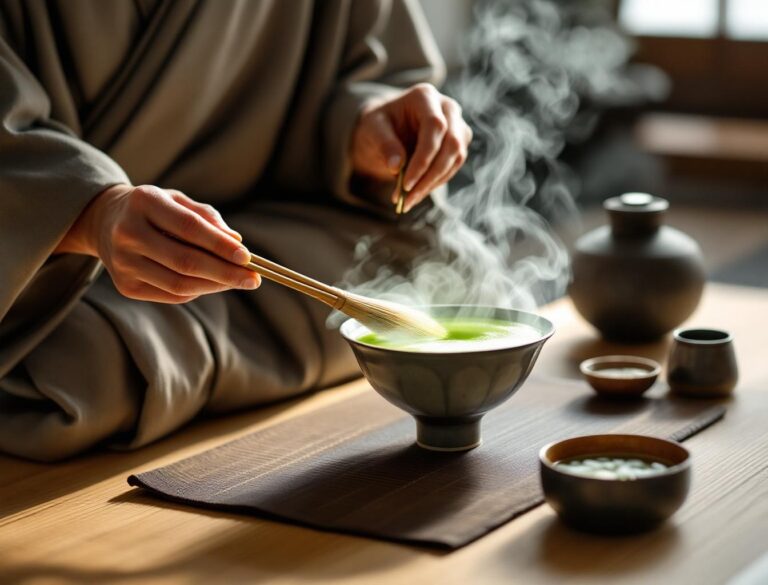
| Matcha | Creamy, full-bodied, deep umami | 70–80 mg | Morning, pre-workout | 70–80°C (158–176°F) | Whisk — no steep | $20–$60 (30g) |
| Shincha | Bright, sweet, vivid green | 30–40 mg | Spring only (seasonal) | 70–80°C (158–176°F) | 30–60 sec | $18–$50 |
Sencha: Japan's Everyday Standard
Sencha accounts for roughly 80% of all Japanese tea production. It's the default cup — the one poured in offices, homes, and restaurants across Japan — and understanding it is the foundation for everything else.
Sencha is made from sun-grown leaves, harvested from the top of the plant in early spring. After harvest, the leaves are immediately steamed (not pan-fired, as in Chinese green teas) to halt oxidation, then rolled and dried. The steaming step is why Japanese green teas taste distinctly different from Chinese varieties: steam creates that characteristic fresh-cut grass and seaweed note; pan-firing creates a roasted, chestnut quality. For a deeper dive, read our Japanese green tea types.
Quality sencha varies significantly. Standard sencha uses Yabukita cultivar leaves from the first or second harvest — reliable, slightly astringent, affordable. Premium sencha may use single-cultivar Okumidori or Saemidori leaves, hand-picked from older plants in shaded mountain plots, with a correspondingly sweeter and more complex cup. When buying sencha, look for bright green needles, vivid aroma even before brewing, and a clear dark green liquor — not yellow or brown, which indicates age or improper storage. You can learn more about gyokuro, Japan's finest shaded green tea in our dedicated guide.
The biggest brewing mistake with sencha is water that's too hot. Boiling water extracts catechins aggressively, overwhelming the amino acids before you taste them. Keep it at 70–80°C, steep for 60–90 seconds, and pour every last drop from the kyusu — residual water in the pot over-extracts the second steep.
Hojicha: The Roasted Evening Tea
Hojicha begins as sencha or bancha — fully processed green tea — and is then roasted over charcoal or in an oven at around 200°C. That roasting step transforms almost everything: the green color turns reddish-brown, the grassy aromatics convert to roasted caramel and walnut notes, and — critically — the heat degrades much of the caffeine content.
This makes hojicha one of the most versatile teas in the Japanese lineup. With only 5–8 mg of caffeine per cup, it's appropriate for evenings, for people sensitive to caffeine, for children, and as an all-day drink alongside meals. The roasted flavor also pairs better with food than most green teas — it doesn't clash with savory or rich dishes the way a vegetal sencha might. Our guide to why loose-leaf sencha tastes so much better than grocery-store green tea goes into much more depth on this topic.
Hojicha comes in two quality tiers. Standard hojicha is roasted bancha — the lower-grade late-harvest leaves. Premium hojicha (sometimes called “first-flush hojicha” or labeled by cultivar) uses sencha or even gyokuro stems, producing a more refined cup with residual sweetness underneath the roast. Hojicha powder is a separate product entirely — stone-ground hojicha for use in lattes, baking, and matcha-style preparations.
Brew hojicha hot — 90–100°C is ideal. The roasted compounds need heat to fully open up. It's one of the only Japanese green teas that actually benefits from near-boiling water, and it's extremely forgiving: even over-steeping produces a toasty, rustic cup rather than something bitter.
Genmaicha: The Popcorn Tea
Genmaicha is a blend rather than a pure tea style: sencha or bancha leaves combined with roasted brown rice, typically in a 50/50 ratio. The rice often includes a few grains of “popped” rice that puffed during roasting — which is why genmaicha is sometimes called “popcorn tea.”
The rice serves two functions. It dilutes the caffeine content of the base tea by roughly half, creating a lower-caffeine cup. And it adds a warm, toasty, nutty layer that balances and softens the grassiness of the green tea. The result is an accessible, mellow cup that many people who don't enjoy pure green tea find immediately appealing.
One variant worth knowing: matcha-iri genmaicha, or genmaicha blended with matcha powder. The matcha intensifies the green color and adds a vegetal intensity and caffeine boost — a completely different experience from standard genmaicha. If you want the mellow toasty version, verify the product is matcha-free before purchasing.
Brew at 80–85°C. The rice components extract better with slightly hotter water than pure sencha, but you still want to avoid fully boiling water to keep the green tea base from turning bitter.
Bancha: The Honest Everyday Drinker
Bancha is harvested later in the season than sencha — from the same plants, but using older, larger leaves and stems that didn't make the early-spring cut. “Bancha” translates loosely to “ordinary tea,” and it wears that description honestly: this is affordable, approachable, and unpretentious.
Because bancha leaves are more mature, they've converted more of their amino acids into catechins during their longer time in sunlight. The result is a stronger, earthier, more astringent cup compared to sencha, with less sweetness and less umami. The mineral notes are more pronounced — woody, slightly cereal-like, with less of the fresh green character.
Bancha‘s real advantage is its resilience. Unlike sencha, which turns harsh with boiling water, bancha actually handles higher temperatures well — up to 95°C — without becoming unpleasant. This makes it the practical daily tea: fill the kettle, don't overthink the temperature, pour a robust cup that holds up through a meal or a long afternoon. It also produces more infusions per gram than sencha, making it economical for high-volume drinkers.
Regional banchas are worth exploring: Kyobancha (Kyoto-style) is smoked over charcoal, producing an earthy, woody cup closer to houjicha in character. Mimasaka Bancha from Okayama is sun-dried rather than steamed, with a distinctly fermented, sour note appreciated by fans of raw-processed teas.
Kukicha: The Twig Tea With Surprising Science
Kukicha is made not from leaves, but from the stems, stalks, and twigs of the tea plant — the parts discarded during sencha and gyokuro production. Historically this made it a peasant's drink, cheap and considered low-grade. Research has significantly upgraded its reputation.
The key insight is biochemical: in the tea plant, caffeine is produced as an insect deterrent and concentrated on the surface of young leaves. Stems serve a different function — they're the plant's mineral delivery system, transporting calcium, magnesium, potassium, and fluoride from the soil to the leaves. This is why kukicha has a fundamentally different nutritional profile: very low caffeine (5–10 mg per cup), but a mineral density that some studies suggest can reach up to 13 times the calcium content of an equivalent serving of milk.
The flavor reflects this profile: light, clean, and slightly creamy, with a natural sweetness and none of the grassy or astringent notes associated with leaf teas. Many people describe it as the most approachable Japanese tea — a good entry point for those transitioning from herbal infusions or light black teas.
Karigane is a premium variant worth distinguishing: rather than stems from standard sencha production, karigane uses stems from shaded gyokuro plants. Because those plants have much higher amino acid concentrations, karigane inherits some of the umami sweetness of gyokuro with the low caffeine profile of kukicha. Cold-brewed karigane develops cool cucumber and cantaloupe melon notes that are genuinely surprising for a “stem tea.”
In macrobiotic tradition, kukicha is an alkalizing tea recommended after grain-heavy meals. Whether or not you follow that framework, the low caffeine and gentle flavor profile make it one of the best options for late-day drinking when you want something more complex than water.
Kabusecha: The Overlooked Middle Ground
Kabusecha translates to “covered tea” — named for the shading technique applied to the plants for 7 to 10 days before harvest, blocking roughly 50% of incoming light. This positions it between fully sun-grown sencha and the intensely shaded gyokuro, a midpoint that makes it one of the most interesting and underrated teas in the Japanese lineup.
Shading triggers a well-documented stress response in Camellia sinensis. Without sunlight for photosynthesis, the plant breaks down proteins into amino acids to generate energy — which is why shaded teas are so much higher in L-theanine. Simultaneously, catechins (the source of bitterness) stop accumulating because the plant no longer needs them as UV protection. Chlorophyll production surges to capture whatever light remains. The result: more sweetness, less bitterness, more vivid green color.
With 7–10 days of shading versus gyokuro's 20–30 days, kabusecha shows those effects in moderated form. It has the crispness and structure of sencha but with notably more umami depth and reduced astringency. The characteristic “ooika” (covered aroma) — a delicate, sweetly vegetal scent unique to shaded teas — is present but subtle, not overwhelming.
Kabusecha is primarily produced in Mie Prefecture. It brews best at 60–70°C, slightly lower than sencha, to protect its elevated amino acid content. For anyone who finds sencha slightly too astringent but finds gyokuro too intense or expensive, kabusecha is the direct answer.
Gyokuro: Japan's Most Prestigious Loose-Leaf
Gyokuro — “jade dew” — is the apex of Japanese loose-leaf green tea. Plants are shaded for 20 to 30 days before harvest, blocking 70–90% of incoming light using either synthetic cloth (jikakabuse) or traditional straw-and-reed screens (honzu). The result of that extreme light deprivation is a leaf with dramatically elevated L-theanine, reduced catechins, and an intense, concentrated umami character that has no real parallel in other teas.
A properly brewed gyokuro should taste almost like a savory broth — oceanic, sweet, with lingering mineral depth. Some describe it as the “nori on the ocean” flavor, traced to a compound called dimethyl sulphide derived from the amino acid methionine, which concentrates under shading. It is a genuinely unusual flavor for anyone expecting typical green tea.
Fukuoka's Yame district produces approximately 45% of Japan's gyokuro, using traditional honzu shading with rice straw mats. Uji in Kyoto produces the most premium-priced gyokuro, largely on reputation and terroir. The 2025 “Matcha Shock” — an April frost that cut Kyoto tencha production 40% — also pushed gyokuro prices upward that season, a reminder that premium Japanese teas are subject to seasonal volatility.
Brewing gyokuro correctly requires patience. Use water at 50–60°C — you can achieve this by pouring boiling water into a cup, then into the kyusu, each transfer dropping temperature roughly 10°C. Use more leaf than you think (5–6 grams per 60ml of water), and steep for 90–120 seconds. The small volume, high leaf-to-water ratio, and cool temperature are all essential. This is not a casual tea: it rewards attention and produces one of the most remarkable cups in the Japanese tradition.
Shincha: The First Flush Phenomenon
Shincha (“new tea”) is technically sencha — same plant, same processing — but harvested from the year's very first buds, typically between late April and early May. What makes it categorically different is the biochemistry of winter dormancy.
During winter, tea plants go dormant and store concentrated nutrients, minerals, and amino acids in their roots and branches. When the first spring buds emerge, all of that stored nutrition surges into those initial leaves. The result is a leaf with roughly three times more L-theanine than second-harvest (nibancha) leaves and a biochemical density not found at any other point in the growing season.
Shincha also contains high concentrations of cis-3-hexenal — the volatile compound responsible for the “vivid fresh aroma” that defines the first-flush experience. This compound is highly unstable and fades within months, which is why shincha must be consumed fresh and why the experience of drinking a just-released shincha in May is unlike anything available the rest of the year.
A common marketing misconception: shincha is often described as “lower caffeine” tea. The opposite is true — shincha has the highest caffeine of any harvest. The reason it doesn't taste bitter despite that caffeine is the record-high L-theanine content, which biochemically counteracts caffeine's edge. The net experience is smooth, sweet, and focused rather than stimulating. This is an important distinction when shopping.
Shincha releases are seasonal and finite. Most quality producers sell out within weeks of the harvest release. If you're interested, watch for announcements from Japanese tea shops in late April — early May.
How to Brew Loose-Leaf Japanese Tea: Parameters and Technique
Japanese tea brewing is controlled precision. The same leaves brewed at the wrong temperature or wrong time will produce a completely different — often inferior — result. These parameters are not arbitrary tradition; they reflect the extraction chemistry of each tea type.
The Core Brewing Parameters Table
| Tea Type | Water Temp | Leaf Amount | Water Volume | First Steep | Second Steep | Third Steep |
|---|---|---|---|---|---|---|
| Gyokuro | 50–60°C (122–140°F) | 5–6g | 60ml | 90–120 sec | 60 sec | 30 sec |
| Kabusecha | 60–70°C (140–158°F) | 4–5g | 120ml | 60–90 sec | 45 sec | 30 sec |
| Sencha | 70–80°C (158–176°F) | 4–5g | 120–150ml | 60–90 sec | 30–45 sec | 20–30 sec |
| Kukicha | 70–80°C (158–176°F) | 4–5g | 150ml | 60–90 sec | 45 sec | 30 sec |
| Genmaicha | 80–85°C (176–185°F) | 5–6g | 150ml | 60–90 sec | 45 sec | 30 sec |
| Bancha | 85–95°C (185–203°F) | 4–6g | 150–200ml | 30–60 sec | 30 sec | 20 sec |
| Hojicha | 90–100°C (194–212°F) | 5–6g | 150–200ml | 45–60 sec | 30 sec | 20 sec |
| Matcha | 70–80°C (158–176°F) | 2–3g (0.75–1 tsp) | 60–80ml | Whisk 30 sec | N/A | N/A |
Five Technique Rules That Matter
1. Pour every last drop. Any water left in the kyusu continues extracting from the leaves between steeps. The second infusion starts already over-extracted. This is a major reason beginner brews taste bitter on the second steep — residual water, not bad tea.
2. Use the yuzamashi method for low-temperature teas. Achieving 50–70°C without a temperature-controlled kettle: pour boiling water into a ceramic cup, let it sit 1–2 minutes (drops roughly 10°C), then pour into the kyusu. Each transfer drops temperature by about 10°C. Two transfers from boiling gets you to approximately 80°C; three get you to 70°C.
3. Don't stir during steeping. Movement disturbs the equilibrium and causes uneven extraction. Pour the hot water evenly over the leaves and leave them.
4. Match teaware to the tea. Unglazed Tokoname clay kyusu, high in iron content, gradually seasons with tea oils and neutralizes tannins — producing noticeably smoother tea over months of use. Use a separate kyusu for hojicha and genmaicha (roasted teas) versus delicate greens (sencha, gyokuro) to avoid flavor transfer.
5. Cold brewing is a legitimate alternative. Mizudashi — steeping leaves in cold or room-temperature water in the refrigerator for 1–3 hours — extracts amino acids selectively, producing a smooth, sweet cup with minimal bitterness and reduced caffeine. The slow cold extraction simply cannot pull catechins at the same rate as hot water. Best teas for cold brew: sencha, kabusecha, kukicha, gyokuro, hojicha.
How to Store Loose-Leaf Tea: The Science
Most tea storage advice is circular: “keep it cool and dark.” That's correct but incomplete. Understanding the five specific degradation pathways tells you exactly why each storage rule exists — and what you're actually protecting against.
The Five Enemies of Tea
Oxygen is the primary degradation driver. Green tea contains polyphenol oxidase enzymes that, when exposed to oxygen, convert catechins into theaflavins and thearubigins — literally forcing your green tea through the same chemical processes that create black tea. Lipid oxidation produces secondary off-flavors: “fishy” notes, hay-like staleness. The solution is airtight storage with minimal dead air space in the container.
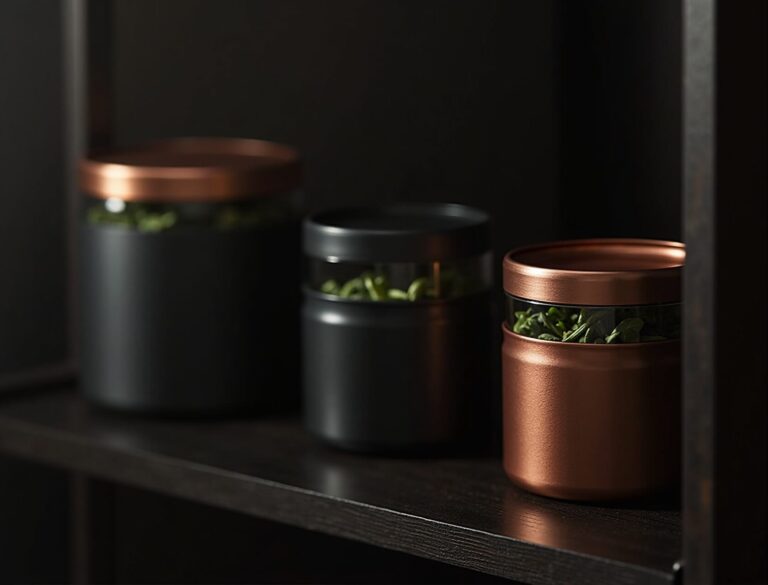
Light causes pheophytinization: the magnesium ion in chlorophyll is displaced by hydrogen, turning vibrant green leaves olive-brown and degrading flavor. UV and blue-spectrum light also directly break down catechins, flattening the tea's flavor complexity. Clear glass containers are actively harmful for tea storage — they provide none of the protection of opaque materials while looking attractive on a shelf.
Heat accelerates every other degradation pathway. The volatile aromatic compounds that define a tea's character — the cis-3-hexenal in shincha, the dimethyl sulphide in gyokuro — have low boiling points and dissipate rapidly at warm temperatures. Even a kitchen counter in direct sunlight can meaningfully shorten a tea's flavor life.
Moisture triggers both chemical and microbial degradation. Above roughly 65% relative humidity, tea becomes vulnerable to mold. Residual water also drives hydrolysis reactions that break down amino acids. Moisture damage is irreversible — there is no way to rescue a tea that has been wet.
Ambient odors are absorbed directly into tea leaves. Tea is hygroscopic and actively captures surrounding molecules. This is why matcha stored next to strong-smelling foods or coffee will absorb those aromas within days. Never store tea in the same drawer as spices, near cleaning products, or unsealed near strong-smelling foods.
Best Containers for Tea Storage
| Container Type | Performance | Best For | Notes |
|---|---|---|---|
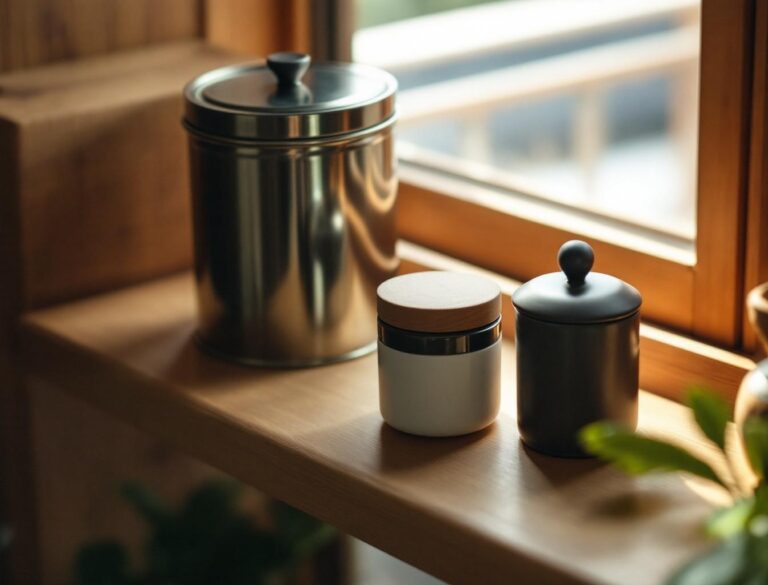
| Double-lidded metal tin | Excellent | Daily-use teas (sencha, hojicha, genmaicha) | The inner lid creates a secondary seal; blocks light; inexpensive |
| Glazed ceramic with silicone gasket | Excellent | Premium teas, matcha | Non-reactive, stable temperature, beautiful on counter |
| Multi-layer Mylar bag + oxygen absorber | Best (archival) | Long-term storage, opened seasonal teas | Gold standard for maximum shelf life; not for daily access |
| Standard plastic bags/containers | Poor | Not recommended | Permeable to oxygen and odors; can impart plastic taste |
| Clear glass jars | Poor | Not recommended | Looks good, actively harmful — provides zero light protection |
| Wooden boxes | Poor to moderate | Not recommended unless airtight-lined | Wood absorbs and imparts odors; not airtight |
The Refrigeration Debate
Refrigeration is a legitimate storage strategy — but only for factory-sealed, vacuum-packed or nitrogen-flushed teas that have not yet been opened. The cold temperature dramatically slows every degradation pathway, extending shelf life significantly.
The risk is condensation. When a cold container is opened in a warmer room, moisture from the air condenses on the cold tea leaves — which is as damaging as direct wetting. The protocol: remove the container from the refrigerator and let it temper, still sealed, at room temperature for 12–24 hours before opening. This allows the container to equalize in temperature so no condensation forms when the seal is broken.
Once opened, don't return tea to the refrigerator. Keep it in an airtight container at cool room temperature, away from the stove and windows, and use it within the recommended shelf-life window.
Matcha is the exception: sealed matcha canisters can be refrigerated even after opening if you're very careful about condensation, because matcha‘s compressed surface area makes it uniquely vulnerable to oxidation. Keep the opened matcha in a sealed inner container inside a zip-lock bag before refrigerating, and temper before every use.
Shelf Life by Tea Type
| Tea Type | Opened (Optimal) | Opened (Acceptable) | Notes |
|---|---|---|---|
| Matcha (ceremonial/culinary) | 2–4 weeks | Up to 3 months | Highest surface area; fastest degradation; store airtight |
| Shincha | 1–3 months | Up to 6 months | Volatile fresh aromas fade fast; consume seasonally |
| Gyokuro / Kabusecha | 3–6 months | Up to 9 months | High amino acids stable; watch for oxidation |
| Sencha | 6–9 months | Up to 12 months | Standard green; store airtight away from light |
| Kukicha / Genmaicha / Bancha | 9–12 months | Up to 18 months | More forgiving; less delicate aromatics at risk |
| Hojicha | 12–18 months | Up to 24 months | Roasting removes moisture; highly stable; still seal airtight |
How to Evaluate Loose-Leaf Tea Quality
Quality assessment in Japanese green tea follows a consistent framework. These are the indicators to check before brewing — and the signals to trust when you can't access tasting notes.
Dry leaf appearance: Premium sencha should be uniform bright green needles of similar size, tightly rolled, with minimal broken particles at the bottom of the bag. Uneven color (yellow, brown, or pale patches) indicates age, improper storage, or inconsistent processing. For gyokuro, look for deep, dark green needles with a slight sheen.
Dry leaf aroma: This is the fastest quality signal. Open the container and hold it close before brewing. Fresh sencha should smell clean, grassy, and slightly sweet — like freshly cut grass or steamed edamame. Any staleness, papery smell, or flat-hay odor indicates the tea is past its peak. Gyokuro should have a pronounced oceanic, seaweed-like intensity. Hojicha should smell warm and roasted with no burnt or acrid edge.
Liquor color: Fresh, well-processed sencha brews a clear golden-green. Cloudy or turbid liquor can indicate fukamushi (deep-steamed) processing — which is fine — or age and degradation, which is not. Yellow-brown liquor from green tea that claimed to be fresh is a red flag. Gyokuro should brew almost jade-green.
Taste structure: A high-quality Japanese green tea should have three layers in sequence: initial sweetness (amino acids), mid-palate freshness (vegetal green notes), and a clean finish with minimal harsh lingering astringency. If you're getting a flat one-note bitter cup, either the temperature was too high, the steep too long, or the tea itself is low quality.
Origin information: Reputable vendors specify the region, prefecture, farm, harvest date, and sometimes cultivar. If a product lists only “Japan” with no additional details, the origin is likely blended from multiple low-cost sources. Not necessarily bad tea — but not premium.
Beginner's Shopping Guide: Where to Start
The best first tea depends on what you already like. Here's a direct guide by palate type:
If you like light, clean flavors — start with kukicha or a standard sencha. Kukicha is the most accessible Japanese tea, with no bitterness and a naturally mild sweetness. A good quality Yabukita sencha from Shizuoka is the second step, introducing you to the characteristic grassy freshness without complexity overload.
If you like warm, roasted flavors — start with hojicha. It's the closest Japanese green tea to Western black tea in character, and it's nearly impossible to brew badly. If you enjoy it, move to genmaicha for the same approachability with more texture and nuance from the rice blend.
If you want umami depth — go directly to kabusecha before gyokuro. Kabusecha gives you a real taste of the shaded tea umami without gyokuro's technical brewing demands or price point. Once you've calibrated to kabusecha, gyokuro's intensity will make sense.
If you want the most complex experience — gyokuro, brewed correctly. It requires a small kettle with temperature control, patience, and proper technique. The payoff is unlike any other tea in the world: the most concentrated expression of umami, sweetness, and mineral depth that the tea plant produces.
If you're cooking with tea — matcha powder for baking and lattes, hojicha powder as a roasted alternative, genmaicha for rice and soups. Loose-leaf isn't always the right format for culinary applications; powders work better when you want consistent flavor intensity in a recipe.
Quality Tiers Explained
Japanese tea pricing is generally reliable as a quality signal. Within each style, you get what you pay for:
Entry level ($5–$15 per 50g): Mass-produced, machine-harvested, often blended from multiple harvests and regions. Consistent, reliable, good for high-volume daily drinking. Bancha and standard genmaicha sit naturally in this tier.
Mid-range ($15–$35 per 50g): Single-origin or prefecture-specific, often from named estates. Harvest date specified. Noticeably more aromatic and complex than entry tier. Most people's daily sencha and hojicha should live here.
Premium ($35–$80+ per 50g): Hand-picked, single cultivar, specific harvest (first-flush or Hachiju-Hachiya certified), traditional shading methods (honzu). This tier includes competition-grade gyokuro and ceremonial matcha from Uji or Yame. Brewed with correct technique, these are transformative.
Frequently Asked Questions
What's the difference between loose-leaf tea and tea bags?
Tea bags typically contain fannings and dust — small, broken particles left over from whole-leaf processing. These extract quickly but sacrifice the sequential extraction of amino acids before catechins that makes Japanese green tea smooth. Whole loose leaves also retain volatile aromatic oils that dissipate quickly in broken particles. The difference in flavor is not subtle.
How much loose-leaf tea per cup?
For most Japanese green teas, 4–5 grams per 150ml of water is the standard starting point. Gyokuro uses more — 5–6 grams per 60ml — due to its much smaller water volume and longer steep. Matcha uses 2–3 grams per 60–80ml. If the tea tastes thin, add leaf rather than steeping longer (which adds bitterness).
Can you reuse loose-leaf tea leaves?
Yes — most Japanese green teas produce excellent second and third infusions. The second steep is often the smoothest, as the first steep removes the most aggressive tannins. Reduce steep time on subsequent infusions (the leaves are already open and hydrated). Delicate teas like sencha and gyokuro typically give two or three quality infusions; kukicha and bancha can go three to four.
Which Japanese green tea has the least caffeine?
Kukicha and hojicha are the lowest, at 5–10 mg and 5–8 mg per cup respectively. Kukicha's low caffeine comes from using stems rather than leaves (caffeine concentrates in young leaf tissue). Hojicha‘s low caffeine comes from roasting, which thermally degrades much of the original caffeine in the base tea.
What tea is best for evening or before bed?
Hojicha and kukicha are the standard recommendations for evening. Both sit at 5–10 mg of caffeine per cup, similar to decaffeinated coffee. Bancha is another option at roughly half the caffeine of sencha. Cold-brewed versions of any of these extract even less caffeine.
Is Japanese green tea the same as Chinese green tea?
Same plant (Camellia sinensis), but different processing. Japanese green teas are almost entirely steam-processed, which halts oxidation immediately and preserves the fresh, vegetal, grassy character. Chinese green teas (Longjing, Biluochun, Mao Feng) are pan-fired, producing a roasted, nutty, chestnut-forward profile. Neither is superior — they're just different flavor categories with different brewing protocols.
What is Karigane tea?
Karigane is a stem tea (like kukicha) made specifically from the stems and stalks of shaded gyokuro or high-grade sencha plants. Because those plants are high in amino acids due to shading, karigane inherits more umami sweetness and depth than standard kukicha. It also has very low caffeine, making it an excellent evening tea with more complexity than typical kukicha.
How do I know if my green tea has gone bad?
The primary signal is aroma: fresh green tea smells clean, green, and slightly sweet. Stale tea smells papery, flat, or hay-like. Visually, degraded green tea shifts from bright green needles to dull olive or brown. If the brewed liquor is yellow-brown rather than golden-green, the tea has oxidized significantly. Stale tea won't hurt you — it just tastes flat and disappointing.
What equipment do I need to brew loose-leaf Japanese tea?
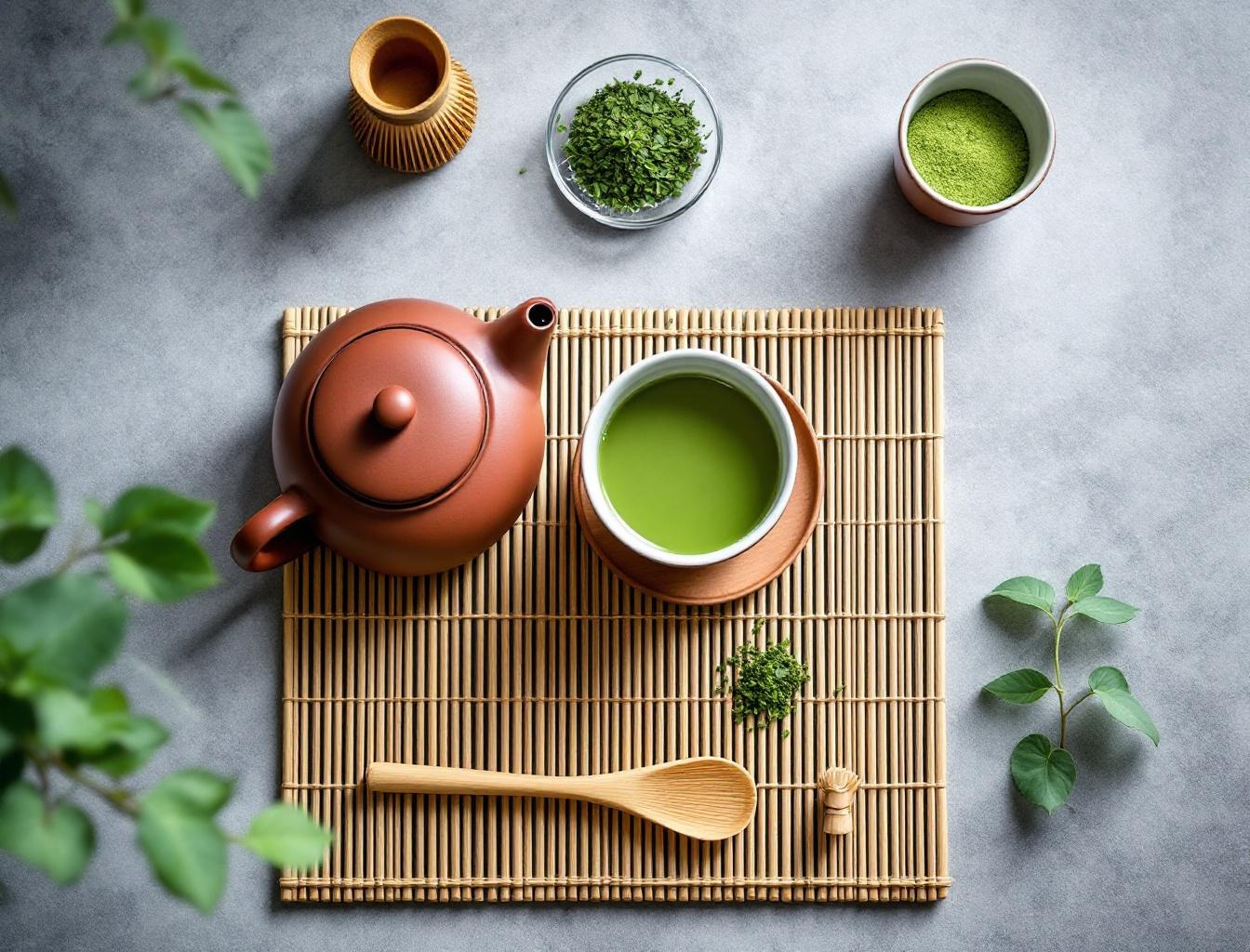
The minimum: a temperature-controlled electric kettle (essential for any tea below 80°C) and a kyusu or small teapot with a built-in fine mesh filter. For high-quality teas like gyokuro or kabusecha, a ceramic or clay kyusu with fine mesh handles the leaf well without losing small particles to the cup. A small ceramic cooling cup (yuzamashi) is helpful for stepping down temperature without a variable kettle. That's the complete setup for approximately $30–$60.
Is there a right order to try Japanese teas for the first time?
A reasonable progression: hojicha or kukicha first (low barrier, no technique required), then standard sencha (introduces the core green tea character), then genmaicha (adds dimension with rice), then kabusecha (first introduction to umami depth), then gyokuro (full expression of shaded tea complexity). Matcha fits at any point as a different format altogether.
What's the difference between tencha and matcha?
Tencha is the unground raw material for matcha: shade-grown leaves that are steamed and flat-dried without rolling or bruising. Once those leaves are stone-ground into fine powder, the result is matcha. Tencha brewed as a leaf tea (which some producers sell) produces a lighter, more delicate cup than gyokuro, with less intensity than matcha — a somewhat rare and interesting preparation.