Hario Loose Leaf Tea Infusers: Filter, Dripper, or Pot?
Hario makes more loose leaf brewing accessories than most people realize. Beyond their famous glass teapots, they produce in-cup filters, dedicated tea drippers, and filter pitchers — each optimized for different brewing styles and learn more about loose leaf to understand how these tools enhance your experience.
The Three Approaches to Hario Loose Leaf Brewing
Before getting into specific products, it helps to understand the three main approaches:
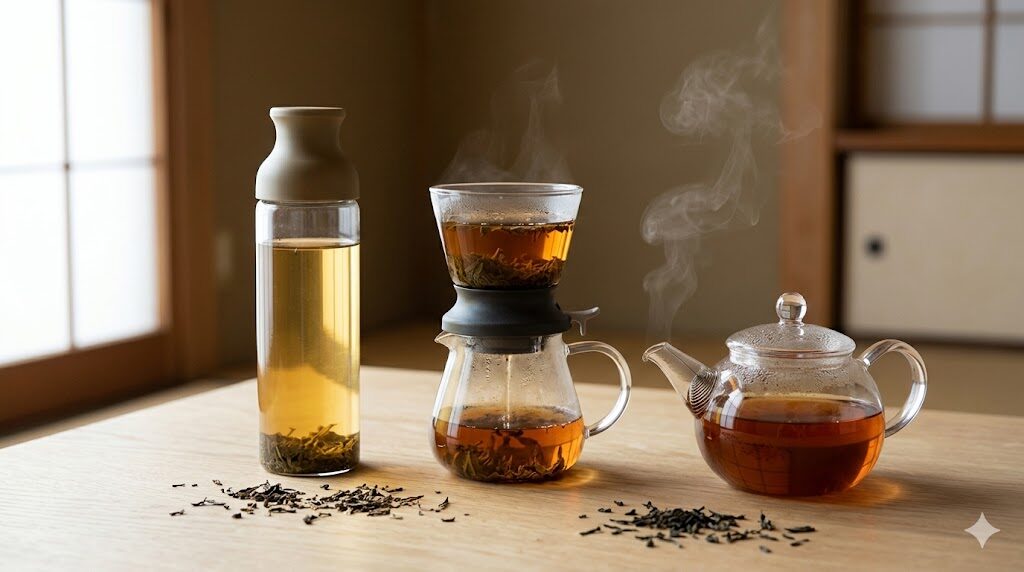
- Teapot with filter — steep in the pot, pour through the integrated mesh into cups. Most control, best for multiple steeps
- In-cup filter/infuser — steep in the cup itself using a basket or mesh infuser. Best for single servings, minimal cleanup
- Dripper/pour-over — pour hot water through a filter containing tea leaves. Produces the cleanest, most clarified cup
Hario Loose Leaf Products Compared
| Product | Method | Capacity | Best Tea | Best For |
|---|---|---|---|---|
| Chacha Kyusu Maru | Teapot + mesh | 450–700ml | All types | Multiple cups, multiple steeps |
| Bona Tea Maker | Teapot + mesh | 700ml | All types | Family brewing |
| Tea Dripper One | Dripper (pour-over) | 1–2 cups | Hojicha, bancha | Clean, clarified single cup |
| Glass Mug + Filter | In-cup filter | 240–300ml | Any loose leaf | Office, quick single cup |
| V60 + Paper Filter | Dripper (paper) | 1–4 cups | Hojicha, genmaicha | Maximum clarity, minimal equipment |
| Cold Brew Bottle | Immersion cold brew | 750ml | Hojicha, genmaicha | Overnight cold brew |
Best for Control: Hario Glass Teapot with Mesh Filter
The Hario Chacha Kyusu Maru and Bona Tea Maker are the flagship loose leaf brewing vessels. Their stainless mesh filters handle essentially any loose leaf tea, the pot allows multiple steeps from the same leaves, and you watch the brew develop in real time through the glass.
For hojicha, genmaicha, kabusecha, and bancha — the core Japanese teas — a glass teapot is the best everyday solution. The mesh catches leaves while allowing full circulation, which produces better extraction than cramped basket infusers.
Browse Hario glass teapots with filters
Best for a Single Cup: Hario In-Cup Glass Filter
Hario makes glass mugs with integrated silicone-sealed filter baskets that sit over the cup. You add leaves to the filter, pour hot water through, and steep directly in the cup. When steeping is complete, remove the filter — no second vessel needed.
This approach is excellent for office brewing where you want minimal equipment and cleanup. The trade-off is less flexibility for multiple steeps: once you remove the filter, you can't easily re-steep the same leaves.
Best for Clarity: Tea Dripper or V60
Hario's Tea Dripper One is a small ceramic dripper designed specifically for tea. It produces a cleaner, more clarified cup than mesh filters because it uses paper filters. Sediment, oils, and fine particles are removed, resulting in a transparent, jewel-bright cup.
The Hario V60 achieves the same result with more flexibility — the larger size options handle up to 4 cups at once. For hojicha and genmaicha specifically, dripper-style brewing produces a distinctly cleaner flavor profile that highlights the tea's lighter, more delicate notes.
Filter Material Comparison
| Filter Type | Clarity | Body Retention | Cleanup | Cost Per Brew |
|---|---|---|---|---|
| Stainless mesh | Good | Full — oils pass through | Rinse daily | Zero (reusable) |
| Paper (V60 style) | Excellent — very clear | Lower — oils filtered | Toss the paper | $0.05–0.10 per brew |
| Cloth (silky) | High | Good — slight filtering | Rinse, air dry | Very low (many uses) |
| In-cup basket | Varies | Full — coarse mesh | Tap out and rinse | Zero (reusable) |
Which Infuser Method for Which Tea Type
Not all infuser methods work equally well across all Japanese teas:
- Hojicha — works beautifully in every method; particularly stunning in a glass teapot
- Genmaicha — stainless mesh teapot is ideal; paper filter removes some of the rice starch character (which some people actually prefer)
- Kabusecha — glass teapot or in-cup filter; temperature control matters most, not filter type
- Bancha — any method works; this is everyday tea that forgives all approaches
- Gyokuro — traditional ceramic kyusu with built-in ceramic strainer; needs the pot's heat retention
Travel Brewing: Hario Tea Stick Infuser
For travel or desk brewing without any pots or drippers, Hario makes a glass tube infuser (tea stick) that sits inside a travel mug or any standard cup. It's the lowest-maintenance solution — fill with leaves, insert in your cup, add water. Not ideal for multiple steeps or high leaf volumes, but convenient for occasional office or travel brewing.
Frequently Asked Questions
What is the best Hario infuser for loose leaf tea at work?
The Hario glass mug with integrated filter basket is the most practical office solution — one vessel handles steeping and drinking, cleanup is minimal, and the borosilicate glass keeps tea reasonably warm without any insulated mug needed.
Does the Hario mesh filter let fine tea particles through?
Very fine-cut teas (certain banchans and powdery hojicha) may pass a few particles through the stainless mesh. This is normal and not harmful. For a completely sediment-free cup from fine-cut teas, use paper filters in a V60 or Tea Dripper.
Can I use a Hario V60 filter for loose leaf tea?
Yes — this is a popular technique. Use standard Hario V60 paper filters, rinse first to remove paper taste, add your loose leaf tea, and pour hot water through slowly. The result is a clean, well-extracted cup. See our full guide to brewing Japanese tea with a Hario V60.
How many grams of tea per cup in a Hario teapot?
A standard ratio for Japanese green teas is 3–5g per 100ml of water. For a 450ml Chacha Kyusu, use 15–20g of loose leaf tea. Adjust based on your preferred strength and the specific tea — hojicha can go slightly lighter (10–12g per 450ml) since it's naturally less astringent.
Is the Hario mesh filter replaceable?
Yes — Hario sells replacement stainless mesh filters for all their teapot models. If your mesh discolors permanently or develops holes, a replacement filter extends the life of your teapot significantly. Check replacement filter availability here.