Hario Chacha Kyusu Maru Review: The Round Glass Teapot Worth Buying
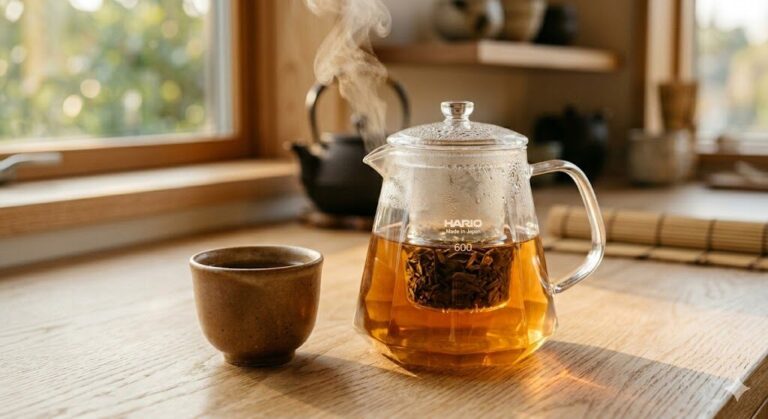
The Hario Chacha Kyusu Maru is Japan's best-selling glass teapot for a reason. It's simple, well-built, available in two useful sizes, and — unlike most glass teapots — actually designed around how loose leaf tea steeps best. This review covers everything: capacity, filter performance, pour quality, and how it holds up after years of daily use.
What Is the Hario Chacha Kyusu Maru?
“Chacha” means tea in informal Japanese, “kyusu” is the traditional side-handled teapot, and “maru” means round. The name describes the pot exactly: a round glass body, side handle, and removable stainless mesh filter that spans most of the interior.
Hario makes it in two sizes: 450ml and 700ml. Both are constructed from their proprietary borosilicate glass — the same heat-resistant formula they've used in laboratory equipment since 1921. The mesh filter and overall build quality make it easy to see why these models are so popular, especially when compare models side by side.
Size Comparison: 450ml vs 700ml
| Feature | Chacha Kyusu 450ml | Chacha Kyusu 700ml |
|---|---|---|
| Cups per brew | 2–3 cups | 3–5 cups |
| Leaf capacity | 8–10g comfortable | 12–15g comfortable |
| Best for | Solo or two people | Family, office |
| Fridge fit | Fits standard door shelf | Taller, may not fit |
| Heat retention | Good (10–12 min) | Better (15–18 min) |
Most households end up happier with the 450ml. If you're brewing for three or four people at once, size up to the 700ml.
Filter Performance: The Key Differentiator
The stainless mesh filter is what separates the Chacha Kyusu from cheaper glass teapots. The mesh is fine enough to catch most Japanese green teas including genmaicha and hojicha, though very fine-cut bancha may pass a few flecks through — this is normal for any mesh filter.
The filter spans roughly 70% of the pot's interior when inserted, allowing leaves to circulate freely around and above it. This matters: tea leaves need room to expand. Cramped filters lead to weak, astringent brews. The Chacha Kyusu's wide filter lets hojicha leaves fully open up, and the result is noticeably better than narrow basket filters.
Cleanup is straightforward — the filter lifts out, you tap out the spent leaves, and rinse. No scrubbing required for daily use.
How It Pours
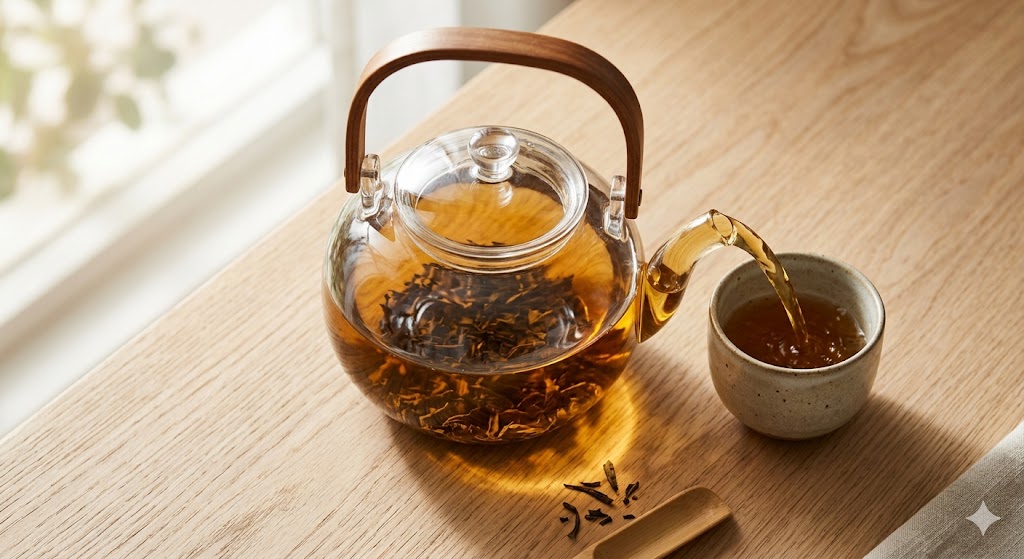
The pour is one of the Chacha Kyusu's genuine strengths. The spout angle and width are engineered for a steady, controlled stream — not the glug-and-drip common on cheaper glass pots. When you tilt the pot, tea flows cleanly until the last drop, with almost no drip-back onto the base.
The side handle gives you leverage that overhead handles don't. With 700ml of hot water in the pot, you want that control. The resin handle stays cool after a full brew cycle.
Teas That Shine in the Chacha Kyusu Maru
This pot is versatile, but it excels with:
- Hojicha loose leaf — watch the water turn amber-gold as the roasted leaves steep
- Genmaicha — the rice kernels and tea leaves look beautiful suspended in clear glass
- Kabusecha — deep green and visually striking against the borosilicate clarity
- Bancha — everyday workhorse, easy to clean after each steep
For gyokuro or very high-grade sencha where temperature precision is critical (around 50–60°C), you might prefer the slower-cooling ceramic kyusu — but for every other Japanese tea, the glass works excellently.
Buy the Hario Chacha Kyusu Maru at our shop
Hario Chacha Kyusu vs Ceramic Kyusu: Which Is Better?
| Factor | Hario Chacha Kyusu (Glass) | Ceramic Kyusu |
|---|---|---|
| Flavor neutrality | Excellent — no absorption | Good (unglazed absorbs oils) |
| Visual experience | Watch tea brew in real time | Opaque |
| Heat retention | Moderate (glass cools faster) | Better for long sipping |
| Stain resistance | Glass wipes clean easily | Unglazed clay stains over time |
| Price | $$ | $$ – $$$ |
| Best application | Multiple tea types, daily use | Single tea type, ceremony |
Durability After Years of Use
Hario's borosilicate glass earns its reputation. With daily use over multiple years, the glass stays crystal clear — no clouding, hazing, or internal scratching. The mesh filter may show minor discoloration from tannins over time, but a 20-minute soak in white vinegar solution removes this completely.
The lid gasket (silicone) can degrade after several years of heavy use, but Hario sells replacement lids separately. This is a $10 fix rather than replacing the entire pot.
Frequently Asked Questions
Is the Hario Chacha Kyusu Maru dishwasher safe?
The glass body is dishwasher safe. Hario recommends handwashing the stainless filter to preserve the mesh integrity and the resin handle to prevent warping. A quick rinse after brewing is all the daily maintenance most people need.
Can I use the Chacha Kyusu Maru on a stove?
No — this pot is not designed for direct heat sources. Use it with pre-boiled water from a separate kettle. The borosilicate glass handles hot poured water well but is not rated for burner use.
Does the 700ml Chacha Kyusu fit in the fridge?
The 450ml version fits most refrigerator door shelves easily. The 700ml version is taller and may require a main shelf rather than a door shelf. Both are suitable for cold-brew tea preparations — just fill with cold water and steep in the fridge overnight.
What is the difference between the Chacha Kyusu Maru and the Hario Bona Tea Maker?
The Chacha Kyusu Maru has a side handle in traditional kyusu style and a round body. The Bona Tea Maker has a more upright cylindrical shape with a top handle. Both use similar borosilicate glass and stainless mesh filters. The Kyusu Maru is the more traditional design; the Bona is more contemporary and slightly easier to store.
Which Hario glass teapot is best for hojicha?
The Chacha Kyusu Maru 450ml is an excellent hojicha pot. The wide mesh filter allows hojicha leaves (which are larger than sencha) to circulate freely, and the glass lets you watch the amber color develop. If you regularly brew for two people, the 450ml is the right size.
The Hario Chacha Kyusu Maru is the right first glass teapot for almost everyone interested in Japanese tea. It's well-priced, built to last, and makes every brewing session genuinely enjoyable. Order yours here.