Hario Bona Tea Maker Review: Japan’s Favorite Glass Set
The Hario Bona Tea Maker consistently tops Japanese online retailer rankings for glass teapots. It's not a complicated product — a 700ml borosilicate glass pot with a stainless mesh filter and a clean contemporary design — but it executes the basics so well that it's become the default glass teapot in millions of Japanese homes. This review tells you exactly what you're buying and whether it's the right choice for your household.
What Makes the Bona Different from Other Hario Teapots
Hario makes several glass teapots, and the differences matter:
| Model | Shape | Handle | Capacity | Design Feel |
|---|---|---|---|---|
| Bona Tea Maker | Cylindrical, upright | Side loop | 700ml | Modern, minimal |
| Chacha Kyusu Maru | Round/spherical | Side (traditional) | 450ml / 700ml | Traditional kyusu |
| Chaho | Barrel-shaped | Side | 450ml | Elegant, minimal |
The Bona's upright cylindrical shape is taller and narrower than the round Chacha Kyusu, which makes it easier to fit in a cabinet or narrow shelf. The design is deliberately contemporary — this is a teapot that looks at home in a modern kitchen without any traditional ornamentation.
Build Quality and Materials
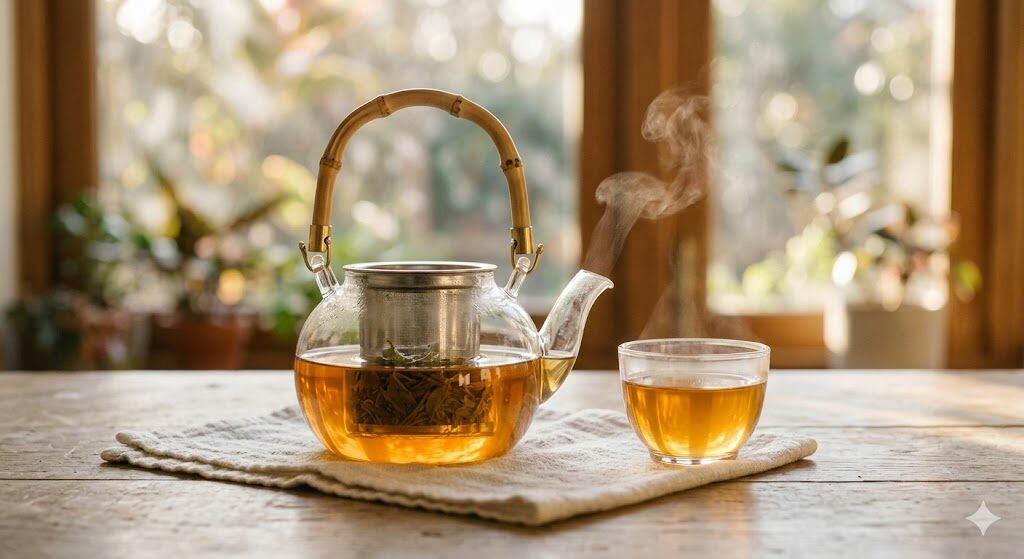
The Bona Tea Maker is made from Hario's standard borosilicate glass, the same heat-resistant formula used across all their teaware. The stainless mesh filter basket is fine enough to handle genmaicha, hojicha, and most Japanese loose leaf teas without significant leaf pass-through.
The lid is borosilicate glass with a silicone ring gasket. The handle is heat-resistant resin — it stays cool after steeping. All components are sold separately for replacement, which is important for long-term ownership.
Brewing Performance: What We Actually Tested
We brewed four Japanese teas through the Bona over multiple sessions and noted the results:
Hojicha (12g / 650ml / 95°C / 45 seconds)
Excellent. The amber color develops visibly as the hojicha steeps — one of the genuine pleasures of a glass teapot. The filter caught essentially all the roasted leaves. Pour was clean with no drip.
Genmaicha (10g / 600ml / 90°C / 60 seconds)
Very good. A small amount of rice starch made the brew slightly cloudy, which is normal for genmaicha. Flavor was clean and full-bodied. The filter allowed good leaf circulation given the 700ml volume.
Bancha (8g / 600ml / 85°C / 45 seconds)
Good. Bancha is forgiving and the Bona handles it easily. Clean pour, no issues.
Kabusecha (6g / 400ml / 70°C / 60 seconds)
The Bona worked well, though for very delicate shaded teas some people prefer the slower-cooling ceramic kyusu. The glass cooled the brew faster than desired for a long sipping session.
The 700ml Size: Who It's For
The Bona's single size (700ml) is optimized for households. It makes:
- 4 standard Japanese tea cups (175ml each) in one steep
- 2–3 Western-style mugs
- 2 servings of cold brew when used as a fridge vessel
For solo tea drinkers who brew multiple steeps of the same leaves, 700ml can feel large. For couples or families where multiple people want tea simultaneously, it's exactly right.
Order the Hario Bona Tea Maker here
Using the Bona Tea Maker for Cold Brew
The Bona's upright shape makes it excellent for fridge storage. Add 15g of hojicha or genmaicha, fill with cold water, cover with the lid, and refrigerate for 8–12 hours. The result is a smooth, low-bitterness cold brew that's noticeably different from hot-brewed iced tea.
The stainless filter prevents leaves from floating when you pour, though you may want to strain the last bit through a fine mesh if your hojicha is finely cut.
Cleaning and Maintenance
The glass body is dishwasher safe. The mesh filter should be rinsed under running water after each use and given a thorough clean weekly — a soft brush and mild soap removes tannin buildup from the mesh holes before it affects flavor. Soak in a baking soda solution (1 tsp per cup of water) for 30 minutes to remove more stubborn discoloration.
Is the Hario Bona Better Than the Chacha Kyusu Maru?
They're different products serving slightly different preferences:
- Choose the Bona Tea Maker if you prefer modern aesthetics, brew for 3–4 people, and want something that stores easily in a cabinet
- Choose the Chacha Kyusu Maru if you want a more traditional kyusu style, brew for 1–2 people (450ml option), or prefer the round form factor
Both use equivalent glass quality and similar mesh filter designs. Either will serve you well for years.
Frequently Asked Questions
Does the Hario Bona Tea Maker come with cups?
The standard Bona Tea Maker is sold as the teapot only. Hario does offer bundled sets that include matching glass cups — these are worth considering if you're setting up a complete tea service.
What size is the Hario Bona Tea Maker?
The Hario Bona Tea Maker holds 700ml (approximately 24oz), which makes 4 standard Japanese tea cups or about 2–3 Western-style mugs per brew.
Is the Bona Tea Maker suitable for everyday use?
Yes — it's designed for daily brewing. The borosilicate glass holds up to repeated thermal cycling, the stainless filter doesn't rust or degrade quickly, and all parts are replaceable. Many households use the same Bona for 5–10 years without issues.
Can you put the Hario Bona in the microwave?
The borosilicate glass body is microwave-safe. Remove the stainless filter and check that the handle material is listed as microwave-safe for your specific model before reheating. Most Hario handles are resin-based and should not be microwaved.
What kind of tea is best in the Hario Bona?
Hojicha and genmaicha are the standout performers in the Bona — both for flavor and the visual experience of watching amber and golden-green teas develop through the glass. Bancha is excellent for daily use. Kabusecha and sencha work well too; just be mindful of water temperature.