Hojicha Latte Recipe: Hot & Iced (With Brewing Guide)
A hojicha latte hits different from any other tea latte — and I mean that technically, not just as a vibe description. The roasting process that transforms green tea leaves into hojicha creates pyrazine compounds that give it a toasty, almost caramel-like warmth that matcha and regular green tea simply don't have. It pairs beautifully with steamed milk, stays smooth without turning bitter, and the low caffeine means you can drink one at 3pm and still sleep at 10.
This recipe covers both hot and iced versions with precise measurements and temperature guidance that most recipes skip. I'll also walk you through which hojicha powder grade actually matters for lattes — because using the wrong one is the most common reason a homemade hojicha latte falls flat.
Using the right hojicha powder makes a measurable difference in this recipe. We sell ceremonial and culinary grade hojicha powder sourced directly from Uji, Kyoto — the same region that produces Japan's finest tea. See our hojicha powder →
What Is Hojicha? (The 60-Second Version)
Hojicha (焙じ茶) is Japanese green tea — usually bancha or kukicha — roasted at high heat over charcoal or in a drum. The roasting process was reportedly discovered by accident in 1920s Kyoto when a tea learn more about hojicha master experimented with fire to reduce a poor harvest’s bitterness.
Unlike matcha, which is shade-grown and stone-ground, hojicha is roasted after harvest. This roasting drives off most of the caffeine and catechins (the astringent compounds), leaving a naturally low-caffeine tea with a mellow flavor profile. For lattes specifically, this means it blends with milk in a way matcha struggles to — no bitterness, no grassiness, just warmth.
For lattes, you'll want hojicha powder (finely milled hojicha), not loose leaf or tea bags. Powder dissolves directly into hot liquid and produces the smooth, creamy consistency a latte needs.
Hojicha Latte Ingredients
These measurements make one serving (hot or iced). Scale up proportionally.
Hot Hojicha Latte
- 2 teaspoons (4g) hojicha powder — culinary grade or above
- 3 tablespoons (45ml) water at 80°C / 175°F — not boiling
- ¾ cup (180ml) milk of choice, steamed or heated
- 1–2 teaspoons sweetener (maple syrup, honey, or simple syrup)
Iced Hojicha Latte
- 2½ teaspoons (5g) hojicha powder — slightly more to compensate for ice dilution
- 3 tablespoons (45ml) water at 80°C / 175°F
- ¾ cup (180ml) cold milk of choice
- Handful of ice
- 1–2 teaspoons sweetener
Choosing the Right Hojicha Powder (What Most Recipes Skip)
This section is where a good hojicha latte separates from a mediocre one. Hojicha powder is not all the same, and the grade affects flavor, color, and how cleanly it dissolves.
Grade Breakdown
| Grade | Best For | Flavor | Color | Notes |
|---|---|---|---|---|
| Ceremonial | Drinking straight, lattes when you want the best flavor | Clean, sweet roast, no bitterness | Rich amber-brown | Made from first-flush bancha or premium kukicha. Most soluble. |
| Culinary | Lattes, baking, cooking | Slightly more robust, still smooth | Lighter brown | Best value for daily latte use. Very good quality for the price. |
| Blend/Generic | Avoid for lattes | Earthy, sometimes bitter or stale | Dull, grayish | Often cut with stems, lower grade leaf, or older tea. Makes bitter lattes. |
For daily hojicha lattes, culinary grade is the sweet spot. Ceremonial is exceptional but premium-priced — save it for when you want to drink it straight. What you should avoid is any powder without a clear grade designation, origin, or that's priced suspiciously low. Bad hojicha powder is the single most common reason homemade lattes taste muddy or bitter.
Regional note: Kyoto (Uji and surrounding regions) and Shizuoka both produce excellent hojicha powder. Kyoto tends toward a sweeter, more delicate roast profile. Shizuoka hojicha often has a slightly smokier, bolder character — which can work well in lattes if you prefer a more assertive flavor. Either works; it comes down to preference.
Our hojicha powder is culinary grade, sourced from Uji, Kyoto, roasted fresh in small batches. View hojicha powder →
Hot Hojicha Latte — Step-by-Step
- Heat your water to 80°C / 175°F. This is the critical step. Boiling water (100°C) scalds hojicha powder and brings out bitterness. If you don't have a thermometer, bring water to a boil and let it sit for 2 minutes — it'll drop to roughly 80–85°C.
- Sift the hojicha powder. Add 2 teaspoons of hojicha powder to a small bowl or cup. Sift it through a fine mesh strainer if it's lumpy. This 10-second step prevents clumping and ensures a smooth latte.
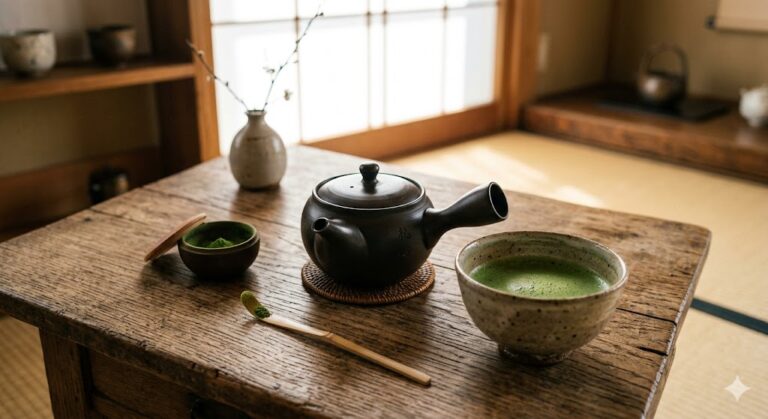
- Mix hojicha concentrate. Pour 45ml of 80°C water over the sifted powder. Whisk using a bamboo whisk (chasen) in an M or W motion — not circular — until fully dissolved with no visible powder clumps. A milk frother works too: hold it just at the surface and blend for 10 seconds. No chasen or frother? A small regular whisk works.
- Steam or heat your milk. Heat ¾ cup of milk to around 65°C / 150°F — hot but not scalding. If you have a steam wand, aim for a microfoam texture. A saucepan over medium-low heat works too; watch for small bubbles forming around the edge (don't let it boil).
- Combine. Pour the hojicha concentrate into your cup first, then pour in the steamed milk. If frothing by hand, spoon foam over the top last.
- Sweeten to taste. Add 1–2 teaspoons of sweetener. Maple syrup is the classic pairing — its caramel notes amplify hojicha‘s roasted character beautifully. Honey adds a floral contrast that works well. Plain simple syrup is neutral if you want the hojicha flavor forward.
Iced Hojicha Latte — Step-by-Step
The key difference for iced: make a stronger concentrate first to compensate for ice dilution. This is the same logic as Japanese konbini (convenience store) iced teas — they're brewed at double strength so ice doesn't thin them out.
- Make the concentrate. Use 2½ teaspoons (5g) hojicha powder with the same 45ml of 80°C water. Sift first, then whisk until fully dissolved. The concentrate will look quite dark — that's correct.
- Sweeten the concentrate while hot. Add sweetener to the hot concentrate and stir to dissolve. Sweeteners incorporate better in hot liquid than cold.
- Fill glass with ice. Use a 12–16oz glass with plenty of ice (at least ¾ full).
- Add cold milk. Pour ¾ cup cold milk over the ice. Cold oat milk works especially well here — it stays creamy without separating.
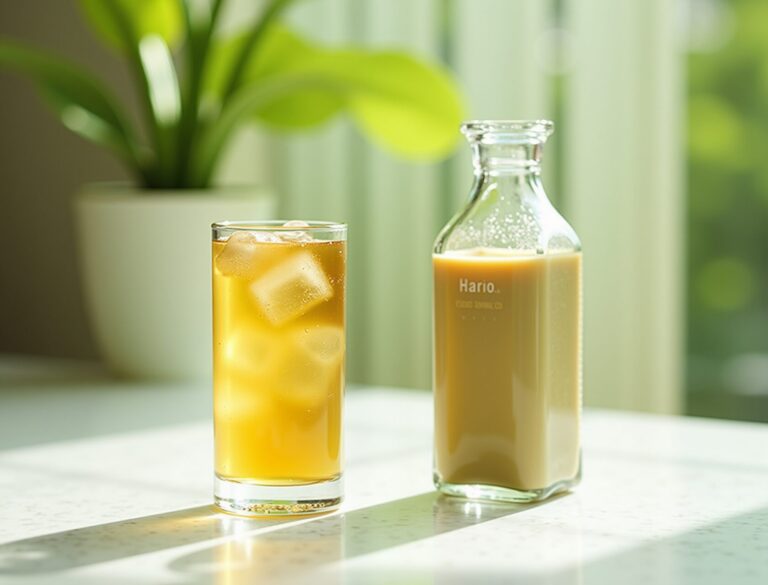
- Pour concentrate over milk. Pour the hojicha concentrate over the top. You can stir it in or let it cascade through the milk for a layered visual — the brown-against-white contrast is very nice. Stir before drinking.
Milk Guide: Which Works Best
| Milk | Froth Quality | Flavor Pairing | Best For |
|---|---|---|---|
| Oat milk (barista blend) | Excellent — holds foam well | Neutral sweetness, enhances hojicha | Best all-around choice for lattes |
| Whole milk | Very good | Rich, creamy — slightly mutes the hojicha | Hot lattes when you want richness |
| 2% milk | Good | Balanced — lets hojicha come through | Everyday hot latte |
| Almond milk | Poor — thin foam | Slightly nutty, complements roast notes | Iced latte (not ideal for hot) |
| Coconut milk (canned) | Rich but heavy | Tropical sweetness — interesting but polarizing | Iced, dessert-style version |
| Soy milk | Good, sometimes separates | Slightly beany — can compete with hojicha | Works when heated carefully |
For vegan hot lattes, oat milk barista blend is the clear winner — it froths comparably to whole milk and its natural sweetness pairs perfectly with hojicha‘s caramel notes. Regular (non-barista) oat milk has less fat and won't foam as well.
How Much Caffeine Is in a Hojicha Latte?
A hojicha latte made with 4g of powder contains approximately 25–40mg of caffeine — compared to 140mg in a standard 8oz drip coffee, and roughly 70–80mg in a matcha latte made with 2g of powder. Hojicha‘s low caffeine is a direct result of the roasting process: heat degrades caffeine, reducing it by up to 80% compared to the unroasted leaf.
Here's the full comparison:
| Drink | Caffeine (approx.) | L-theanine |
|---|---|---|
| Hojicha latte (4g powder) | 25–40mg | Low–moderate |
| Matcha latte (2g powder) | 70–80mg | High |
| Green tea (1 teabag) | 30–50mg | Moderate |
| Drip coffee (8oz) | 120–150mg | None |
| Espresso shot (1oz) | 60–70mg | None |
Hojicha still contains L-theanine — the amino acid that promotes calm focus and modulates caffeine's stimulating effects — though in lower amounts than matcha due to the roasting. The result is a very gentle, non-jittery energy lift that most people describe as “calm alertness.” This makes it an ideal afternoon drink or late-morning alternative for caffeine-sensitive people.
Troubleshooting
No competitor covers this. Here's what actually goes wrong and how to fix it:
Clumpy Powder That Won't Dissolve
Cause: Skipping the sifting step, or water temperature too low. Fix: Always sift through a fine-mesh strainer before mixing. Use water at 80°C, not cold or lukewarm. A milk frother held just at the liquid surface for 10 seconds will break up any remaining clumps.
Bitter or Harsh Taste
Cause: Water too hot (above 85°C) or too much powder. Fix: Let boiled water sit for 2 minutes before using. If using more than 2 teaspoons per serving, you may be over-extracting — dial back to 1½ teaspoons and adjust from there. Cheap powder with low-grade stems and fannings will also produce bitterness no technique can fully fix — this is a sourcing issue.
Flavor Too Weak
Cause: Insufficient powder, under-mixed concentrate, or too much milk. Fix: Make the concentrate first with minimal water (3 tablespoons max), whisk thoroughly, then add milk. Don't skip the concentrate step and add powder directly to a full cup of milk — it won't dissolve evenly.
Milk Not Frothing
Cause: Milk too hot (above 70°C kills foam), low-fat milk, or regular (non-barista) plant milk. Fix: Heat milk to 60–65°C maximum. Use whole milk, or barista-blend oat/soy. Froth immediately after heating, before the foam collapses.
Latte Tastes Flat or Thin
Cause: Over-diluted iced version, or poor quality powder. Fix: For iced lattes, always make the concentrate at 1.5× strength (2½ teaspoons instead of 2). Use fresh powder — hojicha powder loses its aromatic compounds within 3–4 weeks of opening if not stored airtight.
Frequently Asked Questions
Can you make a hojicha latte without powder?
Yes, with adjustments. Brew loose leaf hojicha or a tea bag at double strength (1 tablespoon of loose leaf or 2 bags in 120ml water) at 80°C for 1–2 minutes. Strain, then add steamed milk. The result is less concentrated and slightly lighter in flavor than the powder version, but it works well and is a good option when you don't have powder. The color will be lighter too.
Is a hojicha latte healthy?
Compared to coffee lattes: yes, notably so for caffeine-sensitive people. Hojicha contains antioxidants (catechins, though reduced from roasting), L-theanine for calm focus, and pyrazines from roasting that have shown some metabolic effects in preliminary research. Made with oat or dairy milk, a standard serving runs 90–150 calories depending on milk choice and sweetener. No sugar unless you add it. The low-caffeine profile makes it appropriate for people who are pregnant, caffeine-sensitive, or want an evening drink.
What milk is best for a hojicha latte?
Oat milk barista blend is the best vegan option — it froths well and its mild sweetness enhances hojicha‘s caramel notes. For non-vegan, whole milk produces the richest, creamiest result. See the full milk guide table above for all options.
Can I make a hojicha latte ahead of time?
Make the hojicha concentrate ahead (keeps 24 hours refrigerated) but don't combine with milk until serving. Milk foam collapses after a few minutes, and the combined latte separates when chilled. For iced lattes, you can prep concentrate in bulk — make a 400ml batch and refrigerate for up to 3 days.
Is hojicha cheaper than matcha for lattes?
Usually yes, significantly. High-quality culinary matcha runs $25–40 per 100g. Culinary grade hojicha powder is typically $18–28 per 100g for good quality. And because hojicha‘s flavor is more forgiving (you won't ruin a latte with slightly more or less powder), you waste less getting the proportions right. For daily latte use, hojicha is the more economical Japanese tea option.
Why does my hojicha powder look different shades of brown?
Roast level determines color. Light-roast hojicha powder is golden-caramel in color and has a milder, sweeter flavor. Dark-roast powder is deep reddish-brown and has a more intense, smoky character. Neither is better for lattes — it's personal preference. The dark-roast version is more visually striking in photographs; the light-roast version is more approachable in flavor.
Hojicha Latte Recipe
Prep: 5 minutes | Cook: 5 minutes | Serves: 1
Ingredients
Hot version:
- 2 tsp (4g) hojicha powder (culinary grade)
- 3 tbsp (45ml) water at 80°C / 175°F
- ¾ cup (180ml) milk of choice
- 1–2 tsp maple syrup or honey
Iced version (additional/adjusted):
- 2½ tsp (5g) hojicha powder
- ¾ cup cold milk
- Ice to fill glass
Instructions
- Sift hojicha powder through a fine-mesh strainer into a small cup or bowl.
- Add 45ml water at 80°C. Whisk with a bamboo whisk or milk frother until fully dissolved.
- Add sweetener to hot concentrate and stir to dissolve.
- For hot: Heat milk to 65°C, froth or foam as desired. Pour hojicha concentrate into serving cup, then add steamed milk.
- For iced: Fill a glass with ice, pour in cold milk, then pour hojicha concentrate over top. Stir before drinking.
Notes
- Do not use boiling water — 80°C / 175°F maximum to avoid bitterness.
- Sifting prevents clumps. Don't skip it.
- Oat milk barista blend is the best vegan option for froth.
- Concentrate keeps 24 hours refrigerated.
- Nutrition (per serving, oat milk, 1 tsp maple syrup): ~120 kcal | 3g protein | 20g carbs | 3g fat | 30mg caffeine
Ready to Make Yours?
The only thing that makes this recipe reliably excellent — beyond technique — is starting with good hojicha powder. We source ours directly from Uji, Kyoto in small batches, roasted to a medium-dark profile that dissolves cleanly and produces a rich amber color in the cup.
Try our hojicha powder →
Sourced from Uji, Kyoto. Culinary grade. Ships in a resealable foil bag to preserve freshness.
Shop hojicha powder
For more on hojicha, see our guides on how much caffeine hojicha actually contains, hojicha health benefits, and how hojicha compares to matcha.