Japanese Green Tea Types: Complete Guide to Every Variety
Last updated: April 2026
Japanese green tea is a single plant — Camellia sinensis — producing an enormous diversity of teas through variations in cultivation, harvest timing, and processing. A gyokuro and a hojicha come from the same species. They taste nothing alike. Understanding the differences between Japanese green tea types isn't just academic: it determines what tea you should buy for a specific purpose, how to brew it, and what to expect from it.
- Key Takeaway — Shading drives flavor: Shade-grown teas (gyokuro, matcha, kabusecha) produce higher L-theanine — an amino acid associated with calm alertness — and less bitterness; unshaded teas are brighter, grassier, and more astringent.
- Key Takeaway — Sencha is the baseline: Sencha is Japan's most consumed tea, accounting for approximately 35% of all Japanese tea production — the everyday reference point from which other varieties diverge.
- Key Takeaway — Caffeine range is wide: Japanese green teas span from near-zero caffeine (kyobancha, hojicha at 7–15 mg/cup) to high caffeine (matcha at 60–80 mg/cup, gyokuro at 35–55 mg/cup).
- Key Takeaway — Temperature is critical: Premium teas like gyokuro require water as cool as 50–60°C; the same tea brewed at 80°C tastes bitter and unrecognizable.
- Key Takeaway — Match tea to moment: Hojicha and genmaicha for evenings and meals; sencha for mornings; gyokuro or matcha for focused sessions or ceremony.
This guide covers all the major Japanese green tea categories: what they are, how they're made, what they taste like, and when to drink them.
Quick Comparison: All Japanese Green Tea Types
| Tea Type | Caffeine | L-Theanine | Flavor Profile | Brew Temp | Best For |
|---|---|---|---|---|---|
| Gyokuro | High (35–55 mg) | Very high | Intense umami, sweet, seaweed-like, no bitterness | 50–60°C | Deliberate, focused tea sessions |
| Matcha | High (60–80 mg) | High | Creamy, rich umami, slightly sweet, thick | 75–80°C | Tea ceremony, lattes, baking, sustained focus |
| Kabusecha | Moderate-high (25–40 mg) | High | Sweet, grassy, covered aroma (ooika), gentler than gyokuro | 65–70°C | Daily premium drinking; gyokuro alternative |
| Sencha (standard) | Moderate (20–35 mg) | Moderate | Bright, grassy, slightly sweet, balanced astringency | 75–80°C | Everyday quality tea; the baseline Japanese green |
| Shincha | High (30–50 mg) | Very high | Fresh, sweet, intensely grassy, light | 70–75°C | Seasonal celebration; spring drinking |
| Fukamushi Sencha | Moderate (20–35 mg) | Moderate | Rounder, less sharp than standard sencha, cloudier | 80°C | Everyday drinking; works well with food |
| Tamaryokucha | Moderate (20–35 mg) | Moderate | Fruity, mild, less grassy than sencha | 75–80°C | Variety; different approach to unshaded green |
| Bancha | Low (15–25 mg) | Low | Earthy, mild, woody, cereal-like | 85–95°C | All-day, with meals, evening, children |
| Kukicha | Very low (10–25 mg) | Moderate | Sweet, nutty, mild, light-colored | 80–90°C | Low-caffeine drinking; sweet gentle character |
| Genmaicha | Low (10–20 mg) | Low | Nutty, toasty, popcorn-like, warm | 85–90°C | Meals; afternoon; Japanese comfort tea |
| Hojicha | Very low (7–15 mg) | Low | Roasted, nutty, caramelized, warm | 90–100°C | Evening; low-stimulant; children; with food |
| Kyobancha | Near zero | Very low | Smoky, campfire-like, woody, earthy | 100°C | After meals; evening; caffeine-free equivalent |
Shade-Grown Teas: The Premium Category
The single biggest flavor and quality distinction in Japanese tea is whether the plant was shaded before harvest. Shading blocks sunlight, which causes the plant to redirect resources — it produces more chlorophyll (the pigment responsible for deep green color), more L-theanine (an amino acid that contributes sweet, umami flavor and calm alertness), and fewer catechins (polyphenolic compounds responsible for bitterness and astringency). According to Ashihara (2015, Natural Product Communications), shading suppresses the photosynthetic conversion of theanine to catechins, resulting in gyokuro and matcha containing 2–3 times more theanine than unshaded sencha. Shade-grown teas are sweeter, richer, and more complex — and more expensive to produce.
Gyokuro (玉露)
Best for: Deliberate, focused tea sessions where you want maximum umami complexity and calm alertness.
Gyokuro is the most prestigious shade-grown Japanese tea. The plants are shaded for 20–30 days before harvest — longer than any other tea type — and only the youngest buds and leaves are picked. The result is a deep green tea with extraordinary umami depth, almost no bitterness, and a distinctive sweet, marine character sometimes described as ooika (covered aroma).
Gyokuro's L-theanine concentration is roughly three times that of regular sencha, which explains both its intense sweetness and its distinctive calm-alertness effect. It's brewed at unusually low temperatures (50–60°C) to preserve L-theanine extraction while limiting catechin bitterness — the opposite of most teas. A gyokuro brewed at 80°C will taste bitter and harsh; at 55°C it's one of the most complex experiences in Japanese tea.
Yame (Fukuoka) and Uji (Kyoto) are the primary producing regions for exceptional gyokuro, though Mie and Shizuoka also produce quality examples.
Matcha (抹茶)
Best for: Tea ceremony, matcha lattes, baking, and any application requiring powdered tea with rich umami flavor.
Matcha is powdered tea made from tencha — shade-grown leaves that are steamed, dried, de-stemmed and de-veined, then stone-milled into fine powder. Because you consume the entire leaf rather than steeping it, the preparation method is distinct and requires specific tea brewing tools to achieve the right consistency and flavor.
Ceremonial-grade matcha is whisked with hot water to produce a thick, frothy bowl of tea. Culinary-grade matcha is used in cooking, baking, and lattes. The distinction matters: ceremonial-grade matcha has been selected for standalone drinking quality; culinary-grade is optimized for mixing with other strong flavors.
Uji (Kyoto) dominates premium matcha production. Quality indicators: bright, vivid green (not olive or brown), fine particle size, sweet umami smell. Good matcha should not smell grassy or stale.
Kabusecha (冠茶)
Best for: Daily premium drinking — a gyokuro-adjacent experience at a lower price point and with more flexibility in brewing.
Kabusecha occupies the middle ground between sencha and gyokuro: shaded for 7–14 days (compared to gyokuro's 20–30), producing a tea sweeter and more umami-rich than sencha but lighter and less intense than gyokuro. According to Japanese Agricultural Standards (JAS/MAFF, 2024), kabusecha's shorter shading period places it in an intermediate classification, with theanine levels between those of sencha and gyokuro. The covered aroma (ooika) is present but gentler. It brews at slightly lower temperatures than sencha (65–70°C) and rewards careful brewing.
Mie Prefecture produces the largest volume; Uji and Shizuoka produce the most celebrated examples. Kabusecha is often a strong entry point for people who find gyokuro too intense but want to move beyond standard sencha.
Sencha and Its Variations: The Everyday Foundation
Sencha is Japan's most consumed tea. Grown in full sunlight (no shading), harvested from young spring growth, steamed and rolled, it represents the baseline of Japanese green tea — familiar, balanced, and versatile. The way you prepare sencha can greatly influence its flavor, making the choice of vessel and method an essential part of green tea brewing.
Standard Sencha (煎茶)
Best for: Everyday quality tea drinking — mornings, afternoon work sessions, or any time you want a bright, balanced green tea.
Sencha's flavor profile is bright, grassy, and slightly sweet with moderate astringency. First-flush sencha (ichibancha) from Shizuoka or Uji is the most complex; second-flush (nibancha) is solid but less nuanced. The correct brewing temperature is critical: 75–80°C produces the balanced result sencha is known for. Hotter water pulls more bitterness from the catechins; cooler water produces a sweeter, thinner result.
According to the Japan Tea Central Association (2024), Shizuoka Prefecture alone produces approximately 40% of Japan's total tea output, with sencha accounting for the largest share of that production. Within the sencha category, regional differences are significant: Shizuoka sencha emphasizes the mineral, volcanic-soil character; Uji sencha is more aromatic; Kagoshima sencha is often fuller-bodied and sweeter.
Shincha (新茶 — New Tea)
Best for: Seasonal celebration — the one annual window where you experience the freshest, sweetest Japanese green tea of the year.
Shincha is the first-harvest sencha of the year — the tea from the very first picking after winter dormancy, typically in late April to early May depending on region. During winter, the plant accumulates amino acids (primarily L-theanine) in its roots without the photosynthesis activity that converts those amino acids to catechins. When the first leaves emerge, they carry the winter's accumulated sweetness.
Shincha has the highest L-theanine content of any Japanese green tea, including gyokuro in many comparisons. It also has more caffeine than later-harvest sencha — the energizing amino acid and the stimulant peak simultaneously. Its distinctive characteristic is freshness: specific aroma volatiles (cis-3-hexenal and related compounds) that fade rapidly over months. Shincha from May is noticeably different from the same tea in October — this is by design, not defect.
The traditional picking date is hachiju-hachiya — the 88th day from Risshun (start of spring, February 4), approximately May 1–2. This day was believed to produce the best possible tea, and teas labeled “88th night shincha” still command premiums.
Fukamushi Sencha (深蒸し煎茶 — Deep-Steamed Sencha)
Best for: Everyday drinking, especially alongside food — its rounder, less edged flavor profile is the most forgiving of all sencha styles.
Fukamushi processing steams tea leaves two to three times longer than standard sencha steaming. The extended steam breaks down cell walls, producing smaller leaf particles and a tea with distinct characteristics: cloudier infusion, deeper green color, rounder flavor with less sharp edges, and less of sencha's characteristic vegetal brightness.
Fukamushi was developed in Shizuoka to compensate for tea grown in high-sunlight conditions that produces thicker leaves with more catechins — the extended steaming softens the resulting bitterness. Today it's a stylistic choice as much as a technical one. Shizuoka is particularly associated with fukamushi style; many everyday-drinking Japanese senchas are fukamushi without being labeled as such.
Tamaryokucha (玉緑茶)
Best for: Tea drinkers exploring the range of unshaded Japanese greens — a fruitier, gentler alternative to standard sencha.
Tamaryokucha (also called guricha) is processed without the final rolling step that gives standard sencha its needle-like shape. The leaves curl into comma-like spirals instead. The flavor profile is milder and fruitier than sencha, with less of the sharp grassy quality. It's primarily produced in Nagasaki and Saga prefectures in Kyushu, and in some Shizuoka operations. Relatively rare outside Japan, but worth trying for people interested in the range of unshaded Japanese green teas.
Lower-Caffeine and Everyday Teas
The lower tier of Japanese green tea — in terms of price, not necessarily pleasure — is where daily drinking happens. Bancha, kukicha, genmaicha, and hojicha are what Japanese households serve at meals, to children, and in the evening. Their practical virtues are real: low caffeine, forgiving brewing, and flavors that work alongside food rather than competing with it.
Bancha (番茶)
Best for: All-day household drinking — with meals, in the evening, for children, and anyone who wants lower caffeine and a forgiving brew.
Bancha uses older, more mature leaves from the second, third, and fourth harvests — the material that remains after the premium first-flush has been collected. The mature leaves have lower concentrations of everything that makes premium tea expensive: less L-theanine, lower caffeine (15–25 mg per cup), and more developed catechin structure. The result is mild, earthy, and woody, with a cereal-like warmth that doesn't demand attention.
Bancha brews at 85–95°C — almost boiling — and tolerates brewing errors that would ruin a sencha. It's the practical everyday tea: appropriate for all-day consumption, for serving with food, and for children and elderly family members who need lower caffeine. Kyobancha (Kyoto's heavily roasted bancha variant) reduces caffeine to near zero and produces an entirely different smoky character.
Kukicha (茎茶 — Twig Tea)
Best for: Low-caffeine drinking with a naturally sweet, nutty character — a gentle option for children, evenings, or caffeine-sensitive drinkers.
Kukicha is made from stems, stalks, and twigs pruned from tea plants during processing — byproduct material that would otherwise be discarded. Because stems contain far less caffeine than leaves (roughly one-third), kukicha has very low caffeine. Interestingly, stems retain L-theanine well, giving kukicha a naturally sweet character despite minimal caffeine.
The quality of kukicha depends heavily on its source material. Kukicha from gyokuro or matcha processing (sometimes called karigane) inherits elevated L-theanine from the shade-grown source and can be surprisingly sweet and complex. Kukicha from sencha production is more straightforwardly mild and nutty. It's used in macrobiotic diets and served to children in Japan — a warm, sweet, essentially caffeine-free option that satisfies the same role herbal tea fills in Western kitchens.
Genmaicha (玄米茶)
Best for: Meals, afternoons, and anyone who wants a warm, comforting tea that pairs naturally with Japanese food without demanding attention.
Genmaicha blends green tea (typically bancha or second-flush sencha) with roasted brown rice in roughly equal proportions. Some of the rice kernels pop during roasting, creating the “popcorn tea” nickname. The rice contains no caffeine, effectively halving the caffeine of the tea base — typically landing at 10–20 mg per cup.
The flavor is uniquely satisfying: the nuttiness and warmth of roasted grain alongside the grassy body of green tea. It works well with food in a way that more delicate teas don't — the flavor complexity stands up to seasoned dishes without interfering. According to Heiss & Heiss (2007, The Story of Tea), genmaicha originated as a way to stretch expensive tea leaves with roasted brown rice — a practical, lower-cost solution that has since become a beloved category in its own right. Premium versions today use high-grade sencha or even matcha-dusted rice for additional richness.
Hojicha (ほうじ茶)
Best for: Evenings, low-stimulant requirements, children, and anyone who finds grassy green teas unappealing — the most universally accessible Japanese tea style.
Hojicha is roasted green tea — typically bancha or sencha stems — processed at approximately 200°C until the leaves turn reddish-brown and the caffeine partially sublimes. According to established tea chemistry research (Tea chemistry consensus, 2024), caffeine's sublimation point is approximately 178°C, and hojicha's roasting process at 160–220°C reduces caffeine by roughly 60–70% compared to unroasted green tea — dropping per-cup content to 7–15 mg. The flavor transforms completely: no grass, no umami, no astringency. Instead: roasted nuts, caramel, toast, and a satisfying warmth that makes hojicha one of the most universally appealing Japanese teas.
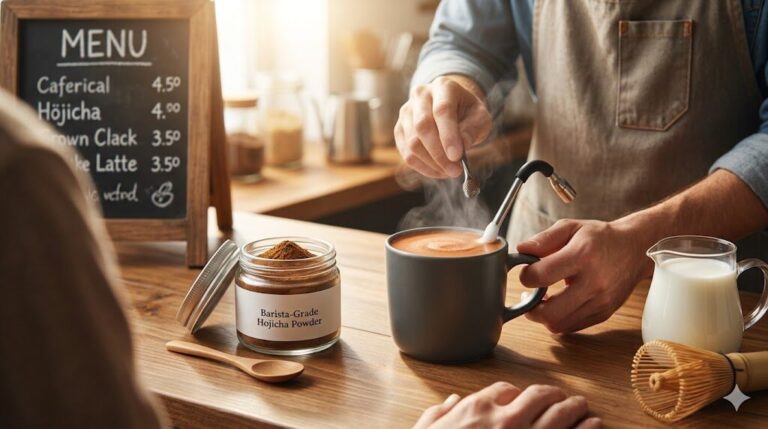
Hojicha brews at near-boiling water (90–100°C) because the roasting has eliminated the temperature-sensitive compounds that require lower temperatures in other teas. It works as hot tea, as a latte (hojicha latte is widely popular in Japan and internationally), and as an ingredient in ice cream, chocolate, and baked goods. The low caffeine makes it appropriate from afternoon through bedtime.
Understanding the Shade vs. Sun Difference
The most important factor in Japanese green tea flavor is shade management. This diagram shows how the spectrum works:
| Gyokuro | Matcha/Tencha | Kabusecha | Sencha | Bancha/Hojicha | |
|---|---|---|---|---|---|
| Shade days | 20–30 | 20–30 | 7–14 | 0 | 0 |
| L-theanine | ★★★★★ | ★★★★★ | ★★★★ | ★★★ | ★★ |
| Catechins | ★★ | ★★ | ★★★ | ★★★★ | ★★★★ |
| Chlorophyll | ★★★★★ | ★★★★★ | ★★★★ | ★★★ | ★★ |
| Caffeine | ★★★★ | ★★★★★ | ★★★★ | ★★★ | ★★ |
| Sweetness/umami | ★★★★★ | ★★★★★ | ★★★★ | ★★★ | ★★ |
| Astringency | ★ | ★ | ★★ | ★★★ | ★★ |
| Price | ★★★★★ | ★★★★★ | ★★★★ | ★★★ | ★ |
Brewing Temperature Reference
Water temperature is the most important variable in green tea brewing. The same tea brewed at different temperatures produces meaningfully different cups:
| Tea | Temperature | Effect of Getting It Right | Effect of Brewing Too Hot |
|---|---|---|---|
| Gyokuro | 50–60°C (122–140°F) | Maximum umami, no bitterness | Harsh, bitter, completely different tea |
| Kabusecha | 65–70°C (149–158°F) | Sweet, ooika aroma prominent | More astringent, loses covered aroma |
| Sencha / Shincha | 70–80°C (158–176°F) | Balanced grass and sweetness | Bitter, astringent, loses brightness |
| Fukamushi Sencha | 75–80°C (167–176°F) | Round, rich, full-bodied | Slightly harsh, loses roundness |
| Kukicha | 80–90°C (176–194°F) | Sweet, nutty, light | Slightly more astringent, manageable |
| Genmaicha | 85–90°C (185–194°F) | Full nutty-grassy balance | Forgiving; near-boiling still works |
| Bancha | 85–95°C (185–203°F) | Earthy, mild, mineral | Very forgiving; boiling still drinkable |
| Hojicha | 90–100°C (194–212°F) | Full roasted aroma released | No problem; roasted teas need heat |
Choosing the Right Tea for the Moment
- Morning focus work: Gyokuro or kabusecha — highest L-theanine for calm alertness without jitters
- Everyday morning: Sencha or shincha — bright, energizing, appropriate caffeine
- With breakfast or lunch: Genmaicha or bancha — works with food, doesn't overpower
- Afternoon: Sencha (if you can handle caffeine), bancha or kukicha (if lower caffeine preferred)
- With dinner: Bancha or hojicha — mild enough not to compete with food, low caffeine
- Evening: Hojicha or kyobancha — very low caffeine, satisfying warmth
- For children: Hojicha, kukicha, or genmaicha — low caffeine, approachable flavor
- Tea ceremony or special occasion: Matcha (ceremonial grade) or gyokuro
- Baking and cooking: Matcha (culinary grade), hojicha powder
- Cold brew: Sencha, bancha, or hojicha cold-brewed are all excellent; sencha cold brew is particularly clean and refreshing
Frequently Asked Questions
What is the most popular Japanese green tea?
Sencha is Japan's most popular green tea, accounting for approximately 35% of all Japanese tea production and consumption. Within sencha, the most common commercial variety uses second-flush material processed as fukamushi (deep-steamed) sencha — the style in most supermarket green tea bags in Japan. First-flush sencha from named regions is the most consumed premium category.
What's the difference between gyokuro and matcha?
The key difference is preparation method: gyokuro is brewed as whole leaves steeped in water and then removed, while matcha is ground into powder and consumed entirely — leaf and all. Both are shade-grown with high L-theanine content, but matcha therefore delivers more total caffeine, L-theanine, and chlorophyll per serving since you consume the whole leaf. Gyokuro is brewed at 50–60°C; matcha at 75–80°C. Both are expensive relative to unshaded teas, but from different producing regions (Yame/Uji for gyokuro; Uji/Nishio for matcha).
Why is matcha expensive?
Matcha is expensive because it requires labor-intensive shade growing, selective harvesting of only the most tender leaves, multi-stage tencha processing (steaming, de-stemming, de-veining), and slow stone-milling that produces only 30–40g of powder per hour. Each stage adds cost: shade structure installation and management; the tencha processing stage before grinding; and the stone-milling process itself, which generates heat that must be managed to preserve freshness. High-quality stone-milled ceremonial matcha from certified Uji farms represents one of the highest labor inputs per gram of any tea type.
Is hojicha and genmaicha the same thing?
No. Hojicha is roasted green tea — the tea leaves themselves are roasted at high temperature, turning brown and producing a nutty, caramelized flavor. Genmaicha is a blend of green tea (usually bancha or sencha) with roasted brown rice — the tea leaves remain green; it's the rice that's roasted. Both are low-caffeine and nutty in character, which causes the confusion, but they're structurally different products with different flavor profiles.
What Japanese green tea is lowest in caffeine?
Kyobancha is the lowest-caffeine Japanese green tea — Kyoto's heavily roasted late-harvest bancha has caffeine levels so close to zero it's commonly served to children and recommended for evening consumption. Hojicha is next at 7–15 mg per cup. Kukicha (twig tea) contains 10–25 mg per cup depending on source material. For unroasted teas, aki bancha (autumn harvest bancha) has the lowest caffeine among leaf teas.
What does the Japanese tea ceremony use?
The Japanese tea ceremony (chado or sado) uses matcha exclusively — no other tea type is used in formal chado practice. Specifically, it uses ceremonial-grade thin matcha (usucha) or thick matcha (koicha) depending on the formality and time of the ceremony. Koicha uses more powder per bowl (about 3–4 teaspoons) and has a paste-like consistency; multiple guests share from a single bowl. Usucha uses 1–2 teaspoons and produces a lighter, frothier tea that each guest receives individually. The choice of matcha for the ceremony is historically linked to Zen Buddhism and the specific mindfulness practice that chado is designed to cultivate.