How to Use Nori in Japanese Cooking Beyond Sushi
Most people discover nori through sushi. But here in Japan, nori is an everyday kitchen staple that shows up in dozens of applications that have nothing to do with rolls or nigiri. Once you know these, you’ll understand why it's worth learning what is nori beyond just its role in sushi.
I keep multiple grades of nori at home — premium sheets for eating plain, mid-grade for cooking, and nori flakes for finishing. Here's how I actually use it.
Understanding Nori Grades
Before diving into recipes, it helps to know that nori quality varies enormously:
- Premium (sushi-grade): Deep green-black, crisp, intensely flavored, melts on the tongue. Expensive but worth it for dishes where nori is the star.
- Mid-grade: Good color and flavor, works well for most cooking applications.
- Seasoned nori (ajitsuke nori): Pre-seasoned with soy sauce, sugar, and mirin. Great as a snack, less versatile for cooking.
- Nori flakes/kizami nori: Shredded nori for garnishing and finishing.
For everyday cooking, mid-grade works well and won't break the bank. See our nori selection for quality options.
Onigiri (Rice Balls)
This is probably nori's second most famous use and the one that's most embedded in daily Japanese life. A sheet of nori wrapped around a rice ball seals in the filling, adds flavor, makes the rice easier to handle, and provides a satisfying textural contrast.
For onigiri, you want crispy nori — soft nori makes the whole thing soggy. Traditionally in Japan, nori is kept separate from the rice and applied just before eating (the plastic separator system in convenience store onigiri exists for this reason). At home, just wrap right before serving or eating.
Nori on Top of Rice (Nori Gohan)
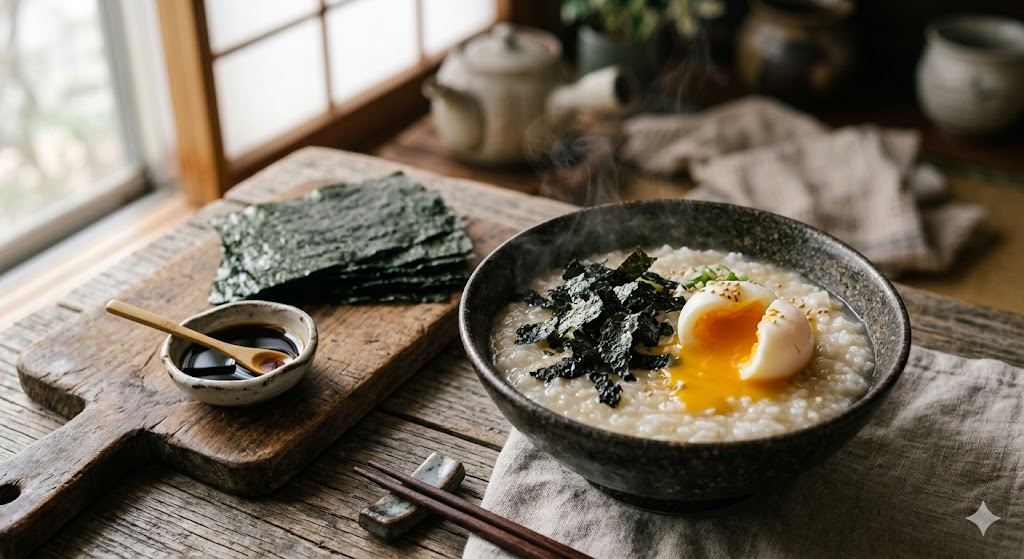
One of the simplest and most satisfying Japanese breakfast foods is plain rice with torn nori sheets and a little soy sauce or sesame oil. The nori wilts slightly against hot rice and adds a deep oceanic umami that turns plain rice into something genuinely satisfying. If you have good nori and good rice, you don't need much else.
Furikake (Rice Seasoning)
Many furikake blends contain nori as a primary ingredient alongside sesame seeds, dried fish, salt, and sugar. You can make a simple homemade furikake by toasting nori sheets, crumbling them finely, and mixing with toasted sesame seeds and a pinch of salt. This stores well in a jar and elevates everything it touches — rice, vegetables, eggs, noodles.
Miso Soup and Clear Soups
Small strips of nori added to miso soup at the end of cooking (never boil nori in soup — it turns slimy and loses flavor) add a gentle umami depth and a beautiful visual element. The nori softens just slightly in the hot liquid, releasing flavor while retaining some texture. Wakame is more common in miso soup, but nori is an excellent alternative or addition.
Nori Pasta (Wafu Style)
Japanese-Italian fusion dishes have been popular in Japan for decades. One of my favorites is a simple pasta with nori, butter, and soy sauce. Cook your pasta, melt butter in the pan with a splash of soy sauce, toss in torn nori sheets, and finish with a few drops of sesame oil. The nori wilts and coats the noodles with a savory, oceanic flavor that's deeply satisfying and quick to make.
Nori Chips and Snacks
Take a sheet of nori, brush lightly with sesame oil, sprinkle with flaky salt, and toast in a 300°F (150°C) oven for 3–5 minutes. The result is a crispy, snackable chip that's packed with flavor and minerals. This works as a standalone snack, a garnish for salads, or a topping for soup.
Cold Tofu Topping (Hiyayakko)
Hiyayakko is chilled silken tofu topped with various garnishes — green onion, ginger, bonito flakes, and nori. Shredded nori (kizami nori) works beautifully here, adding a textural element and depth of flavor to the mild tofu. It's one of Japan's classic summer dishes: cool, light, and satisfying.
Soba and Udon Noodles
Nori is a standard garnish for cold soba (zaru soba) — the dark, thin strips sitting on top of buckwheat noodles are as much about flavor as presentation. For udon and ramen, thin strips of nori are often added as a finishing garnish. The seaweed adds umami and a visual contrast that feels deliberately Japanese.
Tamagoyaki (Japanese Rolled Omelette) Filling
Some versions of tamagoyaki include a strip of nori rolled inside the omelette, adding a visual swirl when sliced and a subtle oceanic note to the egg. It's a beautiful detail that takes no extra effort and significantly elevates the presentation.
Nutritional Value of Nori
Beyond its culinary versatility, nori is genuinely nutritious. It contains:
- Significant amounts of iodine (important for thyroid function)
- Vitamin B12 (one of the few plant-source B12 foods)
- Iron and magnesium
- Complete protein relative to its caloric content
- Umami-active amino acids including glutamic acid
Frequently Asked Questions
What can I make with leftover nori sheets?
Crumble them into rice, use as soup garnish, make quick nori chips, mix into homemade furikake, or add torn strips to pasta or noodles. Nori stays fresh for weeks in an airtight container with a desiccant — it doesn't really go “bad” quickly, just loses crispness.
Does nori lose flavor when cooked?
High heat and long cooking degrade nori's flavor and texture significantly. For cooked dishes, add nori at the very end of cooking or use it as a finishing garnish. Cold or room-temperature applications preserve nori's full flavor best.
What's the difference between nori and wakame?
Both are sea vegetables but quite different. Nori is dried and made into thin sheets from processed red algae. Wakame is a brown seaweed typically sold dried in loose strips, which rehydrates in water and is used primarily in soups and salads. They have different textures, flavors, and culinary applications.
How do you keep nori crispy after opening?
Store in an airtight container or zip bag with a food-grade desiccant packet immediately after opening. Humidity is the enemy of crispy nori. If nori has gone soft, you can restore some crispness by briefly holding sheets over low heat or running them through a dry pan for a few seconds.
Can you eat nori raw?
Yes. Sheet nori is already processed and ready to eat as-is. It's used raw in onigiri, as a wrap, on rice, and as a garnish. The sheets are dried and sometimes lightly toasted during production, so no additional cooking is needed for consumption.