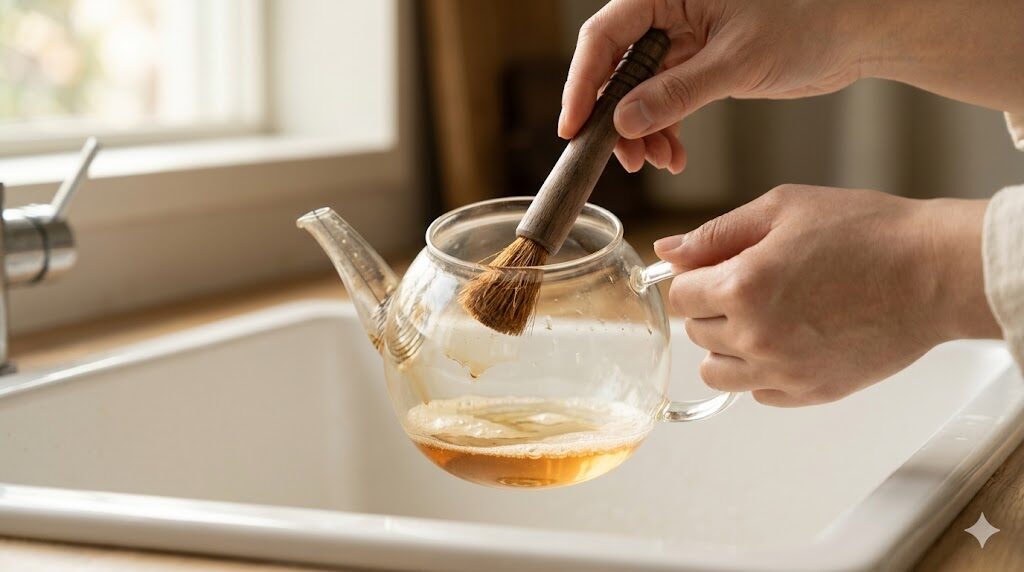
How to Clean Hario Glass Teapot: Remove Stains Without Scratching
Even the best borosilicate glass teapot develops tannin stains over weeks of daily use. The brown-orange buildup isn't dangerous, but it affects the visual clarity that makes glass teapots worth owning in the first place — and over time, it can impart a faint off-flavor to your brew. This guide covers every effective cleaning method for Hario glass teapots, from the simplest daily rinse to tackling deep-set stains.
Understanding Tannin Stains in Glass Teapots
Tea tannins are polyphenolic compounds that bind to surfaces over time. In glass teapots, they create a brown or amber discoloration on the interior walls, lid rim, and stainless mesh filter. Unlike mineral scale (which comes from hard water), tannin stains are organic and dissolve easily with the right approach.
Importantly: tannin stains don't damage the glass itself. Hario's borosilicate is chemically inert and won't absorb them. You're cleaning surface deposits, not embedded staining.
Daily Cleaning: The 30-Second Rinse
The best strategy is preventing buildup in the first place. After each brewing session:
- Remove the mesh filter and tap out spent leaves into compost
- Rinse the filter under warm running water, rubbing the mesh gently with your thumb
- Rinse the glass body with warm water and swirl
- Leave the lid slightly ajar and let air dry
This 30-second routine prevents significant tannin accumulation and means you rarely need deeper cleaning.
Weekly Cleaning: White Vinegar Method (Best for Light Stains)
White vinegar is mildly acidic and dissolves tannin deposits efficiently without any abrasive action:
- Mix equal parts white vinegar and cold water
- Fill the teapot to the brim with the mixture
- Let sit for 20–30 minutes (no heating required)
- Pour out and rinse three times with fresh water
- For the filter: submerge in the same vinegar solution for 20 minutes
After this treatment, the glass interior should be noticeably clearer. Rinse thoroughly — residual vinegar will affect your next brew if you don't.
Deep Cleaning: Baking Soda Method (Best for Heavy Buildup)
For stains that have built up over months without treatment:
- Add 2 teaspoons of baking soda to the teapot
- Fill with hot water (not boiling — use kettle water that has sat for 1 minute)
- Stir to dissolve the baking soda
- Let sit for 1–2 hours
- Pour out and use a soft bottle brush to gently scrub any remaining deposits
- Rinse thoroughly
Baking soda is slightly alkaline and particularly good at breaking up the organic compounds in tannin stains. It's also completely safe for borosilicate glass.
What to Avoid When Cleaning Hario Glass
| Cleaning Agent | Safe? | Reason |
|---|---|---|
| White vinegar | Yes | Mild acid, safe for glass and stainless |
| Baking soda | Yes | Gentle abrasive/alkali, rinses clean |
| Dish soap (mild) | Yes | For regular daily wash |
| Steel wool / abrasive pads | No | Scratches borosilicate glass surface |
| Bleach | Avoid | Can damage silicone gaskets and stainless mesh |
| Abrasive powder cleaners | No | Micro-scratches accumulate and cloud glass |
| Commercial denture tablets | Yes (effective) | Effervescent oxygen bleach, very safe for glass |
Cleaning the Stainless Mesh Filter
The mesh filter is where tannins concentrate most heavily, since it's in direct contact with tea leaves for every steep. Clean it separately with these methods:
- Daily: Rinse under warm running water while rubbing the mesh surface
- Weekly: Soak in white vinegar solution for 20 minutes
- Monthly: Use a small soft-bristle brush (an old toothbrush works) to clean the mesh holes from both sides
If the mesh filter has developed permanent discoloration that doesn't clean off, Hario sells replacement filters separately. This is a $10–$15 fix rather than replacing the whole pot.
Removing Mineral Scale (Hard Water Deposits)
If your tap water is hard (high in calcium and magnesium), you'll develop white mineral scale on the interior glass surface in addition to tannin stains. The white vinegar method is equally effective for mineral scale. For severe cases:
- Fill teapot with undiluted white vinegar
- Let sit 30–60 minutes
- Gently scrub with a soft bottle brush
- Rinse five times with fresh water
Switching to filtered water for brewing prevents mineral scale buildup entirely and also improves your tea's taste noticeably.
Dishwasher Cleaning: Yes or No?
The borosilicate glass body of your Hario teapot is dishwasher safe. However:
- Place it on the top rack only to minimize thermal and mechanical stress
- Remove the stainless filter before running the dishwasher — the high-heat drying cycle can discolor the filter over time
- The silicone lid gasket is dishwasher safe but lasts longer with hand washing
For daily use, a quick handwash takes 60 seconds and preserves the teapot better than repeat dishwasher cycles.
Frequently Asked Questions
How often should I deep clean my Hario glass teapot?
With daily rinsing, a deep clean once every 3–4 weeks is usually sufficient. If you notice visual cloudiness or your tea tastes slightly off, that's a signal to clean more thoroughly.
Can I use lemon juice instead of white vinegar?
Yes — lemon juice is similarly acidic and works for tannin removal. It's less concentrated than vinegar, so you may need a longer soak time (45–60 minutes). The citric acid in lemon juice is gentler on silicone gaskets than strong vinegar solutions.
My Hario teapot glass looks cloudy but I just cleaned it — why?
If vinegar-cleaned glass still looks cloudy, you may have mineral scale rather than tannin stains — try a longer undiluted vinegar soak. Alternatively, if the cloudiness is in the glass wall itself (not the surface), the borosilicate may have micro-scratches from previous abrasive cleaning, which unfortunately cannot be reversed.
How do I get tea stains out of the silicone gasket on the lid?
Soak the lid (with gasket) in white vinegar for 30 minutes. Use a cotton swab to clean around the gasket edge. If the gasket has turned permanently brown after years of use, Hario sells replacement lids.
Is it safe to use denture cleaning tablets in a Hario teapot?
Yes — effervescent denture tablets (like Polident or similar) are a popular and effective cleaning method. Drop one tablet into the water-filled teapot, let it fizz for 20–30 minutes, then rinse thoroughly. They work via oxygen bleaching action and are completely safe for borosilicate glass, silicone, and stainless steel.