Hario Water Kettle for Tea: Temperature Control Guide
Water temperature is the single most impactful variable in Japanese green tea brewing. Get it wrong by 10°C and you'll extract too many bitter compounds — or too few flavor compounds — from the same leaves. A good Hario kettle makes temperature control effortless. This guide covers every Hario kettle model, explains which temperature each Japanese tea needs, and shows you how to hit those targets consistently.
Why Temperature Matters More for Japanese Tea Than Other Teas
Japanese green teas contain a mix of desirable compounds (L-theanine for umami sweetness, certain catechins for body) and less desirable compounds (other catechins that cause bitterness). High water temperatures extract the bitter compounds aggressively; lower temperatures favor the amino acids that produce umami and sweetness.
Black tea and most roasted teas (including hojicha) are less temperature-sensitive — they can handle boiling water. But for kabusecha, bancha, and any shaded tea, temperature precision makes a dramatic flavor difference.
Target Temperatures for Japanese Teas
| Tea Type | Ideal Temperature | Effect of Too Hot | Forgiveness Level |
|---|---|---|---|
| Hojicha | 90–95°C / 194–203°F | None — can handle near-boiling | Very high |
| Genmaicha | 85–90°C / 185–194°F | Slightly more astringent | High |
| Bancha | 80–90°C / 176–194°F | Minor bitterness increase | High |
| Kabusecha | 65–75°C / 149–167°F | Significant bitterness | Low |
| Sencha | 70–80°C / 158–176°F | Bitterness dominates | Low |
| Gyokuro | 50–60°C / 122–140°F | Completely overwhelms umami | Very low |
Hario Kettle Models for Tea
Hario Buono Drip Kettle (Stovetop)
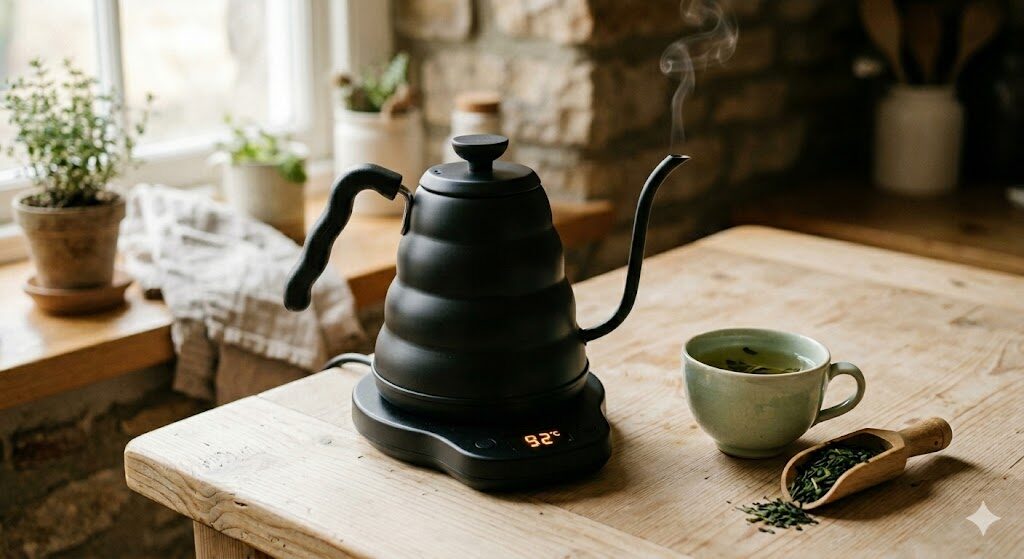
The iconic gooseneck kettle that made Hario famous in pour-over coffee circles. The long, narrow gooseneck spout gives exceptional flow control — you can pour a steady stream or slow drips depending on how you tilt the kettle. Stainless steel body. Designed for stovetop heating.
For tea, the Buono is excellent for anyone who uses a thermometer or has a calibrated sense of how long to wait after boiling before pouring. The trade-off: no built-in temperature control. You heat to boiling and cool as needed.
Hario Smooth Electric Kettle
The Smooth is Hario's electric kettle entry — faster heating than stovetop, auto-shutoff at boil, and a cleaner look. Still no variable temperature settings, but the electric format is more convenient for daily brewing.
Best for: hojicha, genmaicha, bancha brewers who don't need precision temperature control below 90°C.
Variable Temperature Electric Kettles (Hario and Hario-Recommended)
If you brew kabusecha, sencha, or gyokuro regularly, a variable temperature kettle is a genuine upgrade. You set 70°C, 75°C, or 60°C and the kettle hits it precisely. No waiting, no thermometer, no guessing.
Hario's own variable temperature models and compatible third-party options (Brewista, Fellow Stagg EKG) are worth the investment if you brew delicate teas daily.
Manual Temperature Control Without a Variable Kettle
If you have a standard kettle, use these techniques to reach the right temperature:
- To get to ~90°C: Allow boiled water to sit in the kettle for 2–3 minutes with the lid off, or pour into the teapot immediately from boil (the transfer drops ~5°C)
- To get to ~80°C: Pour boiling water into a yuzamashi (Hario cooling vessel) and let sit 3–4 minutes
- To get to ~70°C: Boil, pour into yuzamashi, wait 5–7 minutes, then pour into teapot
- To get to ~60°C: Double-transfer — boil → yuzamashi → second yuzamashi, each transfer drops ~8–10°C
A $10 instant-read thermometer eliminates all the guesswork and pays for itself quickly in better-tasting tea.
The Gooseneck Advantage for Tea Brewing
The Hario Buono's gooseneck spout isn't just an aesthetic choice — it gives you precise control over where and how fast water enters the teapot. For pour-over-style tea brewing (including V60 tea), this control matters significantly. For traditional teapot brewing where you pour a steady stream into the pot, a regular kettle works fine.
If you brew both tea and pour-over coffee, the Hario Buono gooseneck handles both perfectly.
Kettle Material: Stainless vs Glass
Hario makes both stainless and glass kettles. For tea brewing:
- Stainless (Buono): More durable, handles daily stovetop use, no visibility
- Glass (Hario Mizudashi cold brew pot): Visual, but glass kettles are generally for serving/cold use, not heating
For a heating kettle, stainless is the practical choice. Reserve the glass for serving and cold brew vessels.
Frequently Asked Questions
What temperature should I heat water for hojicha?
Hojicha is one of the most forgiving Japanese teas for water temperature — 90–95°C works perfectly. If your kettle just boiled, let it sit for 1 minute before pouring. Hojicha can even handle boiling water if you keep the steep short (30–45 seconds).
Can I use a Hario kettle on an induction stove?
The stainless Hario Buono kettle is induction-compatible. Check the specific model — the stainless versions work on induction, but older models may not have an induction-compatible base. The Hario electric kettles bypass the stove question entirely.
How do I cool boiling water to 70°C for kabusecha?
The fastest method: pour boiling water from your kettle into a Hario yuzamashi (glass cooling vessel), wait 5–7 minutes, then transfer to your teapot. Each pour-transfer drops the temperature approximately 8–10°C and the open vessel cools further from air exposure. A $10 thermometer makes this precise.
Does the Hario Buono come in different sizes?
Yes — the Hario Buono is available in 800ml and 1.0L sizes. The 800ml is better for tea (it fills a 700ml teapot once, which is the right ratio), while the 1.0L suits high-volume coffee brewing or large tea sessions.
Is a variable temperature kettle worth buying for Japanese tea?
If you drink kabusecha, sencha, or gyokuro regularly, yes — a variable temperature kettle is a meaningful quality-of-life upgrade. For hojicha, genmaicha, and bancha drinkers, a standard kettle plus a 60-second wait is sufficient.