What Is Japanese Curry? Flavor, Origins, and How It Differs
Japanese curry is Japan's most popular home-cooked meal — more than sushi, more than ramen, more than any of the dishes that define Japanese food in Western popular culture. It's eaten by school children in cafeterias, sold in train station convenience stores at midnight, and the subject of fierce regional loyalty across every prefecture in Japan. And it looks almost nothing like what most of the world thinks of when they hear the word “curry.”
This guide explains what Japanese curry actually is, how it arrived in Japan from an unexpected direction, why it diverged so dramatically from South Asian curry traditions, and how to understand the full range of Japanese curry formats — from the ubiquitous kare raisu to katsu curry, curry udon, and the regional variations that locals argue about passionately.
What Is Japanese Curry? The Quick Answer
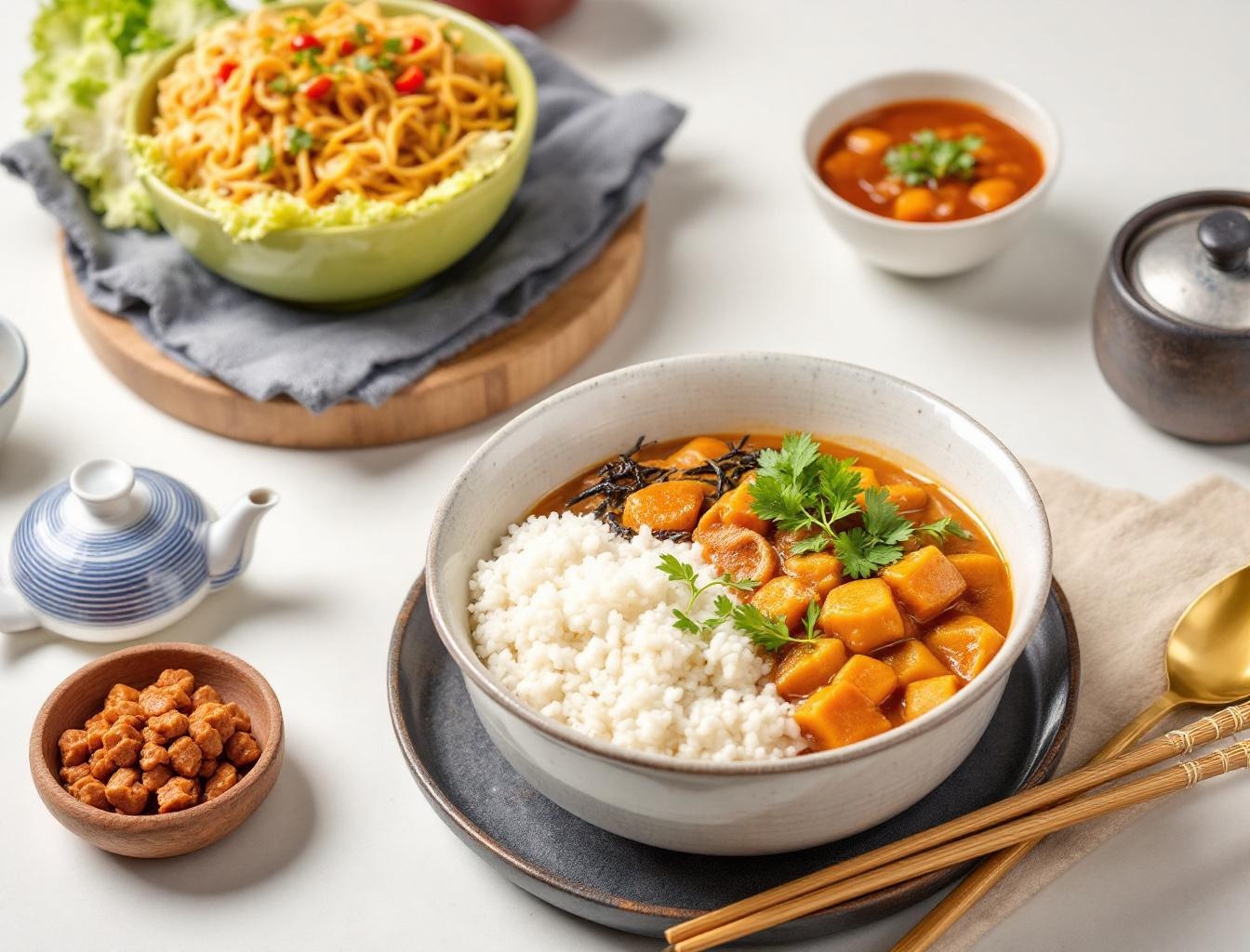
Japanese curry (karē / カレー) is a thick, mildly spiced stew served over rice, typically containing meat (beef, pork, or chicken), potatoes, carrots, and onions in a glossy brown sauce with a complex, mellow flavor profile. It's sweeter, thicker, and less spicy than Indian curry, with more umami depth from the inclusion of ingredients like grated apple, honey, or soy sauce in both commercial roux and home recipes.
The sauce achieves its characteristic thick, silky texture from a roux — the same fat-and-flour mixture that forms French sauces — which differentiates it from the thinner, tomato or yogurt-based sauces of South Asian curries. Commercial curry roux sold in block form (the iconic S&B Golden Curry and House Vermont Curry) is one of the best-selling food products in Japan, used in roughly 80% of Japanese homes.
The result is a dish that is simultaneously exotic-feeling (it has a spice blend) and deeply comforting — predictable in the best way. It's the Japanese definition of home cooking.
How Curry Came to Japan: The British Navy Route
Curry reached Japan via a route most people don't expect: the British Royal Navy.
During the Meiji Restoration period (1868–1912), Japan was undergoing rapid westernization, and the Japanese military was actively studying and adopting British military practices. The Imperial Japanese Navy modeled itself significantly on the British Royal Navy, including adopting elements of British naval food service.
British naval curry — which itself was a simplified, thickened adaptation of Indian curry that the British encountered during colonial rule — was part of the weekly meal rotation on Royal Navy ships. Japanese naval officers encountered it, adapted it for Japanese tastes, and brought it back to Japan.
The timing matters: curry arrived in Japan in the 1870s and 1880s, classified as yoshoku (Western food), not as Asian food. This categorization as a Western dish rather than a foreign Asian dish gave it a particular status and freed Japanese cooks to modify it without the pressure to maintain authenticity to an original tradition they already respected. They made it their own without apology.
By the early 20th century, curry rice was served in school cafeterias and military mess halls across Japan. S&B Foods introduced the first commercially produced curry powder in Japan in 1923, and by the 1950s, curry roux blocks had transformed it from a restaurant and institutional dish into an everyday home-cooked meal.
Today, the Japanese consume an estimated 740 million curry dishes per year — approximately six servings per person annually, though regular curry eaters skew that number much higher. It's formally recognized as a Japanese “national food” in popular culture, even though it's been in Japan for fewer than 200 years.
Japanese Curry vs. Indian Curry: The Key Differences
The comparison is inevitable but somewhat misleading — Indian curry itself encompasses an enormous range of regional dishes with entirely different techniques, spice profiles, and textures. But for the purposes of contrast, comparing Japanese curry to the “Indian curry” that most Westerners know (the restaurant-style North Indian dishes like chicken tikka masala or lamb vindaloo) is useful.
| Characteristic | Japanese Curry | Indian Restaurant Curry (North Indian style) |
|---|---|---|
| Sauce texture | Thick, glossy, roux-based | Thinner to medium, tomato or cream based |
| Spice level | Mild to medium (with optional heat versions) | Mild to very hot depending on dish |
| Sweetness | Noticeably sweet — apple, honey, or caramelized onion often included | Savory-dominant; sweetness uncommon |
| Umami | High — from soy sauce, dashi elements, or MSG | Lower, or from onion/tomato base |
| Spice blend | Turmeric, coriander, cumin, cardamom, cinnamon, nutmeg, and garam masala-style blend in mild ratios | Varies widely; often heavier on chili, fenugreek, and whole spices |
| Vegetables | Potatoes, carrots, onions (standard); peas or mushrooms as additions | Varies by dish; potatoes in some, spinach in others, no standard set |
| Rice | Short-grain Japanese rice, served alongside (not mixed in) | Basmati or long-grain rice, served separately or mixed |
| Preparation method | Roux dissolved in stock, then simmered with pre-cooked vegetables and meat | Typically starts with tarka (tempering whole spices in oil), then onion paste |
| Finishing | Often rested overnight — reheated curry is considered superior | Served freshly made; some dishes improve with resting |
The most distinctive quality of Japanese curry, to anyone encountering it for the first time, is the sweetness and the thick, almost gravy-like texture. Both are features, not bugs. The sweetness comes from a tradition of adding grated apple, banana, or honey to home curry recipes — a technique borrowed from the British practice of adding chutney to curry. Japanese curry without sweetness would taste flat to anyone accustomed to it.
Japanese Curry vs. Thai and Other Asian Curries
Thai curry, Sri Lankan curry, and Japanese curry occupy entirely different flavor universes despite sharing the “curry” label:
Thai curry is coconut milk-based, relies heavily on fresh aromatics (lemongrass, galangal, kaffir lime leaves), and gets heat from fresh chilies ground into paste. The flavor is bright, herbaceous, and aromatic in ways Japanese curry is not. The two dishes have essentially no flavor overlap.
Sri Lankan curry uses toasted spices, often dark-roasted curry powder, and coconut milk, producing a much more complex and assertive spice profile than Japanese curry. Sri Lankan curry is among the most intensely spiced curry traditions in the world.
The shared “curry” label across these traditions reflects the British Empire's habit of calling any spiced, sauce-based dish from Asia “curry” — regardless of the significant differences between them. Japanese curry inherits the label from its British Navy origin rather than from any direct connection to South Asian or Southeast Asian curry traditions.
The Spice Blend: What's Actually in Japanese Curry Powder
S&B introduced commercial Japanese curry powder to Japan in 1923, and their formula — which remains proprietary — set the template that all Japanese curry powder has largely followed since. The blend is an adaptation of British “Madras curry powder,” itself an 18th and 19th century British approximation of South Indian spice blends.
Japanese curry powder typically contains:
- Turmeric — the dominant spice, providing the yellow color and earthy base flavor
- Coriander — bright, citrus-forward, the most abundant spice by volume in most blends
- Cumin — earthy, warming, adds depth without heat
- Fenugreek — slightly bitter, maple-like undertone; more prominent in Japanese blends than Indian blends
- Cardamom — sweet, floral, adds a perfumed quality that distinguishes Japanese curry from British-style Madras
- Cinnamon — adds sweetness and warmth, used more liberally than in most Indian blends
- Nutmeg and mace — distinctive in Japanese curry, particularly in premium blends; adds a slightly woody sweetness
- Black pepper — for background heat
- Chili pepper — at lower levels than Indian curry powder in standard blends; higher in “hot” variants
- Cloves — small amounts, for aromatic depth
- Star anise — appears in some commercial blends; adds faint licorice note
The ratio and roasting level distinguish Japanese curry powder from other curry powder styles more than the ingredient list itself. Japanese curry powder uses lower heat levels, produces a milder, more rounded spice profile, and leans into sweet spices (cardamom, cinnamon, nutmeg) more than hot spices. This is why you can add Japanese curry powder to dishes without overwhelming them — it's designed to complement rather than dominate.
Curry Roux vs. Curry Powder: Understanding the Two Forms
Japanese curry exists in two commercial forms: curry powder and curry roux (roux blocks). These are not interchangeable, and understanding the difference is essential.
Curry Powder
S&B curry powder (the tin with the red, white, and green label) is the standard Japanese curry powder, sold in Japan and internationally. It is straight spice blend — no thickener, no fat, no salt. Use it the way you'd use any spice blend: to season dishes during cooking, add to homemade roux, or incorporate into non-curry applications like deviled eggs, spiced nuts, or vinaigrettes.
Japanese curry powder is distinct from Madras curry powder (hotter, less sweet) and from Indian curry powder blends, which vary enormously by region and brand. S&B is the benchmark for Japanese flavor — start there before experimenting with substitutes.
Curry Roux Blocks
Curry roux blocks are Japan's genuinely innovative contribution to curry history. They combine curry spices, fat (typically vegetable oil or beef tallow historically, now usually palm oil), flour (for thickening), salt, and flavorings (apple powder, honey, MSG, or other umami enhancers) into a solid bar that's broken into pieces and dissolved directly into the cooking liquid.
The convenience is real: add hot water or broth plus vegetables and meat, break in the roux, stir, and you have curry in under 30 minutes. No measuring spices, no building a roux from scratch, no wondering whether you've balanced the flavors correctly. This is why curry roux blocks became a staple of Japanese home cooking and school lunch programs — they removed all the technical barriers.
S&B Golden Curry is the dominant brand globally and probably the most exported Japanese food product after soy sauce and instant ramen. It comes in mild, medium, and hot levels; the mild version is genuinely mild and appropriate for young children, while the hot version adds more chili but remains tame by global curry standards.
House Vermont Curry is S&B's main domestic competitor. Its distinctive feature is the addition of apple and honey to the roux formula, making it noticeably sweeter than Golden Curry. Vermont Curry was named for Vermont state's reputation as an apple- and maple-producing region — a piece of 1960s Japanese marketing mythology that has nothing to do with actual Vermont cuisine, but stuck.
House Java Curry is a darker, richer, more assertive option from the same manufacturer — positioned as the “adult” curry choice, with a more complex spice profile and less sweetness than Vermont Curry.
Japanese Curry Formats: Beyond Kare Raisu
Japanese curry is served in at least six distinct formats — kare raisu, katsu curry, curry udon, curry pan, dry curry, and soup curry — each using the same core curry flavor in a different dish. The basic kare raisu (curry rice) is just the starting point; the sections below cover each format and how it is served.
Kare Raisu (カレーライス) — The Original
Short-grain Japanese rice on the right half of an oval plate, thick curry sauce spooned over the left half, with the sauce just touching the rice. Often served with fukujinzuke — a red pickled vegetable relish made from radish, lotus root, and other vegetables — as a palate-cleansing condiment. The rice and curry are eaten by mixing them together bite by bite, never pre-mixed.
Katsu Curry (カツカレー) — Britain's Favorite
Tonkatsu (breaded, deep-fried pork cutlet) placed on top of kare raisu. This combination, exported to the UK by Japanese restaurants in the 1980s and 1990s, became enormously popular in Britain — the katsu curry at Wagamama is one of the most-ordered restaurant dishes in the UK. The contrast between the crispy, juicy cutlet and the rich curry sauce is the draw.
Chicken katsu curry (using fried chicken cutlet) is the more common version in British Japanese restaurants; pork tonkatsu is the more traditional Japanese version. Both work equally well.
Curry Udon (カレーうどん) — The Noodle Version
Thick wheat udon noodles in a curry-flavored broth — lighter and more soup-like than kare raisu but using the same core flavor profile. The broth is typically a dashi base seasoned with curry powder and soy sauce, distinct from the roux-thickened sauce of kare raisu. Curry udon is a specialty of certain Osaka and Nagoya restaurants, and it's one of the most common lunch options in Japanese udon shops.
The practical warning for newcomers: curry udon will splash. The combination of slurping noodles and brown curry broth is notorious for staining light-colored clothing. Japanese curry udon shops keep paper bibs available for a reason.
Curry Pan (カレーパン) — The Fried Bread Version
A Japanese bakery staple: bread dough filled with thickened curry, shaped into an oval, coated with breadcrumbs, and deep-fried. The result is a hand-held curry bread with a crispy exterior and savory curry filling, eaten hot as a snack. Curry pan appears in virtually every Japanese bakery and convenience store, and the quality varies enormously — from mass-produced convenience store versions with thin filling to artisanal bakery versions with complex, hand-made curry.
Dry Curry (ドライカレー) — The Rice Porridge Version
A completely different preparation: ground meat (usually beef or pork) cooked with onions, curry powder, and seasonings until nearly dry, then served mixed through rice rather than as a sauce on top. Dry curry is a popular Japanese home recipe and bento box filling because it travels well without the mess of sauce-based curry.
Soup Curry (スープカレー) — Hokkaido's Contribution
Originating in Sapporo, Hokkaido, soup curry is a thin, aromatic curry broth served with large, separately cooked ingredients (a whole chicken leg, roasted vegetables, boiled eggs) arranged alongside rather than cooked in the broth. The result looks more like a Southeast Asian curry soup than kare raisu. Diners eat it by spooning curry broth over separate bowls of rice, or dipping the ingredients into the soup.
Soup curry has remained largely a Hokkaido specialty, though it's spread to specialty restaurants in Tokyo and other cities. Its characteristic feature is the fragrant, complex broth — which typically contains more whole spices and aromatic vegetables than roux-based curry, producing a cleaner, lighter result.
Regional Curry Variations Across Japan
Several regions of Japan have their own distinctive curry styles — most notably Yokosuka Navy Curry, Kanazawa's dark curry, and Okinawa's curry made with local ingredients. Beyond the format variations, these regional identities are tied to local history and ingredients.
Yokosuka Navy Curry (横須賀海軍カレー)
Yokosuka, the base of the Japan Maritime Self-Defense Force, claims historical ownership of Japanese curry — this is the city where the Imperial Japanese Navy first standardized curry in its meal rotations. The “Navy Curry” served at Yokosuka restaurants attempts to recreate historical Meiji-era curry recipes, typically featuring beef and a milder, more straightforwardly spiced sauce than modern commercial curry. Friday is officially “curry day” in Yokosuka — a tradition the JMSDF maintains to this day, continuing the practice from the Imperial Navy era of using curry Friday as a weekly day-marker for sailors at sea.
Kanazawa Curry (金沢カレー)
Kanazawa curry is one of Japan's most distinctive regional curry styles, developed by local restaurant chains in Kanazawa, Ishikawa Prefecture. Its defining characteristics: very dark, thick sauce (almost black from long caramelization), served on a stainless steel plate or tray rather than a ceramic plate, always topped with shredded cabbage, and accompanied by a spoon rather than chopsticks. Chains like Go Go Curry and Champion Curry, both from Kanazawa, have expanded nationally and represent this style. Kanazawa curry is darker and more intense than standard kare raisu, with a richness that comes from the heavily reduced sauce.
Osaka Style
Osaka's curry culture leans toward kare udon and curry pan rather than a distinctive kare raisu variant. The city's food culture emphasizes kuidaore (eating until you drop), and curry is treated as one component of a larger street food ecosystem rather than as a distinct regional style in itself.
Okinawa Style
Okinawan curry incorporates local ingredients including goya (bitter melon), rafutee (Okinawan braised pork belly), and the island's naturally sweeter vegetables. The influence of Okinawa's unique culinary heritage — with its Chinese, Southeast Asian, and American military base food influences — produces a curry that tastes noticeably different from mainland Japanese versions.
Making Authentic Japanese Curry: Ingredients and Techniques
The keys to great Japanese curry are deeply caramelizing the onions, adding a “secret” ingredient or two for depth, and resting the curry before serving. Using commercial roux blocks is entirely legitimate — Japanese home cooks use them without apology, and the results can be excellent — but understanding what goes into Japanese curry beyond the roux block explains why some versions taste dramatically better than others.
The Onion Foundation
The most important single technique in Japanese curry is deeply caramelizing the onions. This step is skipped or rushed in most home kitchens, but it's what separates flat curry from genuinely complex curry. Onions should be cooked over medium heat, stirring frequently, for 30–45 minutes until they turn deep golden brown and reduce to a fraction of their original volume. This caramelization creates the sugars and Maillard reaction compounds that give Japanese curry its characteristic sweetness and depth.
Some Japanese curry recipes call for adding grated onion (which caramelizes faster) or a combination of diced and grated. Either works; the goal is maximum browning before adding other ingredients.
The Secret Additions
Japanese curry recipes — both restaurant versions and grandmotherly home recipes — typically include one or more “secret” additions that add complexity without being detectable as individual flavors:
- Grated apple or apple sauce — adds sweetness and slight tartness; the enzyme bromelain in fresh apple also tenderizes meat during long cooks
- Honey — rounds out the sweetness, adds floral undertone
- Soy sauce — adds umami and salt simultaneously; 1–2 tablespoons per batch
- Worcestershire sauce — common in Japanese home curry; adds fermented depth similar to tamarind in British-style curry
- Instant coffee or chocolate — surprising but effective; used in small amounts by experienced curry cooks to add bitterness that balances the sweetness and deepens color
- Mango chutney — the original British adaptation technique, still used in some Japanese recipes
The Rest Principle
Japanese curry is consistently better the next day. Overnight resting allows the starch from potatoes to dissolve slightly into the sauce, thickening it further; the spices integrate; the meat tenderizes. Japanese households routinely make large batches specifically to have leftovers. This is so well understood in Japan that many restaurants serve specifically “rested” curry — made the day before — as a selling point.
The one complication: potatoes can disintegrate into the sauce if left too long. Either remove them before refrigerating and add fresh potatoes when reheating, or accept a thicker, more integrated sauce where the potato has dissolved.
Japanese Curry and the S&B Brand
S&B Foods (エスビー食品) is the company most responsible for Japanese curry's current form. Founded in 1923 as “Spice and Herb” — hence S&B — the company introduced Japan's first commercial curry powder that year, and has been the dominant curry brand ever since.
S&B's product line now includes:
- S&B Curry Powder (the tin) — the classic Japanese curry spice blend, exported worldwide
- S&B Golden Curry (roux blocks) — mild, medium, and hot; Japan's best-selling curry product internationally
- S&B Premium Golden Curry — a higher-end roux with more complex spice blend and no artificial preservatives
- S&B CoCo Ichibanya branded products — in partnership with Japan's largest curry restaurant chain
CoCo Ichibanya (ココイチ) deserves mention as Japan's largest curry restaurant chain, with over 1,400 locations in Japan and outposts in China, Thailand, South Korea, and several other countries. Their model is unusual: customers choose their rice portion size, sauce portion, spice level (1 through 10, where level 10 requires a liability waiver and a very strong stomach), and add-on toppings (cheese, sausage, fried tofu, etc.) from a long menu. The result is a highly customizable curry that became a cultural institution for Japanese people who grew up eating there from childhood.
Frequently Asked Questions About Japanese Curry
Is Japanese curry spicy?
Standard Japanese curry — particularly using mild roux blocks — is genuinely mild. It's appropriate for young children and people with no heat tolerance. “Hot” versions of commercial roux blocks (S&B Golden Curry Hot, House Vermont Curry Medium-Hot) have a noticeable but mild heat comparable to a very mild jalapeño salsa. If you want significant heat, Japanese curry as a cuisine is not the right choice without significant modification (adding extra chili powder, cayenne, or fresh chilies to the recipe).
What's the difference between S&B Golden Curry and House Vermont Curry?
Both are roux blocks that produce standard Japanese kare raisu, but they have distinct flavor profiles. Vermont Curry is noticeably sweeter, with a prominent apple-and-honey flavor from its formula — it's rounder, gentler, and preferred by people who want milder, sweeter curry. S&B Golden Curry has more distinct spice character, slightly less sweetness, and a flavor that's closer to the curry powder blend it's based on. Golden Curry is the better choice if you want the spices to come through; Vermont Curry is the better choice for maximum comfort food sweetness.
Can I make Japanese curry without a roux block?
Yes. Make a roux by cooking 2 tablespoons each of butter and flour together until golden, then stir in 2–3 tablespoons of S&B curry powder, followed by your cooking liquid. This gives you control over spice intensity and allows you to add more complex additions (chocolate, coffee, tamarind) without the fixed flavor profile of a commercial block. Restaurants and serious home cooks typically use this approach with commercial curry powder as the spice base.
Why do people add apple and honey to Japanese curry?
The sweetness balances the spice blend and creates the rounded flavor profile that distinguishes Japanese curry from South Asian styles. The technique likely originated from the British colonial practice of serving chutney with curry — Japanese cooks adapted this into directly incorporating sweetness during cooking rather than as a condiment. Apple also contains natural tenderizing enzymes and adds a subtle fruity acidity that makes the sauce more complex without tasting “apple-like.”
Is Japanese curry healthy?
Japanese curry made with roux blocks is a reasonably balanced meal: it contains protein from meat, carbohydrates from rice and potatoes, vegetables from the standard carrots and onions, and a modest amount of fat from the roux. Commercial roux blocks are relatively high in sodium (check labels — a single serving from most roux blocks contains 700–900mg sodium). The spices in the curry powder, including turmeric, coriander, and cumin, are associated with various dietary benefits in observational research, though the amounts used in a single serving are modest. As always with health questions about specific foods, the overall dietary pattern matters more than any single dish.
What rice do you use with Japanese curry?
Short-grain Japanese rice (koshihikari or similar varieties) is standard. The stickier, slightly chewy texture of Japanese rice holds together when eating curry, and the neutral, slightly sweet flavor doesn't compete with the curry sauce. Long-grain rice (including basmati) is technically acceptable but changes the eating experience significantly — the rice doesn't hold together as well for picking up sauce, and the drier texture of long-grain rice absorbs the sauce rather than sitting alongside it. Use Japanese rice if at all possible.
What's the best protein for Japanese curry?
Beef is considered the premium option for kare raisu — slow-simmered beef chuck or short ribs produce a rich, tender result that absorbs the curry flavor deeply. Pork is more common in home cooking because it's less expensive and cooks faster. Chicken curry (using boneless thighs rather than breast for better flavor and texture) is widely popular and slightly lighter in richness. Seafood curry exists but is less common in classic preparations. Vegetarian versions typically use tofu, chickpeas, or just extra vegetables — all work well with the roux, though the lack of meat fat reduces the sauce's overall richness.
What are good side dishes with Japanese curry?
The traditional accompaniments are:
- Fukujinzuke — red pickled vegetables (standard, often included with restaurant kare raisu)
- Rakkyo (pickled scallions) — less common than fukujinzuke but a traditional pairing
- Miso soup — lighter than the curry, serves as palate contrast
- Shredded fresh cabbage — particularly in Kanazawa curry style; provides freshness and crunch
- Naan or roti — not traditional with Japanese curry but used in some curry specialty restaurants that bridge the Japanese and South Asian traditions
Does Japanese curry have gluten?
Yes — commercial roux blocks all contain wheat flour as the primary thickener. S&B curry powder itself (the tin) is typically gluten-free, though check the label for cross-contamination warnings. Making Japanese curry from scratch using rice flour or arrowroot as the thickener instead of wheat flour is straightforward; the texture is nearly identical. Tamari instead of soy sauce handles the soy sauce component for gluten-sensitive cooks.