Borosilicate Glass Teapots: Why Material Matters for Tea
Walk through any kitchen store and you'll see glass teapots at every price point. They look similar. Most claim to be heat-safe. But pour near-boiling water into the wrong glass teapot and the results can range from disappointing to dangerous — a crack, a shatter, or simply a pot that subtly alters the flavor of your tea.
The difference comes down to the type of glass. This guide explains why borosilicate glass is the only material you should use for a teapot, how to identify it, and which teapots are worth buying.
What Is Borosilicate Glass?
Borosilicate glass is a type of glass that includes boron trioxide in its composition — typically 12–15% by weight. This addition fundamentally changes the glass's physical properties compared to ordinary soda-lime glass (the type used in windows, drinking glasses, and most inexpensive kitchenware).
The most important property for tea brewing is thermal expansion. When glass heats up, it expands; when it cools, it contracts. If this expansion and contraction is uneven — different rates at different points in the same piece of glass — stress builds up, and the glass can crack or shatter. This is called thermal shock.
Borosilicate glass has a thermal expansion coefficient roughly three times lower than soda-lime glass. In practical terms, it can withstand temperature changes of up to 300°F (165°C) without cracking. Soda-lime glass typically fails under temperature differentials of 100°F or less — well within the range you'll encounter pouring hot water into a room-temperature pot.
This is the same material used in laboratory glassware, cookware (Pyrex was originally borosilicate glass), and pharmaceutical containers. Its safety record under thermal stress is impeccable.
Why Glass Type Matters for Tea Flavor
The flavor argument for borosilicate glass is less obvious but equally important.
All brewing vessels influence flavor to some degree. Unglazed clay — Yixing teapots being the classic example — absorbs tannins and minerals over hundreds of uses, developing a patina that seasons future brews. This is desirable for pu-erh and aged oolongs, where the accumulated flavors add complexity.
For Japanese green teas, it's the opposite of what you want. Hojicha, sencha, kabusecha, and genmaicha are prized for their precise, clean flavor profiles — the specific character of a particular terroir, harvest, or processing method. You want to taste the tea, nothing else.
Borosilicate glass is chemically inert. It doesn't absorb flavor compounds, doesn't contribute minerals to the water, and doesn't react with the organic acids in tea. Even glazed ceramic can have micro-variations in the glaze that accumulate organic deposits over time. Glass — particularly high-quality borosilicate — remains perfectly neutral across thousands of uses.
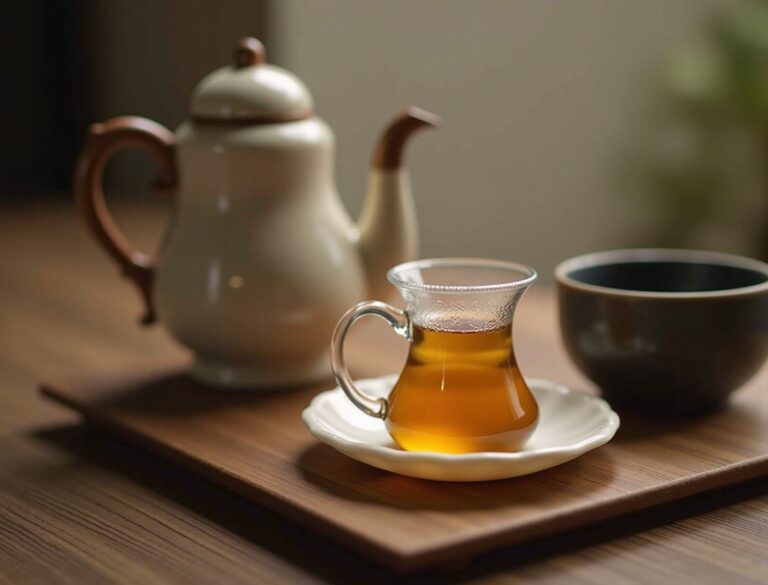
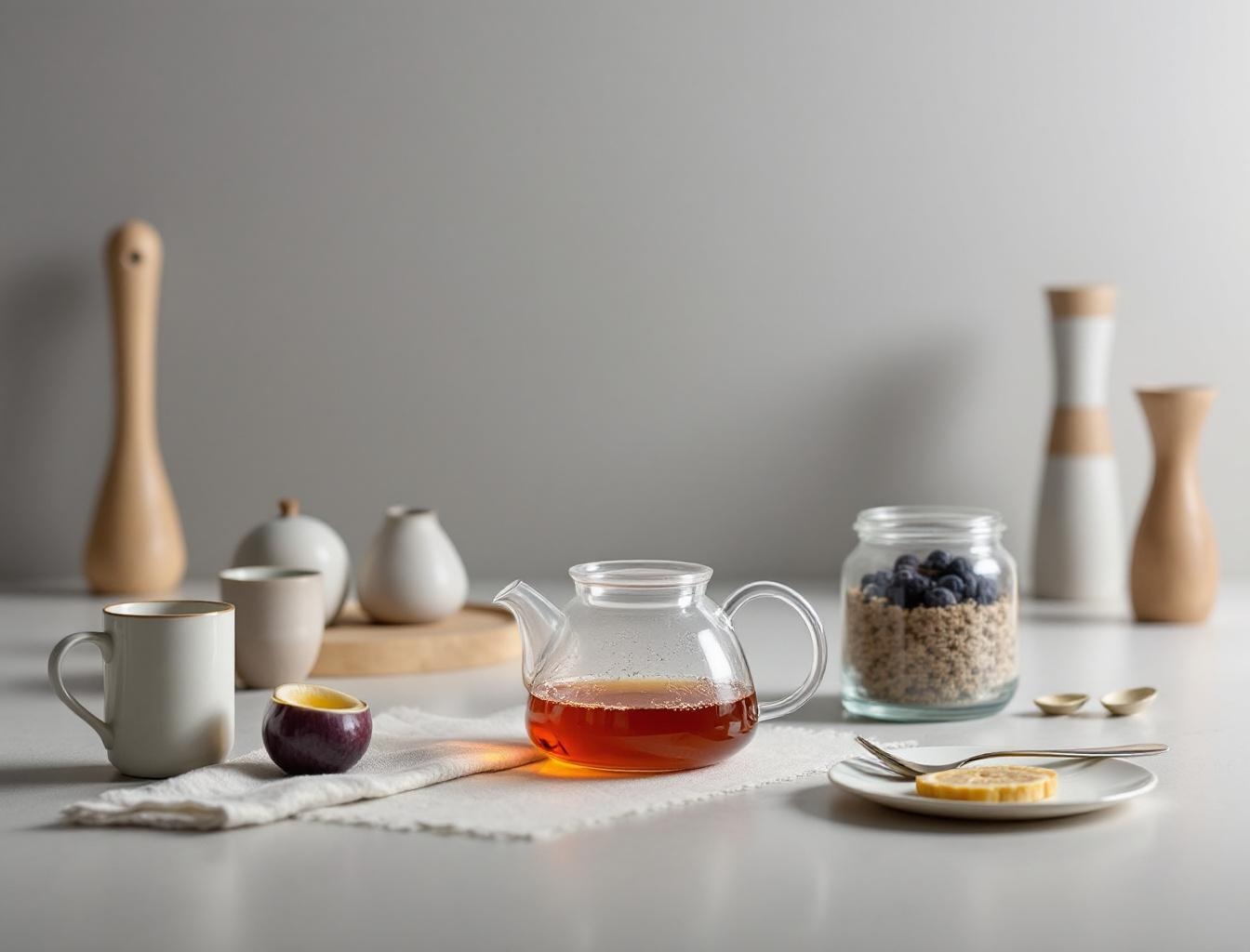
There's also the visual element: glass lets you watch the steep in real time, which matters for precision brewing. The color of brewed kabusecha deepens noticeably within 15-second intervals at the right temperature. Watching the liquor tells you things a timer alone can't.
Borosilicate vs Regular Glass: How to Tell the Difference
Manufacturers don't always make it easy. Here's how to identify borosilicate glass:
| Characteristic | Borosilicate Glass | Soda-Lime Glass |
|---|---|---|
| Color tint (edge on) | Clear to very slightly blue-gray | Green tint visible at edges |
| Label claims | Often labeled explicitly | May say “heat-resistant” without specifying type |
| Price | Higher — borosilicate costs more to produce | Lower |
| Brand reputation | Hario, Schott Zwiesel, certain Pyrex (vintage) | Many budget teapot brands |
| Thermal performance | No cracking under normal brewing use | May crack with rapid temperature changes |
| Weight | Slightly lighter for equivalent thickness | Heavier per unit volume |
When a listing says “heat-resistant glass” without specifying borosilicate, ask the seller or research the brand. Reputable teapot makers who use borosilicate glass will say so explicitly, because it's a genuine differentiator worth advertising.
Why Hario Is the Standard for Borosilicate Tea Glassware
Hario's name translates roughly to “the king of glass” in Japanese. Founded in 1921, the company originally manufactured laboratory and scientific glassware before applying the same precision manufacturing to tea and coffee equipment. Their borosilicate glass is produced to laboratory-grade standards, and it shows.
The ChaCha Maru teapot is Hario's flagship for loose leaf tea. The glass walls are uniform in thickness — no thin spots that would create stress concentration points. The handle attachment is reinforced. The silicone-sealed lid fits precisely. These aren't aesthetic choices; they're engineering decisions that extend the teapot's life and safety under daily thermal cycling.
The stainless steel infuser basket in the ChaCha Maru spans the full interior diameter of the pot. This is a detail that matters for Japanese green tea specifically: the leaves need room to fully hydrate and expand — sometimes doubling or tripling in volume — to release their flavor compounds completely. A cramped infuser produces uneven, weak extraction regardless of how good your tea is.
Shop the Hario ChaCha Maru Borosilicate Teapot
The Hario Largo: Borosilicate for Pour-Over Tea
For single-cup brewing, Hario also makes the Largo tea dripper — a pour-over style brewer that uses the same laboratory-grade borosilicate glass. The dripper sits over a glass receiving cup, creating a full-glass brewing system with no metal or plastic in contact with your tea water.
The Largo is particularly suited to light, delicate Japanese green teas where any off-flavors from the brewing vessel would be immediately perceptible. The combination of borosilicate glass, paper filter, and slow pour-over extraction produces exceptionally clean cups.
Shop the Hario Largo Tea Dripper
Caring for Your Borosilicate Teapot
Borosilicate glass is durable but not indestructible. The properties that make it thermally stable don't make it mechanically strong — it's actually more brittle than soda-lime glass under impact. A sharp knock against a hard surface is the most common failure mode.
Practical care guidelines:
- Never place directly on a hot electric burner. Most borosilicate teapots aren't designed for stovetop use. The Hario ChaCha Maru is not stovetop-safe — it's for brewing with separately heated water.
- Allow to cool before washing. Even with borosilicate's thermal tolerance, filling a hot teapot with cold water strains the glass unnecessarily. Let it cool for five minutes, then wash with warm (not cold) water.
- Store without the lid rattling on the glass. The silicone gasket on the Hario lid protects against impact, but storing the teapot loosely stacked can chip the rim over time.
- Clean tannin stains with baking soda. Baking soda dissolved in warm water loosens tannin deposits without abrasives. Do not use steel wool or abrasive cleaning pads — they scratch borosilicate and create micro-grooves where tannins accumulate faster.
- Dishwasher compatibility varies. The Hario ChaCha Maru glass body is dishwasher safe; the silicone lid gasket and metal infuser should be hand-washed to preserve the seal and mesh.
Teas That Benefit Most from Borosilicate Brewing
Any tea brewed in glass benefits from flavor neutrality, but the difference is most perceptible with:
- Kabusecha and gyokuro: Shaded Japanese teas with high amino acid content. Their sweetness and umami character is delicate and easily masked by any off-flavors from a non-neutral vessel.
- First-flush sencha: The grassy, vegetal brightness of a high-quality shincha is best experienced in glass.
- Single-origin hojicha: Premium roasted green tea has surprising complexity — caramel, walnut, subtle floral notes — that's clearest in a neutral glass vessel.
Shop Kabusecha | Shop Yame Hojicha
Frequently Asked Questions
Is all Hario glass borosilicate?
Yes. Hario exclusively uses borosilicate glass across their tea and coffee product lines. Their manufacturing heritage in laboratory glassware means borosilicate isn't a premium upgrade for Hario — it's the only glass they make.
Can borosilicate glass go in the freezer?
Borosilicate glass can handle cold temperatures, including freezer storage. However, moving directly from freezer to hot water (or vice versa) in rapid succession is still harder on the glass than normal use. For cold brew applications, room-temperature-to-refrigerator cycling is completely safe.
Why did my glass teapot crack if it says heat-resistant?
“Heat-resistant” on a label is not the same as borosilicate glass. Many inexpensive teapots use soda-lime glass with a slightly higher temperature tolerance than standard household glass, but still well below borosilicate's performance. If your teapot cracked from normal tea brewing use, it was not borosilicate glass.
Does a thicker glass teapot mean better heat retention?
Counterintuitively, no. Thicker glass doesn't retain heat significantly longer than thinner glass at tea-brewing timescales. The primary benefit of thicker walls is mechanical durability — resistance to chipping and breaking. Heat retention is better addressed by a well-fitting lid, which traps steam and minimizes heat loss far more effectively than wall thickness.
How do I know if my glass teapot is safe to use?
Inspect the glass for any existing cracks, chips (especially at the rim or handle attachment), or cloudy stress marks before each use. A chip in borosilicate glass, even a small one, can propagate into a crack under thermal stress. Retire any teapot with visible damage rather than risk it failing mid-use.