
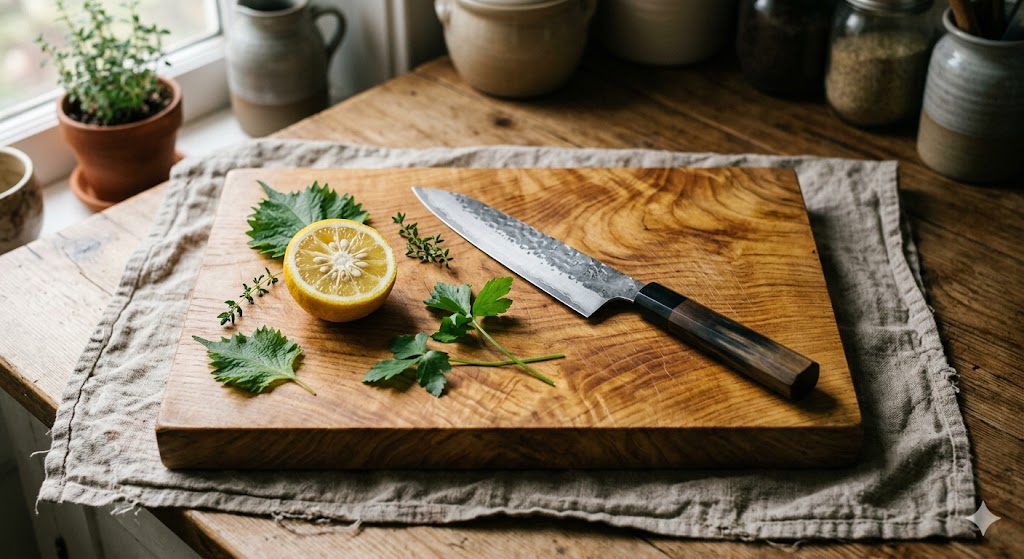
Ginkgo Wood Cutting Board: The Self-Healing Japanese Kitchen Tool
If you've eaten at a high-end Japanese restaurant, the thick, yellowish-white cutting board in the kitchen was almost certainly ginkgo wood. Icho (銀杏, ginkgo) boards are the professional standard in Japanese professional kitchens — particularly in sushi bars and kaiseki restaurants — for reasons that become clear once you understand what this wood actually does.
What Makes Ginkgo Wood Special
Ginkgo (Ginkgo biloba) is one of the most ancient tree species on earth — a living fossil, largely unchanged for over 200 million years. The wood cut from mature ginkgo trees has several properties that make it exceptional for cutting boards:
Self-healing ability: The most distinctive property of icho wood. After knife cuts, the wood fibers gradually contract and close around the cut over time. Knife marks visible on a fresh ginkgo board actually diminish with use and care, compared to other woods where grooves only deepen. This isn't myth — it's a documented property of the wood's fiber structure.
Moderate hardness — softer than Western hardwoods: Ginkgo wood is significantly softer than maple or walnut but slightly denser and more stable than hinoki. This positions it perfectly for Japanese knife use: soft enough to be kind to thin, high-hardness blades, but substantial enough to feel stable under heavy prep work.
Natural antimicrobial compounds: Ginkgo wood contains flavonoids and terpenoids with documented antibacterial and antifungal properties. This is part of why professional Japanese kitchens favor it for raw fish and meat prep — the wood actively resists microbial growth.
Low odor transfer: Unlike some aromatic woods (hinoki has a pronounced cypress aroma that some find interferes with delicate flavors), ginkgo wood is relatively neutral in scent. High-end sushi chefs prefer ginkgo partly because they don't want any wood aroma near their fish.
Ginkgo vs. Hinoki: The Two Premium Japanese Woods
These two are the most discussed Japanese cutting board woods, and they're genuinely different:
| Feature | Ginkgo (Icho) | Hinoki (Japanese Cypress) |
|---|---|---|
| Hardness | Moderately soft | Softer |
| Aroma | Neutral / very mild | Distinctive cypress fragrance |
| Self-healing | Yes, pronounced | Some, less pronounced |
| Antibacterial | Yes | Yes (hinokitiol) |
| Preferred for | Sushi, raw fish, delicate cutting | General Japanese kitchen use |
| Care | Water only, no oil | Water only, no oil |
| Price | Higher | Moderate to high |
| Availability | Less common, specialty retailers | More widely available |
For sushi preparation and delicate fish work: ginkgo is the professional choice. For general Japanese home cooking: hinoki is more accessible and equally excellent. Browse our ginkgo cutting boards and hinoki cutting boards.
What Professional Japanese Kitchens Use
In Japan, the standard professional cutting board for:
- Sushi and sashimi preparation: Thick ginkgo boards, often 5-8cm in depth, used by the head chef for all fish work. The depth matters for stability during rapid, precise knife work and for the total lifespan of the board — thick boards absorb decades of resurfacing.
- General prep: Hinoki boards for vegetables and less delicate work, where the aroma is acceptable or even welcome.
- Casual restaurant prep: Synthetic boards (polyethylene) for high-volume situations where sanitation speed is the priority over cutting quality.
The ginkgo board is often the most prized tool in a sushi chef's kitchen — some chefs bring their own board from restaurant to restaurant throughout their careers.
What to Look For When Buying Ginkgo Wood
Source: Quality ginkgo boards come from mature trees, usually harvested in Japan. Because ginkgo trees are planted widely as street trees in Japan (they're a common urban tree), there's more supply than from some specialty woods. However, quality varies — look for clear grain, even color, and appropriate thickness.
Thickness: A minimum of 3cm for home use; 5cm or more for professional use or serious home cooks. Thicker boards last longer and are more stable. A 2cm ginkgo board works but has limited lifespan through resurfacing.
Surface finish: The cutting surface should be smooth-planed but not lacquered or sealed. Any coating on the surface defeats the purpose of the natural wood properties. The surface should feel slightly warm and slightly yielding to the touch.
Grain and color: Ginkgo wood is typically pale yellow to yellowish-white when fresh, developing a slightly warmer tone with age and use. A uniform grain without excessive knots or inclusions is preferred for a professional cutting surface.
Care Instructions
The care for ginkgo boards is similar to hinoki:
- Rinse with cold or lukewarm water after use — never hot water
- Use mild soap if needed, then rinse thoroughly
- Stand on edge to dry — never lay flat while wet
- Do not oil — the natural properties of ginkgo wood do not need supplementation
- Sand with 150-220 grit sandpaper to resurface when needed — this is how professional chefs maintain their boards for decades
- Never put in the dishwasher
One important note: fresh ginkgo wood can have a mildly unpleasant smell when new, similar to the smell of fresh ginkgo nuts. This dissipates after the first few uses and rinses.
Price Expectations
Quality ginkgo cutting boards command a premium due to material scarcity and traditional production:
- Home-use ginkgo board (30x20cm, 3cm thick): $60-$120
- Professional-grade (40x28cm, 5cm+): $150-$350
- Large restaurant boards (50x35cm+, 6-8cm): $300-$600+
The price is justified by longevity — a properly cared for thick ginkgo board can serve an active kitchen for 20-40 years with periodic resurfacing.
Frequently Asked Questions
Does ginkgo wood really self-heal?
Yes — the property is real and documented. The wood's fibrous structure allows surface knife cuts to partially close over time. This is more pronounced on light surface marks than deep grooves; the effect slows down as the board ages, but new ginkgo boards show this clearly in the first months of use.
Is ginkgo wood safe for food use?
Yes. The flavonoids and terpenoids in ginkgo wood that provide antibacterial properties are present in trace amounts that are entirely safe for food contact. Japanese professional kitchens have used ginkgo boards for centuries.
Can I use a ginkgo board for raw meat?
Yes. The antibacterial properties and the smooth, resurfaceable nature of the wood make it appropriate for raw meat. Standard food safety practices (thorough cleaning, complete drying) apply.
Why is ginkgo less common than hinoki in Western markets?
Hinoki has been more actively marketed internationally by Japanese kitchen importers. Ginkgo boards are more commonly found at specialty Japanese kitchen retailers and direct importers. They're worth seeking out.
How does ginkgo compare to end-grain walnut?
Both are good for Japanese knife care relative to hard alternatives. Ginkgo's natural antimicrobial properties and self-healing give it an edge (pun intended) for sushi-style cutting. End-grain walnut is more readily available in Western markets and requires regular oiling, which ginkgo does not.
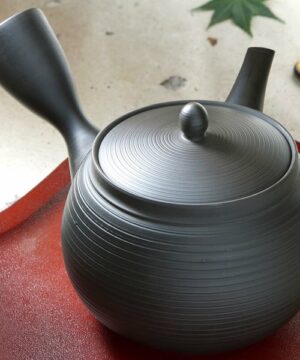 Tokoname Ware Smoke Black Tea Teapot (Kkiri Style) - Made in Japan