How to Brew Japanese Tea at Work (No Teapot Needed)
Brewing loose leaf Japanese tea at the office seems complicated until you try it. The setup is simpler than people expect, the quality difference over tea bags is significant, and the ritual of brewing a proper cup of hojicha or sencha mid-afternoon is actually better for focus than grabbing a third coffee. Here's how to do it with minimal equipment, in any office environment.
The Basic Challenge
Japanese loose leaf tea brewed properly requires:
- Water at the right temperature (not boiling for most green teas)
- A way to steep and strain the leaves
- The tea itself
Most offices have hot water (kettle, hot water dispenser, or boiling water tap). The straining is the only thing to solve. Here are four practical approaches, ranked from simplest to most invested.
Method 1: The Travel Infuser Mug
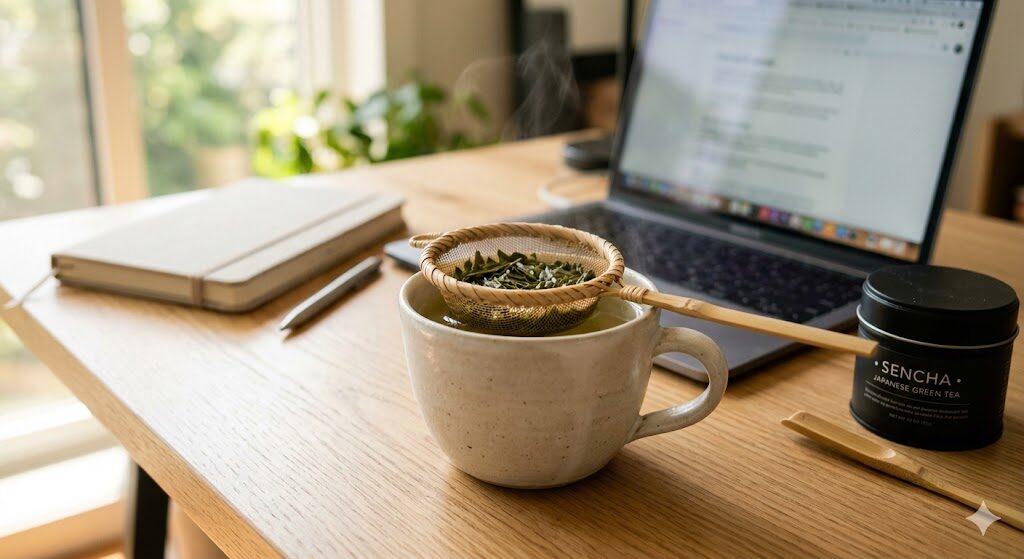
A double-walled mug or travel bottle with a built-in stainless steel infuser is the cleanest office solution. You add loose leaf tea to the infuser, fill with hot water, steep, then remove the infuser and drink directly from the mug.
What you need:
- An insulated infuser mug (look for a fine mesh infuser — important for Japanese teas with smaller leaves)
- Loose leaf tea
- Hot water at approximately the right temperature
Best for: Hojicha, genmaicha, bancha — all forgiving of temperature and can be brewed directly with the leaves remaining in longer without becoming too bitter. For sencha or kabusecha, be more precise — steep 60-90 seconds, then remove the infuser.
Browse hojicha — an excellent office tea choice, low caffeine, richly flavored, very forgiving to brew.
Method 2: Paper Tea Filters in Any Cup
Disposable paper tea filters (the kind you fill yourself, close, and steep) require zero equipment beyond a cup and hot water. You fill the paper bag with loose tea, fold the top, and steep just like a teabag — except you control the quality of the tea inside.
What you need:
- Fillable paper tea filters (available in various sizes for cups and mugs)
- Loose leaf tea
- Any mug
Steep time guidelines at the office:
- Hojicha: 1-2 minutes at any hot water temperature
- Genmaicha: 1-2 minutes at 80-90°C
- Sencha: 60-90 seconds, water cooled slightly from boiling
- Bancha: 1-2 minutes at 90°C
The main trade-off: paper filters are single use and produce slightly more waste than reusable methods.
Method 3: The Compact Kyusu or Travel Kyusu
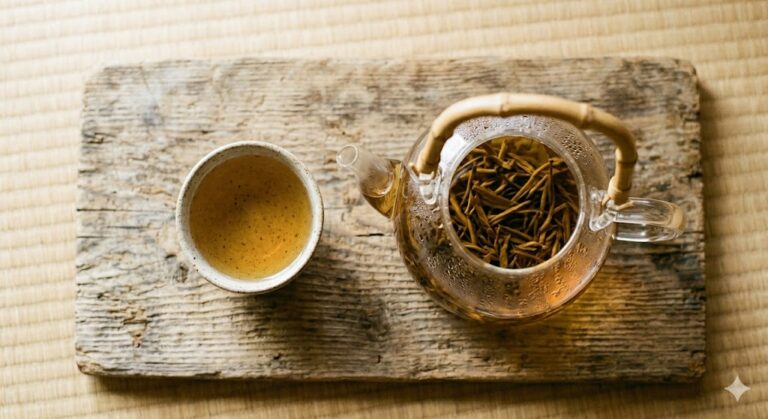
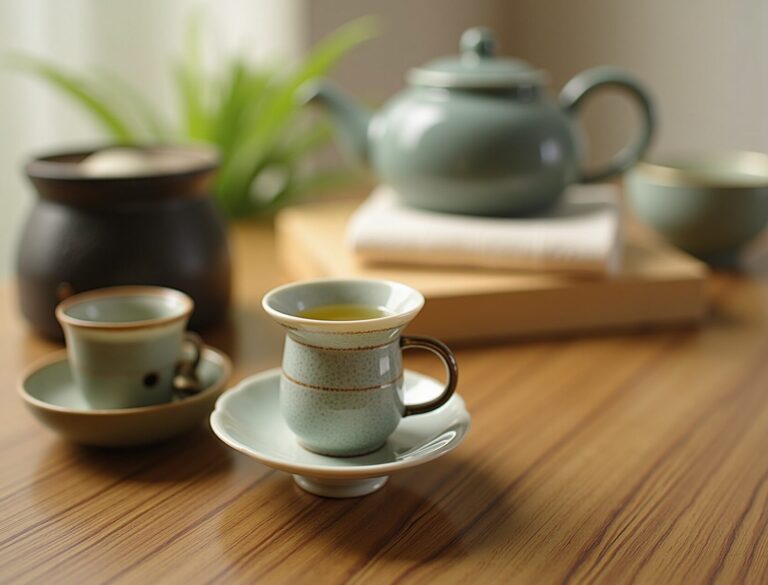
If you're serious about office tea, a compact ceramic kyusu (100-200ml) or a travel-sized strainer system produces genuinely superior results. These are small enough to keep at your desk in a drawer and take up less space than most people expect.
The setup: small kyusu, hot water, a teacup or standard mug to pour into. You make one or two concentrated servings (with 2-3 possible infusions from the same leaves), finish them over 15-20 minutes, then rinse and store.
Best teas for this approach: Sencha, kabusecha, gyokuro — teas worth multiple infusions. You get 2-3 excellent cups from a single loading of leaves.
Browse our kyusu teapots — compact models are available for desk use.
Method 4: Cold Brew Prepared at Home
If your office kitchen has a refrigerator, prepare cold brew Japanese tea at home the night before and bring it in a sealed bottle. This is zero-effort at the office — just pour and drink — and produces an excellent, smooth cup of Japanese tea.
How to prepare:
- Add 10-12g loose leaf tea per 500ml cold filtered water in a bottle with a built-in strainer
- Refrigerate overnight (8-12 hours)
- Remove the strainer and bring the bottle to work
- Drink at room temperature or cold throughout the day
Cold-brewed hojicha, sencha, and genmaicha all keep in the refrigerator for 2-3 days. This method also requires no temperature management — cold brewing is the most forgiving of all brewing methods.
See our Hario cold brew bottle for a dedicated vessel.
Temperature: The Most Critical Variable
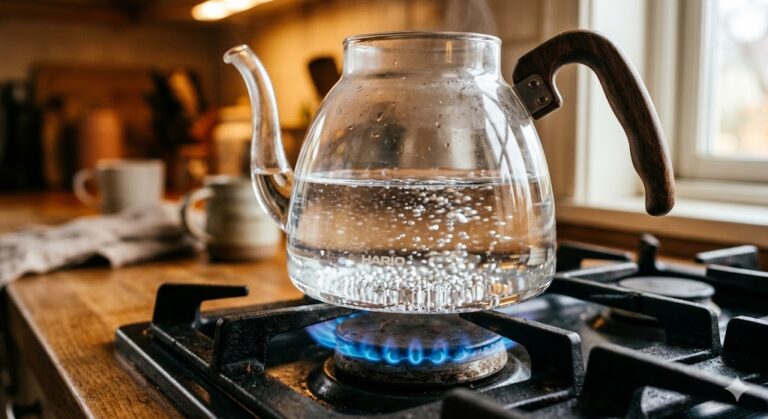
Most office situations have boiling or near-boiling water (100°C). Japanese green teas ideally brew at:
- Sencha: 70-75°C
- Kabusecha: 65-70°C
- Hojicha: 85-90°C (fine at 100°C — very forgiving)
- Genmaicha: 80-85°C
- Bancha: 90°C
If you have a simple temperature-controlled travel kettle at your desk, problem solved. Without one, let boiling water sit in the cup for 1-2 minutes before adding it to the tea — it drops approximately 10°C per minute of cooling in an open cup. For hojicha and genmaicha, this isn't needed — these teas are fine with full boiling water.
What Tea to Stock at the Office
For office use, prioritize teas that are forgiving and flavorful:
Top picks for workplace tea:
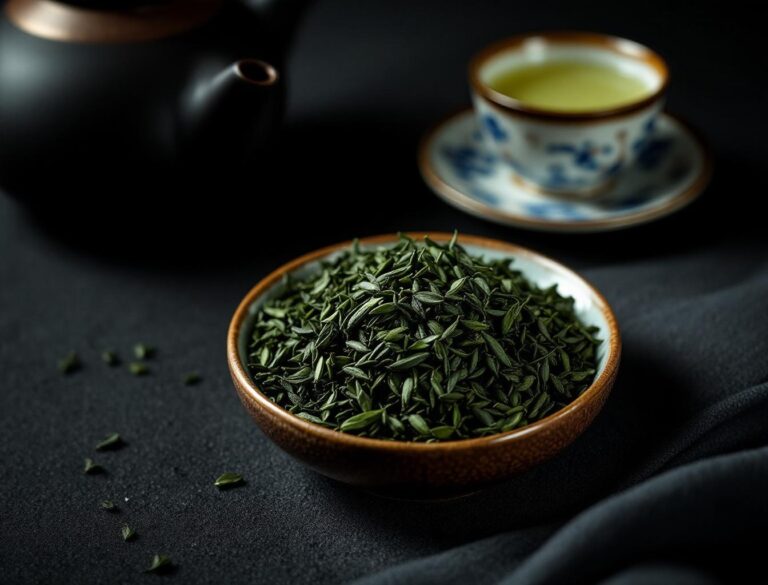
- Hojicha: Roasted, rich, low-caffeine. Brews at any temperature, very forgiving. Great mid-afternoon choice. Our hojicha loose leaf is an ideal starting point.
- Genmaicha: Toasty, approachable, medium caffeine. Easy to brew and widely appealing if you share with colleagues.
- Bancha: Light, low-caffeine, affordable everyday tea. Works for morning or afternoon.
Store tea in a small airtight tin at your desk — away from sunlight. A good quality 30-50g tin lasts a working professional 2-3 weeks of daily drinking.
Frequently Asked Questions
Can I just buy Japanese green tea bags for office use?
Yes, and quality tea bag options have improved significantly. However, loose leaf tea — even brewed with a simple paper filter — produces noticeably better flavor because the leaves have room to expand. The effort difference is minimal once you have a system.
What's the best Japanese tea for afternoon focus at work?
Hojicha or bancha in the afternoon — both are low-caffeine and won't interfere with sleep if you're sensitive to caffeine. Sencha or kabusecha mid-morning for a more pronounced focus effect from L-theanine and moderate caffeine.
How do I clean up the infuser at work?
Rinse with hot water from the office kitchen immediately after use — most loose leaf residue rinses away cleanly. Pat dry with a paper towel or leave briefly in a well-ventilated spot. No soap required for a quick rinse between sessions.
Can I reuse the same tea leaves twice at work?
Yes — Japanese teas are designed for multiple infusions. Keep the used leaves in your infuser or kyusu, add fresh hot water for the second infusion (often sweeter and lighter than the first), and drink within 30-60 minutes before leaving the leaves in.
Is loose leaf Japanese tea expensive for daily office use?
No. Quality hojicha or bancha runs about $10-$20 per 50-100g, which is 2-4 weeks of daily drinking at roughly $0.25-$0.50 per cup — comparable to or cheaper than premium tea bags.