
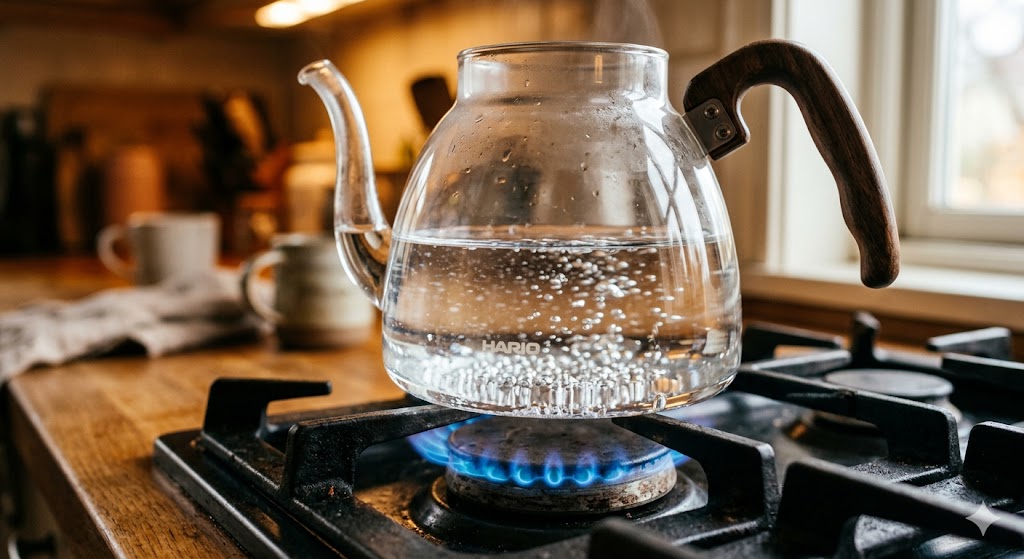
Can You Use Hario Glass on a Gas Stove? Safety Guide
This is one of the most common questions new Hario owners ask — and getting it wrong can shatter an expensive piece of glassware. The answer depends entirely on which specific Hario product you have. Some Hario glass products are stovetop-safe by design; many are not. This guide breaks down the rules clearly so you can use your Hario equipment safely and confidently.
The Core Rule: Not All Hario Glass Is Equal
Hario produces two broad categories of glass products:
Borosilicate glass teaware (NOT stovetop safe): This covers the majority of Hario's tea products — the Chacha Kyusu Maru teapots, the Chaho teapots, tea servers, cold brew bottles, and tea cups. These are made from standard borosilicate glass (also called HARIO glass), which has excellent heat resistance compared to ordinary glass but is NOT designed for direct flame or burner contact.
HARIO-ware with metal heating base (stovetop safe): A smaller subset of Hario products — primarily certain kettles and some limited teapot designs — are explicitly designed and tested for stovetop use. These are usually identifiable by their metal base construction, stovetop-safe labeling, or kettle designation.
If your product doesn't explicitly say “stovetop safe” or “IH-compatible,” assume it is NOT safe for direct heat.
What Happens If You Put Non-Stovetop Hario Glass on a Burner
Thermal shock is the mechanism: direct flame or a hot burner creates an extreme temperature differential between the glass in contact with heat and the glass above the heat source. Even borosilicate glass — which handles the thermal shock of hot water going into a room-temperature teapot — has limits. Direct open flame creates temperature gradients too extreme for non-reinforced glass vessels to handle safely.
The result is typically a sudden crack or shattering. This can happen without warning while the pot is on the burner. The resulting hot liquid spill is a burn hazard.
Hario Products and Stovetop Compatibility
Not stovetop safe (use with kettle/preheat water separately):
- Hario Chacha Kyusu Maru teapots (all sizes)
- Hario Chaho teapots (all sizes)
- Hario Bona Tea Maker series
- Hario glass tea servers
- Hario cold brew bottles (Mizudashi series)
- Hario glass tea cups
- Hario Cha Cha Mug
- Hario V60 pour-over server (the glass range server)
Stovetop safe (verify your specific model):
- Hario Buono kettle and similar gooseneck kettles — specifically designed for stovetop
- Certain Hario coffee server/dripper combinations labeled stovetop-safe
- Always verify the specific product model — even within these categories, not every version is stovetop safe
How to Heat Water for Hario Teapots (The Right Method)
The correct workflow for Hario glass teapots:
- Heat water in a separate stovetop kettle or electric kettle
- Let the water reach your target temperature (or cool briefly from boiling)
- Optionally, preheat your Hario teapot by rinsing it with warm water first — this prevents the worst thermal shock when hot water enters a cold glass pot
- Pour the heated water into the Hario teapot
- Add tea leaves (or add them before water, depending on your preference)
- Steep and serve
This sequence keeps your glass safe while still delivering excellent tea. The warm water preheat step is worth the 30 seconds it takes — it significantly reduces thermal stress on the glass.
Induction Cooktop Compatibility
Almost all Hario glass tea products are NOT compatible with induction cooktops. Induction requires a magnetic metal base — glass doesn't respond to induction fields. Even the stovetop-safe Hario kettles need specific verification for induction compatibility (some are gas-only stovetop safe).
Hario explicitly labels induction-compatible products with “IH” (Induction Heating) compatibility. If you don't see this label, it's not induction-safe.
Microwave Compatibility
Hario borosilicate glass is generally microwave-safe — glass has no metal components that would cause arcing. However:
- Remove the lid if it has any metal components (some Hario lids have metal clips or bands)
- Don't microwave the glass strainer if it's a metal mesh strainer
- The glass body itself is fine for microwave reheating
- Verify your specific product — the polypropylene/plastic handles on some models may not be rated for microwave temperatures
What to Do If You Accidentally Used a Non-Stovetop Hario on a Burner
If you've put a Hario teapot on a gas burner briefly and nothing happened: you got lucky. Inspect the piece carefully for micro-cracks (hold to light and look for hairline fractures). If none are visible, the piece is likely still safe, but be cautious — thermal stress damage can be invisible until the next temperature shock triggers cracking.
If you see any cracks, no matter how minor: retire the piece from tea service. A cracked borosilicate vessel can fail unexpectedly. Don't risk it.
Keeping Your Hario Teaware Safe: Quick Reference
- Always preheat by rinsing with warm water before adding boiling water
- Never put directly on a burner unless explicitly labeled stovetop-safe
- Never add ice to a hot teapot or add boiling water to a cold teapot — gradual temperature changes only
- Store lids off or ajar — trapped moisture isn't a safety issue but promotes staining
- Handle with clean, dry hands — wet hands slip on glass handles
Browse our Hario glass teapot selection — all products in our shop come with clear usage instructions and stovetop compatibility information.
Frequently Asked Questions
Can I use Hario teaware on an electric coil stove? No — same rule as gas. Direct burner contact is unsafe for standard Hario glass teapots regardless of burner type.
Can I heat water in a Hario cold brew bottle? Absolutely not — cold brew bottles are designed for refrigerator temperatures. Taking a cold-from-fridge bottle and heating it would create dangerous thermal shock in addition to the bottle not being designed for hot contents at all.
How do I know if my specific Hario product is stovetop safe? Check the product's original packaging, the Hario website for your specific model number, or the product description where you purchased it. If uncertain, treat it as not stovetop safe.
My Hario teapot cracked — can I repair it? Glass repair is possible with food-safe epoxy for decorative purposes, but a repaired cracked teapot should not be used with hot liquids. The structural integrity is compromised. Hario teapots are reasonably priced — replacement is safer than continued use of a cracked vessel.
Is there a Japanese glass teapot that can go on the stove? Yes — Hario makes specific stovetop-compatible glass products (their gooseneck kettle line primarily). For a stovetop-safe teapot with glass body, look for products explicitly marked “stovetop safe” and verify the model number.
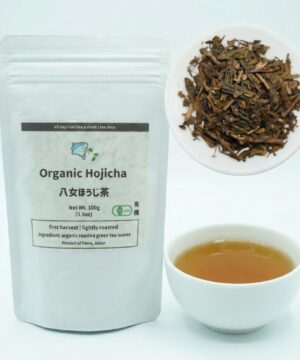 Yame Organic Hojicha Loose Leaf Tea - Roasted Japanese Green Tea (100g)