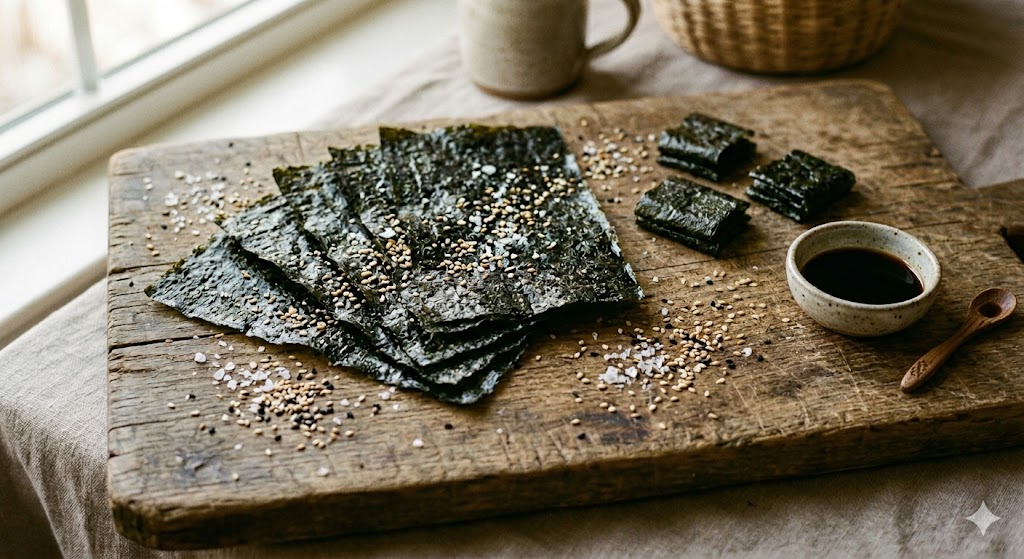
Roasted Nori Snacks: Taste, Quality, and Best Brands
Roasted nori snacks have moved from specialty Asian grocers to mainstream supermarket shelves — and with good reason. They're crispy, savory, and genuinely satisfying in a way that rice cakes or plain crackers usually aren't. But the quality gap between commodity nori snack packs and genuine premium Japanese nori is enormous.
What Are Roasted Nori Snacks?
Roasted nori snacks are sheets or strips of dried, toasted seaweed — specifically the red algae Pyropia yezoensis (the same species used for sushi nori). The sheets are dried, toasted at high heat to create crispness and intensify flavor, and typically cut into smaller pieces for snacking. They may be plain (nothing added) or seasoned with salt, sesame oil, soy sauce, or other flavoring.
The best Japanese nori snacks use the same high-quality seaweed as premium sushi nori — just cut and packaged for eating straight rather than wrapping. The worst use lower-grade seaweed sheets (thinner, more irregular, less flavorful) with heavy salt and oil as substitutes for actual seaweed flavor.
Plain vs. Seasoned Nori Snacks
The core decision when buying nori snacks:
Plain/unseasoned nori: The flavor is entirely the seaweed itself — oceanic, umami, slightly mineral. This is what high-quality nori actually tastes like. If you buy good Ariake-origin nori, eating it plain is genuinely pleasurable. Fewer additives and a cleaner ingredient list.
Seasoned/ajitsuke nori: Pre-seasoned with soy sauce, sesame oil, sugar, and/or salt. Richer, more immediately satisfying flavor that many people prefer. Good option if you're new to nori snacking — the familiar seasonings make it more approachable. Watch out for versions heavy on MSG or artificial flavoring.
Spicy nori: Various brands add chili, gochugaru (Korean red pepper), or wasabi to nori. These work but are novelty products — the seaweed's natural flavor is worth experiencing without the heat mask.
What Separates Quality Nori Snacks from Cheap Ones
Seaweed quality: Premium nori snacks use the same grade seaweed as sushi nori — thick, dense sheets with deep green-black color. Cheap nori snacks use thinner, irregularly shaped sheets that taste less like seaweed and more like the seasoning applied to it.
Origin: The same rules apply as sushi nori — Ariake Sea nori has deeper flavor than generic sources. The best Japanese nori snack producers source from quality growing regions.
Oil quality (for seasoned products): Premium seasoned nori uses sesame oil or high-quality neutral oil. Budget versions use generic vegetable oil that adds heaviness without character.
Packaging and freshness: Nori snacks lose crispness rapidly after opening. Quality brands use nitrogen-flushed individual portions. The larger bags sold cheaply are almost always stale by the time you get to the bottom.
Best Nori Snacks to Buy
Our nori selection includes snacking nori formats alongside sushi nori — here's how to think about each tier:
Premium Japanese nori snacks: Individual portion packs from Ariake or Ise growing regions. More expensive per serving but incomparably better flavor. For anyone who genuinely appreciates the seaweed's natural flavor.
Mid-range quality options: Japanese origin, reasonable seasoning, available in multi-pack formats. Good everyday snacking choice without the premium price of single-origin products.
Avoid: Generic retail brands with non-specific Asian origin, heavy seasoning or oil coatings, or no country of origin stated. These use nori as a delivery vehicle for seasoning rather than as the actual food.
Serving Ideas Beyond Snacking Straight
- Crumble over rice bowls, grain salads, or avocado toast
- Wrap around onigiri rice balls for a handheld snack
- Layer between crackers and cream cheese for a quick canapé
- Crumble over ramen or miso soup at the table for texture
- Use whole sheets as a wrap for hand rolls at home
Frequently Asked Questions
What's the difference between Japanese nori snacks and Korean gim snacks? Korean gim (seasoned seaweed) is typically thinner, oilier (usually sesame or perilla oil), and often more aggressively seasoned than Japanese nori snacks. Both are excellent — they just have different flavor profiles. Korean gim tends to be crisper and richer; Japanese nori snacks tend to have more seaweed-forward, cleaner flavor.
How do I keep nori snacks fresh after opening? Transfer to an airtight container or reseal the bag completely, removing air. Consume within 1–2 weeks of opening for best crunch. Individual-portion packs solve this problem entirely.