Best Nori for Onigiri: Size, Texture, and the Technique That Keeps It Crispy
Onigiri — the Japanese rice ball — is one of the most satisfying portable foods in the world. But wrapped in the wrong nori, or wrapped incorrectly, it turns soggy within minutes. The right nori, cut to the right size, applied at the right moment, produces the satisfying crunch that makes onigiri from a Japanese convenience store so different from a homemade version that went soft.
Here's what you actually need to know.
Why Nori Matters for Onigiri
The nori in onigiri serves both functional and flavor roles. Functionally, it provides grip — you hold the rice ball through the nori rather than touching the rice directly. Flavor-wise, it contributes savory, oceanic depth that complements the mild rice and any filling. Texturally, it creates the contrast between the crispy-on-first-bite seaweed and the soft rice underneath.
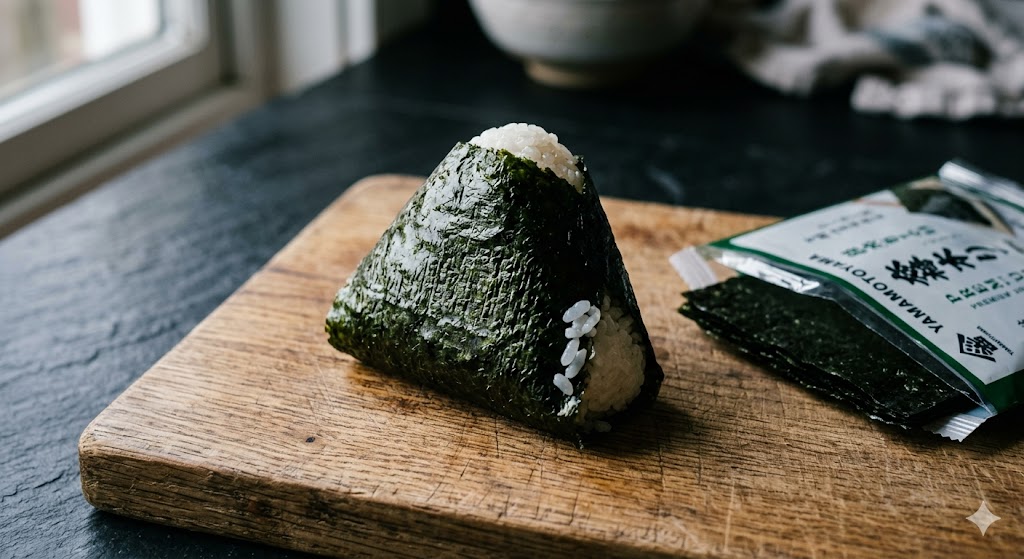
The challenge: nori is hygroscopic — it absorbs moisture from the air and from the rice itself very rapidly. Once it absorbs moisture, it goes from crispy to soft in minutes. This is why wrapped onigiri sold at Japanese convenience stores (konbini) use a special packaging system with a separator that keeps the nori dry until you pull the tab and wrap it fresh at eating time.
Best Nori Grade for Onigiri
For onigiri, you want toasted nori (yaki nori) at a quality level appropriate to its purpose:
Premium/Gold grade nori: Exceptionally tender, dissolves on the tongue. Slightly wasted on onigiri where you won't fully appreciate its subtlety. Better for sushi and hand rolls where the nori is more central to the experience.
Mid-grade toasted nori (Grade A or “everyday” sushi nori): The right choice for onigiri. Clean flavor, good structural integrity, noticeable flavor contribution. This is what most Japanese home cooks use. Our everyday nori sheets are well-suited for onigiri.
Low-grade or snack nori: Thinner and more fragile, often bleached or lower flavor. Technically functional but noticeably inferior in the eating experience.
Sizing: Full Sheets, Half Sheets, and Strips
Full standard nori sheets measure approximately 19-21cm × 19-21cm. For onigiri, you'll work with:
Half sheet (approximately 9-10cm wide strip): The most common onigiri wrapping size. Cut a full sheet in half. This size wraps around a medium triangle onigiri (made from about 100g rice) with a few centimeters of overlap at the bottom.
Third strip: A narrower strip (about 6cm wide) used for a band wrap style — a single stripe of nori around the middle of the rice ball. This is a common style for decorated bento onigiri and for cases where you want less nori per bite.
Full sheet wrap: Used for large, fully wrapped onigiri like yaki onigiri (grilled rice balls). Wrapping fully provides more structural integrity for grilling.
How to Cut Nori for Onigiri
Cut nori with sharp kitchen scissors or a very sharp knife on a clean cutting surface:
- Use scissors rather than a knife if possible — scissors produce cleaner cuts on dry nori without the crumbling that can occur when pressing a blade
- Cut in one swift motion rather than sawing
- If the nori is very dry and brittle, breathe lightly over the sheet before cutting — the slight humidity from your breath momentarily softens the edge and reduces crumbling
The Wrapping Technique: When to Apply Makes All the Difference
The most important variable for crispy onigiri is when you apply the nori relative to eating:
Wrap just before eating: The Japanese convenience store method. Apply nori to the rice ball as close to serving as possible — ideally within 5-10 minutes. The nori stays crispy for the first bites.
Wrap early and accept softness: If you're packing onigiri for lunch boxes more than 30 minutes in advance, the nori will soften. This is the “soft nori” style that many people actually prefer — the softened nori melds with the rice for a different but equally valid texture.
Wrap at packing, eat within 2 hours: If you want some crispness remaining at lunchtime, pack onigiri wrapped in nori in an open container (no seal) and eat within 2 hours. Sealed containers trap moisture and accelerate softening.
The separated wrap technique: Place the nori in a small sandwich bag alongside the rice ball without wrapping. Wrap yourself at eating time. This is the home version of the konbini separator packaging.
Wrapping Step by Step
For a triangle onigiri with a half-sheet of nori:
- Form your rice ball into a triangle shape using wet, lightly salted hands
- Hold the nori (half sheet) lengthwise, shiny side facing down (matte side against the rice)
- Place the bottom point of the triangle onto the nori strip at the center
- Fold the nori up and over one face of the triangle, pressing lightly to adhere
- Tuck the excess nori around to the back, pressing gently to secure
The rice's natural stickiness holds the nori without any adhesive. If the nori tears, your hands are too wet — dry them slightly before wrapping.
Flavored Nori for Onigiri
Plain toasted nori is traditional for onigiri. But seasoned nori options that work well:
- Lightly salted nori: adds a slight extra seasoning layer
- Sesame oil-brushed nori: richer flavor, more fragrant
- Not recommended: heavily seasoned gim (Korean seaweed snacks) — the strong sesame oil flavor competes with the filling
Frequently Asked Questions
How do I keep onigiri nori crispy for lunch boxes?
Pack the nori separately from the rice ball and wrap at eating time. Alternatively, accept soft nori and focus on quality filling — soft-nori onigiri has its own appeal.
Can I use regular seaweed snacks (Korean-style) for onigiri?
Yes, but the flavor profile changes — the sesame oil in seasoned Korean seaweed snacks will flavor the rice noticeably. Use unseasoned or lightly seasoned varieties for more traditional results.
Why does my nori break when I try to wrap?
Very dry, brittle nori breaks more easily. The fix: breathe lightly over the sheet before cutting and wrapping to add a tiny amount of humidity. Or work quickly and confidently — hesitation and repeated handling breaks nori.
What's the correct rice for onigiri?
Short-grain Japanese rice cooked without oil or butter. The starch content of Japanese rice is what holds the onigiri together. Medium or long-grain rice is more difficult to form. The rice should be seasoned with a small amount of salt while still warm.
Do I need special onigiri molds?
No — hand-shaping produces better onigiri once you get the technique. Molds produce consistent shapes for beginners but the pressure applied by hand can be adjusted for the right density. Start with hand-shaping.
Browse our full nori sheet collection for quality sushi-grade options ideal for onigiri.