How to Season a Kyusu Teapot Before First Use
A new clay kyusu — especially a Tokoname clay teapot — benefits significantly from proper seasoning before you start brewing tea in it. Seasoning serves multiple purposes: it removes any remaining clay taste from the manufacturing process, opens the pores of the clay, and begins the long process of building up a tea patina that will improve your brewing over years of use.
The process takes less than an hour and sets your teapot up for decades of use.
Why Seasoning Matters
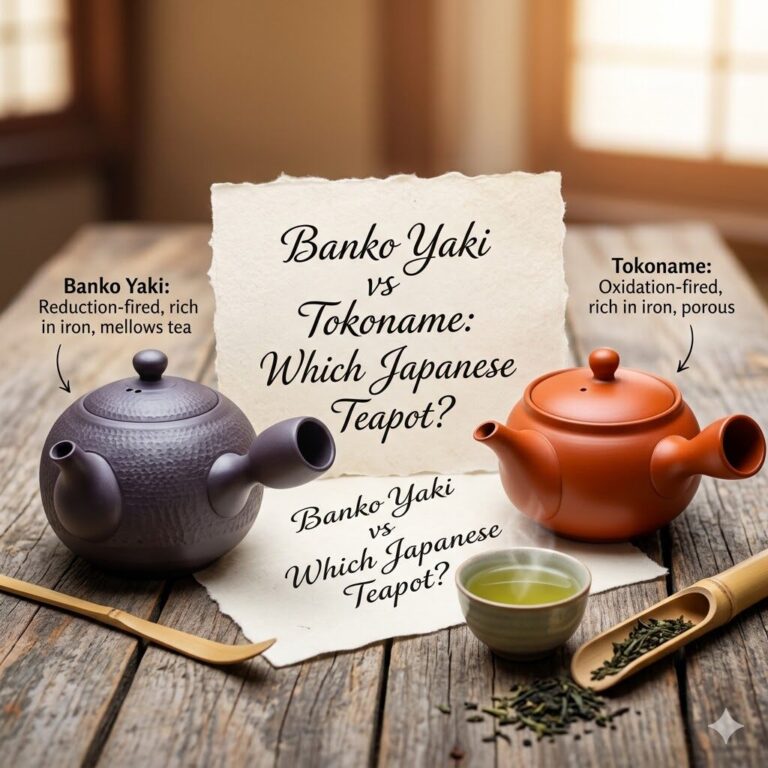
Clay kyusu are made from porous natural clay — Tokoname teapots use an iron-rich clay fired at relatively low temperatures, leaving the clay more porous and reactive than glazed ceramics. This porosity is what creates the famous interaction between Tokoname clay and tea: over time, the clay absorbs tea compounds and builds a mineral-tea patina that rounds and enriches the flavor of every subsequent brew.
A brand-new kyusu, however, can have a slight raw clay taste, traces of kiln smoke, or simply the neutral blankness of unused clay. Seasoning removes these and begins the process of developing the pot's character.
Browse our Tokoname kyusu collection and full kyusu range.
What You Need
- Your new clay kyusu
- Filtered or spring water (avoid heavily chlorinated tap water)
- Loose leaf tea — ideally the same type you'll primarily brew in this pot (sencha for a sencha pot, hojicha for a hojicha pot)
- A kettle
- A bowl or basin large enough to hold the kyusu
Step-by-Step Seasoning Process
Step 1: Initial Rinse
Rinse the kyusu — both inside and outside — with cold water. Use your finger or a soft brush to gently wipe the interior walls. This removes any dust or loose clay particles from manufacturing and transport. Empty and set aside.
Step 2: Warm Water Soak
Fill a basin with warm (not boiling) water. Place the kyusu, lid separate, in the basin and allow to soak for 15-20 minutes. This hydrates the clay and closes any micro-cracks from drying. It also begins to remove any lingering kiln or clay taste.
Some practitioners also submerge the kyusu completely in warm water for this soak. This is fine for Tokoname clay — the kiln-fired clay will not dissolve or weaken from brief soaking.
Step 3: First Tea Brew (The Seasoning Brew)
Heat water to the appropriate temperature for the tea you'll use:
Add your tea leaves to the kyusu — approximately 5g per 200ml is fine for this seasoning brew. Pour the heated water over the leaves, place the lid on, and let it steep for 2-3 minutes.
Pour out the tea entirely. You can drink this first brew if you like, but it serves primarily as a seasoning wash — it's not representative of the pot's mature brewing performance and may have a faint clay note.
Step 4: Second Rinse
Rinse the kyusu again with warm water (same temperature as your brewing water). Swirl gently, empty, and allow to drain for a few minutes with the lid off.
Step 5: Air Dry
Place the kyusu and lid separately on a clean cloth or rack in a ventilated area. Allow to dry completely — this typically takes 1-2 hours for clay. Do not dry in direct sunlight or near a heat source. Do not reassemble (lid back on) until both pieces are completely dry.
Your kyusu is now ready for regular brewing.
Ongoing Care After Seasoning
Once your kyusu is seasoned and in regular use:
- Never use soap: The porous clay will absorb soap, which is extremely difficult to remove and will taint every subsequent brew. Rinse with hot water only.
- Rinse after every use: Empty leaves, rinse interior with hot water, allow to drain.
- Dry with lid off: Store your kyusu with the lid placed separately or ajar — trapping moisture inside leads to mildew.
- Dedicate to one tea type if possible: Many practitioners keep separate pots for different tea categories. A gyokuro pot, a hojicha pot. This allows the seasoning to develop specific to each tea. Mixed use is fine but dilutes the seasoning effect.
If Your Kyusu Develops Mold or Off-Smells
If a kyusu was stored damp and develops a musty smell:
- Rinse with hot water several times
- Fill with hot water and a small amount of baking soda — let sit 10-15 minutes
- Rinse thoroughly with very hot water
- Allow to dry completely for 24-48 hours with lid off
Avoid vinegar or citric acid in clay kyusu — the acid can react with the clay minerals in unpredictable ways.
Do Glazed Kyusu Need Seasoning?
Glazed porcelain kyusu (Arita, Hasami) have a non-porous interior surface and don't season in the same way as unglazed clay. For these, the initial rinse with warm water is sufficient. There's no patina to develop, but also no raw clay taste to remove — they're ready to brew from the start.
The seasoning process described here specifically applies to unglazed or partially glazed clay kyusu — Tokoname and similar traditional clay pots.
Frequently Asked Questions
How long does it take for a kyusu to fully season?
The initial seasoning brew is just the beginning. A well-used kyusu continues developing its character over months and years of regular use. By 50-100 brews, most potters say the pot has developed a meaningful patina.
Should I use the best tea for the seasoning brew?
You can use affordable everyday tea for the seasoning brew — you're not trying to enjoy this first brew. Use the same type of tea you'll primarily brew in the pot, but it doesn't need to be your best leaves.
Can I use tap water for seasoning?
Better to use filtered water. Heavily chlorinated tap water can leave chlorine compounds in the clay's pores during the initial soak. If your tap water tastes good, it's probably fine.
My kyusu has a metallic taste — is this normal?
A slight mineral taste in the first few brews from a new Tokoname kyusu is normal — this is the iron-rich clay. It should diminish significantly after 3-5 brews. If it persists strongly, season again with another seasoning brew.
What if I use my kyusu for different teas?
It's fine — the practical flavor difference from mixed-use seasoning vs. dedicated single-tea seasoning is subtle. Serious practitioners dedicate pots; casual brewers can use one pot for everything with good results.
Where do I find quality Tokoname kyusu?
Our shop carries a curated selection of Tokoname kyusu at various sizes and price points, from everyday working pots to artisan pieces.