
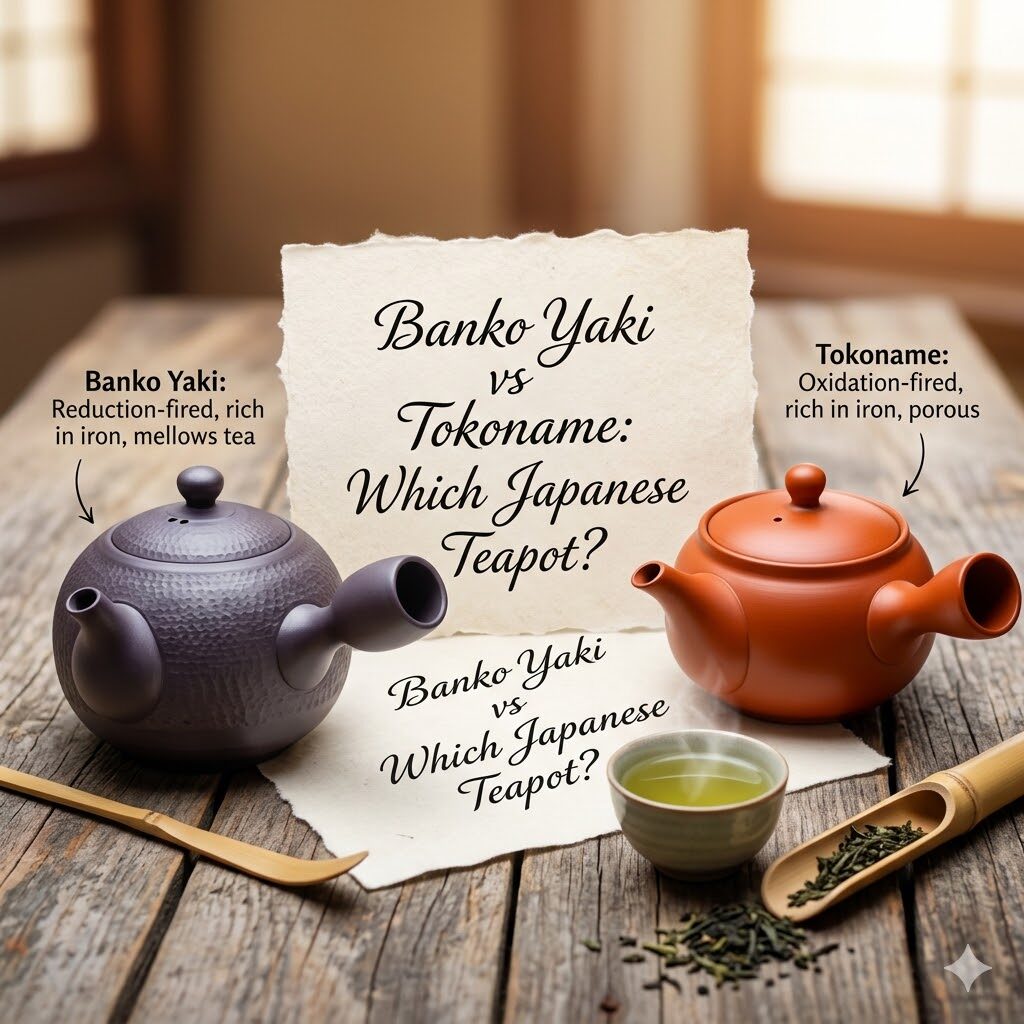
Banko Yaki Teapot vs Tokoname: Which Japanese Clay Makes Better Tea?
If you're serious about Japanese loose leaf tea, you'll eventually confront the question of which pottery tradition to choose for your kyusu. Two names dominate the conversation: Tokoname and Banko yaki. Both are ceramics-producing regions in Japan with centuries of craft history. Both produce kyusu teapots prized by tea enthusiasts. But they have genuinely different characteristics, and the right choice depends on which teas you brew most.
Where They Come From
Tokoname is a city in Aichi Prefecture, on the coast near Nagoya. It's one of Japan's “Six Ancient Kilns” — pottery production sites with documented history going back to the Heian period. Tokoname produces more kyusu than any other region in Japan, and the Tokoname clay tradition is closely associated with Japanese tea brewing culture. When people talk about a traditional Japanese clay teapot, Tokoname is usually what they mean.
Banko yaki originates in Yokkaichi, Mie Prefecture, about 30km from Tokoname. The Banko tradition started in the mid-Edo period and is known for a distinctive purple or reddish-brown clay called murasaki nendo (purple clay). Banko ware is famous for its lightweight construction, precise craftsmanship, and excellent heat resistance — the latter leading to Banko's dominance in the donabe clay pot market as well as teapot production.
Clay Properties: The Core Difference
Tokoname clay is high in iron content. This iron-rich composition is the defining characteristic. When hot water passes through or sits in a Tokoname kyusu, the iron is said to bind with tannins in the tea (particularly the bitter compounds in green tea), softening the flavor. The porous nature of the clay also “seasons” over years of use — each teapot builds a patina that is said to enhance the flavor of the specific tea you brew in it most often.
Banko yaki clay (the purple clay variety most associated with teapots) has a different mineral composition. It's denser and less iron-rich than Tokoname. Banko clay is famously thin-walled for its strength — the clay can be worked thinner than Tokoname clay while remaining structurally sound. This produces teapots that heat up faster and cool down faster than their heavier counterparts.
Effect on Tea Flavor
The flavor impact of both clays is subtle and debated among tea practitioners. The conventional wisdom:
Tokoname: The high iron content is said to smooth and round out the flavors of Japanese green teas — particularly sencha. It reduces perceived astringency and bitterness, producing a rounder, softer cup. The effect is most pronounced in teas brewed in a well-seasoned Tokoname kyusu over years of use.
Banko yaki: The denser, less porous clay has a more neutral effect on flavor — it doesn't season in the same way as Tokoname, which some consider an advantage (the tea tastes like the tea, not the pot) and others consider a disadvantage (you don't develop the deep synergy between pot and tea type).
For brewing green teas specifically — sencha, kabusecha, gyokuro — most Japanese tea specialists recommend Tokoname. Browse Tokoname kyusu options in our shop.
Construction and Craftsmanship
Both Tokoname and Banko yaki are still actively produced by skilled craftspeople, though both also have mass-production segments for the wider market. The quality distinction within each tradition is as important as the distinction between the two.
Tokoname production: The industry ranges from fully handmade pieces by individual master potters to factory-produced teapots assembled with some handwork. The famous Tokoname red teapots (akadobe) with the characteristic smooth, burnished finish represent the high end of the tradition.
Banko yaki production: Banko ware is known for thin walls achieved through skilled hand-finishing. The teapots are often lighter than comparable Tokoname pieces. Some Banko kyusu incorporate decorative yohen (kiln-effect) glazing that makes each piece unique.
Strainer Design: An Underrated Consideration
Both traditions produce kyusu with integrated clay strainers. The strainer design significantly affects which teas you can use in the pot:
Ceramic grid strainer: Larger holes, best for rolled or larger leaf teas. Allows some fine particles through with fukamushi sencha.
Ceramic filter ball strainer: A dome of fine ceramic perforations, better for powdery or broken-leaf teas.
Both Tokoname and Banko kyusu come in both strainer types — it's a factor to evaluate per pot, not per region.
Heat Retention
Banko yaki's thin-walled construction means it heats faster but also loses heat faster. For Japanese green teas brewed at 65-80°C, this is largely neutral — the brew time is short enough that heat retention during the steep doesn't matter much. However, for multiple infusions in succession, a heavier Tokoname pot stays warmer between pours.
Which Should You Buy?
Choose Tokoname if you:
- Primarily brew sencha, kabusecha, or green teas and want the clay's flavor-softening properties
- Want a pot that “seasons” over years of use, developing a relationship with your tea
- Prefer the traditional iron-rich clay aesthetic
- Are buying your first quality clay kyusu — Tokoname is the benchmark
Choose Banko yaki if you:
- Brew a variety of teas and want a neutral clay that doesn't impart its own character
- Prefer the lighter weight and thin-walled elegance
- Are drawn to the decorative qualities of Banko glazes
- Specifically want a pot for hojicha or bancha — Banko's heat characteristics work well here
Our full Japanese teapot collection includes both traditions with notes on which teas each is best suited for.
Frequently Asked Questions
Can I use a Banko teapot for sencha?
Yes, absolutely. Banko yaki kyusu produce excellent sencha — you just won't get the specific iron-clay interaction that Tokoname provides. The difference is subtle enough that most drinkers wouldn't notice in a blind tasting.
Is Tokoname ware expensive?
Quality Tokoname kyusu range from $40-$80 for well-made production pieces to $200-$500+ for pieces by named master potters. It's possible to get excellent everyday Tokoname kyusu without spending a lot.
Should I dedicate my kyusu to one type of tea?
Many tea practitioners do, especially with clay kyusu. A Tokoname pot used exclusively for sencha develops a sencha-specific seasoning over years. Using the same pot for strongly flavored hojicha and delicate gyokuro would mix flavor residues.
Does the clay really affect the taste?
Studies have confirmed that Tokoname clay does bind with certain compounds in tea. Whether this effect is noticeable in a casual cup depends on the pot's age (older, more seasoned pots have a more pronounced effect) and your palate sensitivity.
How do I care for a new clay kyusu?
Season it before first use: rinse with hot water several times, then brew a full pot of the tea you plan to use regularly. Discard this first brew or drink it — it removes clay taste. Over time, rinse only with water (no soap) and allow to air dry completely between uses.
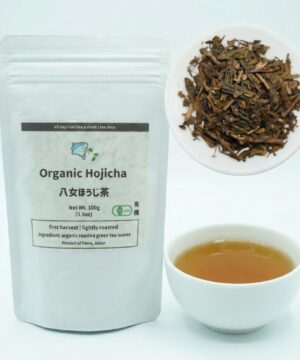 Yame Organic Hojicha Loose Leaf Tea - Roasted Japanese Green Tea (100g)