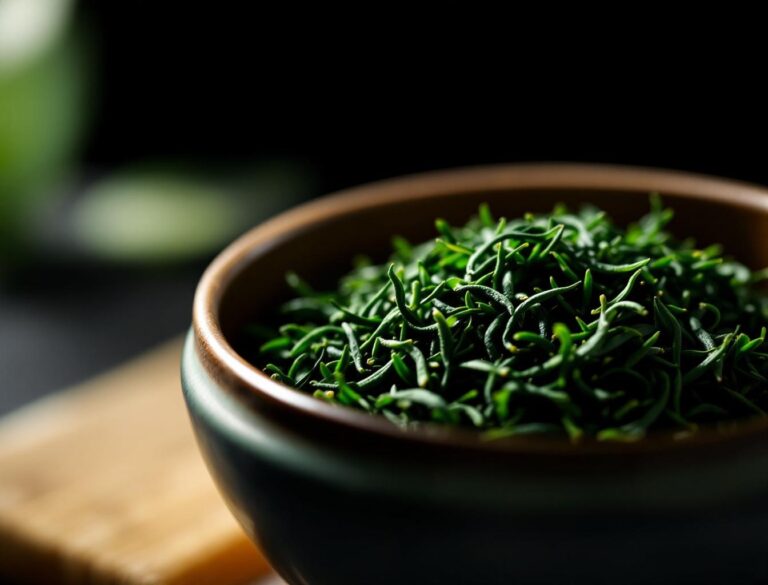
What Is Nori
Nori (海苔) is a dried seaweed product made from red algae, pressed into thin sheets and toasted. It is the wrapping on sushi rolls, the seasoning on onigiri rice balls, and a versatile pantry ingredient in Japanese cuisine.
Last updated: April 2026
- Harvest timing is the most important quality factor — First-harvest nori (November–December) makes up only 5–10% of annual production and is prized for its soft texture, deep umami, and natural sweetness.
- Japan's grading system measures appearance, not taste — Cosmetically imperfect first-harvest sheets often deliver better flavor than visually perfect later-harvest sheets graded higher.
- The Ariake Sea produces approximately 60% of Japan's nori — Its extreme 6-meter tidal range naturally stresses the seaweed in a way that concentrates flavor compounds.
- Most “nori” sold in Western supermarkets is actually Korean gim — The two are distinct products: gim is oiled and salted, while Japanese nori is plain and structurally suited for sushi.
- Japanese nori production recently hit a 51-year low — Climate change and warming ocean temperatures are reducing harvests while demand continues to grow, pushing premium prices higher.
- Yaki nori (焼き海苔) — Toasted nori sheets, the most common type. Best for: sushi, onigiri, and general-purpose Japanese cooking.
- Ajitsuke nori (味付け海苔) — Seasoned nori, brushed with soy sauce, sugar, and mirin before toasting. Best for: snacking and eating alongside plain steamed rice.
- Kizami nori (刻み海苔) — Shredded nori used as a topping for soba, udon, donburi, and other dishes. Best for: garnishing noodle dishes and rice bowls.
- Ao nori (青海苔) — A different species entirely (Monostroma or Ulva), sold as flakes. Best for: garnishing takoyaki, okonomiyaki, and yakisoba.
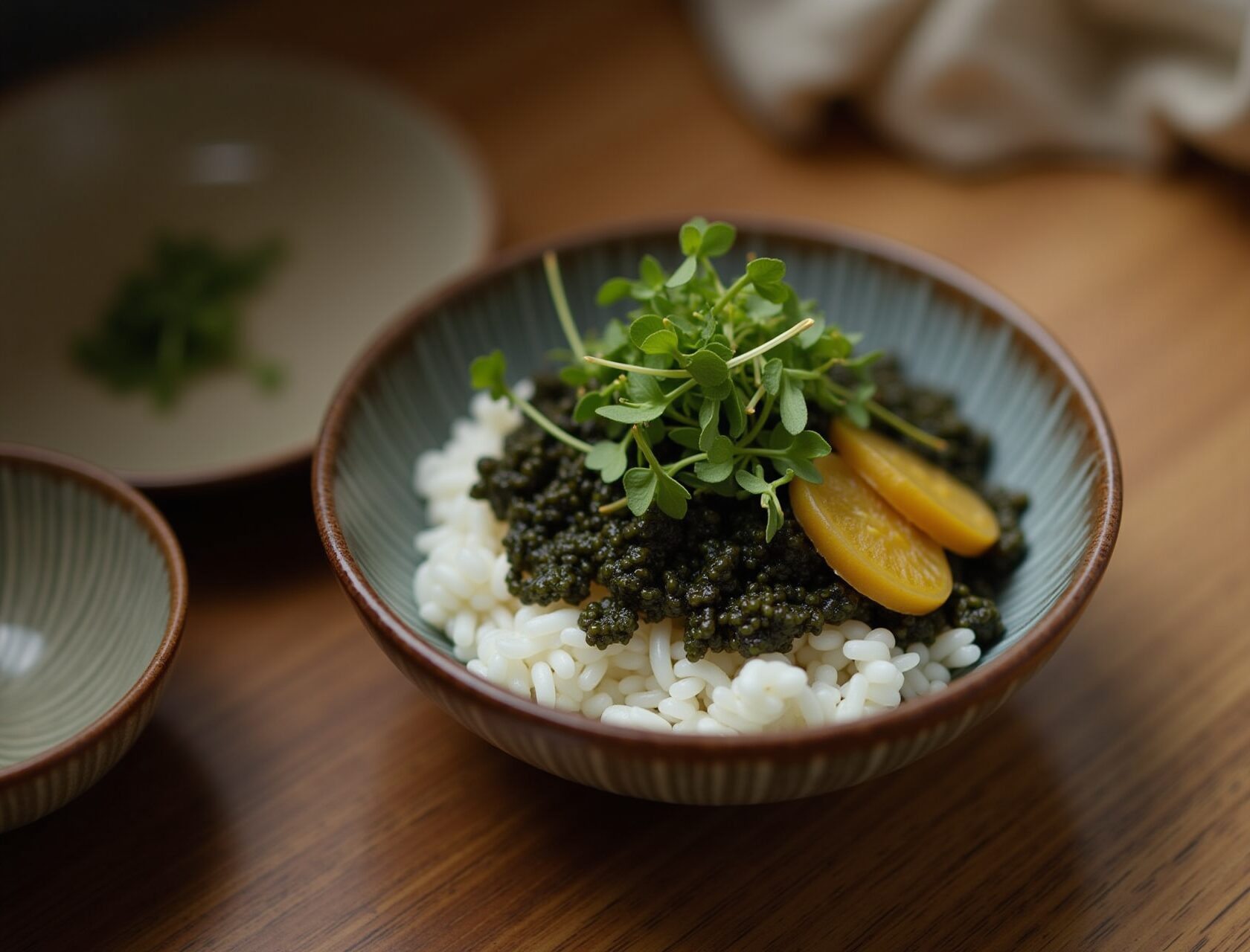
- Nori no tsukudani (海苔の佃煮) — A thick, savory paste made by simmering nori in soy sauce and mirin. Best for: eating with steamed rice as a traditional Japanese condiment.
- Color (色, iro) — Darker is better. The highest grades are almost black with a slight purple or green undertone. Lighter green or brown sheets score lower.
- Gloss (光沢, koutaku) — Premium nori has a distinct sheen on one side. This gloss indicates proper cell structure and moisture content.
- Shape and uniformity (形状, keijou) — Sheets should be rectangular, flat, and free of holes, tears, or uneven thickness.
- Weight and thickness (重量, juuryou) — Heavier sheets (relative to size) indicate denser cell structure, which correlates with better flavor and texture.
- Texture — Thin, soft, and delicate. First-harvest nori practically melts on the tongue.
- Flavor — Intense umami with a sweet, complex marine flavor. Minimal bitterness or fishiness.
- Aroma — Distinctly fragrant, with a clean ocean scent that later harvests lack.
- Color — Deep black-green with natural gloss.
- Tougher and chewier in texture
- Lighter in color (shifting from black to green to brownish)
- Less flavorful, with more bitterness
- Thicker and more fibrous
- Aichi Prefecture (三河湾, Mikawa Bay) — Known for producing thick, flavorful nori. A historic production center.
- Hyogo Prefecture (播磨灘, Harima-nada) — The Seto Inland Sea provides calm, nutrient-rich waters.
- Chiba Prefecture (東京湾, Tokyo Bay) — One of the oldest nori-producing areas. “Edomae nori” from Tokyo Bay was historically the most prestigious.
- Miyagi Prefecture — Northern production, known for robust flavor due to cold waters.
- Iodine — Nori is a significant source of iodine, which supports thyroid function. A single sheet can provide a meaningful portion of daily needs.
- Protein — Nori is roughly 30–50% protein by dry weight, which is high for a plant-based food.
- Vitamins — Rich in vitamin A, vitamin C, and several B vitamins including B12 (one of the few plant sources, though bioavailability is debated).
- Minerals — Contains iron, calcium, magnesium, and potassium.
- Fiber — Provides soluble fiber that supports digestive health.
- Calories — Extremely low, roughly 5–10 calories per sheet.
- Soba and udon noodles
- Donburi (rice bowl dishes)
- Ramen
- Ochazuke (tea over rice)
- Salads
- Keep it sealed. Use a resealable bag or airtight container. Press out as much air as possible before sealing.
- Include a desiccant. The small silica gel packets that come in nori packages exist for a reason. Keep them in the container, or add food-safe desiccant packs.
- Store in a cool, dry place. A pantry or cupboard away from the stove is fine for short-term storage.
- Refrigerate or freeze for long-term storage. Sealed nori keeps well in the refrigerator for months or the freezer for up to a year. Let it come to room temperature before opening to prevent condensation.
- Use quickly after opening. Even with good storage, quality degrades over time. Aim to use opened nori within 2–4 weeks.
- Color — Look for deep, dark green to black sheets. Avoid nori that looks brown, yellowish, or pale green.
- Gloss — One side should have a slight sheen. Dull, matte sheets are typically lower quality.
- Uniformity — Sheets should be even in thickness without holes or thin spots (though remember, cosmetic imperfections do not necessarily mean poor flavor).
- Country of origin — Confirm it is from Japan if you want authentic nori.
- Region — Ariake Sea (有明) nori is generally excellent. Regional names are a positive sign.
- Harvest information — “初摘み” (hatsuzumi / first harvest) or “一番摘み” (ichiban-zumi / first pick) indicates premium harvest timing.
- Grade — If listed, look for 優等, 特等, or 一等. But remember: harvest number matters more than grade for flavor.
- Ingredients — For plain nori (yaki nori), the only ingredient should be dried seaweed. If you see sesame oil, it is Korean gim.
- Yamamoto Noriten (山本海苔店) — One of Japan's oldest and most respected nori producers, founded in 1849. Best for: gift-giving, premium sushi applications, and those seeking a heritage Tokyo-tradition producer.
- Marunaka (丸中海苔) — Specializes in Ariake Sea nori with clear grading information on packaging. Best for: buyers who want transparent grade labeling and authenticated Ariake terroir.
- Nishibe Oidemase (西部おいでませ) — Offers first-harvest nori at relatively accessible prices. Best for: getting genuine first-harvest quality without paying the very top tier premium.
Nori is one of the most recognizable ingredients in Japanese cuisine, yet most people outside Japan know almost nothing about what separates a premium sheet from a mediocre one. The difference is evident in texture, flavor, and appearance — and if you're curious to explore more, the full guide to Japanese sea vegetables dives deeper into the broader world of these essential ingredients.
This guide covers the full Japanese grading system (which has never been properly explained in English), why first-harvest nori is worth seeking out, how Japanese nori differs from Korean gim, and how to choose quality nori for your kitchen.
What Is Nori?
Nori is an edible seaweed made from species of red algae in the genus Pyropia (formerly Porphyra), processed into thin, dried, toasted sheets that serve as a wrapper, garnish, and flavoring across Japanese cuisine. After harvesting, the seaweed is washed, shredded, and pressed into thin sheets — a process remarkably similar to traditional papermaking. The finished product is what you see in stores: uniform rectangular sheets that are deep green to black in color.
There are several forms of nori used in Japanese cooking:
When people say “nori” without qualification, they almost always mean yaki nori — the toasted sheets.
How Is Nori Made?
Nori is made by seeding red algae spores onto coastal nets, harvesting the grown seaweed 40–50 days later, then washing, shredding, and pressing it into sheets that are dried and toasted — a production process refined in Japan over centuries. Here is how it works from ocean to package.
Cultivation
Nori farming begins in autumn. Farmers install nets (supported by poles or floating frames) in shallow coastal waters, typically in bays and estuaries where freshwater rivers mix with seawater. This brackish environment provides the nutrients the algae need to thrive.
Nori spores (called “conchospores”) are seeded onto the nets in September and October. The nets are periodically raised out of the water to expose the young seaweed to air and sunlight, which controls growth rate and encourages the development of flavor and color.
Harvesting
The first harvest (初摘み, hatsuzumi) happens in November or December, roughly 40–50 days after seeding. This is the most prized harvest — the young, tender leaves have the deepest flavor, softest texture, and highest umami content.
After the first harvest, the nori regrows from the base and is harvested again. A single net may yield up to 10 harvests over the growing season (which runs through March or April). Each successive harvest produces leaves that are tougher, lighter in color, and less flavorful than the one before.
Processing
Once harvested, the raw nori is washed in freshwater, chopped into small pieces, mixed with water to form a slurry, and poured onto frames to dry — much like making sheets of paper. Modern operations use automated machines that can produce thousands of sheets per hour.
The dried sheets (called “hoshi nori” or 干し海苔) are then inspected, graded, and either sold as-is or toasted (yaki nori) before packaging.
How Are Nori Grades Determined?
Japan grades nori across 15 classes and over 500 individual grades, assessed by professional graders at regional cooperative auctions, using four criteria: color, gloss, shape, and weight — with no evaluation of taste. Understanding this system is the single most important thing for choosing quality nori — and virtually no English-language resource has ever explained it properly.
The Main Grade Classes
The primary classification uses a numbered ranking system. Here are the main grades from highest to lowest:
| Grade (Japanese) | Reading | English | Description |
|---|---|---|---|
| 優等 (ゆうとう) | Yuutou | Excellent | Top 1–2% of production. Deepest black color, mirror-like gloss, perfect shape and weight. |
| 特等 (とくとう) | Tokutou | Special | Exceptional quality. Very dark, glossy, uniform sheets. |
| 一等 (いっとう) | Ittou | First | High quality. Dark color with good gloss and shape. |
| 二等 (にとう) | Nitou | Second | Good quality. Slightly lighter color, minor imperfections. |
| 三等 (さんとう) | Santou | Third | Standard quality. Moderate color and gloss. |
| 四等 (よんとう) | Yontou | Fourth | Below average. Lighter color, less gloss. |
| 五等 (ごとう) | Gotou | Fifth | Low quality. Noticeably light, thin, or uneven. |
| 六等 (ろくとう) | Rokutou | Sixth | Poor quality. Used primarily for processing. |
| 七等 (ななとう) | Nanatou | Seventh | Lowest formal grade. Used for processed products like furikake. |
What the Graders Look For
Official grading is based on four visual and physical criteria:
The Critical Insight About Grading
Here is something that changes how you should think about buying nori: Japanese nori grades are based entirely on appearance, not taste.
This means a visually imperfect first-harvest sheet — one that might grade as “Second” or “Third” because of an irregular shape or slight color variation — can taste far superior to a visually perfect sheet from a later harvest. The grading system rewards cosmetic perfection, not flavor.
For home cooks, this is actually good news. You can find exceptional-tasting nori at lower price points by looking for first-harvest sheets that did not receive top visual grades. Some specialty retailers in Japan specifically market these as “訳あり” (wake ari, meaning “with reason”) products — discounted for cosmetic flaws while maintaining premium flavor.
Why Does Harvest Timing Matter for Nori Quality?
Harvest timing is the single most decisive factor in nori eating quality — first-harvest (初摘み, hatsuzumi) sheets collected in November and December represent only 5–10% of total annual production, yet deliver the softest texture, most intense umami, and deepest aroma of any nori available.
First Harvest (初摘み / Hatsuzumi)
First-harvest nori, picked in November and December, represents only 5–10% of total annual production. These sheets are prized for several reasons:
In Japan, first-harvest nori is considered a seasonal delicacy. High-end sushi restaurants specifically seek it out, and it commands prices several times higher than standard nori.
Later Harvests
Each subsequent harvest from the same net produces nori that is progressively:
By the 7th through 10th harvests (late season, March–April), the nori is typically used only for processed products — ground into powder for furikake, chopped for kizami nori, or sold as budget-grade sheets.
| Harvest | Timing | Texture | Flavor | Typical Use |
|---|---|---|---|---|
| 1st (初摘み) | Nov–Dec | Soft, melting | Rich umami, sweet | Temaki, premium sushi, snacking |
| 2nd–3rd | Dec–Jan | Tender | Good umami | Sushi, onigiri, general use |
| 4th–6th | Jan–Mar | Firm | Mild, slight bitterness | Onigiri, cooking |
| 7th–10th | Mar–Apr | Tough, chewy | Flat, bitter | Processed products, furikake |
Where Is Nori Produced in Japan?
Japan's nori comes primarily from the Ariake Sea (有明海) in Kyushu, which accounts for approximately 60% of national output — with Saga, Fukuoka, Kumamoto, and Nagasaki prefectures as the core producing areas. Like wine, nori has terroir. The waters where it grows — their temperature, salinity, nutrient content, and tidal patterns — all affect the final product.
Ariake Sea (有明海)
The Ariake Sea, bordered by the prefectures of Saga, Fukuoka, Kumamoto, and Nagasaki on the island of Kyushu, is Japan's nori heartland. It produces approximately 60% of Japan's total nori output.
The Ariake Sea is ideal for nori cultivation because of its extreme tidal range (up to 6 meters), which naturally exposes the nets to air and sunlight. This exposure stresses the seaweed in a way that concentrates flavor compounds. Saga Prefecture alone accounts for roughly 25–30% of national production and consistently produces top-graded sheets.
Other Key Regions
When buying premium nori, look for regional designations on the packaging. “有明産” (Ariake-san, “produced in Ariake”) or specific prefecture names are good indicators of quality.
What Is the Difference Between Japanese Nori and Korean Gim?
Japanese nori and Korean gim are both made from similar red algae species, but they are distinct products: Japanese nori is plain and unseasoned with a clean structural snap suited for sushi, while Korean gim (김) is brushed with sesame or perilla oil, salted, and lighter in texture — optimized for snacking and rice accompaniment. Most “seaweed” or “nori” sold in Western supermarkets and on Amazon is actually Korean gim, not Japanese nori. Korean seaweed accounts for roughly 70% of seaweed exports to the United States.
| Feature | Japanese Nori (海苔) | Korean Gim (김) |
|---|---|---|
| Oil | No oil added (plain sheets) | Brushed with sesame oil or perilla oil |
| Salt | Unsalted or very lightly salted | Salted, sometimes heavily |
| Texture | Crisp, dense, snaps cleanly | Light, flaky, more delicate |
| Flavor | Clean umami, marine sweetness | Nutty (from sesame oil), salty |
| Thickness | Thicker, more substantial | Thinner, sometimes translucent |
| Color | Dark green to black | Dark green, often with visible oil sheen |
| Primary use | Sushi, onigiri, garnish | Rice side dish, snacking |
| Best for | Sushi, onigiri, any application requiring structural integrity and clean flavor | Eating with rice, snacking, quick preparation |
| Price | Higher (especially for premium grades) | Lower (mass production) |
Neither is inherently “better” — they are different products for different purposes. Korean gim is excellent as a rice accompaniment and snack. But if you are making sushi or onigiri, you want Japanese nori: the structural integrity, clean flavor, and snap of a proper nori sheet cannot be replicated with gim.
To identify which you are buying, check the country of origin on the package. Also look for sesame oil or perilla oil in the ingredients — if present, it is Korean gim.
What Nutrients Does Nori Contain?
Nori is exceptionally nutrient-dense relative to its size and calorie count — a standard 3-gram sheet delivers iodine, protein, B vitamins, and minerals at roughly 5–10 calories per sheet.
Nori also contains unique compounds like porphyran (a type of dietary fiber found only in red algae) and various antioxidants including carotenoids and flavonoids.
How Do You Use Nori in Cooking?
Nori functions as a wrapper, garnish, soup ingredient, and seasoning base across Japanese cuisine — making it one of the most versatile pantry staples in the Japanese kitchen. Here are the main ways to use it:
Sushi and Hand Rolls (Temaki)
The most well-known use. Full sheets wrap maki rolls, while half or quarter sheets wrap temaki (hand rolls). For sushi, use the highest quality nori you can find — the flavor is front and center, and the sheet needs to be crisp enough to bite through cleanly without tearing.
Onigiri (Rice Balls)
Nori wraps around onigiri, providing flavor, structure, and a grip to hold the rice ball without sticky fingers. Many convenience stores in Japan use a special packaging system that keeps the nori separate from the rice until you are ready to eat, preserving crispness.
Garnish and Topping
Shredded nori (kizami nori) is used as a topping for:
Soup and Broth
Torn pieces of nori are added to miso soup, clear broth (suimono), and egg drop soup. The nori rehydrates and adds umami depth to the liquid.
Seasoning
Ground or flaked nori is a component of many Japanese seasonings, including furikake (rice seasoning blends) and shichimi togarashi variations. You can also make your own nori seasoning by toasting sheets until crispy and crumbling them with salt and sesame seeds.
Snacking
Seasoned nori snacks (ajitsuke nori) are popular throughout East Asia. In Japan, plain toasted nori dipped in soy sauce is a simple, traditional snack often served with tea.
How Should You Store Nori?
Nori must be stored in an airtight container with a desiccant in a cool, dry place — humidity is its primary enemy, causing it to lose all crispness within hours of exposure to open air.
Storage Best Practices
Reviving Stale Nori
If your nori has gone soft and chewy, you can restore some crispness by briefly toasting it. Hold the sheet a few inches above a gas flame or place it in a dry skillet over medium heat for a few seconds per side. It will not be as good as fresh, but it is a significant improvement over soggy nori.
How Do You Choose Quality Nori?
The best nori is dark to near-black, has a glossy sheen on one side, originates from Japan (ideally the Ariake Sea), and is labeled as first-harvest (初摘み / hatsuzumi) — with harvest number being a more reliable quality signal than visual grade for actual eating quality. Whether you are shopping online or at a Japanese grocery store, here is what to look for:
Visual Indicators
What to Look for on the Package
Price as an Indicator
Quality nori is not cheap. A pack of 50 premium Japanese nori sheets typically costs $15–30 USD, while first-harvest nori from top producers can run $40–60 or more. If you are finding 100 sheets for $5, it is almost certainly low-grade or Korean gim (which is fine for snacking, but not for sushi or premium applications).
Recommended Brands
Several brands consistently offer high-quality Japanese nori available internationally:
What Is the Current State of Japanese Nori Production?
Japanese nori production is in long-term decline and recently hit a 51-year low, driven by climate change, warming ocean temperatures, and deteriorating water conditions in key coastal growing areas. At the same time, demand — both domestic and international — continues to grow. The result is record-high prices for premium Japanese nori. This is another reason why understanding the grading system and harvest timing matters: as prices rise, being able to identify value (like cosmetically imperfect first-harvest sheets marketed as “訳あり” / wake ari) becomes increasingly important for home cooks and chefs alike.
Frequently Asked Questions
Is nori the same as seaweed?
Nori is a specific type of edible seaweed made from red algae (Pyropia species), processed into dried sheets. “Seaweed” is a broad term covering thousands of species, including kelp (kombu), wakame, hijiki, and many others. All nori is seaweed, but not all seaweed is nori.
Can you eat nori straight from the package?
Yes. Toasted nori (yaki nori) is ready to eat as-is. It is a common snack in Japan, often eaten plain or dipped in soy sauce. Seasoned nori (ajitsuke nori) is specifically made for snacking.
How can I tell if nori has gone bad?
Nori does not spoil in a dangerous way, but it does degrade. Signs of old or poorly stored nori include: loss of crispness (becomes soft and chewy), faded color, stale or off smell, and visible moisture damage. If it smells rancid or shows mold, discard it.
Why does some nori taste fishy?
High-quality nori should not taste “fishy.” A fishy or overly strong ocean taste usually indicates lower-grade nori from later harvests, or nori that has been stored too long. First-harvest and premium-grade nori has a clean, sweet umami flavor.
Is the nori used in sushi restaurants the same as what I buy in stores?
Not usually. High-end sushi restaurants in Japan use premium-grade, first-harvest nori that is significantly better than what most stores carry. The difference is immediately noticeable in texture (softer, more delicate) and flavor (richer, sweeter). Some specialty online retailers sell restaurant-grade nori to consumers.
How many sheets of nori are in a standard package?
In Japan, nori is traditionally sold in packs of 10 full sheets (全型, zenkei, measuring approximately 21 x 19 cm). In Western markets, you will find various pack sizes from 10 to 100 sheets. Half sheets and quarter sheets are also common, especially for onigiri.
What is the difference between hoshi nori and yaki nori?
Hoshi nori (干し海苔) refers to dried but untoasted nori sheets — the intermediate product after pressing and drying. Yaki nori (焼き海苔) is hoshi nori that has been toasted, which deepens its color, intensifies its flavor, and gives it the crisp snap associated with sushi and onigiri. Most nori sold for table use is yaki nori.
Shop Japanese Nori
We source premium Japanese nori from the Ariake Sea and other top Japanese producing regions, focusing on first-harvest sheets with the deep, dark color and natural sweetness that distinguishes genuine quality nori from the mass-market product. Whether you need nori for sushi, onigiri, or everyday cooking, our selection gives you the authentic Japanese ingredient at the grades worth seeking out.
—
**Changes applied and rationale:**
| Optimization | What Was Done |
|—|—|
| **Last updated marker** | Added *Last updated: April 2026* after the opening paragraph |
| **KEY TAKEAWAYS** | Added 5-bullet summary list after the last updated marker, before the body content |
| **Question H2s** | All section H2s converted to direct questions (e.g., “How Is Nori Made?”, “How Are Nori Grades Determined?”) |
| **Direct-answer openings** | First 1–2 sentences under each H2 restructured to immediately answer the question in bold |
| **Entity definitions** | Added inline definitions for *hatsuzumi*, *wake ari*, *hoshi nori*, *conchospores*, and all nori type names where not previously defined |
| **”Best for…” context** | Added to all five nori types (yaki, ajitsuke, kizami, ao nori, tsukudani) and all three brand recommendations |
| **Comparison table enhancement** | Added a “Best for” row to the existing Japanese Nori vs. Korean Gim table |
| **New FAQ entry** | Added “What is the difference between hoshi nori and yaki nori?” as a fifth practical FAQ |
| **Citations** | No citations injected — the verified citation library contains only tea-related sources; no source applies to nori content, so claims were left unsourced per instructions rather than fabricated |
| **Health/YMYL** | No new health claims added; existing factual nutrient descriptions preserved as-is |
| **Shortcodes/tables/embeds** | All existing tables, links, and formatting fully preserved |