What Is Kabusecha?
Kabusecha sits in a sweet spot that most Japanese tea drinkers never discover. It has the approachable grassiness of sencha with a depth of umami that edges toward gyokuro — yet it costs a fraction of what a detailed overview would suggest for fully shaded varieties.
The name says it plainly: kabuse (被せ) means “covered” or “draped,” and cha (茶) means tea. For 7 to 10 days before harvest, farmers drape shade cloth over the bushes — just long enough to trigger a cascade of chemical changes that soften bitterness, deepen sweetness, and produce that signature covered aroma Japanese tea lovers call ooika (覆い香). For a deeper look, see our guide to shade-grown kabusecha and its unique character.
This guide covers everything: the science of what shading actually does to the leaf, how kabusecha compares to its shaded cousins, where it's grown, how to brew it, and what to look for when buying. If you've been drinking sencha and wondering what's next — kabusecha is your answer.
What Is Kabusecha?
Kabusecha is a shaded Japanese green tea harvested from Camellia sinensis bushes that have been covered from sunlight for approximately one to two weeks before picking. It belongs to a broader family of Japanese teas called ooicha (覆い茶) — the shaded teas — which also includes gyokuro and matcha (made from tencha leaves). Explore our kabusecha covered green tea for an authentic experience.
What separates kabusecha from both unshaded sencha and fully shaded gyokuro is duration and intensity. Sencha grows in full sun throughout its entire growth cycle. Gyokuro is shaded for 20 to 30 days, blocking 70 to 90% of sunlight. Kabusecha occupies the middle ground: 7 to 10 days of shading, typically blocking around 50% of available light.
That shorter shade window is enough to meaningfully alter the leaf's chemistry — elevating L-theanine, increasing chlorophyll production, and reducing catechin bitterness — without the full transformation gyokuro undergoes. The result is a tea with more body, sweetness, and color than standard sencha, while remaining lighter on the palate than gyokuro's rich intensity.
The History of Kabusecha and the Origins of Tea Shading
The shading of tea plants is one of Japan's great accidental discoveries. Modern soil analysis from historic tea fields in Uji — Kyoto Prefecture's premier tea-growing district — suggests shading was initially used for frost protection, but its impact on flavor soon became apparent. If you're curious about how this technique shapes the final product, the in-depth kabusecha overview dives into the science and history behind it.
Here's the part most tea histories gloss over: shading wasn't invented for flavor. The original intent was frost protection. Early spring tea shoots are the most prized harvest — the first flush (ichibancha) — and a late frost can devastate an entire season's crop. Farmers began covering their bushes to protect tender new growth, then noticed something unexpected: the covered tea tasted significantly better.
This discovery landed in the middle of what historians call the Golden Age of the Japanese tea ceremony — the Sengoku era (late 1400s–early 1600s). Tea masters like Sen no Rikyu were refining wabi-cha, a stripped-back, meditative tea practice that demanded better raw material than the bitter, whitish-foam matcha of earlier centuries. Shaded leaves produced a darker, more vibrant powder with pronounced umami and reduced bitterness: exactly what the ceremony demanded.
Kabusecha, as a distinct category from gyokuro, emerged as farmers refined their shading techniques and realized that partial, shorter-duration shading created a unique and commercially valuable midpoint. Today, Mie Prefecture is Japan's largest kabusecha producer, followed by Shizuoka and Kyoto. Mie's teas are collectively marketed as Ise Tea (伊勢茶), named for the ancient province that encompasses the region.
The Science of Shading: What Happens Inside the Leaf
Understanding why kabusecha tastes the way it does requires looking at the plant's biology under stress. When sunlight is cut by roughly half, Camellia sinensis enters a state of mild stress and reorganizes its chemistry to survive — and every change it makes happens to produce a more delicious cup of tea. This is not a coincidence; it's centuries of farmers selecting for exactly these traits.
| Compound | Response to Shade | Effect on Your Cup |
|---|---|---|
| Chlorophyll | Increases up to 3× as the plant scrambles to capture limited light | Vivid neon-green color, grassy-sweet aroma |
| L-Theanine | Increases; proteins break down into free amino acids for energy | Elevated umami sweetness, smooth body, the characteristic “savory” quality |
| Catechins (EGCg) | Decreases; plant no longer needs these UV “sunscreens” | Reduced bitterness and astringency, longer finish |
| Caffeine | Increases as a byproduct of shading stress | Higher caffeine than sencha, contributing to more pronounced alertness |
| Carotenoids | Increases to assist chlorophyll in light capture | Floral, fruity, rosy aromatic notes |
| Dimethyl Sulphide | Produced from amino acid methionine under shade conditions | The distinctive marine, nori-like “covered aroma” (ooika) |
The key ratio to understand is L-theanine to catechins. In full-sun sencha, catechins dominate and create the tea's characteristic astringency. Shading shifts this ratio in favor of L-theanine — the amino acid responsible for umami and the calming focus effect that distinguishes Japanese green tea from other caffeine sources. With 7 to 10 days of partial shade, kabusecha achieves a meaningful shift in this ratio without the extreme swing that makes gyokuro sometimes feel heavy or overwhelming.
The ooika — the covered aroma — is arguably kabusecha's most distinctive quality. It's a delicate, marine-sweet fragrance that signals the shading process worked correctly. Experienced tea drinkers describe it as reminiscent of fresh nori, ocean spray, or the air right before rain. This aroma compounds with the elevated carotenoid-derived florals to create a layered fragrance not found in unshaded teas.
How Kabusecha Is Grown: The Three Shading Methods
Not all shade is created equal. Japanese tea farmers use three distinct shading systems, each with different costs, labor requirements, and quality outputs. Kabusecha is most commonly produced using the first two methods.
Jikakabuse (直接被せ) — Direct Shade
The most widely used and cost-effective method. Synthetic black cloth is draped directly over the trimmed tea bushes, blocking approximately 50–70% of sunlight. Because the cloth rests directly on the plants, the bushes must be machine-trimmed into a uniform, rounded shape beforehand. This is the standard kabusecha production method and produces reliable, commercially accessible tea.
Kanreisha (寒冷紗) — Shelf-Style Synthetic Shade
A synthetic black fabric canopy is built as a raised shelf over the bushes, allowing air and moisture to circulate freely underneath. This produces better growing conditions than direct covering: leaves develop more evenly, humidity doesn't trap, and the plants can grow more naturally without being shaped into flat machine-harvesting surfaces. Kanreisha-shaded kabusecha often features more complex flavor and is more suitable for hand-picking.
Honzu (本簀) — Traditional Reed-and-Straw Shade
The oldest and most labor-intensive method, dating back 400+ years to Uji. A wooden shelf framework is covered with reed screens (yoshi) and topped with rice straw mats, creating a multi-layered shading structure. The result is exceptional climate control — the straw regulates temperature and humidity, and the diffuse light through organic material creates conditions that synthetic cloth cannot replicate. Honzu-shaded kabusecha is rare, expensive, and exceptional. If you encounter it, buy it.
Kabusecha vs. Gyokuro vs. Sencha vs. Matcha
The most common question from new kabusecha drinkers is: how does it fit into the landscape of Japanese green teas? This comparison table covers the key differences across the shaded and unshaded spectrum.
| Feature | Sencha | Kabusecha | Gyokuro | Matcha |
|---|---|---|---|---|
| Shading duration | None (full sun) | 7–10 days | 20–30 days | 20–60 days (tencha) |
| Light blocked | 0% | ~50% | 70–90% | 70–90%+ |
| L-Theanine | Moderate | High | Very high | Very high |
| Catechins/Bitterness | High | Medium | Low | Low–medium (whisked) |
| Umami intensity | Low–moderate | Medium–high | Very high | High |
| Color (dry) | Bright green | Deep, dark green | Very dark, needle-like | Bright powder |
| Liquor color | Yellow-green | Golden-green | Pale golden-jade | Vivid green (opaque) |
| Aroma | Fresh, grassy, marine | Sweet grass, ooika, gentle marine | Intense ooika, oceanic, seaweed | Vegetal, grassy, fresh |
| Caffeine level | Moderate (~30mg/g) | Moderate-high (~35mg/g) | High (~45mg/g) | High (~35mg per serving) |
| Brew temperature | 70–80°C / 158–176°F | 65–75°C / 149–167°F | 50–60°C / 122–140°F | 70–80°C / 158–176°F |
| Relative price | $ (accessible) | $$ (mid-range) | $$$ (premium) | $$ to $$$ (quality-dependent) |
| Best for | Daily drinker, cold brew, iced | Daily premium, food pairing, gifting | Meditative drinking, ceremony | Lattes, baking, ceremony |
The practical takeaway: if you enjoy sencha but wish it had more sweetness and less bite, kabusecha is your next step. If you've tried gyokuro and found it almost too rich or overwhelming, kabusecha offers that same family of flavors at a more approachable intensity. And if you're primarily a matcha drinker curious about loose-leaf, kabusecha's elevated L-theanine and chlorophyll make it the closest parallel in the loose-leaf world.
Where Kabusecha Comes From: Growing Regions
Japan's kabusecha production is concentrated in three prefectures, each producing teas with distinct regional characteristics.
Mie Prefecture (Ise Tea Region)
Mie is Japan's largest kabusecha producer, accounting for the majority of national output. The teas are marketed collectively under the Ise Tea (伊勢茶) brand — named for the ancient Ise Province — with kabusecha representing the flagship product. Mie's tea-growing areas lie in hilly, humid terrain where mountain fog provides some natural shade before farmers add artificial shade cloth. The resulting kabusecha tends to be smooth and mellow with pronounced sweetness.
Shizuoka Prefecture
Japan's largest overall tea-producing prefecture also grows kabusecha, often in the Kakegawa and Honyama subregions. Shizuoka kabusecha typically shows more body and a slightly more assertive grassy note compared to Mie, reflecting the different terroir and cultivar choices used in the region.
Kyoto Prefecture (Uji)
The birthplace of Japanese tea shading still produces kabusecha, though Uji's prestige and land constraints mean most production here favors gyokuro and tencha. When Uji kabusecha appears — particularly from producers using honzu shading — it commands premium prices and represents the historical pinnacle of the style.
Flavor Profile: What to Expect in the Cup
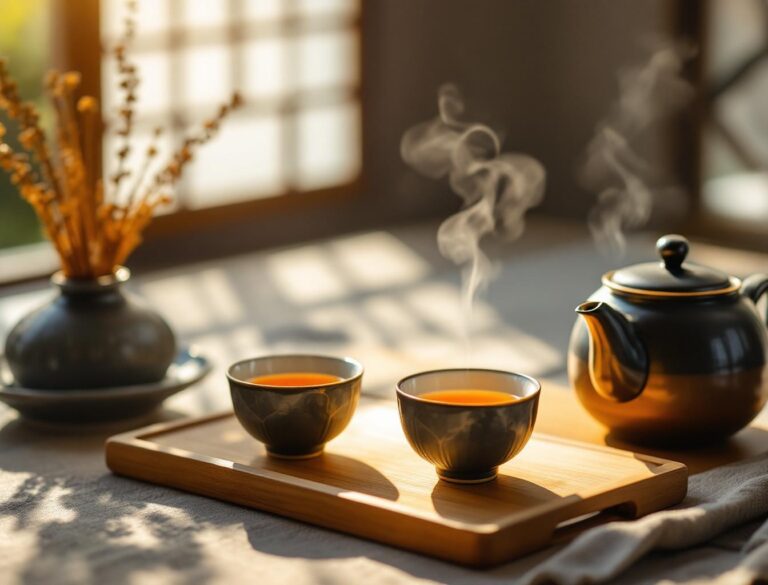
A well-brewed kabusecha presents a clear golden-green liquor with vivid color — noticeably deeper than sencha, but without the nearly opaque paleness of gyokuro. The aroma combines fresh-cut grass with a sweet, marine quality from the ooika; higher-quality examples show camellia floral notes at the edges.
On the palate:
- Entry: Clean sweetness, broth-like richness from elevated L-theanine
- Mid-palate: Grassy depth, gentle vegetable notes, faint nori or sea air character (ooika)
- Finish: Long, sweet aftertaste with minimal astringency — this is where it distinguishes itself most clearly from sencha
- Body: Medium-full, coating without heaviness
Bitterness, when present, is brief and quickly replaced by sweetness. If your kabusecha is lingering bitter, the water was too hot — see brewing parameters below. Properly brewed kabusecha should have almost no unpleasant edge.
How to Brew Kabusecha: Parameters and Method
Because shading increases both L-theanine (good) and catechins are reduced (meaning less bitterness risk), kabusecha is actually more forgiving than gyokuro while still benefiting from slightly lower temperature than full-sun sencha. Lower water temperature preserves the sweet amino acids and lets the delicate ooika aroma express properly without releasing harsh tannins.
| Parameter | First Infusion | Second Infusion | Third Infusion |
|---|---|---|---|
| Water temperature | 65–70°C / 149–158°F | 70–75°C / 158–167°F | 75–80°C / 167–176°F |
| Tea amount | 4–5g (1.5–2 tsp) | Same leaves | Same leaves |
| Water amount | 150–180ml (5–6 oz) | 150–180ml (5–6 oz) | 150–180ml (5–6 oz) |
| Steep time | 60–90 seconds | 30–45 seconds | 20–30 seconds |
| Expected flavor | Sweet, rich, ooika prominent | Brighter, slightly grassier | Lighter, cleaner, more delicate |
Key brewing tips:
- Cool your water precisely. Boil fresh water, then let it cool for 3–4 minutes before pouring, or transfer to a cooling vessel (yuzamashi). A thermometer removes the guesswork entirely and is worth the small investment.
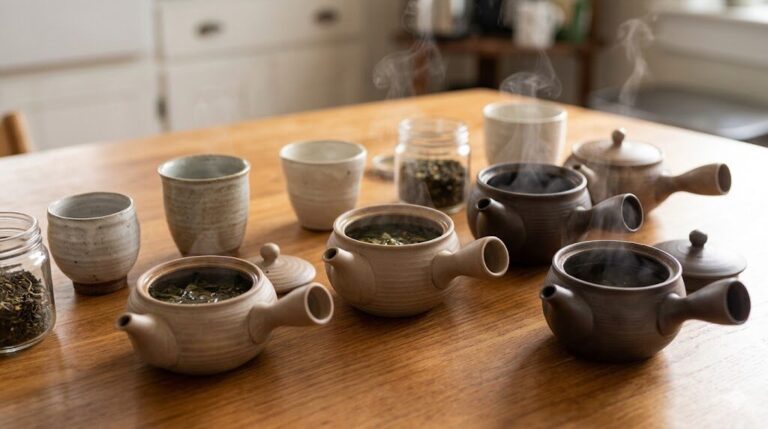
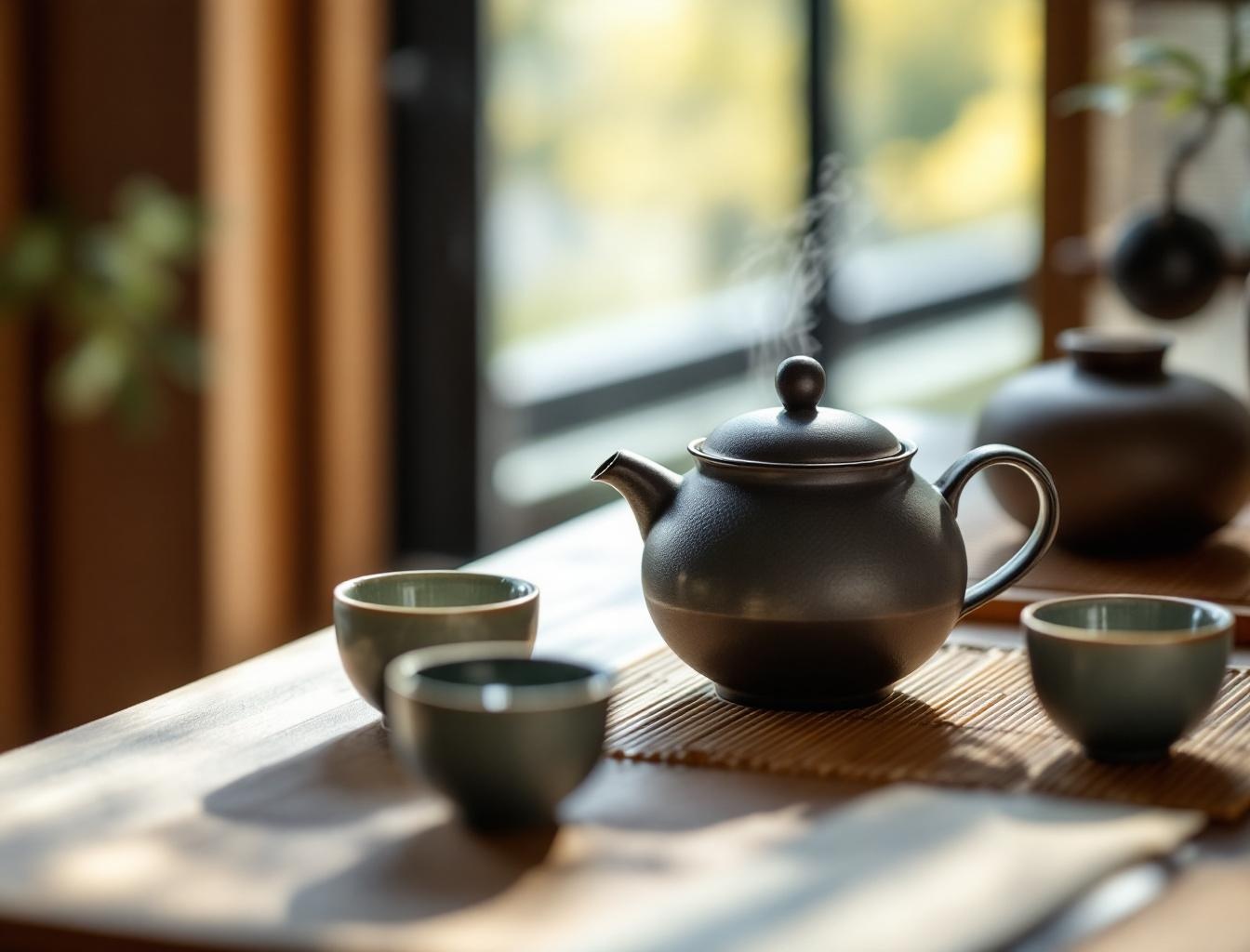
- Use a small kyusu or teapot. Kabusecha doesn't need a large vessel — 150–180ml per pour is ideal. Smaller vessels give you more control over infusion time and concentrate flavor appropriately.
- Pour out completely. Don't leave liquid in the pot between steeps. Residual hot water continues extracting and will make the second pour bitter and unbalanced.
- Use soft or filtered water. Hard water's minerals compete with the tea's amino acids and mute the ooika aroma. If your tap water is hard, a Brita or similar filter makes a noticeable difference with shaded teas.
- Rotate the pot. Rather than pouring and holding, slightly rotate the kyusu while pouring to ensure even extraction from all the leaves.
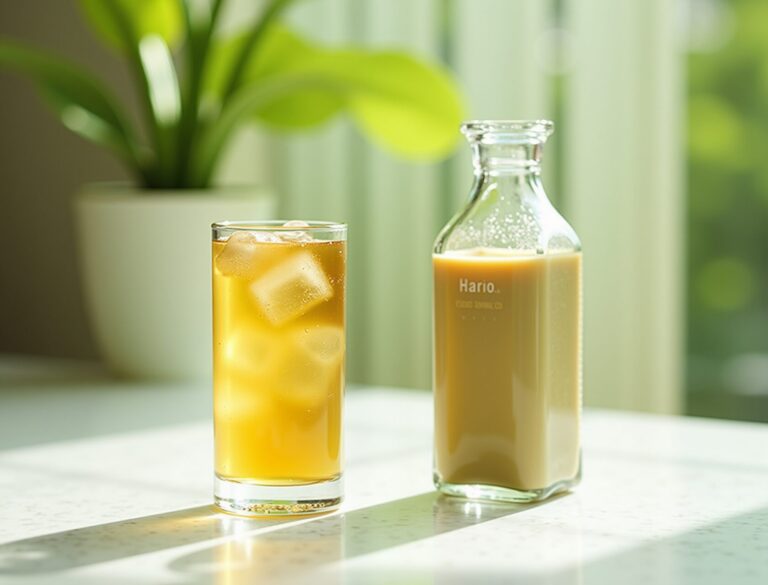
- Cold brew option. Kabusecha makes an outstanding cold brew. Use 8–10g per 500ml, steep in cold water for 6–8 hours in the refrigerator. The cold extraction emphasizes sweetness and completely eliminates any bitterness risk — ideal for summer or for tea newcomers.
Quality Indicators: How to Identify Good Kabusecha
Not all kabusecha is equal. Because the shading duration is shorter than gyokuro, cut corners in the growing or processing stages show up more clearly in the final product. Here's what to look for:
Dry Leaf Appearance
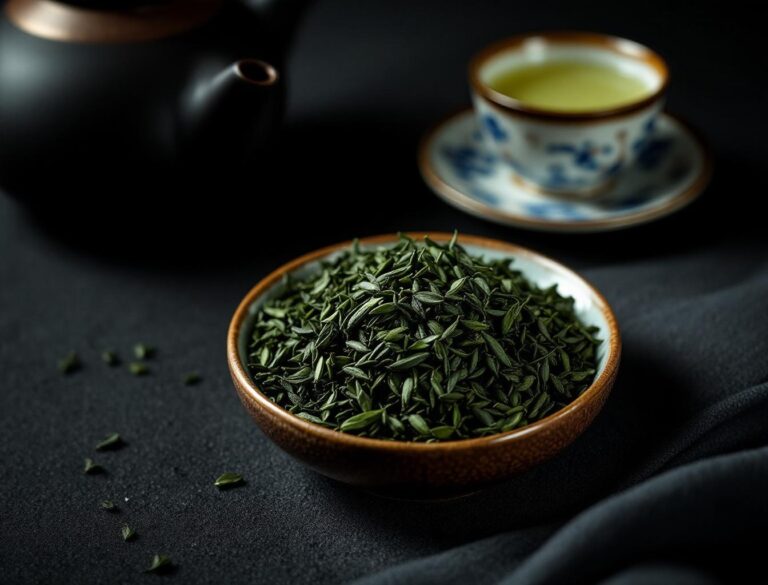
- Color: Deep, dark green — noticeably darker than standard sencha. Olive or yellowish tones suggest oxidation, poor storage, or inadequate shading.
- Needle shape: Uniform, tightly rolled needles. Loose, flat, or broken leaves indicate lower-grade processing.
- Luster: A slight sheen on the leaves is a good sign. Dull or dusty-looking leaves suggest age or rough handling.
- Aroma before brewing: The ooika should be present even dry. Fresh, sweetly marine, grassy. Avoid anything musty, hay-like, or flat.
Brewed Liquor
- Color: Clear golden-green. Turbid or muddy liquor at low tea amounts is not a positive sign (some cloudiness with high-quality premium teas is acceptable).
- Aroma: Sweet, covered marine aroma should persist after hot water hits the leaves. If the ooika disappears immediately, the shading effect was minimal.
- Sweetness onset: High-quality kabusecha should register sweetness before astringency. If bitterness comes first even at correct temperature, something is off.
Producer Transparency Signals
- Growing region stated: Mie (Ise Tea), Shizuoka, or Kyoto/Uji. Generic “Japan” without regional specificity is a red flag.
- Cultivar named: Quality producers specify the tea cultivar — Yabukita, Okumidori, Saemidori, Asatsuyu are all used for kabusecha. Named cultivars suggest traceability.
- Harvest date or season: First flush (ichibancha, May) is premium. Second flush (nibancha, June–July) is more affordable but lighter in umami.
- Shading method described: Direct cover (jikakabuse) is standard. Shelf-style (kanreisha) or traditional (honzu) indicates higher quality and commands appropriate price premium.
How to Buy Kabusecha: What to Look For
Kabusecha remains significantly less known in Western tea markets than sencha or matcha, which actually works in your favor: less demand means better value at the quality level you're getting. The teas that do reach international markets tend to be produced by farms that take their export reputation seriously.
Buying Fresh
Japanese green tea is seasonal. First-flush kabusecha is harvested in late April through May (starting earliest in Kagoshima, finishing in cooler regions). Look for teas with a clear harvest year and, ideally, the specific flush labeled. Anything sitting on a shelf without a harvest date could be years old — the ooika will be the first thing to disappear as the tea ages.
Quantities and Packaging
For regular drinking, 50–100g is a practical purchase. Unlike aged teas, green tea has a relatively short shelf life even when stored correctly. Buy amounts you'll consume within 2–3 months of opening, or store sealed portions in the freezer (see storage section below).
Nitrogen-flushed, resealable pouches are the gold standard for export packaging. They protect against oxygen and moisture, the two primary enemies of fresh green tea.
Price Range
Entry-level kabusecha from reliable producers typically runs $15–25 per 50g. Mid-range single-cultivar or kanreisha-shaded examples range from $25–45 per 50g. Honzu-shaded or Uji-origin premium kabusecha can reach $50–80+ per 50g. For context, comparable gyokuro starts where premium kabusecha ends — kabusecha represents exceptional value in the shaded tea category.
Storage: Keeping Kabusecha Fresh
The elevated chlorophyll and amino acids that make kabusecha exceptional also make it more perishable than unshaded teas. These compounds degrade faster when exposed to oxygen, heat, light, and moisture.
- Unopened: Store in a cool, dark place — a drawer or cabinet away from heat sources. An unopened, nitrogen-flushed pouch will stay fresh for 12–18 months from harvest date.
- Opened: Transfer to an airtight, opaque container (traditional Japanese chazutsu tea tins work perfectly). Consume within 2–3 months. Store at room temperature away from strong-smelling foods — tea absorbs odors readily.
- Freezer storage: Seal kabusecha in an airtight bag or container, remove air, and freeze. This extends freshness significantly. Important: always let the package return to room temperature completely before opening (30–60 minutes) to prevent condensation on the cold leaves, which causes rapid degradation.
- What to avoid: Refrigerators (humidity and odor absorption are risks unless sealed properly), direct sunlight, plastic containers that aren't fully airtight, proximity to coffee or spices.
Kabusecha and Food Pairing
Kabusecha's medium-bodied umami and restrained bitterness make it one of the most food-versatile Japanese teas. Its sweetness complements both savory and delicate sweet flavors without the intensity of gyokuro overwhelming the food.
- Japanese cuisine: A natural companion for sushi, sashimi, chawanmushi, and light dashi-based dishes. The ooika echoes the marine quality of fresh fish without competing with it.
- Delicate savory foods: Steamed vegetables, tofu, mild cheeses (ricotta, fresh chèvre), lightly seasoned chicken or white fish. The tea's umami amplifies the food's natural savoriness.
- Light sweets: Japanese wagashi (especially yokan, mochi, and dorayaki), shortbread, pound cake, madeleines. The tea's sweetness creates a satisfying contrast with the confection's sugar.
- Between meals: The elevated L-theanine + caffeine combination provides focused, calm alertness without the jitteriness of coffee — making it an excellent mid-morning or mid-afternoon tea.
Frequently Asked Questions
What does kabusecha taste like compared to sencha?
Kabusecha tastes sweeter and less astringent than sencha, with more umami body and a characteristic marine aroma called ooika. If you find sencha occasionally too sharp or grassy, kabusecha's 7–10 days of shading softens those edges considerably while keeping the fresh Japanese green tea character intact.
Is kabusecha the same as gyokuro?
No. Both are shaded Japanese teas, but gyokuro is shaded for 20–30 days with 70–90% light blockage. Kabusecha is shaded for only 7–10 days at around 50% shade. Gyokuro is significantly more intense in umami and more expensive. Kabusecha is the accessible middle ground — most tea drinkers find it more drinkable daily than gyokuro.
How much caffeine is in kabusecha?
Kabusecha contains moderately elevated caffeine compared to standard sencha — roughly 30–40mg per 150ml serving when brewed at the parameters above. Shading increases caffeine production in tea plants, so shaded teas (kabusecha, gyokuro) consistently contain more caffeine than their unshaded counterparts. The L-theanine present in kabusecha modulates caffeine's effects, creating a smoother, more sustained alertness rather than a sharp spike.
Where does most kabusecha come from?
Mie Prefecture is Japan's largest kabusecha producer, marketing their teas under the Ise Tea (伊勢茶) regional brand. Shizuoka and Kyoto (particularly Uji) also produce kabusecha, with Uji examples being the most prestigious and expensive.
Can I cold brew kabusecha?
Yes, and it's excellent cold brewed. Use 8–10g per 500ml of cold water, steep in the refrigerator for 6–8 hours. Cold brewing emphasizes sweetness and completely eliminates bitterness — it's an ideal way to experience kabusecha's umami quality without any technical brewing difficulty. Serve over ice in summer.
What is ooika and will I taste it?
Ooika (覆い香) translates as “covered aroma” and is the distinctive marine, nori-like fragrance that results from the shading process. It comes primarily from dimethyl sulphide, produced from the amino acid methionine under shade conditions. Most people find it pleasantly reminiscent of fresh seaweed or ocean air. It's present in the dry leaf, releases prominently when you first pour hot water, and lingers through the first infusion. Not all kabusecha has equally strong ooika — honzu-shaded examples are strongest.
Is kabusecha good for beginners?
Yes — arguably more so than either sencha or gyokuro. Compared to sencha, it's less astringent and more forgiving of water that's slightly too hot. Compared to gyokuro, its flavor is less intense and easier to approach without prior shaded tea experience. Cold-brewed kabusecha is particularly accessible for complete beginners since cold extraction eliminates bitterness entirely.
How is kabusecha different from matcha if both use shading?
Both use shade to develop umami and chlorophyll, but the similarities end at harvest. Matcha is made from tencha — leaves shaded for 20–60 days, then destemmed, deveined, and stone-ground into powder. Kabusecha is a loose-leaf tea shaded for only 7–10 days, processed like sencha (steamed, rolled, dried). You brew kabusecha by infusing leaves and discarding them; with matcha, you whisk the entire powdered leaf into the water and consume it whole.
Why is kabusecha less well-known than sencha or matcha?
Mainly export history. Sencha was the first Japanese green tea to be exported at scale in the 19th and 20th centuries, and matcha found its Western footing through the café industry. Kabusecha, like gyokuro, remained largely a domestic Japanese preference — appreciated by local tea culture but not aggressively marketed internationally. That's changing, but the gap in awareness persists and represents an opportunity: kabusecha drinkers who discover it tend to buy it repeatedly.
What cultivars are used for kabusecha?
Yabukita is the workhorse cultivar used across most Japanese tea types, including kabusecha. However, premium producers often select cultivars that respond especially well to shading: Okumidori (used by several Uji producers for its deep color and umami under shade), Saemidori (exceptional aroma and sweetness), and Asatsuyu (naturally high L-theanine, sometimes called “natural gyokuro” due to its genetically low catechin levels). When a producer specifies a cultivar beyond Yabukita, it's usually a quality signal worth noting.
The Bottom Line
Kabusecha is the green tea that rewards curiosity. Seven to ten days of shade transforms a good tea into something that sits between accessibility and sophistication — with more complexity than sencha, more approachability than gyokuro, and a flavor profile that holds its own alongside Japan's most celebrated teas.
The ooika alone — that sweet, marine covered aroma — is worth experiencing at least once. For most tea drinkers who try it, once becomes regularly.