Gim vs Japanese Nori: What’s the Difference and Which Should You Buy?
You're standing in the seaweed aisle — or browsing online — and there are two options: Korean gim and Japanese nori. They look almost identical. Both are thin, dark green sheets of dried seaweed. Both show up in Asian cooking. So what's the difference, and does it actually matter?
It matters more than most people expect. Korean gim and Japanese nori are made from related but distinct seaweed species, processed differently, and seasoned in ways that make them genuinely incompatible in certain recipes. Using the wrong one won't ruin dinner, but using the right one makes a noticeable difference.
Here's the breakdown you need before buying.
What Is Japanese Nori?
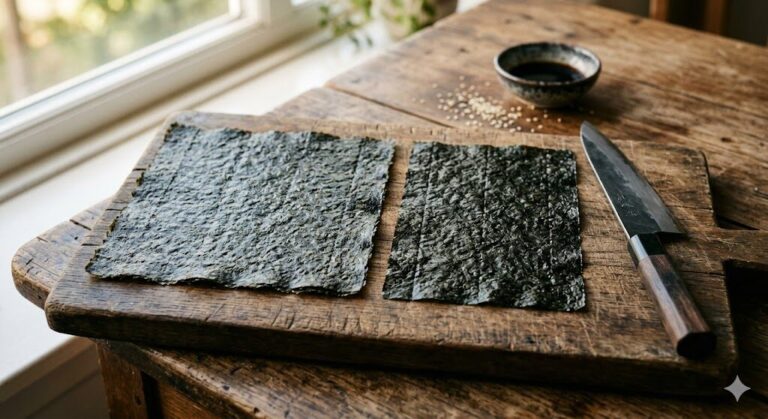
Japanese nori is made from the red algae species Porphyra (most commonly Porphyra yezoensis), harvested primarily in Japan's Ariake Sea, Seto Inland Sea, and coastal regions of Chiba and Miyagi prefectures. The seaweed is cultivated on nets, harvested young, then processed using a method that closely resembles Japanese washi papermaking: the seaweed is washed, chopped, spread into thin sheets on bamboo frames, and dried.
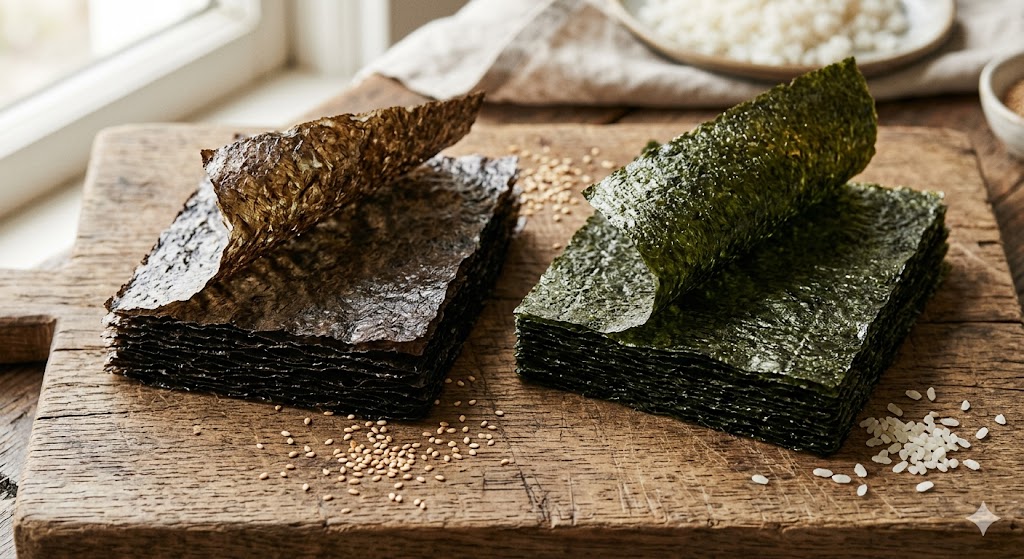
The result is a firm, slightly stiff sheet with a clean oceanic flavor, subtle sweetness, and umami depth. Good Japanese nori has a dark forest-green to near-black color, a glossy finish, and a papery texture that holds its shape even after brief contact with moisture.
What you get with Japanese nori:
- Unflavored — pure seaweed taste, no added oil or salt
- Multiple grades (Gold/Platinum at the top, lower grades for cooking)
- Full sheets measuring roughly 19×21 cm
- Available toasted (yaki nori) or raw (nama nori)
Shop our Japanese nori collection for sushi-grade and everyday options.
What Is Korean Gim?
Korean gim is also made from Porphyra species — the overlap in raw material is real — but the processing and finishing are different. Korean gim is almost always seasoned after drying: brushed with sesame oil, perilla oil, or a blend, then lightly salted and toasted. This creates the characteristic savory, slightly oily, crispy texture that makes gim such an addictive snack.
Unseasoned Korean gim (referred to as “plain gim” or “mulyeom gim”) does exist and is used for kimbap, but the default assumption when buying Korean gim is that it's seasoned.
What you get with Korean gim:
- Seasoned with sesame oil and salt (standard) or perilla oil (regional varieties)
- Crispier and more fragile than Japanese nori
- Slightly thinner sheets in many cases
- Often sold in individual snack packs
Flavor Comparison: Subtle but Real
Unseasoned, the flavor profiles are closer than you'd expect. Both taste of the ocean with a savory, slightly mineral quality. Japanese nori tends to have a more pronounced sweetness and a cleaner finish — partly due to the water quality in Japanese growing regions and the careful processing. Korean gim, even unseasoned, often has a slightly more robust, briny flavor.
Once seasoned, the gap widens dramatically. Korean gim's sesame oil and salt make it richer and more complex as a standalone bite. Japanese nori's neutrality makes it the right backdrop for anything — raw fish, vinegared rice, delicate flavors that would be overwhelmed by sesame oil.
When to Use Japanese Nori
- Sushi and onigiri: The clean flavor and structural integrity under slight moisture is exactly what these require. Seasoned gim would compete with the fish.
- Ramen garnish: A strip of toasted Japanese nori on a bowl of ramen adds umami without fat or salt.
- Temaki hand rolls: You need the neutral base and the structural hold.
- Furikake and cooking: Crumbled nori in seasonings, dressings, and salads works best when unseasoned.
- Soba dishes: Thin strips of nori (kizami nori) over cold soba is a classic — the oil in gim would feel wrong here.
Browse our premium nori sheets for full-sheet sushi-grade options.
When to Use Korean Gim
- Kimbap: Traditional Korean rice rolls use unseasoned gim, but seasoned gim is often added as a snack component on the side.
- Banchan side dishes: Crispy seasoned gim sheets as a side at Korean meals.
- Snacking: Gim is a superior snack seaweed due to the seasoning — crunchier, more flavorful on its own.
- Bibimbap topping: Crumbled seasoned gim as a finishing element works well here.
Can You Substitute One for the Other?
In a pinch, yes — with adjustments. If you're using seasoned Korean gim where Japanese nori is called for, reduce any added salt in the dish and expect a richer, oilier result. If you're using unseasoned Japanese nori where gim is called for, add a brush of sesame oil and a pinch of salt to the sheet before using.
The substitution that genuinely doesn't work well: using seasoned Korean gim in sushi or onigiri. The sesame oil changes the flavor profile of every bite and can cause the seaweed to soften faster, affecting the structure of rolls.
Grades and Quality: Japanese Nori Grades Explained
Japanese nori has a formal grading system based on harvest location, season, texture, luster, color, and taste. The top grades are referred to as “Gold” or “Platinum” (kin/hakkin), and these are the sheets used at high-end sushi restaurants. They're noticeably more tender, more aromatic, and dissolve on the tongue rather than requiring chewing.
For everyday cooking, mid-grade nori (often labeled as Grade A or comparable) is excellent value. The flavor difference from top-grade is noticeable to trained palates but won't be obvious in a busy weeknight hand roll. Save premium nori for dishes where the seaweed is a star, not a wrapper.
Korean gim doesn't use the same formal grading system, though some producers use descriptors like “premium” or “gold” based on the seaweed source and oil quality.
Storage: Both Need It Airtight
Both gim and nori are highly susceptible to moisture and will lose their crisp texture quickly once exposed to air. Key rules:
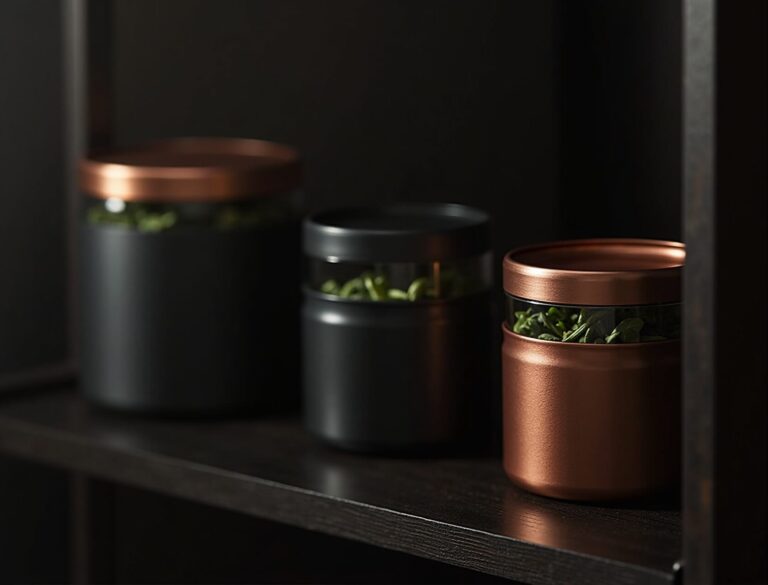
- Store in an airtight container with a silica gel desiccant packet
- Keep away from direct sunlight and heat
- Once opened, consume within 1-2 weeks for best quality
- If sheets have gone soft, toast them in a dry pan for 10-15 seconds per side to restore crispness
See our full nori storage guide for more tips.
Frequently Asked Questions
Can I use Japanese nori to make kimbap?
Yes. Many Korean home cooks actually prefer unseasoned nori for kimbap because it holds structure better when rolled tightly. Use full-size sheets.
Why does my nori taste bitter?
Bitterness usually indicates the nori is stale or was exposed to moisture and then partially dried. Fresh, properly stored nori should have no bitterness.
Is Ariake Sea nori really better?
Ariake Sea nori is considered top-tier due to the nutrient-rich waters from the Kyushu coastline. It tends to be more tender and have a more complex flavor. For most home cooking, the difference is subtle.
Does gim expire?
Unopened gim and nori typically have a shelf life of 1-2 years. Quality degrades well before the official expiry date if stored improperly — watch for softness, dull color, and a flat or sour taste.
Which is better for a snack board?
Korean seasoned gim wins for snacking boards — it's more flavorful standalone. Japanese nori is better as an accompaniment to other food.