Meet Kabusecha: The Shade-Grown Japanese Tea Between Sencha and Gyokuro
Last updated: April 2026
Kabusecha sits in a space most tea drinkers never discover. It is not sencha, grown in full sun. It is not gyokuro, shaded for weeks under heavy cover. Kabusecha is the tea in between — shaded for a shorter time than shade-grown tea, but enough to develop a richer, sweeter character than unshaded varieties.
- Kabusecha is shaded for 7–14 days before harvest, placing it between sencha (no shading) and gyokuro (20+ days) in flavor, chemistry, and price.
- Shading preserves L-theanine, the amino acid responsible for umami depth and natural sweetness, while reducing bitter catechins.
- Spring first-flush (ichiban-cha) kabusecha is the most prized, producing the highest amino acid levels and the distinctive ooika (covered) aroma.
- Brewing temperature dramatically affects caffeine — ranging from ~38mg to ~77mg per cup based solely on water temperature.
- Kabusecha delivers shade-grown complexity at a more accessible price point than gyokuro, making it an ideal entry into shaded Japanese teas.
The name itself tells you what it is: kabuseru (被せる) means “to cover” in Japanese. Before harvest, farmers drape a porous cloth called a kanreisha (寒冷紗) directly over the tea bushes for 7 to 14 days. According to Japanese Agricultural Standards (JAS/MAFF, 2024), this shading duration classifies kabusecha as an intermediate variety — producing theanine levels that fall between sencha and gyokuro. That brief period of shade changes everything about the leaf's biochemistry, flavor, and aroma.
What Happens When You Shade a Tea Plant
Shading a tea plant for 7–14 days directly shifts its chemistry: theanine levels rise, chlorophyll production increases, and catechin levels fall — the three changes that define kabusecha's flavor profile. Tea plants are remarkably responsive to light, and those adaptations create the flavors that make kabusecha unique.
L-Theanine Preservation
In full sunlight, the tea plant naturally converts the amino acid L-theanine into catechins — the bitter, astringent polyphenols that give unshaded sencha its characteristic bite. When you shade the plant, this conversion slows dramatically. The result: kabusecha retains high levels of L-theanine, which contributes umami depth and natural sweetness that sencha simply cannot match. According to Ashihara (2015, Natural Product Communications), shading suppresses the photosynthetic conversion of theanine to catechins — gyokuro and matcha retain 2–3× more theanine than unshaded sencha, with kabusecha falling meaningfully above sencha on this scale.
Chlorophyll Boost
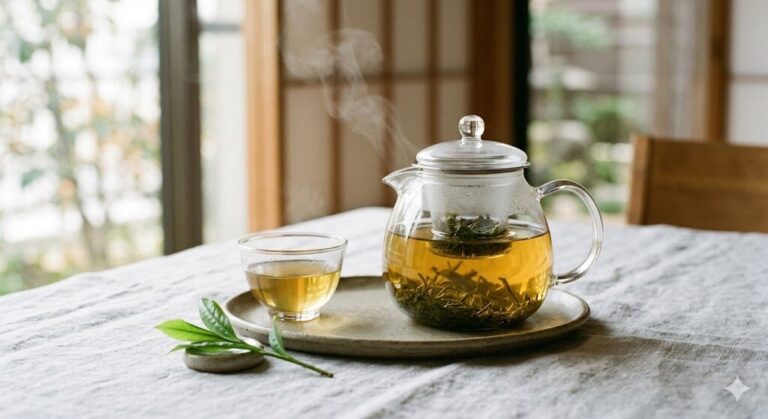
With less light available, the plant compensates by producing more chlorophyll to maximize photosynthesis. This gives kabusecha leaves a vivid, deep green color with a subtle bluish tint — noticeably darker than standard sencha. The brewed tea yields a bright yellow-green liquor with exceptional clarity.
Catechin Reduction
Less sunlight means fewer catechins. Since catechins are the primary source of bitterness and astringency in green tea, kabusecha drinks smoother and sweeter than sencha — without any of the “mouth-puckering” quality that turns some people off from Japanese green tea.
The Seasonal Paradox: Spring vs. Autumn Shading
The effect of shading on kabusecha reverses depending on the season — spring shading increases amino acids while autumn shading can reduce them, making harvest timing as critical as shading technique itself.
Scientific studies comparing spring and autumn shading treatments found:
- Spring (April) shading — Significantly increases total free amino acids, including threonine, glutamic acid, and alanine. This is why first-flush spring kabusecha is prized for its intense umami and sweetness.
- Autumn (August) shading — Actually decreases amino acid levels. L-theanine showed no significant response to shading in spring but dropped under heavy shading in autumn.
This biochemical paradox means that the season of harvest matters as much as the shading itself. According to Yamamoto, Kim, and Juneja (1997, Chemistry and Applications of Green Tea, CRC Press), first-flush teas (ichibancha, April–May) contain the highest theanine levels and the most prized flavor profiles, with later harvests progressively lower in amino acids and higher in catechins. Spring kabusecha from the first flush (ichiban-cha, 一番茶) is a fundamentally different tea from an autumn harvest, even from the same field using identical shading methods.
The Ooika Aroma: Why Kabusecha Smells Different
Kabusecha develops a distinctive floral-sweet fragrance called ooika (覆い香, “covered aroma”) as a direct result of the shading process — and it is one of the primary quality markers used by professional tea evaluators to assess shade-grown Japanese teas.
Scientific analysis has found that kabusecha's essential oils contain high quantities of ionone series compounds. These are the same aromatic molecules found in violets, roses, and certain fruits. They are produced when the shading process alters the leaf's volatile compound profile, and they cannot be replicated in an unshaded tea.
Ooika is one of the markers that tea professionals use to evaluate kabusecha quality. A strong, clean ooika indicates proper shading technique and timing. It is the fragrance equivalent of umami — subtle, complex, and immediately recognizable once you know what you are smelling.
How Kabusecha Compares to Sencha and Gyokuro
| Characteristic | Sencha | Kabusecha | Gyokuro |
|---|---|---|---|
| Shading | None (full sun) | 7–14 days | 20+ days |
| Flavor | Bright, grassy, astringent | Sweet, umami, balanced | Intense umami, brothy, marine |
| Aroma | Fresh, vegetal | Ooika (floral-sweet) | Strong ooika, seaweed-like |
| Caffeine | ~20–30 mg/cup | ~38–77 mg (temp dependent) | ~46–82 mg (temp dependent) |
| L-Theanine | Moderate | High | Very high |
| Catechins | High | Moderate | Low |
| Price | $ | $$ | $$$ |
| Leaf shape | Needle-shaped | Slightly flat | Tightly rolled needles |
| Best for | Everyday drinking; budget-conscious tea lovers; those who prefer crisp, grassy flavor | Drinkers seeking umami balance without gyokuro's intensity; an ideal entry point into shaded Japanese teas | Special occasions; seasoned tea drinkers seeking maximum umami depth and the most complex shade-grown flavor |
Think of kabusecha as the sweet spot. It delivers the umami depth and calming L-theanine of shade-grown tea at a price point well below gyokuro, while offering a more nuanced and approachable flavor than standard sencha. Japanese tea experts sometimes call it “shade-grown sencha” — the best of both worlds.
Caffeine in Kabusecha: Temperature Changes Everything
Kabusecha's caffeine content varies dramatically based solely on brewing temperature — ranging from approximately 38mg to 77mg per cup, giving you precise, controllable caffeine intake from a single tea.
Laboratory analysis of organic kabusecha showed:
- 37.9 mg caffeine when brewed at 130°F (54°C) for 3.5 minutes
- 77.1 mg caffeine when brewed at 212°F (100°C) for 3 minutes
That is a two-fold difference based solely on water temperature. This gives you real control over your caffeine intake — a cool brew for a gentle afternoon cup, a hot brew for a focused morning session.
For a complete caffeine comparison across every Japanese tea type, see our green tea caffeine content guide.
How to Brew Kabusecha
Brew kabusecha at 65–70°C (150–160°F) for 3 minutes to maximize sweetness and umami while keeping bitterness in check — cooler than sencha, but warmer than gyokuro. According to Komes et al. (2010, Food Research International), higher water temperatures significantly increase catechin and tannin extraction, producing more astringency; 70–80°C is the established optimal range for flavor balance in green teas, and kabusecha benefits from staying toward the lower end of that window.
Method 1: Classic Low-Temperature Brew (Recommended)
- Use 7g (about 3 teaspoons) of kabusecha leaves
- Heat 300ml of water to 65–70°C (150–160°F)
- Steep for 3 minutes for the first infusion
- Pour completely — do not leave water sitting on the leaves
- For subsequent infusions, raise the temperature slightly and steep for 1–2 minutes
Method 2: Quick Higher-Temperature Brew
- Use 3g of leaves per 100ml of water
- Heat water to 70–80°C (160–175°F)
- Steep for 1–2 minutes
- Good for a more astringent, refreshing cup
Multiple infusions are one of kabusecha's strengths. The first infusion delivers the most umami and sweetness. The second and third infusions release more astringency and body as you raise the temperature, giving you a progression of flavor from a single batch of leaves.
Why Kabusecha Deserves a Place in Your Tea Collection
Kabusecha is the ideal choice for tea drinkers who want more depth and umami than sencha provides, without the intensity or cost of gyokuro — making it one of the most accessible and rewarding entry points into shade-grown Japanese tea.
Most people who drink Japanese green tea are either in the sencha camp or the matcha camp. Kabusecha is the tea for people who want something more layered than sencha but less intense (and less expensive) than gyokuro or ceremonial matcha.
It pairs beautifully with light Japanese cuisine — white fish, tofu dishes, onigiri, and mild tsukemono. The umami in the tea complements rather than competes with delicate food flavors.
It is also an excellent mindfulness tea. The cooler brewing temperature and slower steeping process naturally forces you to slow down, pay attention to the water, and approach the tea with intention. In a world of one-button pod machines, that deliberate act of tea-making is itself valuable.
Explore all the Japanese green tea varieties and find what suits your taste in our complete Japanese green tea guide. If you are specifically interested in how loose leaf compares to other preparation methods, our loose leaf tea guide covers everything you need to know.
Frequently Asked Questions
What does kabusecha taste like?
Kabusecha has a balanced flavor that bridges sencha and gyokuro. Expect a smooth, sweet cup with noticeable umami depth, a bright yellow-green color, and grassy notes balanced by subtle marine characteristics. It is less astringent than sencha and less intensely brothy than gyokuro.
Is kabusecha the same as gyokuro?
No — kabusecha is shaded for 7–14 days with lighter cover, while gyokuro is shaded for 20+ days with heavy cover, producing significantly higher theanine levels and a more intense flavor. According to Japanese Agricultural Standards (JAS/MAFF, 2024), kabusecha's shorter shading period produces intermediate theanine levels between sencha and gyokuro. This results in a more approachable, affordable tea that still delivers meaningful umami depth.
Does kabusecha have more caffeine than sencha?
Yes. The stress of shading causes the tea plant to increase caffeine production as a natural insecticide. Kabusecha has more caffeine than sencha but less than gyokuro. However, brewing at a lower temperature (65–70°C) extracts significantly less caffeine — potentially cutting the amount in half compared to a full boil.
When is the best kabusecha harvested?
Spring first-flush (ichiban-cha, 一番茶) kabusecha, typically harvested in April and May, is considered the best. The spring shading produces the highest amino acid levels and the most pronounced ooika aroma. Autumn-shaded kabusecha has a different, less sweet profile due to the seasonal biochemistry paradox described above.
How should I store kabusecha?
Keep kabusecha in an airtight, opaque container away from heat, light, and moisture. Refrigeration extends freshness, but let the container reach room temperature before opening to prevent condensation. Once opened, use within 2–4 weeks for the best flavor and ooika aroma.