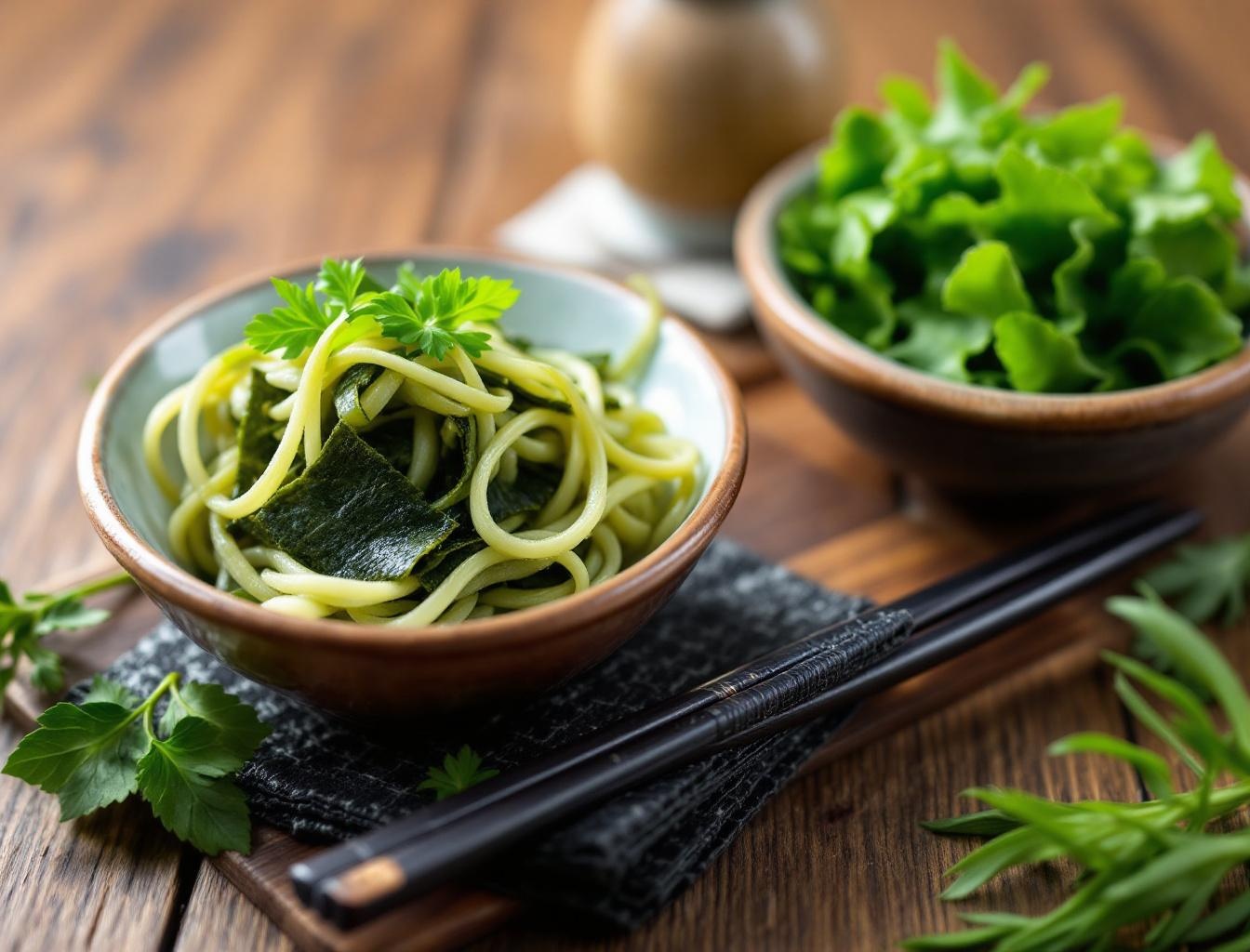
Japanese Sea Vegetables: Nori, Kombu, Wakame, Hijiki, and Mozuku — A Culinary Guide
Last updated: April 2026
Sea vegetables — kaiso (海藻, literally “sea grass” or “sea plant”) in Japanese — have been part of Japanese cooking for over a thousand years. They're not a recent trend in Japan; they're structural ingredients used daily in ways that are completely integrated into the cuisine. Kombu makes dashi. Nori wraps onigiri. Wakame goes into miso soup. While the Western food world discovered them recently and immediately reached for superlatives, the Japanese culinary tradition has been quietly using them with precision for centuries.
Key Takeaways
- Japanese sea vegetables (kaiso) fall into three algae types — brown, red, and green — each with a distinct character and specific culinary role in Japanese cooking.
- Nori is one of the highest-protein sea vegetables, prized for the savory, oceanic flavor it brings to sushi and onigiri.
- Kombu is among the most concentrated natural sources of free glutamic acid on earth — the compound that defines umami flavor — and forms the base of dashi, Japan's foundational cooking stock.
- Each variety has a different texture and flavor intensity, from the mild, leafy wakame to the assertive, earthy hijiki.
- Traditional Japanese pairings — wakame with sesame oil, nori with citrus, kombu in bean cooking — are built directly into the cuisine's standard preparations.
What makes Japanese sea vegetables worth understanding properly is the specificity. For more on Japanese cuisine, explore our toro sushi. Each variety has a distinct flavor profile, a different culinary function, and a different best use in the kitchen. This guide covers the six most commonly used varieties in Japanese cooking, how they're made, and how to use them well.
What Are the Three Primary Categories of Japanese Sea Vegetables?
Japanese sea vegetables are classified into three groups by pigmentation — brown algae (Phaeophyta), red algae (Rhodophyta), and green algae (Chlorophyta) — each with a distinct character and culinary use.
Brown Algae (Phaeophyta) — The Umami Workhorses
Brown algae dominate Japanese cooking in terms of volume and flavor impact. Kombu, wakame, hijiki, and mozuku all belong here. Their color comes from fucoxanthin — a marine carotenoid pigment unique to brown algae that turns green when the seaweed is cooked or dried. Brown algae are the backbone of Japanese stock-making and braised side dishes.
Red Algae (Rhodophyta) — Delicate, Crisp-Edged
Nori is a red alga. Despite appearing dark green-black when dried, its natural state is red-purple, which you can see when fresh nori is held to light. Red algae are notable for their protein content — nori is exceptional for a plant food — and for the crisp, savory sheet that defines sushi and onigiri.
Green Algae (Chlorophyta) — The Condiment Variety
Aonori — the bright green flakes used as a topping for takoyaki, okonomiyaki, and yakisoba — belongs here. Best for: finishing garnish and seasoning on grilled or fried Japanese dishes. It's primarily used as a seasoning rather than a main ingredient. Concentrated in chlorophyll and a strong oceanic flavor, a small amount goes a long way.
What Is Nori (海苔)?
Nori is a thin, dried, pressed sheet made from Porphyra species red algae — one of the highest-protein sea vegetables available. In its wet state it's red-green; dried and toasted, it becomes the dark forest green sheets used in sushi and onigiri. The flavor and texture of nori can vary significantly depending on the species and growing conditions — for a deeper look, consider exploring nori in detail.
Best for: sushi and onigiri preparation, snacking, and versatile use as a garnish or flavor carrier.
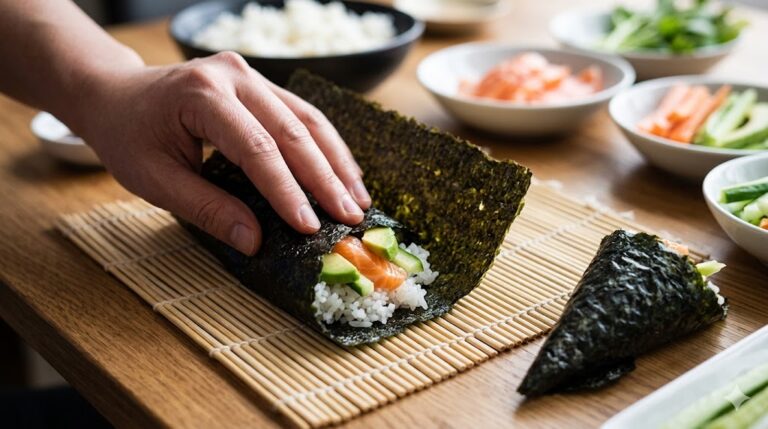
What sets nori apart in the kitchen: For its weight, nori delivers an outsized punch of savory, oceanic flavor. A standard sheet (~2.5g dry) carries a concentrated umami character that makes it as much a seasoning as a wrapper. Toasted lightly over heat, it turns fragrant and crisp — the textural contrast against soft rice is a big part of why sushi works.
Nori Quality and Grades
Nori quality varies significantly and matters for cooking. High-grade nori is uniformly dark green-black with a glossy surface, crisps easily when passed over heat, and has a distinctly fragrant, oceanic smell. Lower grades are duller, may have color variation, and are less aromatic.
The Ariake Sea (Ariake-kai) in Kyushu has historically produced Japan's finest nori — the tidal conditions create ideal growing conditions. Nori graded by Japanese standards (銀, 金, 特金 — Silver, Gold, Special Gold) reflects not just color and appearance but flavor compound concentration.
Culinary Uses for Nori
- Maki and temaki sushi rolls — the primary global use
- Onigiri wrapping — the strip that creates structural integrity and finger grip
- Snack sheets, often seasoned with soy sauce and sesame oil (ajitsuke nori)
- Topping for ramen, udon, rice bowls, and chazuke (rice with hot tea)
- Crumbled into furikake (rice seasoning blend)
- Finely cut as a garnish (kizami nori)
- Wrapped around tofu, tempeh, or yakitori as a flavor carrier
Storage: Keep in a sealed container away from moisture. Re-crisp slightly damp nori by passing briefly over low heat. Toasting nori in a dry pan for a few seconds also intensifies the flavor.
What Is Kombu (昆布) and How Is It Used?
Kombu is dried kelp — large, flat brown algae from the Laminaria and Saccharina families — and the single most important flavor ingredient in Japanese cooking. It looks like thick, dark brown-green leather, often with a light white powder on the surface. That white powder is dried glutamates and mannitol — do not wash it off. It's flavor, not residue.
Best for: making dashi (Japan's foundational cooking stock), adding deep umami to any dish, cooking dried beans and legumes, and curing fish (kombu-jime technique).
Kombu is one of the highest natural sources of free glutamic acid on earth. Kikunae Ikeda, the chemist who identified umami as the “fifth taste” in 1908, first isolated glutamic acid from kombu. When you steep kombu in water to make dashi — Japan's foundational all-purpose cooking stock — you're essentially extracting a naturally occurring flavor precursor that activates umami receptors on the tongue. This is why kombu-based dashi has such a profound savory depth without any fat, salt, or added flavoring — you're working with pure flavor chemistry.
How to Make Kombu Dashi
- Wipe a 10cm piece of dried kombu with a dry cloth. Do not wash it — the white powder on the surface is flavor.
- Add to 1 liter of cold water. Soak for 30 minutes to several hours. Cold extraction (8+ hours in the refrigerator) produces the clearest, smoothest dashi.
- For hot dashi: slowly heat the water with the kombu to 60–65°C (140–150°F). Remove the kombu just before the water reaches a simmer. Do not let it boil — above 70°C, kombu releases bitter compounds and the broth becomes murky and slightly slimy.
- The resulting liquid is kombu dashi — the foundation for miso soup, noodle broths, simmered dishes, and countless sauces.
Types of Kombu
The main varieties come from Hokkaido, Japan's northernmost island, where cold Pacific waters produce the highest glutamate concentrations:
- Ma-kombu (真昆布) — The standard for home cooking. Balanced flavor, moderate thickness.
- Rishiri-kombu (利尻昆布) — From Rishiri Island in northern Hokkaido. Produces the clearest, most delicate dashi. Preferred in Kyoto-style cuisine and kaiseki cooking.
- Rausu-kombu (羅臼昆布) — From the Shiretoko Peninsula. Produces a richer, more amber-colored stock with stronger flavor. Common in Osaka cuisine.
- Hidaka-kombu (日高昆布) — Softer texture, often eaten directly (braised or as a condiment) rather than for dashi.
What Is Wakame (わかめ)?
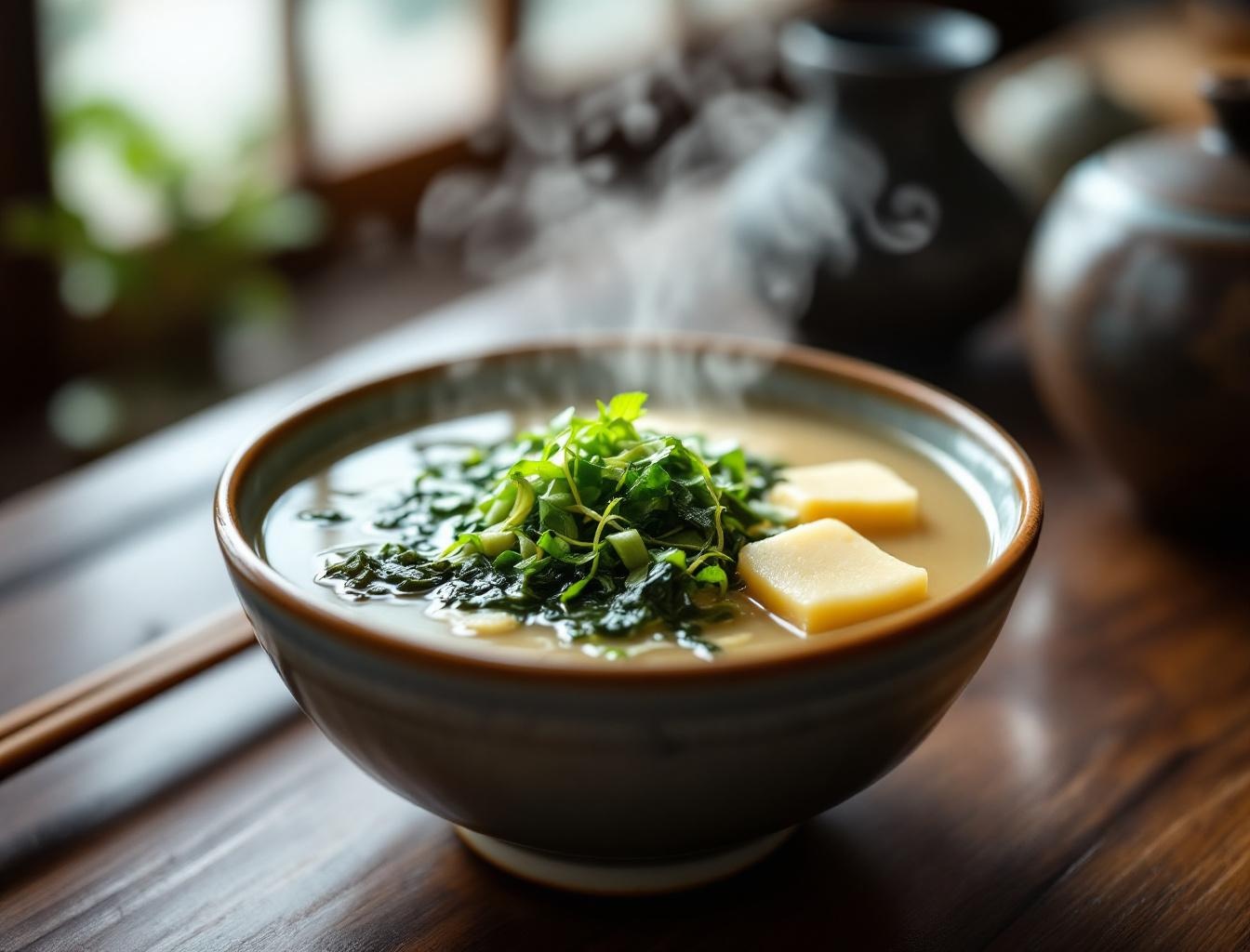
Wakame is Undaria pinnatifida — a brown alga with a slender, leafy frond structure that turns bright green when rehydrated and is among the most widely consumed sea vegetables in Japanese households. The flavor is mild: gently oceanic, slightly sweet, without the intensity of kombu or hijiki. It has a pleasant texture that holds up in soups while being tender enough for salads — which explains why it appears in virtually every Japanese household's miso soup and most restaurant seaweed salads.
Best for: everyday miso soup, sesame-dressed seaweed salads, and a mild-flavored introduction to sea vegetables.
Fucoxanthin: The Pigment Behind the Color
Wakame's signature compound is fucoxanthin — a fat-soluble carotenoid pigment found exclusively in brown algae that gives wakame its brownish color before rehydration and the green it turns once steeped. It's the same family of pigment that colors carrots and tomatoes, and it's part of what makes wakame visually distinct from the green and red algae.
Because fucoxanthin is fat-soluble, wakame dishes pair naturally with sesame oil or tahini dressing — the fat carries the pigment's flavor and color through the dish. This is one reason the sesame-dressed seaweed salad is such a fixture on Japanese restaurant menus: the pairing is built on flavor and texture, not chance.
Culinary Uses for Wakame
- Miso soup — the primary everyday application in Japanese households
- Wakame salad (wakame no sunomono) — tossed with sesame oil, rice vinegar, and sesame seeds
- Shabu-shabu — added briefly to hot broth near the end of cooking
- Cold tofu topping with ponzu and green onion
- Mixed grain rice bowls
- Stir-fried with garlic and sesame oil as a simple side
Reconstituting: Dried wakame expands 5–7x in cold water in about 5–10 minutes. Start with far less than you think you need. Salted wakame needs a thorough rinse under running water before soaking.
What Is Hijiki (ひじき)?
Hijiki is a dark brown alga that dries to small, black stick-like or bead-like pieces, turning dark green-brown when rehydrated — and is the highest-fiber sea vegetable commonly used in Japanese cooking. It has a stronger, more assertive oceanic and earthy flavor than wakame — one that traditional Japanese cooking balances with sweet soy, dashi, and fat from aburaage (deep-fried tofu pouches).
Best for: braised side dishes (nimono) in traditional Japanese home cooking.
Traditional Hijiki Preparation
Hijiki no nimono — braised hijiki, one of the foundational home-cooking side dishes in Japan — is the classic preparation. Rehydrate dried hijiki in warm water for 20 minutes. Sauté briefly with sesame oil, then add dashi, soy sauce, mirin, and sugar. Add julienned carrots and aburaage (sliced thin). Simmer 20–30 minutes until liquid is almost absorbed. The long cooking time and bold seasoning work with hijiki's stronger flavor. In traditional Japanese cooking, hijiki is enjoyed as an occasional side dish in small portions rather than as a daily staple.
What Is Mozuku (もずく)?
Mozuku is a thin, slender, translucent brown alga most closely associated with Okinawan cuisine. Its defining characteristic is an exceptionally slimy texture — more so than any other sea vegetable in Japanese cooking. That silky, slippery quality is exactly what makes mozuku such a refreshing, distinctive dish.
Best for: Okinawan-style vinegared side dishes (mozuku-su) and a quick, minimal-prep addition to everyday meals.
Mozuku in Okinawan Cooking
Mozuku is a staple of Okinawan home cooking and is one of the region's signature ingredients. Its mild brininess and unusual texture make it a refreshing counterpoint on a meal tray of richer dishes.
How it's eaten: Mozuku is almost always consumed as mozuku-su — vinegared mozuku, a common Okinawan side dish made with rice vinegar and a small amount of dashi. The combination of mozuku with rice vinegar creates a dish that's tangy, slightly slimy, and deeply refreshing. Pre-packaged mozuku-su is sold in convenience stores throughout Okinawa and increasingly across Japan.
Sea Vegetables at a Glance
Each variety brings a different flavor, texture, and culinary role to the kitchen. The table below summarizes how they compare.
| Sea Vegetable | Algae Type | Signature Quality | Key Flavor Compounds |
|---|---|---|---|
| Nori | Red | High protein, crisp savory sheet | Phycoerythrin pigment, savory umami |
| Kombu | Brown | Deepest umami of any sea vegetable | Glutamic acid, mannitol, alginate |
| Wakame | Brown | Mild, leafy, tender in soup | Fucoxanthin pigment |
| Hijiki | Brown | Highest fiber, assertive earthy flavor | Sulfated polysaccharides |
| Mozuku | Brown | Silky, slippery texture | Sulfated polysaccharides |
Culinary Applications at a Glance
| Sea Vegetable | Primary Cooking Role | Best Applications | Flavor Profile | Texture |
|---|---|---|---|---|
| Nori | Wrapper, garnish, topping | Sushi, onigiri, furikake, snack sheets | Savory, oceanic, umami-rich | Crisp when dry, slightly chewy when moist |
| Kombu | Flavor base (for dashi) | Dashi stock, bean cooking, curing fish | Deep savory/umami, mineral, faintly sweet | Thick, leathery (not typically eaten whole) |
| Wakame | Leafy vegetable | Miso soup, seaweed salad, grain bowls | Mild, oceanic, slightly sweet | Tender, slightly slippery |
| Hijiki | Vegetable (braised) | Nimono (braised dishes), mixed rice | Earthy, assertive sea flavor | Slightly chewy, holds shape during cooking |
| Mozuku | Condiment/side dish | Vinegared salad (sunomono), small side dishes | Mild with pleasant brininess | Very slimy, fine-stranded |
How Should I Pair Sea Vegetables in the Kitchen?
Traditional Japanese culinary practice has developed pairings that are built into the cuisine's standard preparations:
- Wakame + sesame oil: The classic sesame-dressed wakame salad balances the mild seaweed with nutty richness — a textbook flavor pairing.
- Nori + citrus (lemon, yuzu): A squeeze of yuzu or lemon over nori-topped dishes brightens the seaweed's savory depth — a traditional and delicious finish.
- Sea vegetables + cruciferous vegetables: Japanese cooking regularly pairs sea vegetables with bok choy and cabbage, where the crisp, mild greens balance the oceanic flavor.
- Kombu in bean cooking: A strip of kombu added to a pot of dried beans contributes umami depth and softens the beans as they cook — a traditional kitchen trick.
How Do I Buy Quality Sea Vegetables?
Quality varies significantly, and origin matters more than price for any sea vegetable used regularly. Key indicators by variety:
What to Look for When Buying
- Nori: Shiny, uniformly dark green-black, with visible texture. Should have a strong, clean oceanic smell when the package is opened. Dull color or no fragrance indicates poor quality or age.
- Kombu: Thick, firm pieces with a visible white powder on the surface (the glutamates you want). Should be pliable, not brittle. Hokkaido origin is the standard for quality.
- Wakame: Dried wakame should be dark and fragrant. Avoid any that appears gray or has off-odors. Certified Japanese origin is preferable.
- Hijiki: Black, consistent in size, clean smell. Buy from reputable importers.
Sourcing from regions with clean, monitored coastal waters — Japan's main farming regions maintain regulated water quality standards — is the mark of a careful supplier. Certified organic sea vegetables often come with additional sourcing documentation.
For a deeper dive into one variety, see our guide to nori specifically, including grade identification and the Ariake Sea growing tradition. If you're interested in how these ingredients connect to the broader Japanese culinary framework, our guide to Japanese green tea types covers a parallel category of carefully crafted Japanese ingredients.
Cooking with Sea Vegetables: Practical Notes
Reconstituting Dried Seaweed
Most dried sea vegetables expand significantly in water — wakame expands 5–7x, hijiki 3–4x. Start with much less than you think you need. Cold water works for most varieties; typical reconstitution time is 5–15 minutes. Salted sea vegetables need 30–60 seconds of thorough rinsing under running water before soaking.
Temperature Rules
Kombu must never be boiled — it releases bitter compounds above 70°C and becomes slimy. Remove before the water reaches a simmer. All other sea vegetables tolerate higher temperatures and are typically added to dishes partway through cooking or at the end to preserve texture and color.
Using Kombu as a Flavor Enhancer Beyond Dashi
Kombu's glutamic acid content makes it useful beyond dashi. A strip of kombu added to a pot of dried beans or chickpeas softens the beans and adds depth. It can be used to cure fish (kombu-jime) — wrapping fish in kombu for 30 minutes to several hours draws out moisture, firms the texture, and infuses a subtle umami and ocean character without any “fishy” quality. This technique is common in Japanese sashimi preparation and works beautifully with white fish, salmon, or halibut.
Sea Vegetables and Sustainability
Seaweed farming is one of the most resource-efficient forms of food production on earth. It requires no fresh water, no chemical fertilizers, no pesticides, and no arable land. It grows using nutrients already present in the ocean, sequestering carbon as it grows — the “blue carbon” concept. Seaweed grows at rates that make most land crops look slow; commercial kelp species can add 30cm per day under optimal conditions.
Japan's traditional seaweed farming regions — particularly along the Sanriku Coast in Tohoku and around Ise Bay — have maintained sustainable harvesting practices for centuries, with generational fishermen managing wild beds and farmed lines in concert with local ecology. Japan's Ministry of Agriculture tracks seaweed production volumes and supports satoumi (community-managed coastal zones that integrate human use with marine ecosystem stewardship) that maintain sea vegetable fisheries as part of broader coastal management.
For someone trying to reduce the environmental footprint of their cooking, adding sea vegetables is one of the more impactful choices available — using nori as a topping, adding kombu to cooking water, keeping dried wakame on hand for quick miso soup. The environmental calculus on this one is unusually clear.
Frequently Asked Questions
What's the white powder on dried kombu?
That white powder is mannitol — a natural sugar alcohol — and dried glutamates that have crystallized on the surface as the kombu dried. It's the primary source of kombu's umami flavor and should never be washed off. Wipe with a dry or barely damp cloth to remove any actual grit, but preserve the powder.
What does dashi taste like?
Dashi tastes like pure umami — deeply savory, oceanic but not “fishy,” with a clarity and roundness that most Western stocks lack. Kombu dashi alone is light and clean; combined with bonito flakes (awase dashi) it gains more depth and warmth. The best description is “water that tastes like the ocean without smelling like it.” Once you've cooked with good dashi, everything made without it tastes slightly flat.
How do I tell if dried seaweed has gone bad?
Signs of deterioration are clear: off or rancid smell (not oceanic — actually unpleasant), visible moisture or softness in nori that should be crisp, significant color change to gray or brown in varieties that should be green-black, or unusual bitterness. Dried sea vegetables kept properly sealed and away from moisture and heat can last 1–2 years. If in doubt, smell it first — properly stored sea vegetables have a clean, oceanic fragrance.
Can sea vegetables replace table salt for flavor?
Partially — the umami compounds in sea vegetables can reduce the amount of salt needed to achieve satisfying flavor. Adding kombu to cooking water, using nori as a topping, or incorporating wakame into soups naturally adds savory depth that allows you to use less added salt. This is part of why traditional Japanese cooking can achieve such complex flavor with relatively modest salt use. It's not a one-to-one replacement, but sea vegetables are a legitimate flavor-building tool in the kitchen.
Which Japanese sea vegetable should I start with as a beginner?
Nori is the easiest entry point — it's ready to eat straight from the package, widely available, and familiar from sushi. For cooking, dried wakame is the most versatile beginner ingredient: it reconstitutes in minutes, has a mild flavor, and integrates directly into miso soup or any salad. Kombu is a worthwhile next step — making a simple cold-steep dashi requires no special skill and immediately transforms everyday cooking.
For more on Japanese ingredients and their culinary applications, see our guides to the post-fermented Japanese teas and the types of Japanese green tea.