Goishi-cha, Awa-bancha, and Japan’s Post-Fermented Teas: What They Are and Why They’re Different
Last updated: April 2026
Most people know about green tea, matcha, and maybe hojicha. But Japan has a category of tea that barely registers outside of specialist circles — post-fermented teas, known collectively as kurocha (黒茶, literally “black tea” in Japanese, though distinct from the oxidized black teas of Darjeeling or Assam). These aren't oxidized like black tea from Darjeeling or Assam. They're fermented by fungi and lactic acid bacteria (LAB) — microorganisms external to the leaf — in a process closer to how kimchi or miso is made than anything most people associate with tea.
Key Takeaways
- Japan's post-fermented teas (kurocha) are transformed by external fungi and bacteria — not the leaf's own enzymes — making them biochemically unique among all tea categories.
- There are four main varieties: Goishi-cha, Awa-bancha, Ishizuchi-kurocha, and Batabata-cha — each from a specific rural region and produced by only a handful of farming families.
- Fermentation degrades catechins and caffeine, making kurocha generally lower in caffeine than green tea (according to USDA FoodData Central (2024), brewed green tea contains approximately 29mg caffeine per 237ml — kurocha is typically lower, varying by variety).
- The flavor is sour, earthy, and savory — closer to kombucha or kimchi than to Japanese green tea — due to lactic acid and fungal metabolites produced during fermentation.
- These are among the rarest traditional Japanese teas: genuinely difficult to source outside Japan, with production volumes among the smallest of any named tea category.
The four main Japanese post-fermented teas — Goishi-cha, Awa-bancha, Ishizuchi-kurocha, and Batabata-cha — are regional products from rural areas of Shikoku and Toyama, produced in small quantities using methods that have survived in isolated valleys and mountain communities for centuries. They're sour, mellow, and completely unlike anything in the standard Japanese tea canon. Understanding what they are and how they're made is worth doing — these are among the most genuinely distinctive things in Japanese tea.
What Is Kurocha? The Fermentation Distinction Explained
Kurocha is Japan's post-fermented tea category — leaves that are first heat-processed to deactivate plant enzymes, then intentionally fermented by external microorganisms (fungi and lactic acid bacteria) for days or weeks. This distinguishes kurocha from every other tea type, where transformation is driven either by the leaf's own enzymes (oolong, black tea) or halted entirely (green tea). Tea processing sits on a spectrum based on how much enzymatic and microbial activity is allowed before the leaf stabilizes.
- Green tea: Heat-applied immediately after harvest (steaming or pan-firing) stops all enzyme activity. No oxidation, no fermentation. Best for: those seeking fresh, grassy, high-catechin Japanese tea.
- Oolong and black tea: Enzymatic oxidation (using the leaf's own polyphenol oxidase enzymes) is allowed before heat-fixing. The leaf's own chemistry transforms the catechins into theaflavins and thearubigins. Best for: those who enjoy oxidized, aromatic tea with moderate to full body.
- Post-fermented tea (kurocha): The leaf is heat-processed first — which deactivates the leaf's own enzymes — and then intentionally inoculated with or exposed to fungi and bacteria for days or weeks. External microorganisms do the transforming, not the leaf's own chemistry. Best for: those curious about fermented foods, low-caffeine teas, or Japan's rarest traditional tea styles.
This makes kurocha biochemically distinct from any other tea category. The microbial action converts and degrades existing compounds (catechins, caffeine) while creating entirely new ones — lactic acid, D-amino acids (mirror-image forms of standard amino acids, rarely found in unfermented foods), modified polyphenols — that don't exist in unfermented tea. According to Cabrera, Artacho, and Gimenez (2006, Journal of the American College of Nutrition), catechin content varies substantially by processing method — kurocha's fermentation stage represents the most dramatic departure from green tea's catechin profile of any processing style.
The Four Japanese Post-Fermented Teas
| Tea | Region | Fermentation Type | Primary Microorganisms | Character | Best For |
|---|---|---|---|---|---|
| Ishizuchi-kurocha | Ehime (Saijo) | Two-step: aerobic then anaerobic | Aspergillus fungi + LAB | Sour, earthy, complex | Fermented food enthusiasts; those interested in D-amino acid research |
| Goishi-cha | Kochi (Otoyo) | Two-step: aerobic then anaerobic | Aspergillus, Penicillium + LAB | Sour, acidic, savory | Those who want the most distinctive, complex kurocha experience |
| Awa-bancha | Tokushima (Kamikatsu) | One-step: anaerobic only | LAB (Lactiplantibacillus pentosus) | Mildly sour, clean, yellow-green | Low-caffeine seekers; kurocha beginners |
| Batabata-cha | Toyama (Asahi) | One-step: aerobic only | Fungi | Earthy, muted, traditionally whipped | Those interested in rare regional Japanese tea traditions |
Goishi-cha (碁石茶)
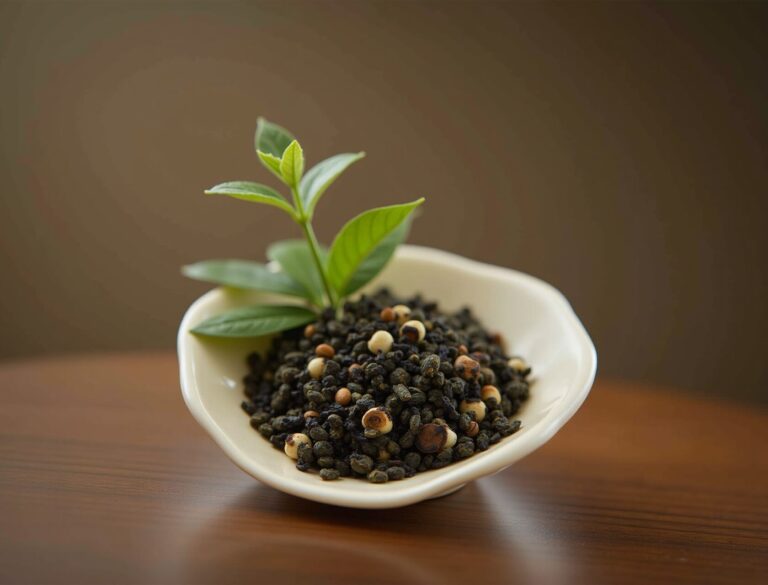
Goishi-cha is a two-step post-fermented tea from Otoyo village in Kochi Prefecture — one of the rarest named teas in Japan, produced by fewer than a handful of farming families. Best for: those seeking the most complex, sour, and savory kurocha experience. It takes its name from the way the fermented tea is cut into small round cakes that resemble go game stones (碁石, goishi). The production volume is tiny. The process: fresh leaves are steamed to kill the plant enzymes, then piled under straw matting for aerobic mold fermentation. After the molds have colonized the leaf, the leaves are packed tightly into wooden barrels and submerged in water for anaerobic lactic acid fermentation (LAB fermentation in an oxygen-free environment). The result is pressed into blocks and sun-dried.
Brewed Goishi-cha is amber-orange and notably acidic. Research has examined it for its effects on lipid absorption — animal studies suggest it may inhibit intestinal lipid absorption, which has driven interest in it as a functional food. The flavor profile is unlike anything else in Japanese tea: pleasantly tart, with an almost kombucha-like sourness but earthier and more complex.
Awa-bancha (阿波番茶)
Awa-bancha is the most approachable kurocha variety — mildly sour, low in caffeine, and brewed to a surprising yellow-green color rather than the dark amber most people expect from a fermented tea. Best for: those new to kurocha, low-caffeine drinkers, or anyone who wants a gentle introduction to Japanese post-fermented tea. Produced in Kamikatsu, Tokushima, it uses a single-step anaerobic fermentation by lactic acid bacteria — specifically Lactiplantibacillus pentosus — without the prior aerobic mold stage. This means less earthy complexity and more of a clean, mildly sour character. The fermentation happens in sealed barrels or bags, with the leaves submerged under weights for several weeks.
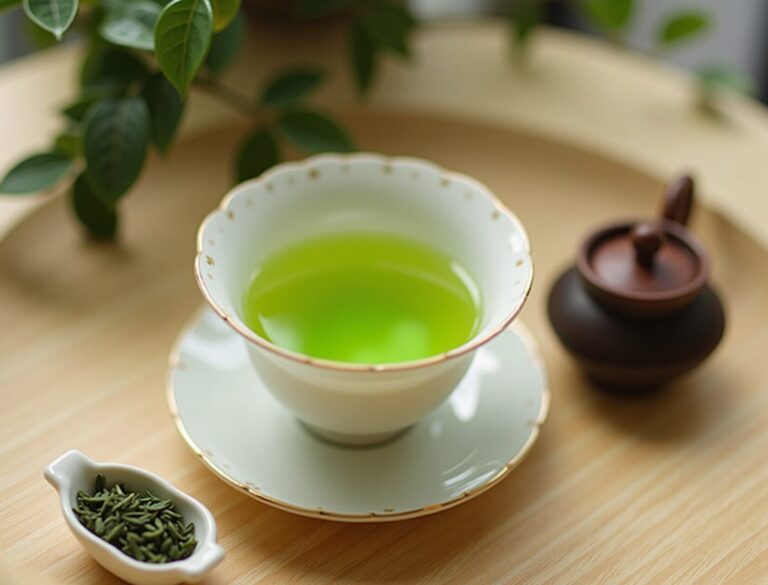
The resulting tea brews yellow-green (not amber or dark), which surprises most people — you'd expect a “black tea” to look dark. The flavor is mild, mellow, and easy. Awa-bancha is low in caffeine and catechins (both degraded during fermentation), making it a suitable option for those avoiding stimulants while still wanting the experience of traditional Japanese tea.
Ishizuchi-kurocha (石鎚黒茶)
Ishizuchi-kurocha from Saijo in Ehime Prefecture is the most scientifically researched of Japan's post-fermented teas, notable for its unusually high D-amino acid content — a class of amino acids rarely found in unfermented foods. Best for: tea enthusiasts interested in fermentation science and those who enjoy complex, earthy, sour flavor profiles. It undergoes the same two-step process as Goishi-cha but with different specific organisms and subtly different flavor results. The bacterial racemase enzymes in Lactobacillus brevis (a lactic acid bacterium found in the anaerobic fermentation stage) convert standard L-amino acids into D-forms including D-glutamic acid, D-alanine, and D-aspartic acid.
D-amino acids have generated research interest for various physiological roles — D-serine is involved in glutamate receptor signaling in the brain; D-aspartic acid plays roles in neuroendocrine function. Whether dietary D-amino acids from fermented tea have meaningful effects on these pathways in healthy people is still being studied. What's clear is that Ishizuchi-kurocha has a distinctly different chemical profile from any other tea.
Batabata-cha (バタバタ茶)
Batabata-cha from Asahi in Toyama Prefecture is the most culturally distinctive kurocha variety — traditionally prepared by whipping with a two-pronged bamboo whisk to create foam, a practice nearly extinct outside of Toyama. Best for: those interested in regional Japanese tea culture and traditional preparation rituals rather than widely available commercial teas. Its name comes from the whipping method: batabata is an onomatopoeia for the sound. The fermentation is aerobic-only (fungi, no lactic acid bacteria), which produces the lowest antioxidant activity of the four varieties and an earthier, more muted flavor. Batabata-cha is mostly consumed within Toyama Prefecture by elderly residents who grew up with it; it has very little commercial presence even within Japan.
The Fermentation Science: What Actually Happens
The two-step fermentation in Goishi-cha and Ishizuchi-kurocha works because the aerobic and anaerobic stages each contribute different transformations. According to Hara (2001, Green Tea: Health Benefits and Applications), processing method is the primary driver of caffeine and compositional variation across tea types — kurocha's sequential microbial fermentation represents the most extreme form of post-processing transformation in the Japanese tea tradition.
In the aerobic stage, molds from the Aspergillus and Penicillium genera colonize the surface of the steamed leaves. These fungi secrete hydrolytic enzymes — proteases, amylases — that break down the leaf's structural carbohydrates and proteins. This softens the leaf, creates new flavor compounds, and changes the substrate in ways that favor the bacteria that come next.
In the anaerobic stage, lactic acid bacteria (LAB — the same broad family of bacteria responsible for fermenting yogurt, kimchi, and sourdough) take over in the oxygen-free barrel environment. They metabolize remaining carbohydrates into lactic acid (creating the characteristic sourness) and produce a range of metabolites including the D-amino acids, short-chain organic acids, and modified polyphenols. Research has found that the L. plantarum strains isolated from Ishizuchi-kurocha show unusually high adhesion to human colon cells compared to standard probiotic strains — regional microbial communities with distinctive properties, shaped by centuries of the same fermentation environment.
What the Chemistry Changes: Catechins, Caffeine, and Flavor
Fermentation substantially degrades catechins. Where green tea retains the full spectrum of EGCG, EGC, ECG, and EC, kurocha shows significantly reduced catechin levels — the microbes break them down or polymerize them into larger, more complex molecules. As Cabrera, Artacho, and Gimenez (2006, Journal of the American College of Nutrition) note, catechin content varies considerably by processing and variety; kurocha's multi-week microbial fermentation produces the most pronounced reduction among any Japanese tea style. The antioxidant capacity is lower than green tea but not zero; the modified polyphenols still show radical-scavenging activity, just through different mechanisms.
Caffeine is similarly reduced — particularly in varieties with extended fermentation. For reference, according to USDA FoodData Central (2024), brewed green tea contains approximately 29mg of caffeine per 237ml. Kurocha is generally lower than this baseline, though the exact degree varies by variety and specific production batch. This makes kurocha broadly suitable for those managing caffeine intake who still want to drink traditional Japanese tea.
The flavor compounds that emerge from fermentation are completely different from what green tea tastes like. The characteristic sourness is lactic acid. Earthy, mushroom-like notes come from fungal metabolites. The savory quality in Goishi-cha and Ishizuchi-kurocha comes partly from new amino acids produced during protein breakdown. The result is tea that has more in common with kimchi or aged vinegar — sour, layered, fermented — than with the fresh, grassy character of Japanese green tea.
How to Brew Post-Fermented Japanese Tea
Kurocha is forgiving and tolerates hot water and longer steeping times without becoming harsh — unlike high-grade green teas, which require precise lower temperatures to avoid over-extracting bitter catechins. Because catechins are already substantially degraded during fermentation, the main risk with over-steeping kurocha is intensified sourness rather than bitterness.
- Water temperature: 90–100°C is fine for all varieties. (Unlike green tea, where 70–80°C is optimal to limit catechin extraction and astringency.)
- Amount: 3–5g per 200ml is typical. Goishi-cha cakes: 2–3 pieces.
- Steep time: 2–5 minutes. First steep is usually mild; second and third steeps develop more flavor.
- Awa-bancha: Can be brewed cold; cold-brew over several hours produces a clean, slightly sour, very mellow tea. Best for: summer drinking, caffeine-sensitive individuals.
- Goishi-cha: Often simmered gently in a small pot for 2–3 minutes rather than steeped. Best for: extracting the full savory-sour complexity of the pressed cake.
The sourness intensifies with longer steeping. If you find the acidity strong, use less leaf or shorter steeping time. Diluting with hot water is also common in traditional preparation.
Where to Find These Teas
Post-fermented Japanese teas are genuinely difficult to source outside Japan. Production volumes are small, producers are few, and most of what's made is consumed locally. A small amount is exported through specialty importers who work directly with the producing families.
When evaluating a source: Goishi-cha and Ishizuchi-kurocha should be clearly labeled by prefecture and ideally by producer. Awa-bancha should specify Kamikatsu, Tokushima. Batabata-cha should specify Asahi, Toyama. Generic “Japanese black tea” or “fermented green tea” without specific regional provenance is probably not authentic kurocha.
Frequently Asked Questions
Is Japanese kurocha the same as Chinese pu-erh?
No — Japanese kurocha and Chinese pu-erh are distinct post-fermented teas that share a broad category but differ substantially in microbiology, production scale, and flavor. Both are post-fermented, but pu-erh uses Aspergillus niger-based wet piling (shou pu-erh) or slow aging under controlled conditions (sheng pu-erh) with different microbial communities and much larger production scale. Japanese kurocha is produced in tiny quantities using traditional, regionally specific protocols and has a different flavor profile and microbiology. Pu-erh also typically has a more pronounced earthy, aged quality, while kurocha (especially Awa-bancha) is often cleaner and more sharply sour.
Does kurocha have probiotics?
Probably not in the conventional probiotic sense — the lactic acid bacteria are alive during fermentation, but their viability after drying and high-temperature brewing is uncertain and not established. The lactic acid bacteria are active during fermentation, but whether they survive in the dried product and remain viable through the brewing process is uncertain. The more meaningful question is whether the metabolites produced by fermentation — lactic acid, D-amino acids, modified polyphenols — have effects independent of live bacterial cultures. That research is ongoing. If live cultures are your primary goal, kurocha is not the same as a refrigerated probiotic supplement.
Is kurocha low in caffeine?
Yes — kurocha is generally lower in caffeine than green tea, with Awa-bancha and Batabata-cha typically the lowest of the four varieties. Fermentation degrades caffeine alongside catechins, and the longer or more intensive the fermentation, the greater the reduction. For comparison, brewed green tea contains approximately 29mg caffeine per 237ml (USDA FoodData Central, 2024) — kurocha sits below this in most cases. Exact caffeine content varies by variety and specific lot; if caffeine minimization is the goal, Awa-bancha and Batabata-cha are the better options.
What does kurocha taste like compared to green tea?
Kurocha tastes completely different from green tea — sour, earthy, mellow, and savory rather than fresh and grassy. Green tea is fresh, grassy, sometimes umami-rich. Kurocha's characteristic sourness comes from lactic acid produced during fermentation; its earthy notes come from fungal metabolites; its savory depth comes from amino acids released during protein breakdown. If you enjoy fermented foods — kimchi, kombucha, sourdough — the flavor profile of kurocha will make immediate sense. If you expect green tea flavor, you'll be genuinely surprised. Awa-bancha is the mildest entry point; Goishi-cha is the most intensely sour and complex.
Can kurocha be aged?
Yes — Goishi-cha and Ishizuchi-kurocha, both pressed into cakes, can be stored for years and develop greater complexity over time, similar to aged pu-erh. Awa-bancha and Batabata-cha are consumed relatively fresh and do not benefit from long-term aging in the same way. For the pressed varieties, proper storage is cool, dry, and away from strong odors — the same principles that apply to any aged fermented tea.