Nori Storage Guide: How to Keep Seaweed Crispy and Fresh
Nori's biggest enemy is moisture. The crisp, paper-thin seaweed sheets that make perfect sushi and satisfying onigiri become soft, rubbery, and dull in flavor within hours of exposure to humid air. Understanding how to store nori properly extends its life from days to months and protects your investment in premium seaweed. This guide covers everything from unopened packaging to opened-tin management in different climate conditions.
Nori's Relationship With Moisture
Nori is dried to approximately 5-6% moisture content for storage. At this level, it's crispy and aromatic. When exposed to ambient air above about 60% relative humidity, nori begins absorbing moisture rapidly. The hygroscopic (moisture-attracting) properties of nori's cell structure mean it responds to humidity changes faster than most other dried foods.
This is why nori stored in open packaging in a coastal kitchen goes soft overnight while the same nori in a dry inland climate might stay crispy for several days. Climate matters, and your storage strategy should account for it.
Unopened Nori Storage
Quality nori is sold in nitrogen-flushed packaging. The nitrogen displaces oxygen, preventing oxidation that degrades flavor and the plastic prevents moisture infiltration. Properly stored unopened nori keeps at room temperature for 1 to 2 years without quality degradation.
Store unopened packages:
- Away from direct sunlight (UV light degrades chlorophyll and causes color changes)
- Away from heat sources (stove, oven, sunny windows)
- At stable room temperature — not in the refrigerator unless the packaging is sealed (refrigerator humidity causes condensation on cold packaging)
Opened Nori Storage: The Critical Phase
Once the packaging is opened, the clock starts. Transfer immediately to:
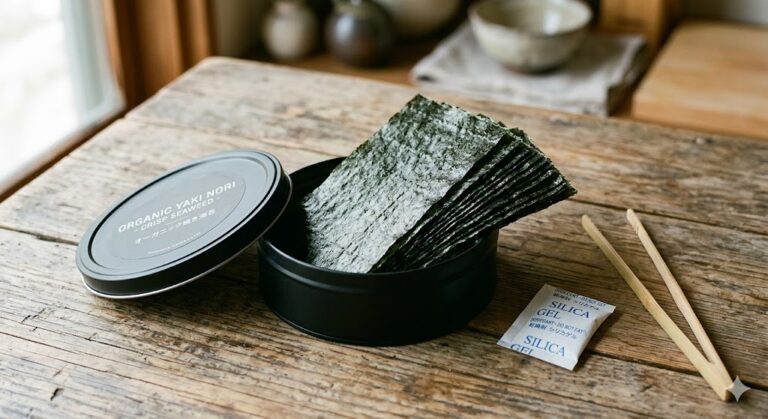
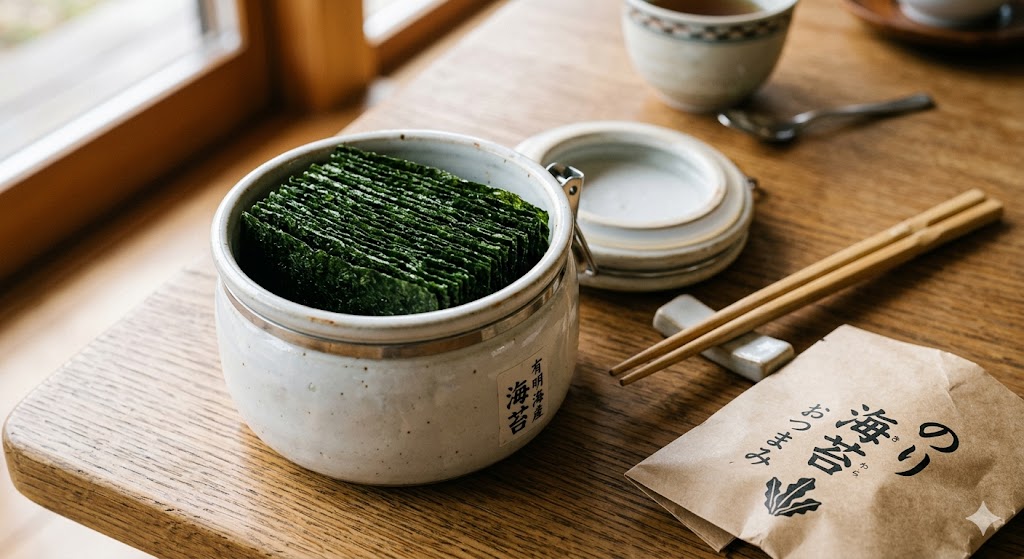
- A dedicated nori tin — the ideal solution; purpose-designed rectangular tins designed to hold full sheets flat without folding, with tight-fitting lids
- A zip-top freezer bag — press out all air before sealing; effective but not optimal for long-term storage
- A sealable container with silica gel — adding 1-2 silica gel packets (the kind used in packaged goods) dramatically extends crispness in humid climates
After opening, consume within:
- Dry climate (below 50% relative humidity): 2-3 weeks before quality noticeably declines
- Moderate climate: 1-2 weeks
- Humid climate (above 70% relative humidity, tropical, coastal): 3-5 days
Our premium nori is packaged with nitrogen flushing for maximum shelf life.
Refrigerator Storage: When and How
Refrigerator storage can extend opened nori life in very humid climates, but requires careful technique:
- Place nori in a zip-lock freezer bag, pressing out all air before sealing
- Place this bag inside a hard container (metal tin or rigid plastic) to prevent compression and to add another moisture barrier
- When removing from refrigerator, do not open the bag immediately — allow the sealed container to come to room temperature first (15-30 minutes) to prevent condensation forming on the cold nori surface
Skipping the temperature equalization step causes condensation that instantly softens the nori. This is the most common refrigerator storage mistake.
Freezer Storage for Long-Term Nori
Nori freezes very well. If you buy large quantities (full packs of 100+ sheets), freezer storage protects quality for up to 12 months:
- Divide into usable portions (10-20 sheets) before freezing
- Wrap tightly in plastic wrap, then place in a zip-lock freezer bag
- When ready to use, remove from freezer and allow to come completely to room temperature before opening (2+ hours)
- Use within 1-2 days of thawing
Re-Crisping Soft Nori
If your nori has become soft, recovery is often possible:
Gas stove method: Wave the sheet over a low gas flame, moving continuously, for 3-5 seconds per pass. The heat drives out absorbed moisture. The nori should return to crispness within 1-2 passes.
Dry pan method: Place in a dry pan over medium heat for 10-15 seconds per side, pressing lightly. Works for both gas and electric stoves.
Oven method: Place on a baking sheet at 150C for 3-4 minutes. Good for large quantities but requires watching carefully to prevent burning.
Re-crisped nori tastes slightly different from freshly opened nori — some of the most volatile aromatic compounds have dissipated. It's fully usable for all applications but won't have the full fresh-nori aromatic experience.
Frequently Asked Questions
How can I tell if my nori has gone bad?
Soft texture is not necessarily “bad” — it's just lost crispness and can be re-crisped. Truly bad nori shows discoloration (yellowish or brownish patches indicating oxidation), an off smell (rancid, musty, or chemical rather than oceanic), or visible mold (rare but possible in very humid conditions). Soft nori without these signs is safe to use after re-crisping.
Why does my nori taste different after storage even when it looks fine?
The most volatile aromatic compounds in nori — the ocean fragrance notes — dissipate over time even in sealed storage. Good nori at 6 months old is different from fresh-season nori, even when stored properly. This is expected and normal. The umami and core seaweed flavor remains; the fresh-ocean top notes fade.
Should I buy nori in small or large quantities?
For the best quality, buy what you'll consume within 2 months of opening. If you use nori weekly in cooking, a 50-sheet pack makes sense. If you use it occasionally, a 10-sheet pack prevents waste. The price-per-sheet savings from larger packs don't compensate for flavor degradation if the nori sits too long after opening.
Does re-crisping nori in the microwave work?
No. Microwave heating creates steam from the nori's absorbed moisture, which softens rather than crisps. The nori may come out warm but will be even softer than before. Use dry heat only (flame, dry pan, oven) for re-crisping.
Can I use soft nori for cooking applications?
Yes. Soft nori works perfectly in soups, as a seasoning ingredient, in cooked dishes (where it softens anyway), and in furikake. Its usefulness ends primarily for applications requiring structure — sushi rolling, onigiri wrapping, hand rolls. For anything that involves the nori being cooked or dissolved, softness is irrelevant.