Nori Grade Guide: Understanding Seaweed Quality Levels
Not all nori is created equal. The seaweed sheets you find at a dollar store and the nori served at top-tier sushi restaurants are both called “nori” but they're fundamentally different products. Understanding how nori is graded helps you make informed purchases and explains why some sushi rolls hold together perfectly while others fall apart, and why some nori tastes like the ocean while others taste like paper.
How Nori Grading Works in Japan
Japan's nori grading system is managed by regional fishery cooperatives and follows consistent criteria. The grading evaluates:
- Color — the deepest black-green color indicates highest chlorophyll content
- Sheen — premium nori has a glossy, silk-like surface; lower grades are dull or matte
- Texture — thin, uniform sheets that dissolve perfectly on the palate
- Aroma — fresh ocean smell; higher grades have a more complex, marine fragrance
- Integrity — no holes, uneven edges, or discoloration
- Taste — the richness of umami flavor, depth of seaweed character
Japanese nori is graded on a numerical scale from Grade 1 (highest) downward, or in some labeling systems as gold, silver, and standard grades. Worth knowing as a buyer: there's no standardized international definition of “gold” or “premium” — these are producer-defined marketing terms, not an official government grade. From a reputable Ariake Bay producer, a gold label is genuinely a reliable signal; from a mass-market importer with lower internal standards, it may not mean much. A seller who names the producer and growing region is a better trust signal than the label alone.
Gold Grade (First-Class) Nori
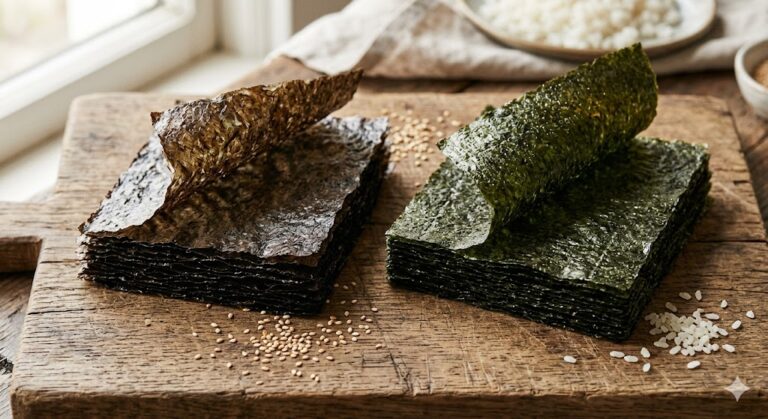
Gold grade nori is harvested at the peak of the autumn season from the most productive growing areas — traditionally Ariake Bay, Ise Bay, and Seto Inland Sea in Japan. The sheets are:
- Deep, uniform black-green in color with visible sheen
- Thin enough to be slightly translucent when held to light
- Dissolving almost instantly on the palate — no chewing required
- Richly flavored with complex ocean umami
- Perfectly flat with no thickness variations
Gold grade nori is what premium sushi restaurants use for their nigiri and hand rolls. The difference from mid-grade is obvious to anyone who has experienced both. Our premium nori selection sources from certified producers with grade documentation.
Silver Grade (Second-Class) Nori
Silver grade represents the excellent everyday nori — very good quality with slightly less uniformity in color, sheen, and thickness than gold grade. The flavor is excellent but marginally less complex. This is the grade used by competent home cooks and mid-range restaurants.
For home onigiri, maki rolls, and nori snacking, silver grade is the practical choice — meaningfully better than commodity nori at a more reasonable price than gold grade. Most of what Japanese families stock at home falls into this category.
Standard Grade (Third-Class) Nori
Standard grade is the commodity product found in most supermarkets. It may be thicker, less uniform in color (sometimes with greenish patches or slight discoloration), less aromatic, and chewier. It's entirely functional for many applications — wrapping rice balls, adding to ramen, use in soups — but it's not what you want for sushi where the nori's contribution is central to the experience.
Ariake Bay Nori: Japan's Most Prized
Ariake Bay in Kyushu produces nori that commands a consistent premium in Japanese markets. The bay's unique tidal conditions and nutrient-rich waters produce nori with exceptional color depth, flavor richness, and dissolving texture. Ariake nori regularly wins top prices at the annual nori auction. Ise Bay (Mie Prefecture) and other regions also produce quality nori, but Ariake carries the reference-standard designation — similar to how Champagne functions in wine — so for sushi or high-end use, Ariake origin is what to look for first.
When shopping for premium nori, “Ariake-san” designation is meaningful — it indicates sourcing from this specific bay. Our Ariake nori is sourced with full origin documentation.
Yaki Nori vs. Hoshi Nori: Toasted or Raw
Separate from grade, but just as important for buying: yaki nori (roasted/toasted) is pre-toasted during processing — crisp, aromatic, and ready to use straight from the pack. It's the standard choice for sushi and snacking. Hoshi nori (dried but not toasted) needs a quick pass over a flame or in a dry pan before use; it keeps longer in storage since it hasn't been heat-treated, which is why some professional sushi chefs prefer to toast it to order. For home use, pre-toasted yaki nori is almost always the simpler, right choice.
What Affects Nori Quality Beyond Grade
Grade captures the inherent quality of the nori at harvest, but handling afterward matters:
- Roasting (yaki nori) — properly roasted nori has enhanced aroma and the right crispness; over-roasted nori becomes brittle and loses flavor
- Packaging — nitrogen-flushed packaging preserves crispness and aroma; moisture is nori's enemy
- Age — fresh-season nori from the season's first harvest (called hatsutsumi, picked October–December depending on region) is at peak quality, with thinner, more tender sheets and concentrated flavor; older stock and later-season harvests lose aroma and become more brittle
- Storage — once opened, nori degrades quickly in humidity; store in an airtight tin or zipper bag
Choosing the Right Grade for Your Use
Match grade to application:
- Nigiri sushi, temaki (hand rolls) — gold grade; the nori is the star here
- Maki rolls at home — silver grade; excellent performance at practical cost
- Onigiri wrapping — silver grade; the nori competes with fillings for attention anyway
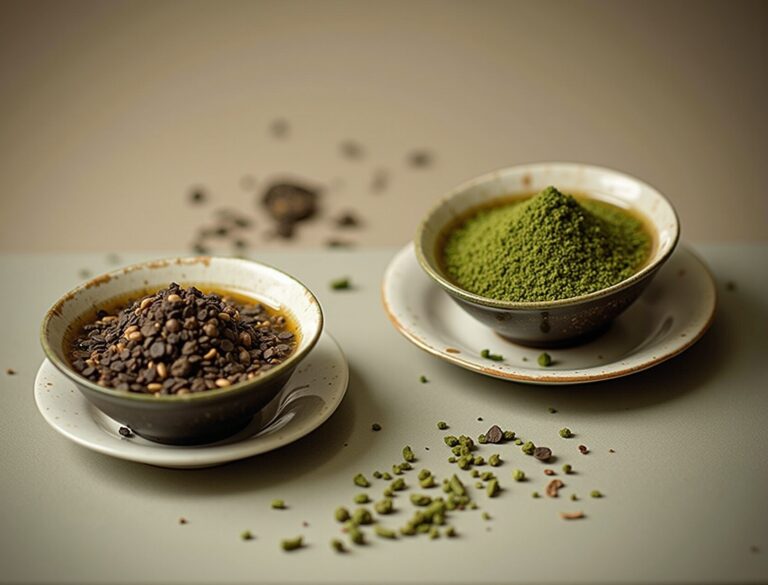
- Soups, garnishing, furikake — standard grade is fine; the nori is supporting role
- Gift presentation — gold grade; it's what the recipient will notice and remember
Frequently Asked Questions
How can I tell nori quality without a grade label?
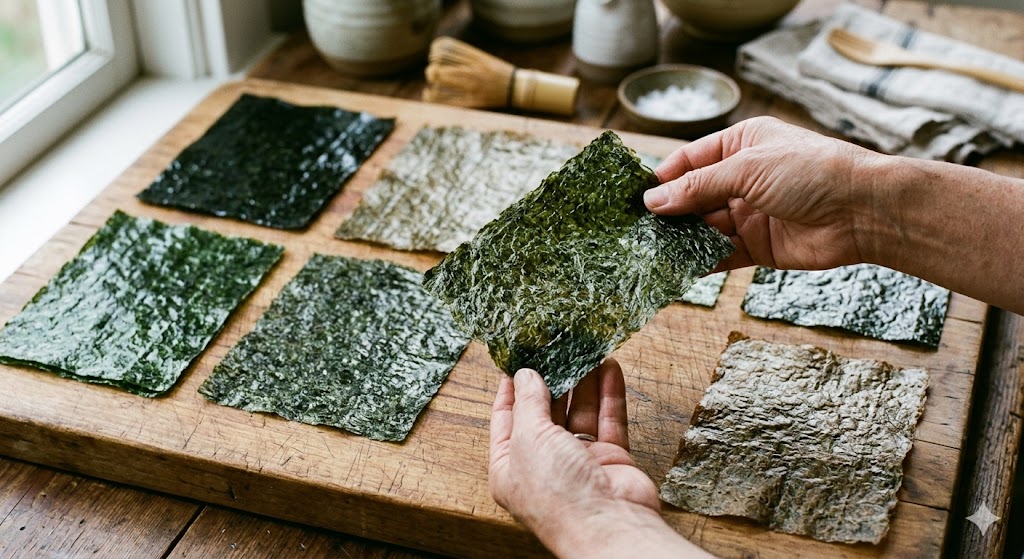
Hold a sheet to light: premium nori is nearly translucent with uniform thickness. Check color: deep, near-black green uniformly indicates quality. Smell it: good nori smells like the ocean. Touch it: it should feel smooth and silk-like, not rough or papery. Eat a piece plain: you should taste complex ocean umami, not just “seaweed.”
Why does some nori have holes or thin spots?
This is a grading defect that indicates irregular growing conditions or harvesting/processing damage. It weakens the sheet for rolling and indicates lower-quality raw material. Premium nori should be completely uniform in thickness and have no holes or weak points.
What is the difference between yaki nori and raw nori?
Yaki nori is toasted/roasted after drying and is what's used for sushi and onigiri — the roasting creates the crisp texture, enhanced aroma, and slightly reduced fishy rawness of fresh nori. Raw (untoasted) nori is used in some Korean preparations and for wrapping certain foods where softer texture is desired.
Does expensive nori actually taste better?
Yes, demonstrably. The difference between commodity nori and premium Ariake nori is not subtle — it's the difference between a thin, dissolving, richly flavored sheet and a papery, chewy, faintly flavored one. In applications where nori's flavor and texture are central (hand rolls, fresh nigiri), the quality difference significantly affects the eating experience.
How long does nori stay fresh after opening?
Opened nori loses crispness rapidly in any humidity. Store immediately in an airtight container with a silica gel packet. In low-humidity climates, opened nori stays crisp 1 to 2 weeks. In humid climates, use within 3 to 5 days or re-toast briefly in a dry pan over medium heat to restore crispness before use.