Miyazaki Hojicha Brewing Guide: Get the Best From Your Roasted Tea
Miyazaki hojicha deserves more than a rough approximation of correct brewing. This premium roasted green tea from Kyushu has qualities that a well-tuned brewing approach brings out dramatically — deeper caramel sweetness, cleaner roasted character, and a lingering finish that standard brewing at boiling water misses. This guide walks through every brewing method so you can extract the most from your investment.
Understanding Miyazaki Hojicha's Character
Miyazaki's southern location, high humidity, and fertile soil produce green tea leaves with naturally higher sugar and amino acid content than many other regions. When these higher-quality leaves are roasted to create hojicha, the sugars caramelize into a sweeter, more complex roasted profile than hojicha made from commodity bancha.
The practical implication: Miyazaki hojicha rewards slightly lower temperatures and shorter steep times than you might use with standard hojicha. The more developed base means less extraction time is needed to get full flavor.
Standard Hot Brewing
Optimal parameters:
- Water temperature: 85-90C (not boiling — 100C over-extracts and muddies the sweetness)
- Leaf amount: 1.5 teaspoons (approximately 3g) per 200ml water
- Steep time: 30-45 seconds
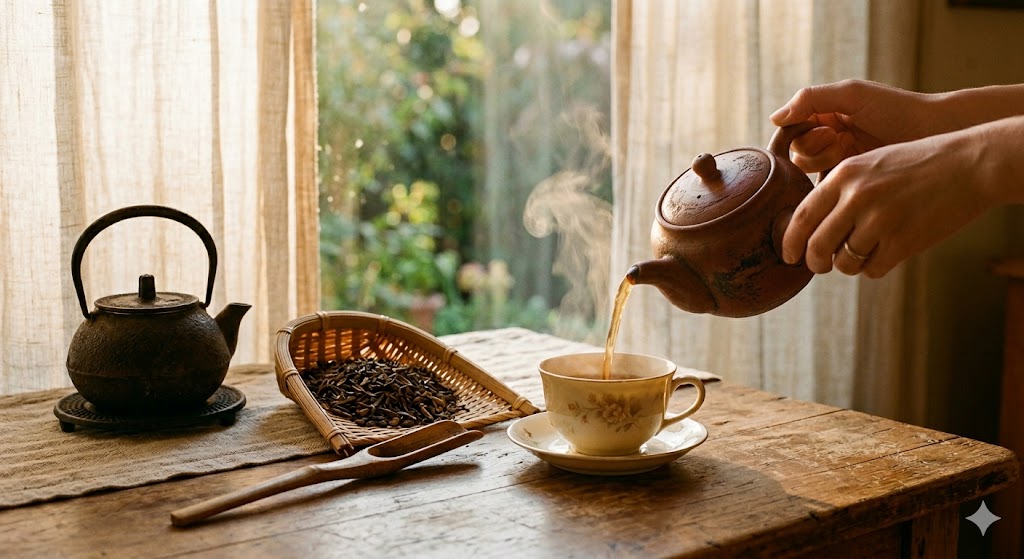
- Vessel: ceramic teapot or kyusu with adequate filter; the short steep time makes good filter flow important
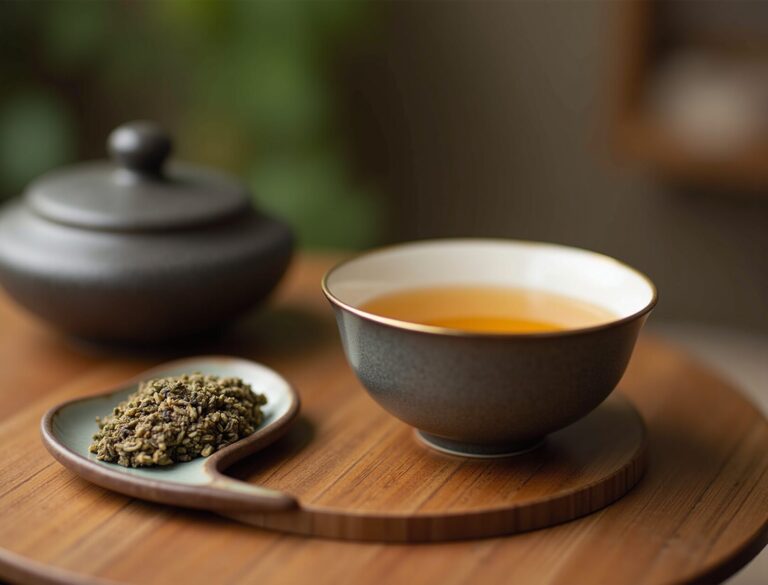
Pour immediately when the time is up — don't let leaves sit in water. The first steep should be amber-orange with excellent clarity. If it's very dark (dark brown), either the water was too hot or the steep was too long. Both produce a flat, over-extracted character.
Second and Third Steeps
Miyazaki hojicha holds up for 3 steeps:
Second steep: 90-95C water, 45-60 seconds. The second steep often reveals the deepest caramel notes — many people consider this the best of the three.
Third steep: 95C water, 60-75 seconds. Lighter in body but pleasant with toasted grain character. Good for a digestive evening cup when you want something mild.
Making a Strong Concentrate for Lattes
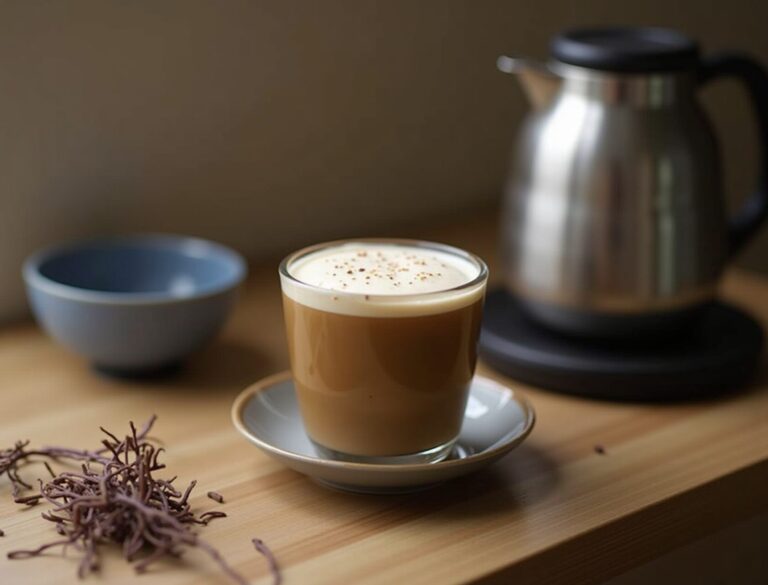
Miyazaki hojicha latte is exceptional. The natural sweetness means less added sugar needed than with standard hojicha powder products.
Concentrate method:
- Use 3 teaspoons loose leaf per 120ml water at 90C
- Steep for 2 minutes (longer steep for concentrate is intentional)
- Strain immediately into a pre-warmed cup
- Add 150-200ml steamed milk in 2:3 ratio (concentrate to milk)
- Sweeten with 1 teaspoon honey if desired
Oat milk is particularly complementary with Miyazaki hojicha's sweet profile. See our Miyazaki hojicha here.
Cold Brew Miyazaki Hojicha
Cold brew reveals a different side of Miyazaki hojicha — less roasted smokiness, more caramel sweetness, a lighter body that's very refreshing.
Cold brew method:
- 2 tablespoons loose leaf per 500ml cold water
- Steep in the refrigerator 8-12 hours (overnight is perfect)
- Strain and serve over ice
The result is a very smooth, caramel-forward iced tea with none of the typical roasted astringency. Excellent with a drop of milk or completely plain. Cold brew Miyazaki hojicha is one of the most approachable and impressive summer teas you can serve.
Cooking With Miyazaki Hojicha
The premium quality of Miyazaki hojicha makes it effective in small amounts for flavoring:
- Panna cotta — steep 2 tablespoons in hot cream before setting; strain before adding gelatin
- Shortbread — finely grind dry leaf and mix into cookie dough at 1 teaspoon per 100g flour
- Overnight oats — add 1 teaspoon ground leaf to the dry oats before refrigerating
- Smoked salt substitute — finely ground hojicha mixed with fine sea salt creates a roasted seasoning for finishing grilled proteins
Common Brewing Mistakes
- Boiling water — 100C extracts bitter, flat notes that override the sweetness
- Too long in water — the short steep (30-45 seconds) is intentional; longer produces over-extraction even at correct temperature
- Not prewarming the cup — cold cups drop the tea temperature fast, shortening the optimal drinking window
- Letting it sit — hojicha brewed and then left sitting for 10+ minutes loses aromatics; drink promptly
Frequently Asked Questions
Can I brew Miyazaki hojicha in a teabag?
If your hojicha came in bags, yes — follow the parameters above. But loose leaf produces better results because the leaves can expand fully during the brief steep, extracting more evenly. For the best Miyazaki hojicha experience, use loose leaf with a fine-mesh strainer.
Why is my Miyazaki hojicha brew bitter?
Almost always temperature or time. Even low-bitterness hojicha can become harsh at boiling temperature with extended steeping. Try 85C and 30 seconds. If still bitter, the issue may be very hard water — mineral-rich water amplifies astringency. Use filtered water if your tap water is hard.
How does Miyazaki hojicha compare to Kyoto hojicha in the cup?
Kyoto (Uji area) hojicha has a sharper, more defined roast character — what most people think of as classic hojicha. Miyazaki hojicha is rounder and sweeter with more caramel depth from the higher-quality leaf base. If you prefer more pronounced roast, Kyoto style. If you prefer sweetness and smoothness, Miyazaki is the better choice.
How should I store Miyazaki hojicha?
In an airtight tin away from light and heat. Unlike delicate sencha, hojicha's aromatic compounds are relatively stable and don't degrade as quickly. An opened tin stored properly maintains good quality for 3-4 months. Consume within this window for best aroma, though it remains pleasant for up to 6 months.
Is Miyazaki hojicha appropriate for all-day drinking?
Yes. With only 7-15mg caffeine per cup, Miyazaki hojicha is among the safest teas for unlimited daily consumption. Most people can drink it throughout the day and evening without sleep disruption. It's the ideal “always on” tea for people who want something flavorful and warming without caffeine concerns.