Ceramic Teapot vs Clay Kyusu: Which Is Better for Green Tea
The “clay vs ceramic” question is one of the most frequently asked by people building a Japanese tea setup. It sounds technical, but the practical answer is accessible: both are excellent, they serve different purposes, and which you choose depends on how seriously you want to engage with tea brewing and what tea types you focus on. This guide breaks down the genuine differences and helps you decide.
Understanding the Material Difference
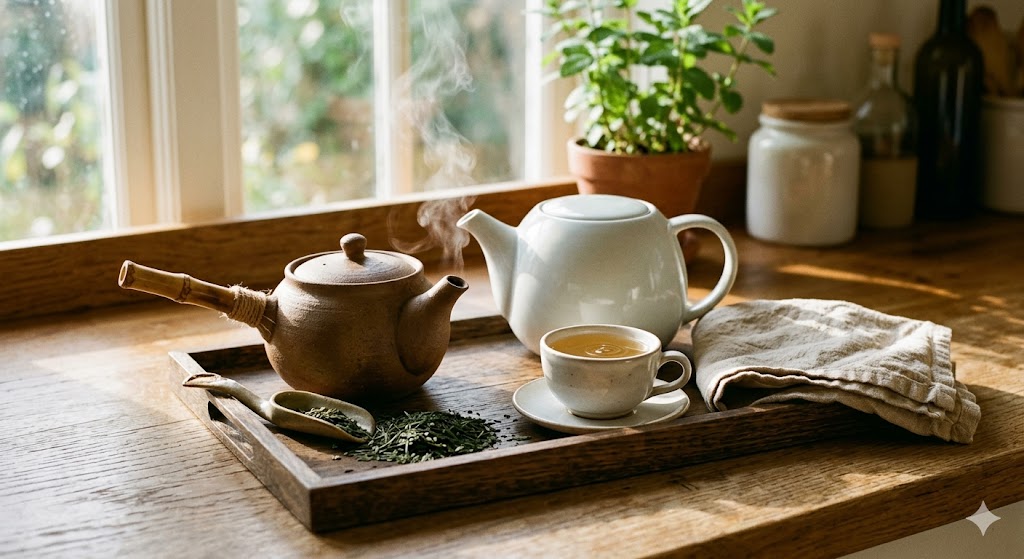
First, a clarification: all clay is ceramic, but not all ceramic is clay in the tea context. When people say “clay kyusu,” they typically mean unglazed or partially glazed stoneware made from specific mineral-rich clay bodies — specifically Tokoname red clay, Banko clay, or similar materials with mineral content that affects tea chemistry. When they say “ceramic,” they typically mean fully glazed porcelain or earthenware where the glaze seals the clay body completely.
The distinction matters because the glaze is the barrier. Glazed ceramic doesn't interact with tea; unglazed clay does.
Clay Kyusu (Unglazed or Partially Glazed)
Advantages:
- Mineral interaction with tea (Tokoname iron clay reduces astringency measurably)
- Develops seasoning over use — accumulated tea character over hundreds of sessions
- Excellent heat retention from thick clay walls
- Slightly porous surface creates micro-environment for brewing
Disadvantages:
- Absorbs tea flavors — switching teas in the same kyusu contaminates the seasoning
- Cannot be washed with soap (the soap is absorbed and affects future brews)
- Requires more specific care than glazed alternatives
- Must be dedicated to one tea type for best results
Browse our Tokoname clay kyusu collection here.
Glazed Ceramic Kyusu
Advantages:
- No flavor absorption — use for any tea type without contamination concerns
- Easy to clean with soap
- More decorative options available (glazes allow color and pattern)
- Non-porous interior is food-safe and stain-resistant
- Better for households with multiple tea types
Disadvantages:
- No mineral interaction with tea
- Doesn't develop seasoning
- Often thinner walls with less heat retention than dense clay
- The “neutral” character means the tea's quality must stand entirely on its own
Glass Kyusu (and When It Makes Sense)
Glass is the third option. It's fully non-reactive (like glazed ceramic), provides no flavor interaction, but adds one unique advantage: you can see the tea as it brews. For teas where leaf unfurling is beautiful (premium gyokuro with its needle-like leaves, spring shincha with intact buds), the visual element of brewing in glass adds genuine aesthetic pleasure.
Glass also allows color monitoring — you can see when the tea has reached your preferred color saturation and adjust steep time accordingly. This is particularly valuable for people developing their brewing technique.
Which Is Better for Specific Teas
Gyokuro: Clay kyusu or shiboridashi (dedicated clay vessel). The mineral interaction at 50-60C temperature is particularly effective, and gyokuro is the tea most worth the investment in specialized ware.
Premium sencha: Clay kyusu (Tokoname) for best results; glazed ceramic as an excellent everyday alternative.
Kabusecha: Either works well. The intermediate character of kabusecha is enhanced by Tokoname clay but performs very well in glazed ceramic at the right temperature.
Genmaicha / Hojicha / Bancha: Glazed ceramic is the practical choice. These forgiving teas don't need the mineral interaction, and the larger volumes typically used are better served in larger glazed vessels that are easier to clean.
The Practical Recommendation
For most people building a Japanese tea setup: start with a quality glazed ceramic kyusu that handles all your teas without complexity. If you develop a specific interest in sencha or gyokuro and want to go deeper, add a Tokoname clay kyusu dedicated to that tea. This builds knowledge gradually rather than requiring an immediate large investment in specialized equipment.
Frequently Asked Questions
Can I use soap to clean a clay kyusu?
No. Unglazed clay is porous — soap molecules absorb into the clay and are released during future brews, affecting taste. Rinse clay kyusu with hot water only. The accumulated tea tannins and oils on the interior are the seasoning you're trying to develop, not a problem to remove.
Does a glazed ceramic kyusu produce inferior tea?
No — it produces excellent tea that reflects the tea's own quality without mineral contribution from the vessel. The difference is that clay adds (mineral character, seasoning) while glazed ceramic is neutral. Neutral is not inferior — it's appropriate for many teas and preferences. The world's finest tea can be brewed in a glass vessel.
How long does it take to season a clay kyusu?
Noticeable seasoning develops after approximately 50-100 uses. The clay's interior gradually absorbs tea tannins and aromatics from each brew. After 200+ uses with the same tea type, experienced brewers report that the kyusu produces distinctly smoother, more rounded tea than a new vessel. This is the reason old kyusu from established potters are collected and valued.
Should I use one kyusu for all green teas?
In glazed ceramic or glass, yes — no flavor transfer concern. In clay, ideally dedicate each kyusu to one tea type. Gyokuro and sencha have notably different flavor profiles that each imprint on the clay's seasoning. Using a seasoned gyokuro kyusu for sencha introduces gyokuro character into the sencha brew.
What is the best size for a first kyusu?
250-300ml for most people. This size handles solo brewing at the correct leaf-to-water ratio and can serve two people from a single session. It's versatile enough for premium sencha (where precision matters) and practical enough for casual genmaicha. The 300ml range is the most commonly owned primary kyusu for experienced Japanese tea drinkers.