Japanese Tea Set Buying Guide: What’s Included and What to Look For
A Japanese tea set is one of the most satisfying kitchen purchases you can make — it's beautiful, functional, and transforms the daily act of brewing tea into something worth paying attention to. But sets vary enormously in what they include, what materials they use, and what style of tea they're designed for. This guide walks you through everything you need to know before buying.
What Pieces Come in a Japanese Tea Set?
The contents vary by style and price, but most complete Japanese tea sets include some combination of:
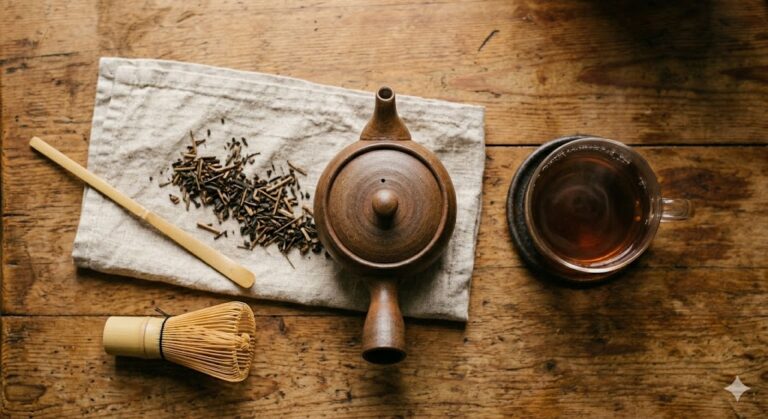
- Kyusu (teapot): The core piece. A side-handled Japanese teapot with a built-in filter for brewing loose-leaf tea. Size typically ranges from 200ml to 450ml.
- Yunomi (teacups): Handleless cylindrical cups, traditionally taller than wide. Standard sets include 2 or 4 cups. Capacity is usually 100–150ml — smaller than Western teacups.
- Chakai-bon or tray (optional): A lacquered or wooden serving tray that holds the set together visually and practically.
- Tea caddy (chazutsu): A small canister for storing loose-leaf tea. Often included in gift sets, less common in basic sets.
- Tea scoop (chashaku): A bamboo scoop for measuring tea. More common in matcha sets than loose-leaf sets.
Note: Japanese sets designed for sencha and everyday teas (bancha, hojicha, genmaicha) differ from matcha ceremony sets. This guide focuses on loose-leaf brewing sets.
Main Materials for Japanese Tea Sets
Tokoname clay: Iron-rich clay from Aichi Prefecture that softens tea astringency. The benchmark material for serious loose-leaf green tea. Unglazed interior means the clay interacts with tea over time, building seasoning. Best for sencha, gyokuro, kabusecha.
Banko ware (purple clay): From Mie Prefecture. Excellent heat retention and a slightly different mineral profile. Popular for hojicha and everyday drinking. Often thinner-walled than Tokoname.
Hagi ware: From Yamaguchi Prefecture. A softer clay with a beautiful rough texture. Ages spectacularly as tea stains penetrate the clay body. Highly prized aesthetically.
Porcelain (white ceramic): Neutral — doesn't alter tea flavor. Elegant and versatile. Traditional blue-and-white porcelain sets (from Arita or Kutani) are among Japan's most recognizable export ceramics. Good for all tea types.
Glass: Modern and minimal. Excellent for cold brew, gyokuro, and any tea where you want to watch the leaves unfurl. Hario is the dominant brand. Doesn't alter flavor at all.
Choosing by Tea Style
For sencha and kabusecha: Choose a Tokoname clay set. The tannin-softening properties of Tokoname clay make a genuine difference with these grassy, sometimes sharp teas.
For hojicha and genmaicha: Almost any material works. Banko ware or a basic porcelain set is fine. These teas are forgiving and don't require specialized clay properties.
For gyokuro: A small, well-made kyusu (200–250ml) in Tokoname clay. Gyokuro is brewed in tiny amounts at low temperatures — precision matters more than volume.
For everyday use: A sturdy porcelain or Banko set handles daily brewing and cleanup easily. Reserve specialty clay for weekends or when the tea warrants it.
For gifts: Porcelain sets with traditional patterns (blue-and-white, celadon, Kutani painting) photograph and present beautifully. Tokoname sets make better gifts for known tea drinkers; decorative porcelain works for anyone.
Size Considerations
Japanese tea is brewed in multiple short steeps rather than one long steep, and the volumes are smaller than Western brewing. Consider:
- Solo drinker: 200–250ml kyusu, 2 yunomi cups
- 2–3 people: 300–350ml kyusu, 4 yunomi cups
- 4+ people or entertaining: 400–450ml kyusu, 4–6 cups, or consider two kyusu
Yunomi cup capacity of 80–120ml is standard. If you're used to Western mugs (350ml+), this will feel small — but with multiple steeps per session, you'll pour frequently, and that's part of the ritual.
What to Look for in Quality
- Lid fit: Tilt the kyusu with water inside. The lid should stay put. A poorly fitted lid rattles, leaks, and frustrates every pour.
- Spout performance: The pour should be clean and cut off instantly when you right the pot. Drips after pouring indicate a poorly shaped spout.
- Filter design: Clay mesh filters (multiple small holes in the clay) are best. Avoid single-hole spouts or stainless inserts in clay pots.
- Cup wall thickness: Thinner walls feel more refined but are more fragile. For daily use, a medium-wall yunomi in the 3–4mm range is ideal.
- Set cohesion: In a well-designed set, the kyusu and cups match in material, glaze, and visual weight. Mismatched sets suggest assembly from surplus parts rather than intentional design.
Explore our full Japanese tea set collection at shop.alldayieat.com/product/japanese-tea-set/.
Budget Guide
Under $40: Mass-produced porcelain, usually imported from China. Functional, attractive, and completely acceptable for everyday use. Not collectible.
$40–$100: Japanese-made stoneware or Tokoname clay sets. Quality construction, better lid fit, genuine regional clay character. The sweet spot for serious everyday use.
$100–$300: Named-kiln or artisan pieces. Hand-crafted details, exceptional surface quality, signed or kiln-marked. Appropriate as a meaningful gift or a personal upgrade.
$300+: Individual artisan teapots paired with handcrafted cups. Museum-quality craft. Buy when you're ready to treat tea preparation as an art form.
Frequently Asked Questions
- Can I use a Japanese tea set for hot and cold tea?
- Yes, though most kyusu are designed for hot brewing. For cold brew, glass sets are more practical since you can see the tea and move the pot to the refrigerator easily.
- Are Japanese tea sets dishwasher safe?
- Clay and unglazed pieces (Tokoname, Banko, Hagi) should never go in the dishwasher. Porcelain and glass pieces often can, but check the specific product. When in doubt, hand wash.
- What's the difference between a Japanese and Chinese tea set?
- Japanese sets typically feature a side-handle kyusu and yunomi cups, designed for green tea brewed at moderate temperatures. Chinese gongfu sets use small clay teapots (zhisha) and tiny cups for multiple oolong or pu-erh steeps at near-boiling temperatures. Different tools for different tea traditions.
- How do I store a Japanese tea set?
- Store teapots and cups with the lid slightly ajar or removed to allow airflow. Never store a sealed pot — trapped moisture causes mildew in clay bodies. A display shelf works well and keeps the set accessible for daily use.
- Is a Japanese tea set a good gift?
- Excellent gift. A well-chosen set is functional, beautiful, culturally meaningful, and relatively rare compared to typical gifts. Pair it with a quality loose-leaf tea for a complete package.