Best Hario Glass Tea Server: Which Model Is Right for You?
A tea server (also called a yuzamashi or pitcher) is one of those pieces of teaware you don't think you need until you have one. Once you use a proper glass server for cooling water before green tea, or for collecting second and third steeps, you realize how much it improves every session. Hario makes several glass tea servers worth considering — this guide breaks them down clearly.
What Is a Tea Server and Why Does It Matter?
A tea server is a small glass pitcher used for two main purposes in Japanese tea preparation:
- Cooling boiled water before it touches delicate green teas — pouring boiling water from your kettle into a server drops the temperature 8–12°C before you add it to the teapot
- Collecting steeped tea — pouring all the tea from your kyusu into a server stops the extraction immediately and lets you pour each cup evenly without the first cup being stronger than the last
For hojicha and genmaicha, step 2 is particularly useful. For kabusecha and other shaded teas, step 1 is essential.
Hario Glass Tea Server Models Compared
| Model | Capacity | Glass Type | Handle | Best Use |
|---|---|---|---|---|
| Hario Yuzamashi Server 300ml | 300ml | Borosilicate | No handle | Cooling water for 2 cups |
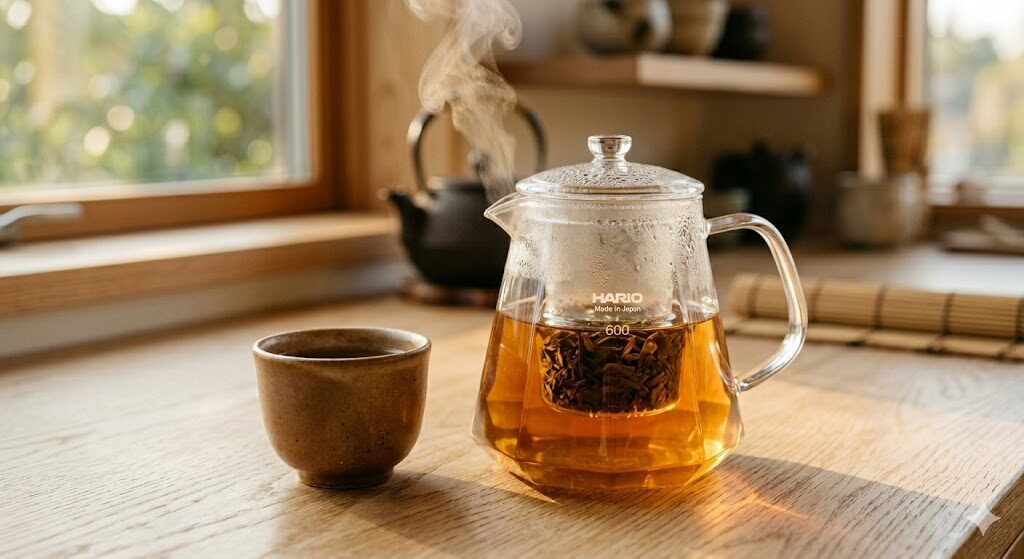
| Hario Glass Tea Server 450ml | 450ml | Borosilicate | Yes | Table service, collecting steeps |
| Hario Glass Tea Server 600ml | 600ml | Borosilicate | Yes | Groups of 3–4 |
| Hario Glass Tea Server 900ml | 900ml | Borosilicate | Yes | Large tables, office settings |
| Hario Cold Brew Bottle 750ml | 750ml | Borosilicate | Bottle grip | Fridge cold brew |
Best for Solo and Two-Person Brewing: 300ml Yuzamashi
The yuzamashi (literally “hot water cooler”) is a handleless glass pitcher sized to cool one kyusu-worth of water before brewing. You pour boiling water from your kettle into the yuzamashi, wait 60–90 seconds, and pour into the teapot. This drops the temperature from boiling (~100°C) to 80–90°C naturally.
The 300ml version is compact, fits anywhere, and is the traditionally correct vessel for Japanese tea preparation. If you primarily brew kabusecha, bancha, or genmaicha at home, this is the piece you should add first.
See the Hario Yuzamashi Server
Best for Table Service: 450ml or 600ml Glass Server
After you've steeped tea in your kyusu, pouring it all into a glass server does two things: stops extraction immediately (no over-steeping while people fill their cups at different rates), and lets everyone see the tea's color and clarity before they drink.
The 450ml server pairs perfectly with the Hario Chacha Kyusu Maru 450ml — you steep in the pot, pour into the server, and distribute from there. The 600ml is better if you're regularly brewing for three or four people.
Browse Hario glass tea servers
Hario Tea Server vs Regular Pitcher: Is There a Difference?
Hario designs their tea servers specifically for the pour volumes and flow rates of tea service. The spout is thinner and more controlled than a standard pitcher, reducing drips. The glass is borosilicate rather than soda-lime glass, so it handles hot-to-cold transitions during cold brew use without cracking. A regular glass pitcher can work in a pinch, but Hario's dedicated tea servers are noticeably better to use over time.
How to Use a Glass Tea Server for Cold Brew
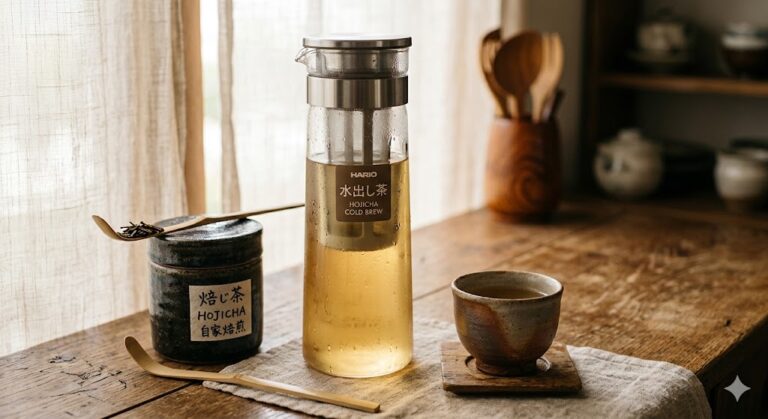
The 600ml or 900ml server doubles as a cold brew vessel. Add 15g of hojicha or genmaicha loose leaf directly to the server, fill with cold water (filtered is best), cover with plastic wrap or a loose lid, and refrigerate for 8–12 hours. The tea that results is remarkably smooth — almost no bitterness, just clean flavor.
Strain through a fine mesh strainer before serving, or use the server with a removable filter insert if your model includes one.
Pairing the Right Server Size with Your Teapot
- Chacha Kyusu 450ml → pair with 300ml Yuzamashi (cooling) + 450ml server (service)
- Bona Tea Maker 700ml → pair with 450ml Yuzamashi + 600ml server
- Any kyusu for office use → 900ml server holds multiple steeps for refilling cups throughout a meeting
Care and Cleaning
Hario glass servers are dishwasher safe. For tea stain removal (tannins build up over weeks of daily use), fill the server with 50/50 water and white vinegar and let it sit for 20 minutes. The inside will come out clear with no scrubbing needed. Rinse thoroughly after any vinegar treatment.
Frequently Asked Questions
Do I need a tea server or can I pour directly from the kyusu?
You can pour directly from the kyusu, but uneven steeping is the result — the first cup will be weaker and the last cup will be over-extracted. Collecting all the tea in a server first ensures every cup is identical. For casual daily brewing this matters less; for sharing tea with guests, the server makes a noticeable difference.
What is the difference between a yuzamashi and a tea server?
A yuzamashi is a small handleless vessel used specifically to cool boiling water before brewing. A tea server is a larger pitcher used to collect and serve brewed tea. Some Hario models function as both depending on how you use them.
Can I use a Hario glass server for coffee?
Yes — Hario glass servers work equally well for pour-over coffee. The glass is the same borosilicate used in their coffee range and handles hot liquid from a V60 or Chemex without any issues.
Is the Hario glass server microwave safe?
Borosilicate glass is generally microwave-safe without any metal components. The Hario glass tea servers (without handles or with resin handles) can typically be microwaved briefly for reheating. Check the specific product instructions as handle materials vary by model.
How much does a Hario glass tea server cost?
Hario glass tea servers range from about $20 for the smaller yuzamashi to $35–$45 for the larger 600ml–900ml servers. They're a durable investment — most users keep the same server for five or more years. Check current pricing here.