Best Hojicha Powder: Top Brands, Grades, and How to Use Them
Hojicha powder is finely ground roasted Japanese green tea — the same roasted tea that gives hojicha lattes their warm amber color and toasty, caramel-like flavor, but milled to a powder that dissolves directly into milk or batter without any brewing equipment. It's been a café staple in Japan for years, and it crossed into mainstream Western consciousness fast: Bon Appétit ran a dedicated buying guide in February 2026, and hojicha lattes have quietly displaced matcha on menus from specialty coffee shops to mainstream chains. If you're buying for the first time, though, the market is genuinely confusing — there's a $12 bag and a $92 bag, and almost nobody explains why. Our guide to why hojicha is gaining so much attention goes into much more depth on this topic.
Last updated: April 2026
KEY TAKEAWAYS
- Hojicha powder is made from roasted Japanese green tea leaves — most commonly bancha (later-harvest leaf) or kukicha (stems and twigs) — and is an entirely different product from matcha, which is unroasted and shade-grown.
- The single biggest price driver is the leaf base: standard powders use bancha or kukicha (affordable, strong roasted flavor); premium powders use tencha (finer grind, more umami-rich, dissolves more cleanly).
- Hojicha powder delivers roughly 5–15mg of caffeine per serving — far less than matcha (~70mg) or drip coffee (~95mg) — making it one of the few tea-based drinks suitable for evening use.
- Powder vs. loose leaf: choose powder for lattes and baking; choose loose leaf for daily tea drinking and better value per cup. Most hojicha fans keep both on hand.
- For milk-based lattes, the quality ceiling where extra spending stops being perceptible is around $25/100g; tencha-base powders show their full advantage when drunk straight with hot water.
🍵 New to hojicha? Take our 60-second quiz: Find Your Perfect Japanese Tea
Get a personalized recommendation — plus a discount code for your first order.
What Is Hojicha Powder?
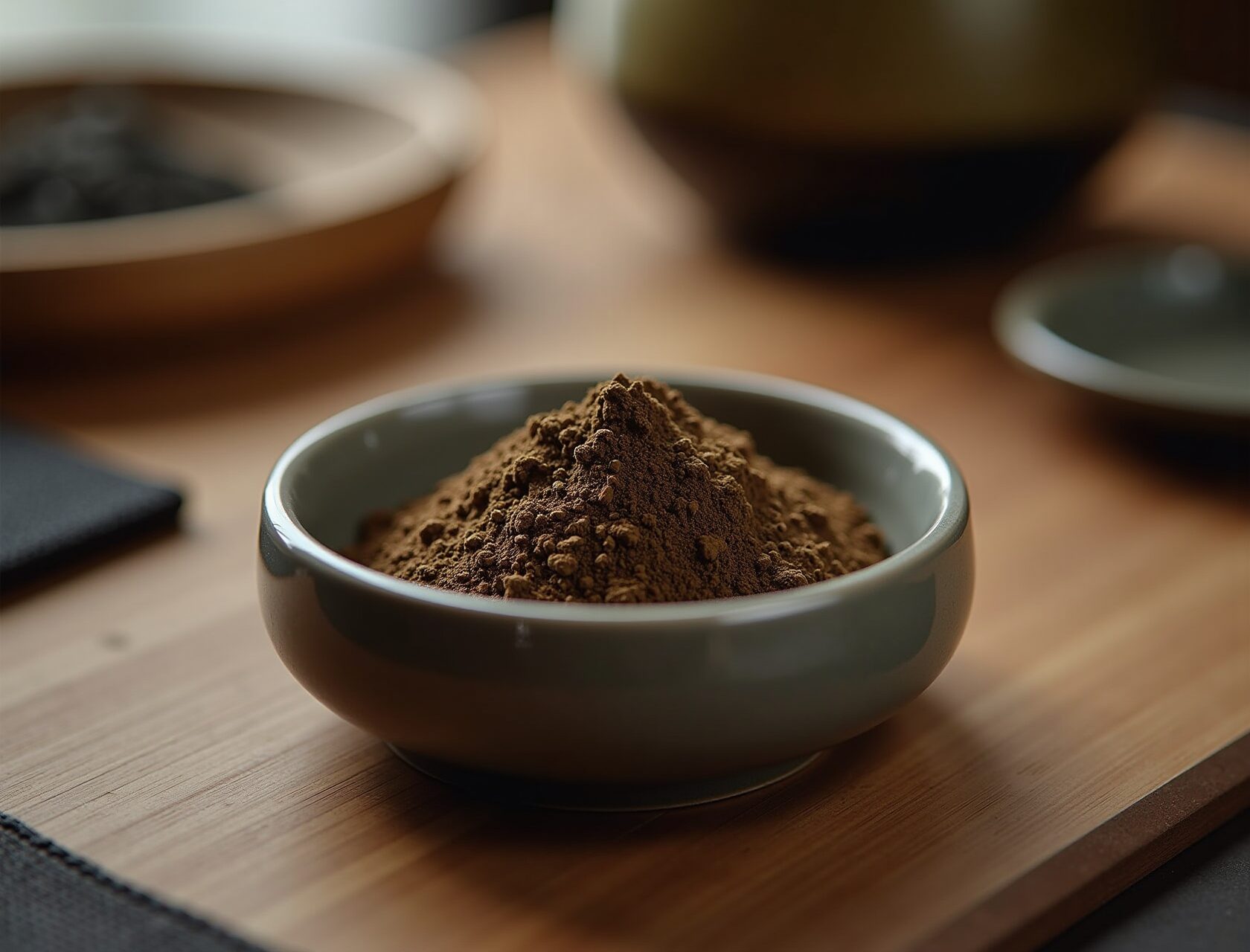
Hojicha powder is finely ground roasted Japanese tea leaf — typically made from bancha (later-harvest green tea leaves, usually the 3rd or 4th flush of the season) or kukicha (stems and twigs pruned from the tea plant) that are first roasted at high heat, then milled into a fine powder. It is not the same as matcha: matcha is made from shade-grown tencha leaves that are never roasted, then stone-ground while still green. The two powders look and taste completely different: matcha is vivid green and grassy-umami; hojicha powder is warm amber-brown with toasty, lightly sweet, low-caffeine flavor.
The production path for hojicha starts the same way as any Japanese green tea: leaves are harvested, then steamed to halt oxidation. The divergence comes next. Instead of going straight to the grinder or rolling machine, hojicha leaves are roasted at high heat — typically around 200°C — over charcoal or in a drum roaster. This roasting step does three things: it turns the leaves from green to reddish-brown, it substantially reduces caffeine content (via sublimation — the heat causes caffeine molecules to vaporize directly out of the leaf), and it creates a new flavor profile dominated by pyrazines — the same roasty, nutty aromatic compounds found in coffee and dark chocolate. According to Hara (2001, Green Tea: Health Benefits and Applications), the degree of roasting directly determines both caffeine content and aromatic compound profiles in processed Japanese teas.
Ground to a fine powder, hojicha becomes enormously versatile. Explore our Shizuoka hojicha to learn more. It dissolves into hot liquid without the gritty texture you'd get from loose-leaf steeped tea, making it practical for lattes, baking, ice cream, and anything else where you want that roasted tea flavor fully integrated into the dish. The powder format also means no strainer, no teapot, no wait — just whisk and go.
Hojicha Powder vs. Loose Leaf Hojicha — Which Should You Buy?
Choose hojicha powder for lattes, baking, and convenience; choose loose leaf for daily tea drinking and better value per cup. Both formats start from the same roasted leaf, but the choice depends almost entirely on what you're making and how you want to spend your time.
Choose powder when: You're making lattes or iced drinks, you're baking (cookies, cakes, mochi), you want convenience, or you don't own a teapot or infuser. Learn more in our guide on cold brew hojicha methods and ratios. Powder integrates fully — no residue, no equipment, no steeping time.
Choose loose leaf when: You're drinking hojicha as tea — by the cup, daily. Loose leaf gives you a more complex, layered flavor (the roasted notes unfold differently when you steep the whole leaf), and it's significantly more economical per serving. A 100g bag of good loose leaf at $12 yields 40–50 cups; 100g of powder at the same price might yield 25–30 lattes.
| Hojicha Powder | Loose Leaf Hojicha | |
|---|---|---|
| Best use case | Lattes, baking, smoothies, cooking | Daily tea drinking, traditional brewing |
| Equipment needed | Just a whisk or milk frother | Teapot, kyusu, or infuser |
| Approximate price per cup | $0.40–$1.50 depending on brand | $0.20–$0.60 for equivalent quality |
| Best for | Convenience, recipe integration, café drinks | Economy, flavor nuance, everyday sipping |
The short version: powder for making things, loose leaf for drinking. Most serious hojicha fans keep both on hand.
The Grade Difference Nobody Explains — Tencha Base vs. Bancha Base
This is the single most important thing to understand about hojicha powder, and almost no retailer explains it clearly. The price gap between a $12 bag and a $90 bag isn't just marketing — it traces back to what the powder is actually made from before it gets roasted.
Standard Hojicha Powder: Bancha or Kukicha Base
Most hojicha powder on the market — including many well-regarded brands — starts with bancha (later-harvest green tea leaves, typically the 3rd or 4th flush of the season) or kukicha (stems and twigs pruned from the tea plant as a byproduct of gyokuro or sencha production). Both are humble raw materials — but that's not a knock. Bancha and kukicha make excellent hojicha. The roasting process elevates them significantly, and the resulting powder is genuinely good, especially in milk-based drinks where the roasted notes shine.
What you get: strong, straightforward roasted flavor. Good dissolution in hot liquid. Affordable. Best for: high-volume café use or daily home lattes where cost-per-serving matters.
Premium Hojicha Powder: Tencha Base
The premium tier — and this is what brands like Senbird's Homura and Jade Leaf's Barista Edition use — starts with tencha. Tencha is the same shaded, de-veined leaf that gets stone-ground into matcha. It's the most labor-intensive leaf to produce: plants are shade-covered for 3–4 weeks before harvest to force chlorophyll and amino acid production, then leaves are steamed and dried without rolling. Normally this becomes matcha. But some producers take those tencha leaves and roast them before grinding — creating a powder that carries all the umami richness and smooth texture of matcha-grade leaf plus the roasty complexity of hojicha.
The practical difference in the cup is real:
- Dissolution: Tencha-base powder is finer and dissolves more completely, leaving no graininess even in cold milk.
- Flavor depth: More umami underneath the roasted notes. The sweetness is more natural, less one-dimensional.
- Creaminess: Blends more cohesively with milk fats. This is why it's favored for lattes even at the price premium.
- Drinking straight: The tencha base is clearly perceptible when you prepare hojicha with just hot water. With bancha base, the difference is more subtle in milk.
Best for: tea enthusiasts, anyone drinking hojicha straight with hot water, and specialty café programs where the powder is a menu focus rather than a background ingredient.
The honest caveat: for high-volume café lattes, most customers won't taste the difference between good bancha-base and tencha-base powder. The tencha base is most worth paying for when you're drinking the hojicha with water, or when you're a tea enthusiast who wants to taste what the leaf can actually do.
| Bancha / Kukicha Base | Tencha Base | |
|---|---|---|
| Typical price range | $10–$25 per 100g | $25–$92 per 100g |
| Flavor profile | Strong, straightforward roasted-caramel | Roasted notes with umami depth and natural sweetness |
| Dissolution in cold milk | Good with barista grind | Excellent — finer particle size |
| Perceptible difference in lattes? | — | Subtle; most perceptible drinking straight |
| Best for | High-volume café use, daily home lattes, baking | Drinking straight, specialty latte programs, tea enthusiasts |
Hojicha Powder Grades — Culinary, Barista, and Ceremonial-Equivalent
Beyond the leaf base question, hojicha powder is informally graded by grind fineness and intended use. Brands apply these terms inconsistently, so it's worth understanding what each actually means for your use case.
Culinary Grade
Coarser grind, optimized for baking and cooking where the powder will be mixed into batters, doughs, or frostings. The slightly coarser particle size doesn't matter when it's baked into a cookie, but it can feel grainy in a latte if you're not careful. Learn more in our guide on hojicha powder recipes for lattes and baking. Culinary grade is also typically less expensive — and entirely appropriate for baked goods, ice cream bases, and anything where the powder is incorporated into a mixture rather than dissolved directly into liquid. Best for: baking, ice cream bases, smoothie bowls, and cooking applications.
Barista Grade
Finely milled for clean dissolution in hot and cold milk. This is the café standard — what you want behind an espresso machine or in a milk frother. Good barista-grade powder dissolves with a quick whisk and stays in suspension rather than sinking. Most of the brands in the comparison table below produce a barista-optimized grind. Jade Leaf's Barista Edition is named for this explicitly. Best for: lattes, iced drinks, and café programs where clean dissolution in milk is the priority.
Ceremonial-Equivalent
The highest-grade powders — typically tencha-base, single-origin, with named cultivars and producers — are sometimes positioned as ceremonial-equivalent, meaning they're best appreciated when prepared simply with hot water rather than milk. This mirrors how ceremonial-grade matcha works: the premium goes into the nuance of the leaf itself, and steaming milk over it covers up what you paid for. Senbird's Homura (Uji, Kyoto; Okumidori cultivar; JAS-certified organic) operates in this tier. Best for: tea enthusiasts drinking hojicha straight with hot water, and anyone who wants to understand the full flavor ceiling of the format. Worth buying at least once to understand what hojicha can actually taste like at full expression.
How to Make a Hojicha Latte (The 2-Minute Method)
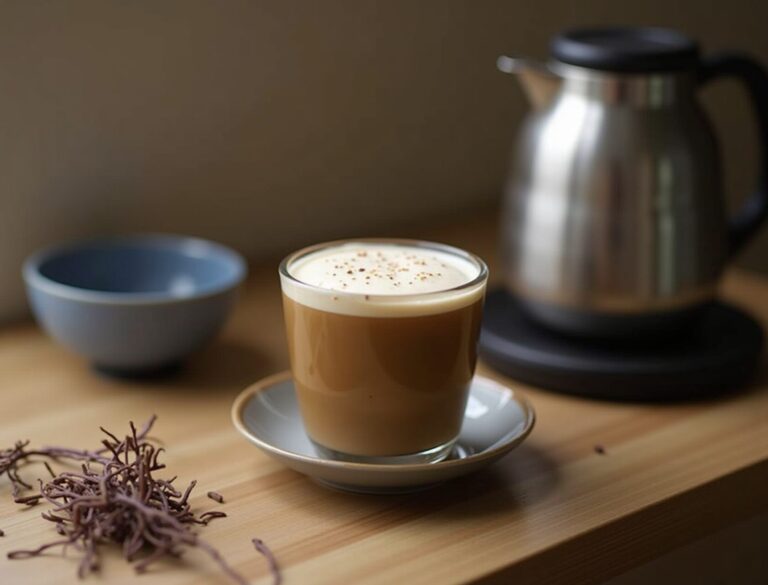
To make a hojicha latte, dissolve 1 teaspoon of powder in 2 oz of hot water, then top with 6 oz of steamed or frothed milk — no espresso machine or special equipment required, just a small whisk or milk frother.
Hot hojicha latte:
- Add 1 teaspoon (3–4g) of hojicha powder to a cup or small bowl.
- Pour 2 oz (60ml) of water heated to 80°C (176°F) over the powder. Water that's too hot can make the powder clump — 80°C is the sweet spot.
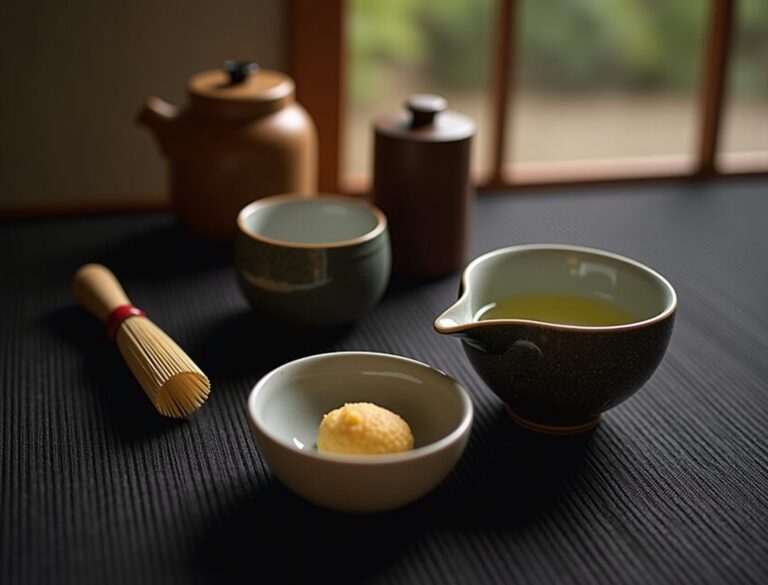
- Whisk vigorously for 20–30 seconds until fully dissolved and slightly frothy. A bamboo chasen works beautifully here; a small electric frother also works.
- Steam or froth 6 oz (180ml) of milk. Oat milk and whole milk both complement hojicha well — the roasted notes pair naturally with dairy fat and oat sweetness.
- Pour the frothed milk over the dissolved powder. Sweeten with a small amount of honey or cane sugar if desired, though good hojicha powder is naturally sweet enough to drink unsweetened.
Iced hojicha latte:
- Dissolve 1 teaspoon of hojicha powder in just 1 oz (30ml) of hot water — you want a concentrated shot.
- Fill a glass with ice.
- Pour the hojicha concentrate over the ice.
- Top with 6–8 oz cold milk. Stir gently and serve immediately.
For detailed variations — hojicha oat milk latte, hojicha dirty chai, hojicha with sweetened condensed milk — see our full hojicha latte recipe guide. We cover our creamy hojicha latte recipe in detail in a separate guide.
Top Hojicha Powder Brands Compared
The hojicha powder market has matured quickly. Here are the brands worth considering, with the details that actually matter for making a purchase decision. According to the Japan Tea Central Association (2024), Shizuoka prefecture produces approximately 40% of Japan's annual tea output — context worth knowing when evaluating region-specific claims on packaging.
| Brand | Origin | Leaf Base | Organic | Price / 100g | Best For |
|---|---|---|---|---|---|
| Hojicha Co. | Kyoto | Bancha (small-batch roasted) | No | ~$25 | Kyoto purists, single-origin focus |
| Jade Leaf Barista Edition | Kagoshima / Mie | Tencha + gyokuro blend | USDA Organic | ~$12.55 (bulk) | Best value, daily café use |
| Senbird Tea — Homura | Kyoto (Uji) | Tencha (Okumidori cultivar, Hiroshi Sato farm) | JAS Organic | ~$92 | Tea enthusiasts, drinking straight |
| Ippodo Tea | Kyoto (since 1717) | Bancha + stems blend | No | ~$16 | Traditional brewing, brand heritage |
| Matchaful Houjicha | Shizuoka | Premium bancha | Yes | ~$37 | Specialty market, Shizuoka terroir |
For everyday café-style lattes, Jade Leaf's Barista Edition (Best for: daily café-style lattes at home) is the practical choice. The tencha-and-gyokuro base gives it more depth than a standard bancha powder, it's USDA certified organic, the grind is optimized for milk dissolution, and the price per serving is competitive with commodity-grade options. If you're making hojicha lattes three mornings a week, this is your workhorse.
If origin specificity matters to you — if you want Kyoto terroir and small-batch roasting transparency — Hojicha Co. (Best for: single-origin Kyoto powder with documented roasting approach) is the more honest choice. Their roasting approach is well-documented, and the flavor profile is noticeably more complex and less standardized than mass-market options. It's not dramatically more expensive than Jade Leaf, so this comes down to whether brand story and sourcing specificity are worth $12/100g to you.
For a genuinely different experience — what hojicha powder tastes like when no corners are cut — try Senbird's Homura (Best for: drinking straight with hot water; understanding the flavor ceiling of hojicha powder) at least once. The named farmer (Hiroshi Sato), the specific cultivar (Okumidori), the JAS-certified organic standard, and the tencha base together make it a different category of product. It's expensive enough that daily use is unrealistic for most people, but it recalibrates what you expect from the format. After drinking Homura straight with hot water, the flavor difference between tencha-base and bancha-base powder becomes immediately legible.
Price Guide — What You Actually Get at Each Price Point
Hojicha powder pricing spans roughly 8× from bottom to top of market. Here's what the price brackets actually correlate with:
~$10–$15 per 100g: Commodity Level
Usually bancha-base, often sourced through commodity green tea brokers rather than directly from farms. The roasting may be done in bulk rather than in small batches, which produces a more uniform but less interesting flavor profile. Perfectly functional for high-volume café use or anyone who primarily uses hojicha as a latte base with substantial sweetener. The low caffeine and approachable flavor are intact at this tier. Best for: high-volume cafés, recipe testing, and cost-sensitive daily use.
~$16–$25 per 100g: The Quality Sweet Spot
This is where most of the interesting options live. At this price, you're either getting well-sourced bancha from a known region (Kyoto, Shizuoka, Kagoshima) or an entry-level tencha blend. Ippodo's offering and Hojicha Co. both sit here. The roasting is more carefully controlled, origin traceability is usually available, and the flavor is noticeably cleaner. Best for: daily home use by anyone who cares about what they're drinking — this is the right tier for most households.
~$30–$40 per 100g: Premium Territory
At this level, you expect specialty farm sourcing, either a single-farm or single-prefecture origin, and usually a more specific story about the tea: which cultivar, harvest timing, roast profile. Matchaful's Houjicha operates here. The flavor difference over the $20 tier is real but incremental — you're paying for provenance and transparency as much as for a dramatically different cup. Best for: specialty home brewers and enthusiasts who value single-origin traceability.
~$80–$100 per 100g: Connoisseur Tier
Named farmer. Named cultivar. Certified organic by Japanese agricultural standards. Tencha leaf base. This is Senbird Homura territory, and at this price, the product is fundamentally different from commodity hojicha powder — not just incrementally better. Best for: buying once to understand the ceiling of the format; drinking straight with hot water. Unrealistic as a daily driver for most households.
The honest diminishing-returns answer: For milk-based lattes, the flavor ceiling where additional spending stops being perceptible is around $25/100g. The milk fats and heat integrate the roasted notes in a way that makes the subtleties of a $90 powder effectively undetectable once steamed oat milk goes in. For drinking hojicha straight — hot water and powder, nothing else — the tencha-base difference at the $80–$100 tier is clearly, immediately perceptible. Buy to budget for lattes; buy for quality if you're drinking it as tea.
Caffeine in Hojicha Powder
Hojicha powder contains roughly 5–15mg of caffeine per 1-teaspoon serving — a fraction of the ~70mg in matcha or ~95mg in drip coffee, making it one of the lowest-caffeine tea-based powders available. The reduction traces directly to the roasting process: bancha-base powder falls toward the lower end of that range, while tencha-base powder (which starts from a more caffeinated raw material) falls toward the higher end.
| Beverage | Approximate Caffeine per Serving |
|---|---|
| Hojicha powder latte (1 tsp) | ~7mg |
| Matcha (1 tsp) | ~70mg |
| Drip coffee (8 oz) | ~95mg |
| Decaf coffee (8 oz) | ~3mg |
The mechanism matters here: roasting reduces caffeine primarily through sublimation — at temperatures of 160–220°C, caffeine molecules vaporize directly out of the leaf rather than decomposing. According to tea chemistry consensus research (Tea Chemistry Consensus, 2024), hojicha roasted at these temperatures loses approximately 60–70% of its original caffeine content through this sublimation process. The longer and hotter the roast, the lower the caffeine in the finished product. This makes hojicha genuinely low-caffeine, not just lower-caffeine relative to matcha.
For most adults, a hojicha latte in the evening has no meaningful effect on sleep. It's one of the few tea-based drinks you can responsibly recommend to caffeine-sensitive people and children. For a more detailed breakdown of hojicha vs. matcha vs. green tea caffeine levels, see our hojicha caffeine comparison guide.
How to Store Hojicha Powder
Store hojicha powder in an airtight, opaque container away from heat, light, and moisture — a cupboard away from the stove works well for most households. Opened powder stays at peak flavor for 3–6 months; unopened bags hold for up to 12 months from the production date. Hojicha powder is relatively forgiving compared to matcha, since the roasting process leaves less chlorophyll to degrade and fewer delicate aromatic compounds that oxidize quickly — but it still degrades with poor storage.
- Container: Airtight, opaque or dark-tinted. The powder will absorb moisture and odors from the surrounding environment if left in a loose container.
- Location: Away from heat, light, and moisture. A cupboard away from the stove is fine. A pantry shelf works well.
- Opened shelf life: 3–6 months for peak flavor. Technically still safe to consume beyond that; the flavor just flattens.
- Unopened shelf life: Up to 12 months from production date in ideal conditions.
On Refrigeration
Refrigerating hojicha powder is acceptable but requires care. The risk isn't the cold — it's condensation. When you take a cold container out of the fridge and open it, warm ambient air condenses moisture inside the container and on the powder surface, which accelerates clumping and flavor degradation. If you refrigerate, keep the container sealed until it reaches room temperature before opening. A double-container approach (outer bag sealed, inner bag used daily) prevents this.
For most home users, refrigeration isn't worth the hassle. An airtight container in a cool cupboard, used within three to four months after opening, produces better results with less risk of moisture damage than improperly managed refrigeration.
Signs Your Powder Has Gone Stale
- Color has faded from warm amber-brown to a duller, grayer tone
- The aroma is flat or papery rather than toasty and caramel-sweet
- Brewed powder tastes thin, slightly bitter, or bland
- The natural sweetness of the roasted leaf is absent
Stale hojicha powder won't hurt you, but it won't taste like much either. Buy in quantities you'll use within three to four months of opening — a 100g bag is the right size for most households.
Frequently Asked Questions
What is hojicha powder used for?
Hojicha powder is most commonly used for lattes and iced drinks, but its applications go well beyond the cup. It works in baking (cookies, cakes, brownies, mochi), smoothies and smoothie bowls, ice cream and gelato bases, overnight oats and chia pudding, bubble tea (as a powder base), and savory glazes for roasted meats where you want a subtle smoky-sweet note. Because it dissolves completely rather than steeping as a leaf, it integrates into recipes in a way that loose hojicha cannot.
Is hojicha powder the same as matcha?
No — they are fundamentally different products. Matcha is made from shade-grown tencha leaves that are never roasted, then stone-ground while still green, producing a vivid green powder with grassy, umami-forward flavor and roughly 70mg of caffeine per serving. Hojicha powder is made from tea leaves (usually bancha or kukicha) that are roasted at high heat before grinding, producing a warm amber-brown powder with toasty, caramel-like flavor and roughly 5–15mg of caffeine per serving. Same plant (Camellia sinensis), completely different processing and flavor outcome.
How do you use hojicha powder in baking?
Hojicha powder substitutes for matcha powder in equal amounts in most baked recipes — use the same weight or volume the recipe calls for. The result is slightly sweeter and nuttier than matcha, with warm roasted notes rather than grassy green ones. It works particularly well in shortbread cookies, financiers, pound cake, cream cheese frosting, and chocolate-hojicha combinations (the roasted notes complement dark chocolate cleanly). For cookies and cakes, use culinary or barista-grade powder — the grind fineness that matters for lattes is less important when baking.
Does hojicha powder dissolve in cold water?
Not well. Like matcha, hojicha powder doesn't dissolve cleanly in cold liquid without help. The recommended approach: dissolve the powder in a small amount of hot water first (1 oz / 30ml is enough to create a smooth concentrate), then pour over ice or into cold milk. Skipping this step results in visible clumps and uneven flavor. Some barista-grade powders are specifically formulated with finer particle sizes to improve cold dissolution, but the hot-concentrate method works better than trying to dissolve directly in cold liquid regardless of grind.
What is the difference between hojicha and matcha powder?
The difference begins at processing. Matcha leaves (tencha) are shade-grown for 3–4 weeks before harvest to increase chlorophyll and amino acids, steamed to halt oxidation, and then stone-ground while still green. Hojicha starts as harvested green tea (typically bancha or kukicha) that is then roasted at around 200°C, which turns the leaves from green to reddish-brown and converts many of the catechins and amino acids into roasty aromatic compounds called pyrazines. The roasting also substantially reduces caffeine — from roughly 70mg per serving in matcha down to 5–15mg in hojicha. The result: matcha is green, grassy, and umami-forward with high caffeine; hojicha is amber-brown, toasty-sweet, and low in caffeine.
How much hojicha powder per cup?
The standard ratio for a hojicha latte is 1 teaspoon (3–4g) per 8 oz serving. Start here and adjust to your taste: more powder produces a stronger roasted flavor and darker color; less produces something milder. For drinking hojicha straight with just hot water — no milk — use the same 1 teaspoon per 6–8 oz, but the flavor will be more concentrated and the quality of the powder more perceptible. Some recipes call for 1.5 tsp for a more intense café-style flavor, especially in iced drinks where ice dilutes the final cup.