Hario Cold Brew Bottle Review and Guide: The Best Setup for Japanese Tea (2026)
Cold brewing Japanese green tea produces one of the most satisfying beverages you can make at home — sweet, smooth, and completely effortless. But getting the setup right matters. The Hario cold brew bottle works especially well with whole-leaf teas, and choosing the right best teas can make all the difference in flavor and clarity.
This guide reviews the Hario cold brew bottle lineup, explains what makes it the right tool for Japanese tea, and gives you everything you need to get great results from day one.
Why Japanese Tea Needs Specific Cold Brew Equipment
Most cold brew equipment on the market is designed for coffee. The differences matter:
- Filter mesh size: Japanese green tea — especially sencha and gyokuro — produces fine leaf particles that pass through coarse coffee filters. Hario's tea-specific mesh is finer than coffee cold brew filters.
- Leaf-to-water ratio: Tea uses a much lower ratio than coffee concentrate. The Hario bottle's chamber size is calibrated for tea, not the 1:4 ratio of coffee cold brew.
- Refrigerator fit: The Hario design is vertical and sized to stand in a standard door shelf — convenient for the 6–12 hour cold brew window.
- Ease of cleaning: Tea tannins deposit on surfaces; the Hario's wide mouth and removable filter are designed for thorough cleaning.
Hario Cold Brew Models
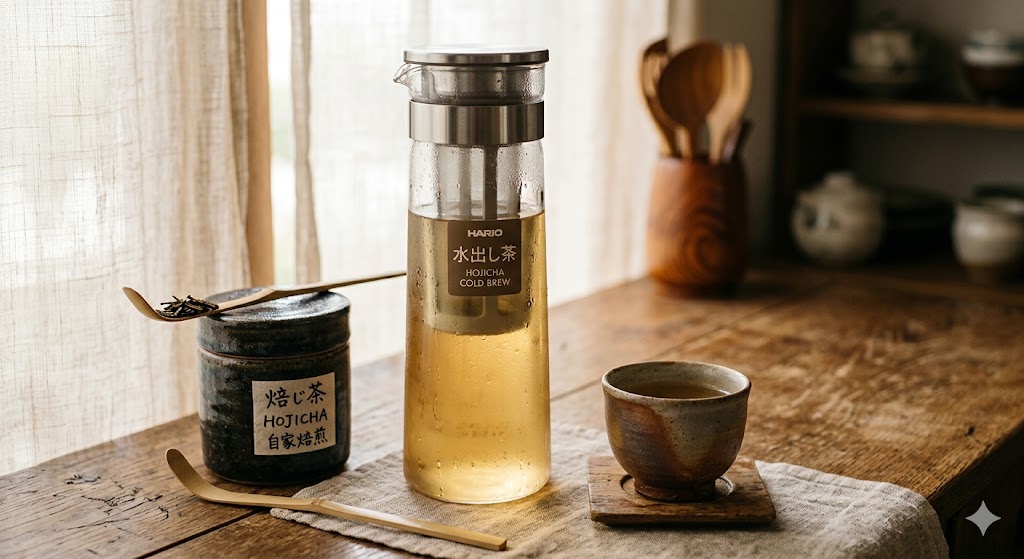
Hario Cha Cha Cold Brew Bottle (CBCN-10)
The flagship cold brew bottle in Hario's tea lineup. Borosilicate glass body, 750ml capacity, stainless steel and rubber filter assembly that seals to the top of the bottle. The filter chamber sits inside the bottle for steeping, then the assembly is sealed and inverted for serving.
Pros: Excellent build quality, beautiful clear glass shows the infusion color, dishwasher-safe glass body, works for both hot and cold brew
Cons: Slightly more expensive than competing options; filter cleaning requires some attention to remove fine tea particles
Hario Mizudashi Cold Brew Bottle
A more minimalist design — a clear glass bottle with a removable mesh filter insert that sits inside the bottle during cold brewing. Simpler than the Cha Cha, slightly lower price point.
Pros: Straightforward, less to clean, good value
Cons: Less elegant serving design; mesh filter is slightly coarser than the Cha Cha
Hario Filter-in Bottle (FIB series)
A dual-purpose design that functions as both a hot brewing vessel and a cold brew bottle. The filter insert drops into the bottle for both applications. Practical for those who want one vessel for multiple brewing methods.
Pros: Maximum versatility; works for iced sencha brewed hot and then chilled, or true cold brew
Cons: Compromise design — not the absolute best at either hot or cold brewing
Model Comparison
| Model | Capacity | Filter Type | Best For | Price |
|---|---|---|---|---|
| Cha Cha Cold Brew | 750ml | Fine stainless mesh | Premium cold brew, gifting | $$ |
| Mizudashi | 600–1000ml | Medium stainless mesh | Everyday cold brew, value | $–$$ |
| Filter-in Bottle | 600–900ml | Fine mesh insert | Hot + cold dual use | $ |
How to Cold Brew Japanese Tea in a Hario Bottle
The process is simpler than most people expect:
- Measure your tea. Standard ratios: sencha 5–6g per 500ml, hojicha 8–10g per 500ml, gyokuro 6–8g per 300ml. Start conservative and adjust based on taste.
- Place loose leaf in the filter insert. Do not pack tightly — leaves need room to expand as they rehydrate.
- Fill with cold, filtered water. Room temperature water also works but steeps slightly faster. Cold water produces the cleanest, sweetest result.
- Seal and refrigerate. Standard steep times: sencha 4–8 hours, hojicha 6–12 hours, gyokuro 2–4 hours.
- Remove the filter before serving. Once at your target steep time, remove the filter insert to stop extraction. Do not leave the filter in indefinitely — over-extraction eventually occurs even in cold water.
- Serve within 48 hours. Cold brew Japanese tea is perishable. Drink within two days for best flavor.
Tips for Better Results
- Chill your water before brewing: Starting with very cold water (4°C) slows extraction to the minimum, producing the sweetest possible result. Room temperature water at 20°C extracts faster but produces a slightly different flavor balance.
- Use whole-leaf tea: Tea bags release fine particles that pass through even fine filters. Loose leaf whole-leaf tea produces a cleaner cold brew.
- Pre-rinse the filter: Before first use, rinse the stainless filter with hot water to remove any manufacturing residue.
- Cover the top: During refrigerator storage, keep the bottle sealed or covered to prevent the tea from absorbing refrigerator odors (particularly important with delicate sencha).
- Don't squeeze the filter: When removing the filter after steeping, resist the urge to press it — squeezing releases bitter compounds that were properly left in the leaves.
Cold Brew Recipes for the Hario Bottle
Cold Brew Sencha
6g first-flush sencha + 600ml cold filtered water. Refrigerate 6–8 hours. Result: sweet, clean, bright with natural sweetness that hot brewing can never quite replicate.
Overnight Hojicha
10g hojicha loose leaf + 750ml cold water. Refrigerate overnight (8–10 hours). The caramel notes concentrate beautifully; serve over ice with a slice of orange for a summer drink.
Cold Brew Gyokuro
8g gyokuro + 300ml cold water. Refrigerate 3 hours. The most luxurious cold brew possible — deeply sweet, rich umami, no bitterness. Serve in small amounts (100ml glasses) as a premium experience.
Genmaicha Cold Brew
8g genmaicha + 500ml cold water. Refrigerate 8–10 hours. The savory-sweet result is unlike any other cold tea — excellent with sushi or as a palate-cleansing dinner drink.
Cleaning and Care
Glass body: dishwasher safe or hand wash with mild dish soap. The borosilicate glass cleans easily and doesn't retain flavors between batches.
Stainless filter: rinse under running water immediately after use. For thorough cleaning, soak in warm water with a small amount of baking soda (not bleach — it damages the stainless over time). Use a small bottle brush to clean inside the filter chamber. Allow to air dry completely before reassembling.
Frequently Asked Questions
Can I use the Hario cold brew bottle for cold brew coffee?
Yes, though it is not optimized for coffee concentrate ratios. The fine mesh filter works well for coarsely ground coffee at lower ratios (1:12 or 1:15 rather than the traditional 1:4 cold brew concentrate). For dedicated coffee cold brew, a purpose-built coffee cold brew device is more practical.
Can I make hot tea in a Hario cold brew bottle?
The glass body is borosilicate and heat-resistant. The Cha Cha and Filter-in versions can handle hot water for standard hot brewing. Do not pour boiling water directly into a cold glass bottle — allow a brief temper by rinsing with warm water first.
How many brews can I get from each fill of tea?
Cold brew extracts less than hot brewing, leaving compounds in the leaf. After a 6–8 hour cold steep, the leaves still have extraction potential. You can do a second cold steep (extending time to 10–12 hours) for a lighter second infusion, or use the same leaves immediately for a short hot brew.
Why does my cold brew look cloudy?
Fine particles from lower-grade or finely cut teas sometimes pass through even good filters. This is harmless but aesthetically unappealing. Using higher-grade whole-leaf tea resolves this; alternatively, allow the cold brew to settle and decant carefully into a serving glass.
Purchase the Hario cold brew bottle and explore the full range of Japanese teas perfect for cold brewing at All Day I Eat Like a Shark.