Tea Storage Science: How to Keep Your Green Tea Fresh (and What’s Destroying It)
Last updated: April 2026
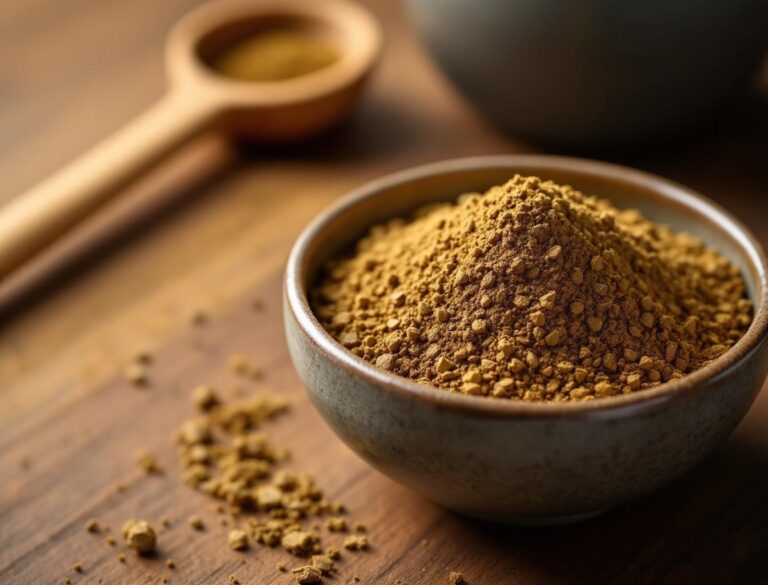
You spent good money on a tin of ceremonial matcha (抹茶 — powdered green tea made from shade-grown, stone-ground leaves) or a bag of first-flush shincha (新茶 — the season's earliest new-harvest tea, harvested April–May). Now it's sitting in your cabinet, and you're probably wondering how long it will hold up.
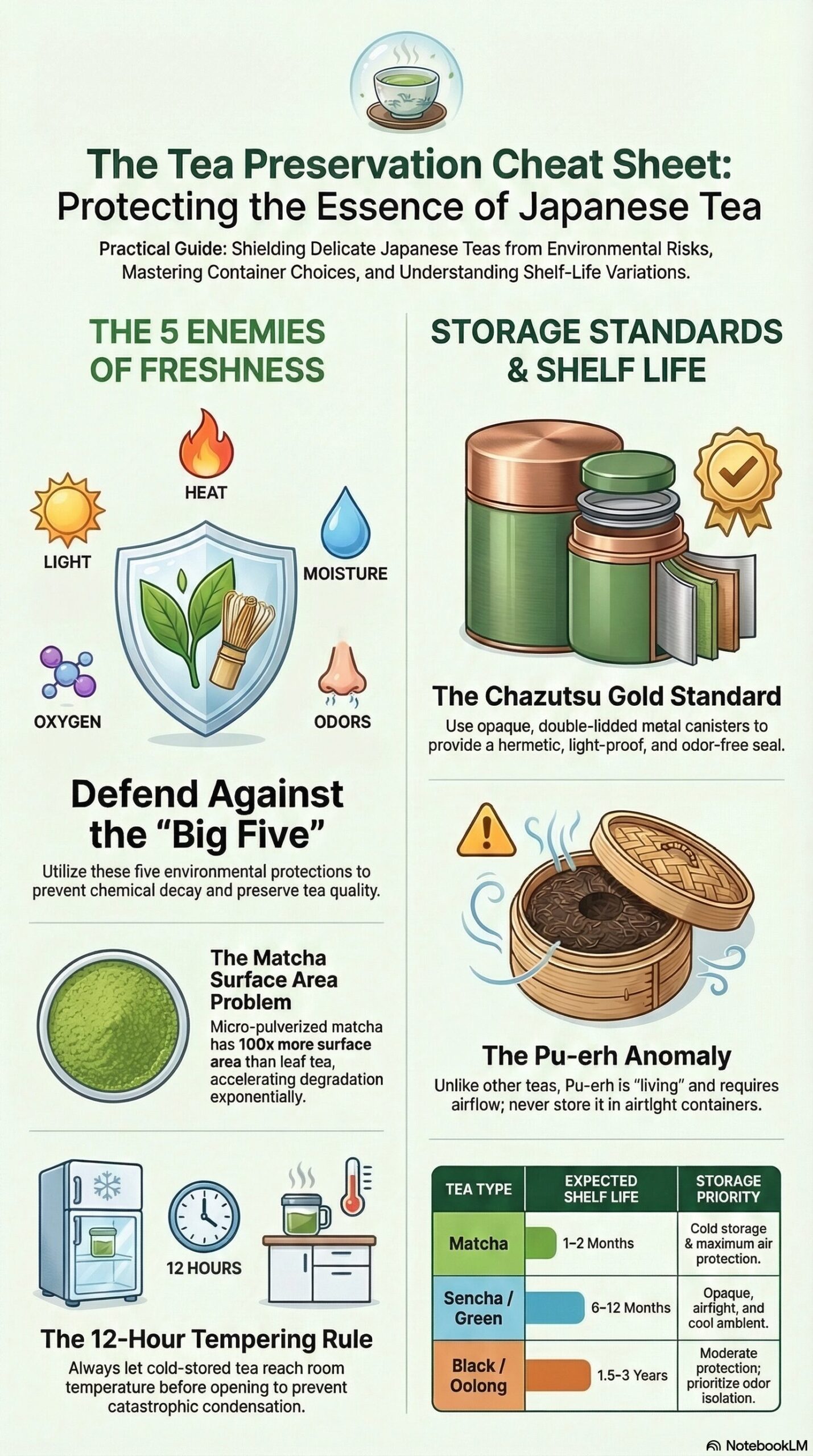
- The five enemies of green tea freshness are oxygen, light, heat, moisture, and ambient odors — each attacking through a distinct chemical mechanism requiring a different countermeasure.
- Matcha degrades the fastest after opening (peak quality: 2–4 weeks) because its powdered form gives it roughly 100× more surface area than whole-leaf tea.
- Refrigerating opened tea almost always makes things worse — condensation from temperature cycling causes more moisture damage than the cold prevents.
- Opaque, airtight containers — a double-lidded chazutsu tin or a ceramic jar with a silicone seal — are essential for any green tea storage.
- Nitrogen-flushed packaging is the gold standard for sealed matcha preservation; a slightly puffy, rigid foil bag is a reliable quality signal before purchase.
The honest answer: most home storage destroys tea faster than age does. Not because people are careless — but because the reasons tea degrades are counterintuitive. Light from a clear jar. Moisture condensing inside a fridge. Odors from nearby coffee beans slowly infiltrating sealed bags. The mechanisms are real, specific, and preventable once you understand them.
This guide explains the actual science behind tea degradation, then gives you a clear system for storing every type of Japanese green tea so it reaches your cup the way it was intended.
What Are the Five Enemies of Tea Freshness?
The five enemies of tea freshness are oxygen, light, heat, moisture, and ambient odors — and each attacks a different set of compounds through a distinct mechanism. Tea leaves are biochemically complex. What makes them taste exceptional — the volatile aromatic compounds, the catechin polyphenols, the chlorophyll responsible for vibrant green color — is also what makes them vulnerable to these five specific environmental stressors:
- Oxygen — triggers enzymatic oxidation that converts green tea into something chemically resembling black tea
- Light — drives photochemical reactions that destroy chlorophyll and directly degrade catechins
- Heat — accelerates all chemical reactions and volatilizes the aromatic compounds responsible for fragrance
- Moisture — enables microbial growth and dramatically accelerates chemical degradation
- Ambient odors — absorbed directly by tea leaves, permanently altering flavor
Each requires a different countermeasure. “Keep it cool and dark” is partially correct, but it misses oxygen (the most destructive force for matcha), ignores the condensation trap in refrigerators, and says nothing about odors. Let's go deeper on each.
How Does Oxygen Turn Green Tea into Something Resembling Black Tea?
Oxygen is the most destructive force for green tea — particularly matcha — triggering enzymatic oxidation that chemically transforms green tea toward black tea. This is also the degradation pathway most people underestimate, and it's the most chemically interesting.
Green tea leaves contain polyphenol oxidase (PPO) enzymes — the same enzymes that make a cut apple turn brown. These enzymes are deliberately deactivated during Japanese green tea production through heat (steaming for sencha (煎茶 — Japan's most widely produced steamed green tea), pan-firing for Chinese greens). But they're not destroyed. When oxygen is present and time passes, these enzymes slowly reactivate and begin converting catechins — the primary polyphenols responsible for green tea's fresh, grassy character — into theaflavins and thearubigins.
If those compound names sound familiar, they should: theaflavins and thearubigins are the dominant polyphenols in black tea. They're what give black tea its amber color, its characteristic malty flavor, and its reduced astringency compared to green tea. Oxidized green tea doesn't just go “stale” — it undergoes the same fundamental chemistry that produces black tea from fresh tea leaves, just slowly and incompletely.
A second oxidation pathway also damages quality: lipid oxidation. Tea leaves contain small amounts of lipids, and when these oxidize, they produce “fishy,” “hay-like,” or “old paper” off-flavors. This is why badly stored green tea develops that characteristic flat, unpleasant note that no amount of precise brewing temperature can fix.
The countermeasure: eliminate or minimize oxygen contact. This means airtight containers, vacuum-sealed bags, or nitrogen-flushed packaging (more on nitrogen flushing below). Every time you open a container and close it again, you're trapping a fresh charge of oxygen inside.
How Does Light Destroy Green Tea Color and Quality?
Light damages green tea through two distinct mechanisms: pheophytinization, which strips chlorophyll of its green color, and direct photochemical breakdown of catechins — both of which are irreversible. The vivid green color of high-quality gyokuro (玉露 — shade-grown premium Japanese green tea), matcha, and shincha isn't just aesthetic — it's a quality signal. That green comes from chlorophyll, and light destroys it through the pheophytinization reaction.
In pheophytinization, the magnesium ion at the center of the chlorophyll molecule gets displaced by a hydrogen ion. The result is pheophytin — a structurally identical molecule that's olive-brown instead of green. This is why improperly stored matcha turns brownish, why old sencha loses its vibrant color, and why Japanese tea merchants have used opaque, double-lidded tins for centuries.
Light also degrades catechins directly. UV and high-energy blue wavelengths drive photochemical reactions that break down EGCG (epigallocatechin gallate — the most abundant and biologically active catechin in green tea) and other key catechins, flattening flavor. These reactions happen even through amber glass — the standard used in many premium product containers. For green tea specifically, opaque is non-negotiable.
Even low-level indoor lighting causes measurable degradation over weeks. If your tea is sitting in a glass jar on the counter for display, it's losing quality every day it's exposed.
The countermeasure: opaque storage. Metal tins, ceramic jars with solid lids, dark Mylar bags. Glass is never appropriate for green tea storage regardless of color.
How Do Heat and Moisture Accelerate Tea Degradation?
Heat accelerates every degradation pathway described above — oxidation, pheophytinization, lipid breakdown — while moisture enables enzymatic and microbial processes that are otherwise largely dormant. Understanding both is essential to choosing where, not just how, to store your tea.
Heat doesn't create a new degradation pathway — it speeds up every pathway already described. Oxidation, pheophytinization, lipid breakdown: all accelerate with temperature. As a rough chemical rule, reaction rates roughly double for every 10°C increase in temperature. A tea stored at 30°C degrades approximately twice as fast as the same tea stored at 20°C.
Beyond acceleration, heat directly volatilizes aromatic compounds. The nuanced fragrance of gyokuro — that characteristic seaweed-like umami note, the underlying sweetness — comes from volatile terpenes, aldehydes, and amino acid derivatives. These compounds evaporate at elevated temperatures. A tea cabinet above a stove is one of the worst places you can store tea, even if it's in an airtight container.
Moisture is similarly indirect but severe. Water activity enables enzymatic and microbial processes that are otherwise dormant. Tea is hygroscopic — it absorbs moisture from the air readily — and above certain humidity thresholds, mold and bacterial growth become real risks. More practically, even sub-mold moisture levels dramatically accelerate all chemical degradation.
The Refrigerator Condensation Problem
Refrigeration is where well-intentioned tea storage most often goes wrong. The logic makes sense: lower temperature slows degradation, so refrigeration should help. And it does — but only under specific conditions.
The problem is condensation. Cold tea containers pulled from the refrigerator and exposed to warm room air immediately collect condensation on their surfaces. If the container isn't perfectly sealed, moisture infiltrates. If you open the container before it warms to room temperature, you introduce condensation directly onto the leaves. Either scenario is worse than room-temperature storage.
The condensation rule: Only refrigerate factory-sealed, vacuum or nitrogen-flushed tea that has not been opened. When retrieving from the refrigerator, set the sealed container on the counter and wait 12–24 hours before opening. Let it fully equilibrate to room temperature first. Once a package is opened, refrigerating it is almost certainly counterproductive unless you have exceptionally dry, airtight storage.
Why Does Tea Absorb Odors — and How Do You Stop It?
Tea absorbs ambient aromas through its enormous surface area — the same property intentionally exploited to make jasmine tea — making container choice and storage location as important as the container's light-blocking and airtight properties. This mechanism works against you in a typical kitchen cabinet.
Tea stored adjacent to ground coffee will begin absorbing coffee aromatics within days. Tea near spice jars, near cleaning products under the sink, near garlic or onion — all of these scenarios gradually alter the tea's flavor profile. The damage isn't always dramatic at first. The tea may just taste “slightly off” or “less fresh than it used to.” But it's cumulative and irreversible.
The traditional production of jasmine tea demonstrates the mechanism clearly: fresh jasmine flowers are layered with tea overnight, removed, and the process repeated multiple times. The tea absorbs the floral fragrance completely without contact with the flowers during brewing. Your kitchen cabinet operates on the same principle — but with coffee, garlic, and dish soap.
The countermeasure: dedicated tea storage away from strong odor sources, with containers that form a genuine seal. “Airtight” means airtight in both directions — it prevents odors from entering as effectively as it prevents oxygen from degrading the tea inside.
What Are the Best Containers for Storing Green Tea?
The best containers for storing green tea are double-lidded metal tins (chazutsu), glazed ceramic jars with silicone gasket seals, and multi-layer Mylar bags with oxygen absorbers — each suited to a different use case. Container choice is where theory becomes practice.
Daily-Use Storage
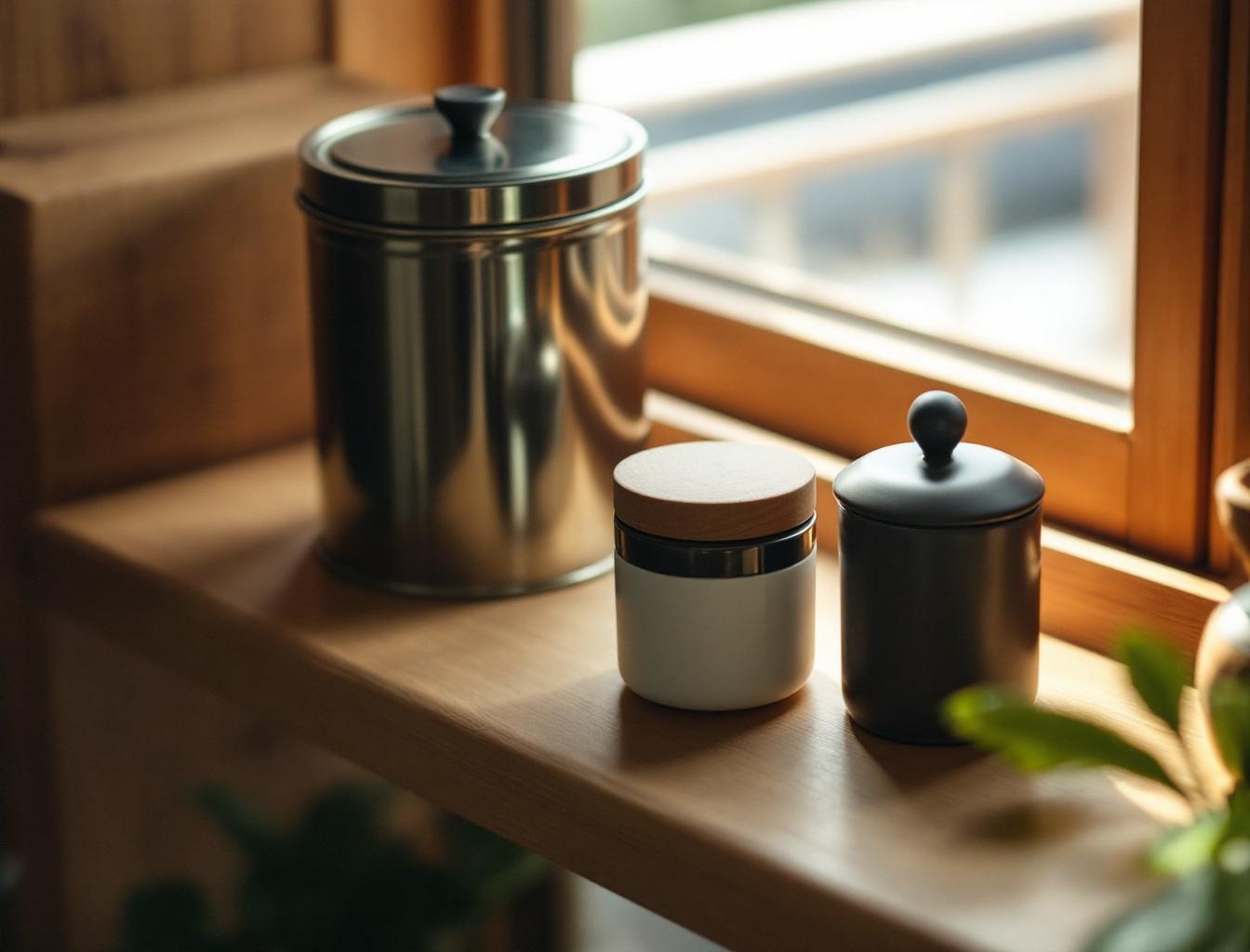
Best option: double-lidded Japanese tea tin (茶筒, chazutsu). The traditional design — an inner lid that fits tightly inside the canister, an outer lid that fits over it — exists precisely to create a two-stage oxygen barrier. A good chazutsu isn't just decorative; it's an engineering solution developed over centuries of tea culture. Look for ones with a close-fitting inner lid, not loose-fitting decorative ones sold as gifts.
Best for: Daily use of opened sencha, gyokuro, matcha, and shincha; countertop storage in kitchens away from direct light and heat sources.
Second-best: glazed ceramic jar with silicone gasket seal. The silicone gasket forms an airtight compression seal when the lid is closed. Glazed ceramic is non-porous (important for both odor neutrality and moisture resistance) and completely opaque. These work well for smaller quantities of daily-use tea.
Best for: Smaller tea quantities; kitchens where aesthetics matter; teas consumed within 1–3 months of opening.
Long-Term Archival Storage
Best option: multi-layer Mylar bag with oxygen absorber. Mylar (biaxially-oriented polyethylene terephthalate) with an aluminum foil laminate layer provides exceptional oxygen and moisture barrier properties — far superior to standard zip-lock or even heavy freezer bags. Adding a 100cc or 300cc oxygen absorber packet before sealing creates a near-zero-oxygen environment inside. This is the standard used by specialty tea importers storing significant tea inventory.
Best for: Sealed, long-term storage of high-value teas (ceremonial matcha, first-flush gyokuro, shincha); bulk inventory; teas not intended for use within the next 3–6 months.
What to Avoid
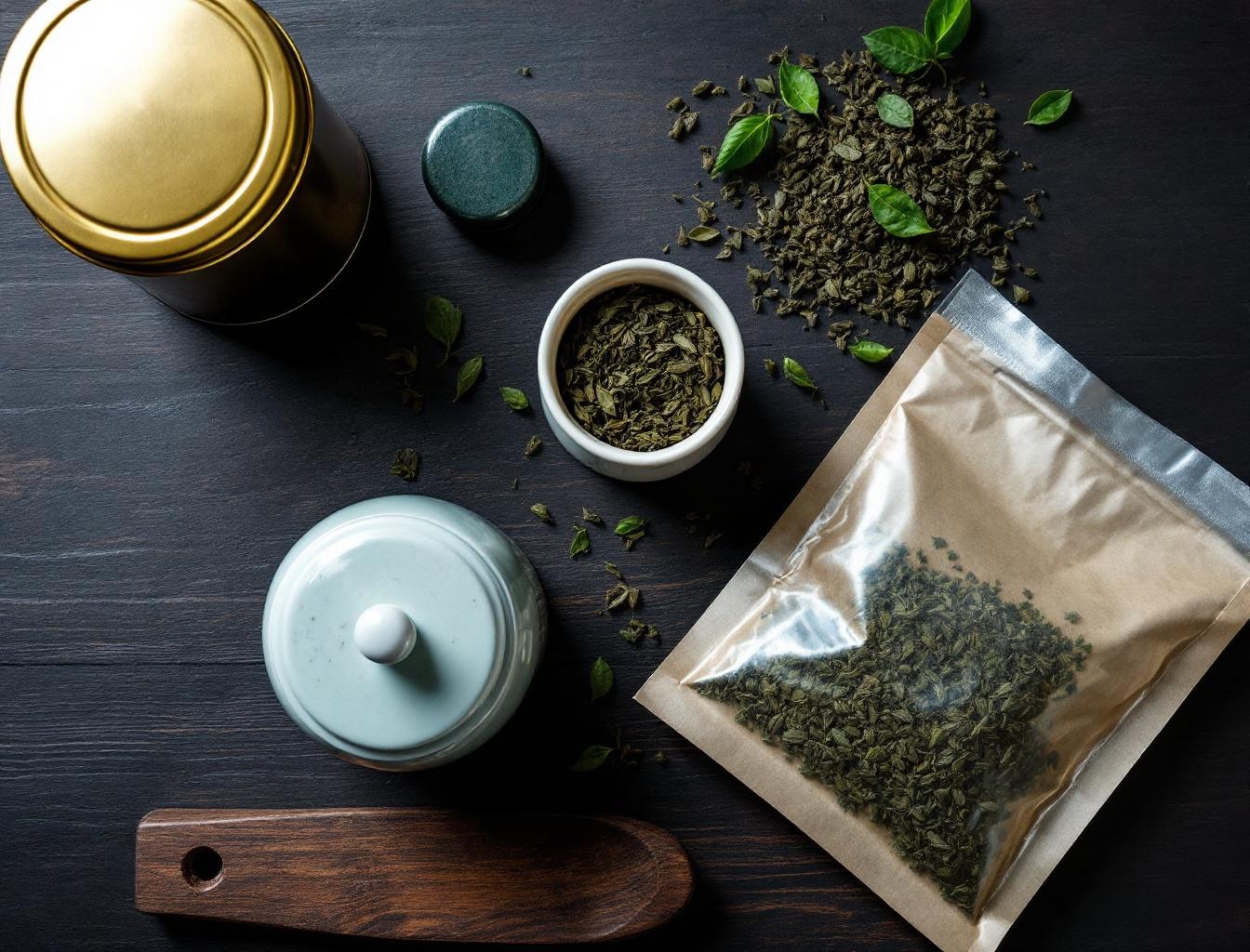
| Container | Light Blocking | Airtight | Odor Neutral | Verdict |
|---|---|---|---|---|
| Clear glass jar | No | Variable | Yes | Avoid — light destroys color and catechins |
| Amber glass jar | Partial | Variable | Yes | Still insufficient — amber doesn't block all damaging wavelengths |
| Wooden box/canister | Yes | No | No | Avoid — wood is porous, absorbs and transfers odors, traps moisture |
| Standard zip-lock bag | No (clear) / Yes (opaque) | Poor | Poor | Avoid — low oxygen barrier, not truly airtight, permeable to odors |
| Double-lidded metal tin (chazutsu) | Yes | Good | Yes | Excellent for daily use |
| Glazed ceramic with silicone seal | Yes | Excellent | Yes | Excellent for daily use |
| Mylar bag + oxygen absorber | Yes | Excellent | Yes | Best for long-term archival storage |
What Is Nitrogen Flushing and Why Does It Protect Matcha?
Nitrogen flushing replaces the air inside a package with inert nitrogen gas before sealing, creating a near-zero-oxygen environment that eliminates the primary degradation pathway for matcha. Premium matcha brands often advertise “nitrogen flushed” or show “N₂” on their packaging. This isn't marketing language — it's a specific and genuinely superior preservation technique.
Nitrogen is inert — it doesn't react with tea compounds, doesn't support oxidation, and doesn't enable the enzymatic and chemical processes that degrade quality. The result is a package with effectively zero oxygen inside, eliminating the primary degradation pathway.
Why not just vacuum seal? For whole-leaf tea, vacuum sealing works reasonably well. For matcha, it creates a specific problem: the pressure of vacuum sealing compresses the powder into clumps, and if the seal is broken (even briefly), moisture rushes in to fill the pressure differential. Nitrogen flushing maintains atmospheric pressure inside the package — no compression, no rush of moist air on opening, just inert protection.
When you buy matcha and see a slightly puffy, rigid foil bag, that puffiness is the nitrogen atmosphere doing its job. A flat, soft bag indicates either vacuum sealing or a broken nitrogen seal — both worth noting as quality signals before purchase.
Once opened, nitrogen flushing no longer helps. At that point, you're back to the principles above: transfer to an airtight, opaque container, minimize oxygen exposure, and consume within the shelf-life windows below.
Should You Refrigerate Your Tea? When It Helps and When It Ruins It
Whether refrigeration helps or ruins your tea depends on a single condition: whether the package is factory-sealed and has never been opened. Japanese tea merchants and specialty retailers in Japan do refrigerate tea — but under very specific conditions that rarely translate to home storage.
When Refrigeration Genuinely Helps
- Factory-sealed, vacuum or nitrogen-flushed tea that hasn't been opened. The sealed environment prevents condensation infiltration. The cold temperature meaningfully extends shelf life, particularly for matcha.
- Extended storage of sealed packages during hot, humid summer months. In Japan's summer humidity (often 70–80%+), refrigerated sealed storage is standard practice for preserving first-flush teas purchased in April through the summer. According to Yamamoto et al. (1997, CRC Press), first-flush tea harvested April–May contains the highest theanine levels and the most prized flavor profile — making proper extended storage especially worthwhile for these teas.
- Long-term archival of sealed high-value teas. A sealed, nitrogen-flushed tin of ceremonial matcha stored at refrigerator temperatures will maintain peak quality significantly longer than the same tin at room temperature.
When Refrigeration Ruins Tea
- Any opened package stored in the refrigerator. Daily in-and-out cycling of opened tea creates condensation and moisture infiltration almost every time. The temperature benefit is far outweighed by the moisture damage.
- Poorly sealed containers in the refrigerator. Refrigerators are humid environments (from stored produce, liquids, etc.) and will actively force moisture into imperfectly sealed containers.
- Tea stored in the refrigerator door. Temperature swings from door opening are more extreme near the door — poor for consistent cold storage.
Practical rule: Refrigerate only sealed packages. Before opening any refrigerated tea, remove it, leave it on the counter unopened for 12–24 hours, and let it fully warm to room temperature. Only then open. This prevents condensation both on the exterior and inside the container.
How Long Do Different Types of Tea Actually Last?
Shelf life varies dramatically by tea type: matcha degrades to peak quality within 2–4 weeks of opening, while black tea can remain fresh for 18–24 months — primarily because more-oxidized teas are more shelf-stable, their oxidizable compounds already transformed during processing. More delicate, lightly processed teas are more vulnerable.
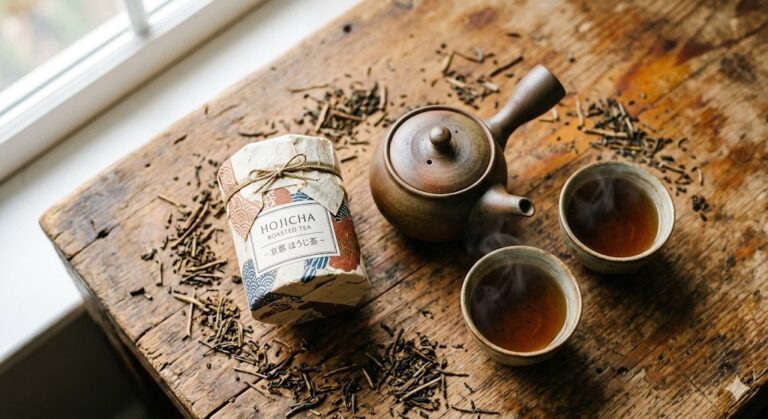
According to Hara (2001, Marcel Dekker), caffeine and catechin content vary significantly by variety and processing method, with roasting being one of the most significant factors in producing a more shelf-stable chemical profile — which is why hojicha (ほうじ茶 — roasted Japanese green tea) outlasts unroasted green teas in storage.
| Tea Type | Opened, Proper Room-Temp Storage | Sealed, Room Temp | Sealed, Refrigerated | Notes |
|---|---|---|---|---|
| Matcha (ceremonial/culinary) | 2–4 weeks peak quality; 2–3 months drinkable | 6–12 months | 12–18 months | Powdered — 100x more surface area than leaf tea, degrades fastest |
| Gyokuro | 3–6 months | 12–18 months | Up to 24 months sealed | Shaded tea; high in chlorophyll and amino acids, moderately delicate |
| Sencha / Shincha | 4–6 months | 12 months | 18–24 months sealed | Shincha (new harvest) is most delicate; consume within 3 months of opening |
| Bancha / Kukicha | 6–12 months | 18 months | 24 months sealed | Coarser tea; more forgiving on storage |
| Hojicha | 6–12 months | 12–18 months | Not necessary | Roasting transforms the chemical profile — significantly more shelf-stable than unroasted green teas |
| Genmaicha | 6–9 months | 12 months | Not recommended | Roasted rice can go rancid; refrigeration can accelerate this in opened packages. According to Heiss & Heiss (2007, Ten Speed Press), genmaicha originated as a way to stretch expensive tea with roasted brown rice — the rice component is the primary shelf-life limiting factor. |
| Light Oolong (green oolong) | 6–12 months | 18 months | 24 months sealed | Moderate oxidation provides more stability than green tea |
| Black tea | 18–24 months | 3 years | Not necessary | Full oxidation makes it the most shelf-stable category |
| Pu-erh (sheng/shou) | Designed to age indefinitely | Never store airtight. Needs airflow, 20–30°C, 50–70% humidity. Airtight storage kills the microbial cultures responsible for pu-erh aging. | ||
A note on matcha: the 2–4 week “peak quality” window for opened matcha at room temperature reflects the reality that matcha's enormous surface area makes it exceptionally vulnerable. By week 3–4, most people can detect flavor loss. The tea is still safe and reasonably pleasant at 2–3 months, but the nuance that justifies premium pricing has largely faded.
How Can You Tell If Your Tea Has Gone Bad?
You can assess tea quality through three sensory checks — visual color, aroma, and flavor — without any lab equipment. Your senses are well-calibrated for this. Run through this audit when opening a tea you haven't used in a while:
Visual Check
- Matcha: Vibrant, bright green indicates freshness. Dull olive-green or brownish tones indicate pheophytinization — chlorophyll has degraded. Clumping beyond normal can indicate moisture damage.
- Whole-leaf green tea: Leaves should retain their original color (bright green for steamed teas, sometimes more muted for pan-fired). Faded, brown-tinged, or discolored leaves indicate oxidation.
Aroma Check
- Fresh: Grassy, vegetal, sometimes floral, slightly marine (for gyokuro/matcha), with a bright top note.
- Degraded: Flat, “old hay,” musty, papery, or no discernible aroma. Off-notes like fishiness (lipid oxidation) or unfamiliar smells (odor absorption) are clear indicators of quality loss.
Flavor Check
- Fresh: Bright, with the characteristic profile of that tea type — umami and sweetness for gyokuro, grassy and clean for sencha, nutty and toasty for hojicha.
- Degraded: Flat, thin, overly astringent (oxidation), musty, or carrying off-notes. The brightness and complexity are the first things to go; what's left is a muted, one-dimensional version of the original.
If your tea passes the aroma check, it's almost certainly still worth drinking — even if not at its best. Degraded tea isn't unsafe, just less enjoyable. The question is whether it's worth the water temperature and teaware.
Quick Storage Reference: The Rules in One Place
- Matcha (opened): Double-lidded tin or airtight ceramic jar, room temperature, away from light. Consume within 4 weeks for peak quality.
- Sencha / Gyokuro / Shincha (opened): Airtight opaque container, room temperature, away from heat and light. Consume within 6 months.
- Hojicha / Genmaicha (opened): Airtight opaque container, room temperature. More forgiving — up to 12 months.
- Any sealed, unopened tea: Cool, dark, stable temperature. Refrigerate only if nitrogen-flushed or vacuum-sealed; temper 12–24 hours before opening.
- Pu-erh: Breathable container (traditional clay jar or ventilated cabinet), 20–30°C, 50–70% relative humidity. Never airtight.
Frequently Asked Questions
Can I still drink tea that's past its best-by date?
Yes — in almost all cases, properly stored tea that's past its best-by date is still safe to drink. The best-by date is a quality guarantee, not a safety limit. Tea doesn't become hazardous with age; it loses complexity and brightness. Judge by the sensory audit above: if it smells flat and tastes thin, you can still drink it — it just won't be as enjoyable as fresh tea.
Can I freeze green tea?
Freezing is possible but requires stricter condensation controls than refrigeration — with proportionally greater risk if the container fails. Professional tea merchants do freeze bulk inventory, but it requires the same condensation precautions as refrigeration — amplified. The container must be completely airtight before freezing, and the tea must temper at room temperature for 24–48 hours before opening after freezing. Moisture damage from condensation on a frozen package is severe and immediate. For most home users, proper room-temperature storage in a good container is both easier and safer.
Why did my matcha turn brown?
Brown matcha is the result of pheophytinization — light, heat, or oxygen exposure displaced the magnesium ion at the center of the chlorophyll molecule, producing brownish pheophytin. The magnesium ion at the center of the chlorophyll molecule was displaced, producing brownish pheophytin. The tea is still drinkable but has lost significant quality. Store future matcha in an opaque, airtight container and consume within 4 weeks of opening.
How do I store an open bag of tea?
Transfer it to a proper container immediately — open bags are designed for shipping, not preservation. Move the contents into an airtight, opaque container such as a chazutsu tin or a ceramic jar with a silicone-seal lid. Press out as much air as possible before closing. If you have a lot of tea and will use it slowly, divide it into smaller containers to minimize how much you expose to air each time you open one.
Is a tin with a lid but no inner gasket good enough?
For short-term daily use (1–2 months), a well-fitting tin lid provides reasonable protection — but a double-lidded chazutsu is meaningfully better for anything longer. For longer storage, the lack of an airtight seal allows gradual oxygen exchange and odor penetration. A double-lidded chazutsu (with an inner press-fit lid plus an outer lid) is meaningfully better than a single-lidded tin.
Should I store different teas in the same container?
No — teas absorb each other's aromas just as readily as external odors, making dedicated containers non-negotiable. Store each tea in its own dedicated container. This is especially important for strongly aromatic teas like hojicha or heavily roasted oolongs stored near delicate gyokuro or shincha.
Does the same storage logic apply to Chinese green teas?
Yes, with minor differences. Pan-fired Chinese greens (Longjing, Bi Luo Chun) are chemically similar to Japanese steamed teas and require the same protection from oxygen, light, and moisture. They're generally slightly more oxidation-resistant than Japanese steamed teas because the higher-heat pan-firing further deactivates polyphenol oxidase enzymes, but the same five enemies apply.
Proper tea storage isn't complicated once you understand what's actually happening at the molecular level. The enemies are real, the mechanisms are specific, and the countermeasures are simple. A good tin, kept away from light and heat, away from odor sources, opened with a dry spoon — that's 90% of what you need to get the most out of every tea you buy.
If you're looking for storage containers, browse our selection of Japanese tea accessories, including traditional chazutsu tins and ceramic tea canisters. For guides on specific teas and how freshness affects each one, see our shincha guide, hojicha guide, and matcha brewing guide.