Toasted Nori vs Raw Nori: What’s the Difference and When to Use Each
Most nori you encounter at a grocery store or Japanese market is toasted. But raw nori exists, and the differences between the two affect flavor, texture, and how they behave in recipes. Understanding which type you need prevents the frustrating experience of buying the wrong one.
What Is Toasted Nori?
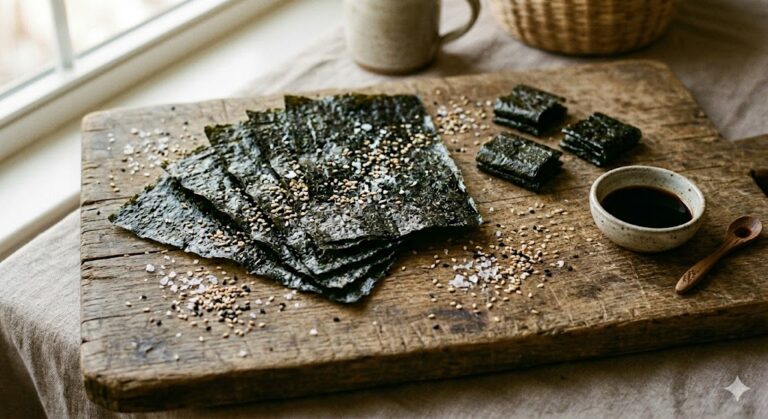
Toasted nori (yaki nori, 焼き海苔) is the standard form of nori used in Japanese cooking. After the seaweed sheets are dried, they're passed through a toasting process — either with direct heat from a burner or in a specialized toasting machine. The result is a darker, crispier, more aromatic sheet that's ready to use immediately.
Toasting does several things:
- Removes residual moisture, creating the crispy, papery texture
- Deepens the color from olive green to near-black
- Develops roasted, umami-rich aromas not present in raw nori
- Makes the sheet more structurally stable — it holds its shape until contact with rice or moisture
When a recipe calls for “nori” without qualification, it means toasted nori. This is what you want for sushi rolls, onigiri, and most applications.
Shop our toasted Japanese nori in full sheets and snack sizes.
What Is Raw (Untoasted) Nori?
Raw nori (nama nori, 生海苔) is dried but not toasted — it retains the fresh seaweed flavor with a chewier, more pliable texture. True fresh nori (before any drying) is rarely found outside Japan and is typically used in soups and as a condiment.
For most practical purposes, “raw nori” in Western markets means dried but untoasted sheets. These are:
- More flexible, less brittle than toasted nori
- Lighter in color — olive or greenish-black rather than near-black
- Fresher, more oceanic in flavor — closer to seaweed rather than toasted grain
- Less shelf-stable in their crispy state (they were never crispy to begin with)
Flavor Comparison
The flavor difference is significant and surprising to people who've only encountered toasted nori.
Toasted nori: Savory, roasted, slightly smoky. The Maillard reaction during toasting creates new flavor compounds. A slight nuttiness. The umami is still ocean-forward but backed by roasted depth.
Raw nori: Clean, green, briny. Tastes more directly of the sea — almost vegetal in a positive way. Less complex but more pure seaweed character. Similar in some ways to fresh seaweed you might encounter at a sushi bar as a garnish.
Neither is better — they're different flavor profiles suited to different uses.
Texture and Performance in Recipes
Texture matters as much as flavor for choosing between the two.
Toasted nori:
- Crispy and stiff initially
- Softens on contact with moisture (rice, filling) — this is why the outside of onigiri can become soft within minutes
- Snaps cleanly when folded or cut
- Excellent for wrapping where you want initial crunch
Raw nori:
- Flexible and slightly chewy even when dry
- Does not produce the crunch-to-soft texture transition that toasted nori does
- Stays chewy when wet rather than going soft
- Better for long-contact applications where you don't want the seaweed to dissolve into softness
When to Use Toasted Nori
- Sushi rolls (maki): Standard. The structure and toasted flavor are designed for this application.
- Onigiri: Toasted nori wrapped around rice balls is classic. Wrap just before eating for maximum crunch.
- Hand rolls (temaki): The crispy texture holds up better for hand-eating.
- Snacking: Toasted nori seasoned with sesame or soy is the standard snack application.
- Ramen garnish: A crispy sheet of toasted nori resting against a bowl rim absorbs the broth flavors as you eat — classic.
- Furikake seasoning: Crumbled toasted nori is a core ingredient.
When to Use Raw Nori
- Miso soup: Small pieces of fresh or raw nori added to miso soup just before serving provide a clean oceanic note without overpowering.
- Cold tofu (hiyayakko): Strips of raw nori as a garnish preserve their green color and fresh flavor better than toasted.
- Nori tsukudani: This seaweed paste (simmered nori in soy sauce and mirin) is made from either type, but raw nori produces a more delicate result.
- Nori pasta and grain dishes: When you want the seaweed to meld into a dish rather than add crunch, raw works better.
Can You Toast Raw Nori at Home?
Yes, and it's straightforward. Hold the sheet with tongs or chopsticks and pass it quickly back and forth over a gas burner on medium heat, or use a dry skillet over medium heat for about 10 seconds per side. Watch it carefully — nori toasts (and burns) quickly.
Alternatively, a toaster oven at 300°F for 1-2 minutes works well for multiple sheets at once.
The result is identical to commercially toasted nori and brings raw nori fully to life.
Storage Differences
Toasted nori loses its crispness faster on exposure to moisture in the air — once the package is opened, store immediately in an airtight container with a desiccant packet. Consume within 1-2 weeks of opening for best texture.
Raw nori is already somewhat flexible so moisture exposure doesn't change its texture as dramatically. However, it still benefits from airtight storage to preserve flavor and prevent mold or off-tastes.
Both types keep for 1-2 years unopened. See our nori storage guide for details.
Frequently Asked Questions
Does all packaged nori come toasted?
Most nori sold for cooking comes toasted. Packages typically say “yaki nori” or “roasted seaweed sheets.” If you see “nama nori” or it specifically says unroasted, it's raw.
Is toasted nori more nutritious than raw?
Nutritionally they're very similar. Toasting may slightly reduce some heat-sensitive vitamins but the difference is minimal. Both are excellent sources of iodine, B12, and various minerals.
Why does my nori taste bitter?
Bitterness usually indicates staleness — either the nori has absorbed moisture from the air or it's simply past its prime. Freshly toasted nori should have no bitterness.
Can I freeze nori?
Yes — freezing in an airtight container extends shelf life significantly. Allow to come to room temperature before opening to prevent condensation.
What's the difference between nori and seaweed snacks?
Seaweed snacks (often labeled as “roasted seaweed”) are toasted nori sheets, usually seasoned with oil and salt, and often thinner and more fragile than full sushi-grade nori sheets. Same base product, different processing and seasoning.