Kyusu Teapot: The Complete Guide to Japan’s Green Tea Brewing Vessel
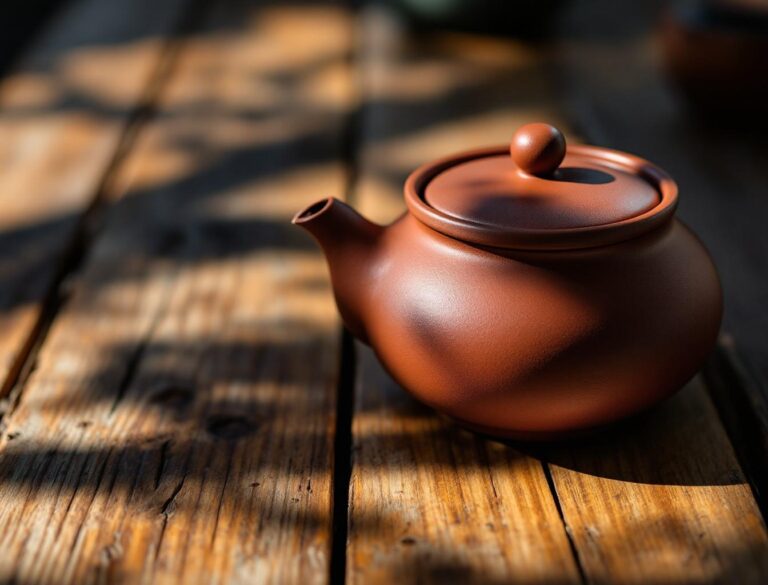
The kyusu (急須) is Japan's quintessential teapot — purpose-built for brewing loose-leaf Japanese green tea with precision. Unlike Western teapots designed for a single long steep, the kyusu is engineered for rapid, complete pour-off: you steep briefly, drain every drop, and repeat across multiple infusions. The result is tea that reveals new dimensions with each re-steep, never bitter, always balanced. Explore our round stainless steel teapot — Best for: everyday brewing with any Japanese green tea type — for an authentic experience.
Last updated: April 2026
- The kyusu comes in four handle styles — yokode, ushirode, uwade, and hōhin — each matched to a different tea type, serving size, and skill level.
- Unglazed Tokoname iron-rich clay actively mellows bitterness and builds umami with use; glazed Arita porcelain is flavor-neutral and the easiest to maintain.
- Water temperature — not steep time — is the primary driver of bitterness in Japanese green tea; lower temperatures produce sweeter, less astringent results.
- Tokoname (Aichi Prefecture) produces roughly 90% of Japan's kyusu and is the default choice among serious Japanese green tea drinkers.
- For most first-time buyers, a 200–270ml yokode kyusu in the $40–$80 range offers the best balance of versatility and ease of use.
If you've been brewing Japanese green tea in a standard ceramic teapot and wondering why it tastes flat or bitter, the kyusu is probably the missing tool. This guide covers everything — the four handle styles, regional clay varieties, what makes Tokoname clay different from Banko, how to match brewing parameters to each tea type, and what separates a quality kyusu from a cheap imitation.
What Is a Kyusu? History and Cultural Context
The word “kyusu” literally means “to pour quickly” — a direct description of the teapot's core function: steep briefly and drain every drop without leaving hot water on the leaves. While teapots came to Japan from China during the Edo period (1603–1868), Japanese potters evolved them specifically for sencha (煎茶 — steamed loose-leaf green tea) culture, which prizes precise temperature control, short steep times, and multiple infusions over a single long brew.
Two figures defined this culture: Ingen Ryuki, the Chinese monk who introduced sencha drinking to Japan in 1654, and Baisao (売茶翁), the wandering monk who popularized it among ordinary people in Kyoto in the early 1700s. As sencha culture spread, pottery centers across Japan — Tokoname, Banko, Arita — began producing kyusu tailored to the specific teas of their regions.
Today, Tokoname in Aichi Prefecture produces roughly 90% of Japan's kyusu. The remaining production comes from Banko in Mie, Arita in Saga, and smaller regional kilns. Each brings a distinct clay composition that affects not just aesthetics but the flavor chemistry of your tea. For more, see our guide on enhancing flavor.
Which Kyusu Handle Style Should You Choose? The Four Types Explained
There are four distinct kyusu handle configurations, and the right choice depends on your tea type, serving size, and hand preference. Most people assume “kyusu” means one thing — the distinctive side-handle teapot — but the category covers four meaningfully different designs.
Yokode Kyusu (Side-Handle) — Best for: sencha, genmaicha, everyday solo brewing
The most recognizable style. The handle extends perpendicular to the spout at a 90-degree angle, positioned on the side of the body. This allows one-handed pouring with the wrist in a natural, low-strain position — ideal for multiple infusions over a tea session. Standard size is 200–300ml. This is the everyday choice for sencha and genmaicha.
Ushirode Kyusu (Back-Handle) — Best for: beginners, bancha, hojicha
Handle positioned directly opposite the spout, like a Western teapot. Offers maximum stability and a familiar grip, making it approachable for beginners. Slightly larger capacity (250–400ml). The pour angle is less precise than yokode — you tilt more steeply to drain fully. Good for bancha and hojicha where perfect temperature control is less critical.
Uwade Kyusu (Top-Handle) — Best for: large groups, high-volume coarse-tea brewing
An arching handle rises over the top of the body, similar to a Chinese gaiwan or a Japanese dobin. Provides excellent leverage for large-capacity pots (300–500ml) but requires two hands for a controlled pour. Used primarily for serving multiple guests or brewing coarser teas like bancha at high volumes.
Hōhin (Handle-Free) — Best for: gyokuro, ceremonial single-serving sessions
Not a kyusu in the strict sense, but functionally in the same family. A handle-free cup-shaped brewing vessel, typically 60–120ml. Used almost exclusively for gyokuro (玉露 — shaded green tea prized for elevated theanine and umami) — where water temperature is 50–60°C and the thin walls must transmit your hand's heat precisely to maintain temperature. According to Ashihara (2015, Natural Product Communications), shading increases theanine by 2–3× compared to unshaded sencha, which is why gyokuro demands this level of temperature precision. The smallest, most ceremonial option.
| Handle Style | Position | Capacity | Best For | Skill Level |
|---|---|---|---|---|
| Yokode (side) | 90° to spout | 200–300ml | Sencha, genmaicha, everyday solo use | Beginner–Intermediate |
| Ushirode (back) | Opposite spout | 250–400ml | Bancha, hojicha, newcomers to kyusu | Beginner |
| Uwade (top) | Arching over body | 300–500ml | Multiple guests, large-volume brewing | Intermediate |
| Hōhin (none) | Handle-free | 60–120ml | Gyokuro, ceremonial brewing | Advanced |
Does Clay Type Affect the Flavor of Your Tea? Regional Varieties Compared
Yes — clay composition directly influences your tea's taste, not just the aesthetics of the teapot. Unglazed kyusu absorb trace minerals into the clay wall over time, and these minerals interact with your tea at a molecular level — softening bitterness, enhancing sweetness, and rounding the body. Glazed kyusu are chemically neutral, keeping your tea's flavor exactly as brewed.
| Region | Clay Type | Key Properties | Best For | Price Range |
|---|---|---|---|---|
| Tokoname (Aichi) | Iron-rich red/purple clay | Reduces bitterness, enhances umami and sweetness; iron reacts with tannins; excellent heat retention | Sencha, gyokuro, fukamushi | $40–$300+ |
| Banko (Mie) | Petalite-mineral clay; purple/brown | Extremely thin walls, ultra-light, outstanding heat retention due to petalite; neutral iron content | Sencha, gyokuro | $60–$400+ |
| Arita/Hizen (Saga) | White kaolin porcelain (glazed) | Chemically neutral; no flavor interaction; easy to clean; excellent for comparative tastings | All tea types; beginners | $25–$150 |
| Shigaraki (Shiga) | Rough natural clay; ash glazes | Rustic wabi aesthetic; thicker walls; moderate heat retention; flavor-neutral when glazed | Bancha, hojicha, genmaicha | $50–$250 |
| Soma (Fukushima) | Double-walled clay | Exceptional insulation due to air gap between walls; specialty construction; rare outside Japan | Gyokuro, cold-brew sencha | $80–$500+ |
Key decision point: If you brew primarily for flavor precision and want to taste your tea without clay influence, choose a glazed Arita porcelain kyusu. If you want the clay to work with your tea — mellowing bitterness and building umami over months of use — choose unglazed Tokoname. Tokoname is the default choice of serious Japanese tea drinkers for a reason.
For a deeper look at Tokoname production history and kiln techniques, see our complete Tokoname teapot guide.
Which Strainer System Does Your Tea Need?
The strainer system is the most underrated factor in a kyusu purchase — it directly determines whether you end up with fine leaf particles in your cup or a clean, smooth pour. How your kyusu filters tea leaves affects every infusion. Three main systems exist:
Ceramic Ball/Dome Strainer (Ceramic Zaru)
A molded ceramic dome with fine holes, integrated into the spout opening. Best for standard needle-leaf teas (sencha, gyokuro). Allows high flow rate without clogging. Downside: very fine-leaf teas like fukamushicha (深蒸し茶 — deep-steamed sencha with a broken leaf structure and rich, thick liquor) can partially slip through.
Multi-Hole Flat Strainer
A flat ceramic disk with punched holes, common in production kyusu. Works well for most teas. Easy to clean. Flow rate is slightly slower than the dome style. The most common strainer in mid-range $40–$100 kyusu.
Integrated Sasame (Fine Mesh Grid)
Multiple fine channels cut into the clay at the spout entrance — essentially a built-in grid filter. Tokoname kyusu often feature this. Excellent for fukamushicha and any broken-leaf tea. Harder to clean but delivers the clearest cup with minimal sediment.
If you brew fukamushicha (the rich, deep-green style popular in Shizuoka and Kagoshima), look specifically for a sasame-style filter. Standard flat strainers will let the fine leaf particles through.
What Are the Correct Brewing Parameters for Each Tea Type?
The kyusu's “drain completely” design is what makes these parameters work — if you leave hot water sitting on leaves between infusions, every figure below breaks down. Always pour out completely. According to Komes et al. (2010, Food Research International), higher water temperature significantly increases extraction of catechins and tannins, producing more astringent results — making temperature the single most important variable to control.
| Tea Type | Water Temp | Leaf Ratio | 1st Infusion | 2nd Infusion | 3rd Infusion |
|---|---|---|---|---|---|
| Sencha | 70–75°C (158–167°F) | 4g per 120ml | 45–60 sec | 30 sec | 45 sec |
| Gyokuro | 50–60°C (122–140°F) | 5g per 60ml | 90–120 sec | 30 sec | 45 sec |
| Fukamushi Sencha | 70–75°C (158–167°F) | 4g per 100ml | 30–40 sec | 20 sec | 30 sec |
| Genmaicha | 80–85°C (176–185°F) | 3g per 100ml | 45 sec | 45 sec | 60 sec |
| Bancha / Hojicha | 85–90°C (185–194°F) | 3g per 100ml | 30–45 sec | 30 sec | 45 sec |
Temperature is the most common source of bitterness in green tea. If your sencha tastes harsh, the water is almost certainly too hot — not steeped too long. Drop 5–10°C before increasing steep time. Note that hojicha (焙じ茶 — roasted green tea) tolerates higher temperatures partly because the roasting process itself reduces caffeine content significantly through sublimation, according to established tea chemistry consensus (Multiple sources / Tea chemistry consensus, 2024). For a science-based breakdown of why temperature matters more than duration, see our brewing temperature guide.
The ratios above are starting points. Gyokuro rewards experimentation — some serious enthusiasts use as much as 8g per 40ml for an intensely sweet, almost syrupy first infusion.
What Size Kyusu Do You Need?
The right kyusu capacity depends primarily on how many people you're brewing for and which tea you brew most — larger vessels make leaf-to-water ratios harder to maintain precisely. The strainer may not fully submerge in an undersized amount of water; too much water dilutes the result.
| Capacity | Serves | Best Use Case |
|---|---|---|
| 60–120ml (hōhin) | 1 | Gyokuro, ceremonial brewing |
| 150–200ml | 1 | Personal sencha sessions, single-cup brewing |
| 200–300ml | 1–2 | Standard daily use — the most versatile size |
| 300–400ml | 2–3 | Sharing with guests, bancha/hojicha brewing |
| 400ml+ | 4+ | Large gatherings, coarser teas |
For most people buying their first kyusu, 200–270ml is the sweet spot. It's sized for personal use but generous enough to fill two small yunomi cups — handy when you want to share. Anything smaller than 150ml demands very precise leaf measurement and is best left to experienced brewers.
How Do You Buy a Quality Kyusu? Key Indicators to Check
Price variance in kyusu is enormous — from $20 factory pieces to $800+ hand-thrown artisan works. Evaluating quality comes down to five physical checks you can perform regardless of budget.
Lid Fit
Flip the kyusu upside down with the lid on and shake gently. A quality lid should not rattle or fall out. The seal prevents steam from escaping and maintains temperature. Cheap kyusu have loose lids that create inconsistent brew conditions.
Pour Quality
The spout should create a clean, unbroken arc of liquid with no dripping from the tip. Test by filling with water and pouring slowly. Drip = poor spout engineering = tea stains everywhere.
Strainer Alignment
Hold the kyusu at eye level and look into the spout. The strainer holes should be fully visible and unobstructed. In cheaper pieces, the strainer often sits too low or is partially blocked by the spout wall.
Wall Uniformity
Gently squeeze the body (not hard enough to break it). Quality hand-thrown pieces have consistent wall thickness — no thin spots that crack under heat stress. Slip-cast mass-produced pieces often have uneven walls.
Kiln Marks and Provenance
Authentic Tokoname kyusu carry a certification stamp from the Tokoname Ceramic Art Association. Banko pieces may carry a Banko-yaki mark. These aren't just branding — they guarantee the clay composition and firing process that determines the tea-enhancing properties. Without provenance, you're buying generic clay that may look similar but doesn't deliver the same chemistry.
How Do You Season a New Kyusu?
An unglazed kyusu — especially Tokoname — must be seasoned before its first real use; glazed kyusu can skip this step entirely. Seasoning closes micro-pores in the clay, removes manufacturing residue, and begins building the tea patina that makes the teapot improve over time.
- Rinse with boiling water — fill the kyusu with boiling water, swirl gently, discard. Repeat 2–3 times.
- Tea rinse — brew a strong pot of the tea you'll primarily use (sencha, gyokuro, etc.) and pour it into the kyusu. Let it sit for 15 minutes, then discard.
- Dry completely — remove the lid and allow to air-dry for 24 hours before first use.
- Dedicate to one tea type — for unglazed kyusu, commit to brewing primarily one type of tea. The clay absorbs flavor compounds over hundreds of brews, and mixing green tea with oolongs or blacks can produce off flavors.
Glazed kyusu skip the seasoning process — just rinse and brew.
How Do You Clean and Care for a Kyusu?
Daily care is simple — rinse with hot water and air-dry — but the rules differ meaningfully between unglazed and glazed kyusu. Never use soap on unglazed clay.
Daily Cleaning
After each session, remove all leaves, rinse with hot water, and allow to air-dry with the lid off. Never use soap on unglazed clay — soap penetrates the porous surface and permanently affects flavor. The patina that builds over time is not dirt; it's beneficial mineral accumulation. Don't scrub it away.
Deep Cleaning
For stubborn staining or mineral buildup, soak in a solution of baking soda and warm water (1 tsp per 500ml) for 30 minutes. Rinse thoroughly. For the spout interior, use a thin flexible brush or pipe cleaner — tea residue buildup is the main cause of off-flavors in older teapots.
Long-Term Storage
Before extended storage, allow the kyusu to dry completely — at least 48 hours — before enclosing. Traditional storage uses a tomobako (paulownia wood box) that regulates humidity and prevents cracking. If you don't have one, wrap in acid-free paper and store in a cool, dry place with the lid ajar for air circulation.
FAQ
Can I use a kyusu for black tea or oolong?
A glazed kyusu works fine for black tea or oolong, but an unglazed clay kyusu is not ideal. The clay absorbs flavor compounds, and black tea tannins will interfere with future green tea brews. If you want to brew multiple tea types in clay, keep a dedicated kyusu for each. A glazed Arita porcelain kyusu — Best for: versatile multi-tea households — is the flexible choice, neutral enough for any tea.
Why does my kyusu drip after pouring?
Dripping usually means the spout angle or diameter is off, or there's tea residue partially blocking the spout tip. Try cleaning the spout exit with a thin brush. If it's a design issue (common in cheap kyusu), there's no fix — this is one reason spout quality is a top evaluation criterion when buying.
What's the difference between a kyusu and a tetsubin?
A tetsubin is a cast-iron kettle used to heat water — it's a heat source, not a brewing vessel. A kyusu is the clay or porcelain teapot where actual brewing happens. Occasionally you'll see “iron kyusu” — small cast-iron teapots styled like kyusu — but traditional Japanese green tea preparation uses clay kyusu, not iron, because iron affects temperature control differently. For more, see our guide on clay teapot.
How many times can I re-steep leaves in a kyusu?
Quality Japanese green teas — especially gyokuro and hand-rolled sencha — typically yield 3–5 infusions. Standard machine-rolled sencha gives 2–3 good steeps. Fukamushicha tends to exhaust faster due to the broken leaf structure releasing compounds quickly. Each re-steep: increase time by 15–30 seconds, keep temperature constant. See our re-steeping guide for extraction data across infusions.
Do I need a separate yuzamashi (cooling pitcher) to hit the right temperature?
A yuzamashi (湯冷まし — ceramic or glass cooling pitcher) is genuinely useful for sencha — it cools boiling water by 10–15°C in about 30 seconds and aerates the water slightly, which softens mineral sharpness. For gyokuro, it's essentially required — hitting 50–60°C with a kettle alone is difficult without an adjustable temperature kettle. Beginner alternative: boil water, let it sit for 3–4 minutes, then pour.
Should I start with glazed or unglazed?
Glazed is the right choice for beginners; unglazed suits committed sencha or gyokuro drinkers. Glazed kyusu are easier to clean, work with any tea, and don't require seasoning. Unglazed Tokoname is the traditional choice that actually improves with use — but it demands care and tea-type dedication. If you drink Japanese green tea daily and want to develop a brewing practice, the unglazed Tokoname is worth the commitment.
What's the ideal first kyusu for someone new to Japanese tea?
A 200–270ml glazed porcelain or lightly glazed Tokoname yokode kyusu in the $40–$80 range is the best starting point. This size handles personal brewing without demanding precision leaf measurement. The yokode (side-handle) style is ergonomically forgiving. Once you're brewing daily and notice which teas you return to most, it's worth investing in an unglazed kyusu dedicated to that specific tea type. Explore our loose-leaf tea guide to choose your brewing focus.