The Perfect Brew: 100°C or 80°C? Getting Water Temperature Right for Japanese Tea
If you've ever poured straight-from-the-kettle boiling water over a delicate green tea and ended up with a sharp, flat cup, you already know: water temperature is the single biggest lever you control at the teapot. Roasted teas like hojicha and genmaicha shrug off near-boiling water and reward you with deep, toasty sweetness. Unroasted greens like sencha and gyokuro are far more delicate — treat them the same way and you'll cook the sweetness right out of the leaf, leaving mostly bitterness behind. Get the temperature right for each tea, and every cup opens up: brighter aroma, rounder body, and the sweetness the leaf was grown to give you.
Why Water Temperature Changes the Cup
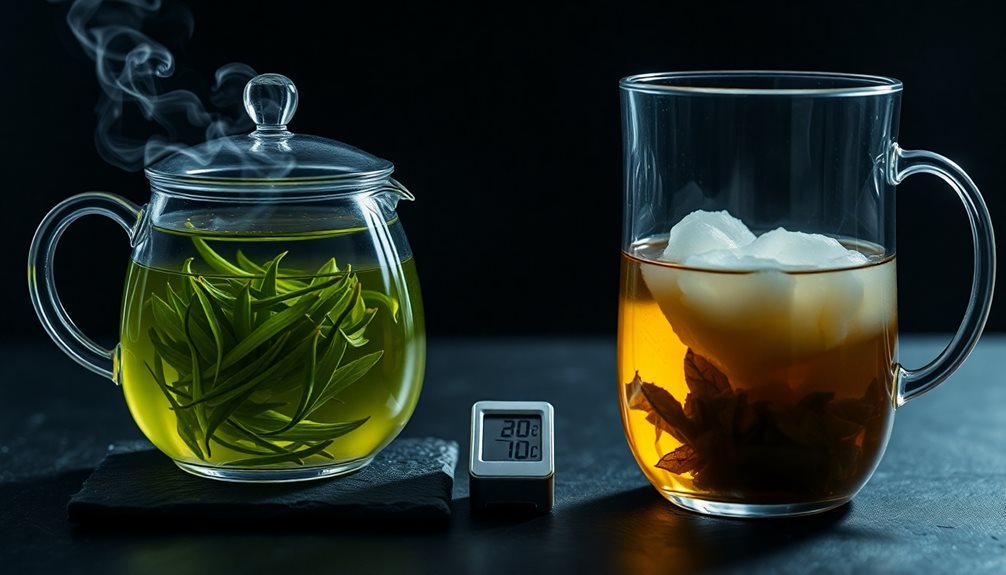
Water temperature is really a dial for how fast flavor moves out of the leaf. Push that dial too high on a delicate tea and the sharp, astringent notes flood in before the sweeter, rounder ones get a chance to show up — the cup tastes harsh, grassy, sometimes almost bitter to the point of unpleasant. Keep the dial too low and you get the opposite problem: a thin, watery cup that never really opens up, because the leaf hasn't had enough heat to release its aroma and body.
Part of this comes down to how the leaf was processed. Fully oxidized leaves, like black tea, are sturdy — oxidation has already broken down their cell structure, so near-boiling water doesn't overwhelm them. Green tea leaves are unoxidized and far more tender, which is exactly why the same boiling water that makes a great cup of black tea can turn a green tea bitter and one-note in seconds.
Roasted vs. Unroasted: The Real Dividing Line
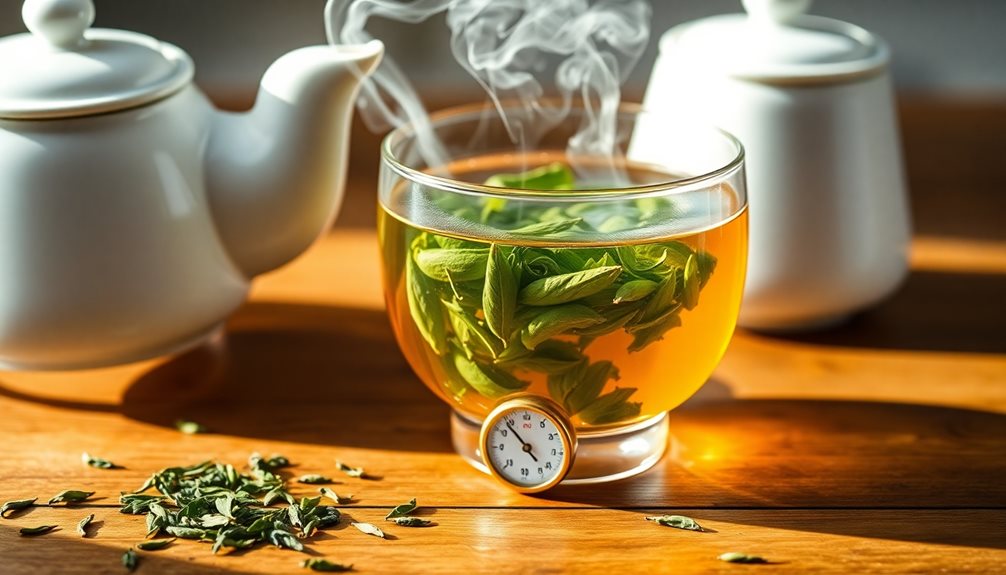
The single most useful question to ask before you brew isn't “what's the ideal temperature for green tea” — it's “was this leaf roasted?” Roasting changes a leaf's character in a way that makes it far more forgiving of heat.
Hojicha is roasted at high heat until the leaf turns a warm reddish-brown, which trades its grassy, vegetal side for something nutty, caramelized, and toasty-sweet. That roast also softens the sharper edges that would otherwise turn bitter in hot water — which is why hojicha is one of the few Japanese green teas that actually wants water close to a full boil.
Genmaicha — green tea blended with roasted, popped rice — behaves the same way. The toasted rice brings a warm, popcorn-like aroma that holds up beautifully at high temperatures, and it softens some of the tea's astringency along the way.
Bancha, a later-harvest, more mature leaf, is naturally milder and less prone to turning bitter under heat, so it also tolerates hotter water than a young first-flush sencha would.
Sencha and especially gyokuro are the opposite story. These are unroasted, tender leaves picked for their sweetness and umami, and that sweetness is fragile — hot water breaks it down fast and replaces it with astringency. That's why these teas ask for noticeably cooler water and shorter steeps than their roasted cousins.
Temperatures and Steep Times by Tea Type
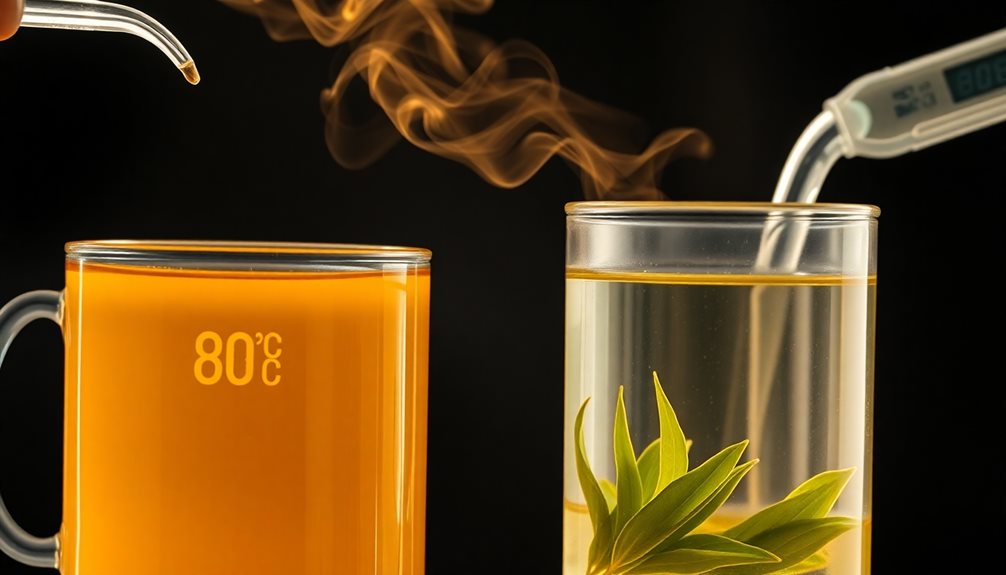
Think of these as starting points, not laws — nudge half a step in either direction to match your particular leaf and your own palate.
Hojicha
Water: 90–100°C. Steep: 30 seconds to 1 minute. Roasted hojicha is remarkably forgiving — a slightly long steep rarely ruins it the way it would a sencha. Reach for this when you want a fast, no-fuss cup with deep, roasty sweetness.
Genmaicha
Water: 90–100°C. Steep: 30 seconds to 1 minute. Brew it hot and quick so the toasted-rice aroma leads, with the green tea filling in behind it.
Bancha
Water: around 90°C. Steep: 30–45 seconds. A short, hot steep keeps bancha's mellow, everyday character clean and refreshing rather than sharp.
Sencha
Water: 70–80°C. Steep: about 1 minute. This is the range where sencha's grassy-sweet, umami-forward character comes through without tipping into bitterness. Cooler within that range gives a gentler, sweeter cup; warmer adds more body and a touch more edge.
Gyokuro
Water: 50–60°C. Steep: about 2 minutes. Gyokuro is shade-grown specifically to concentrate sweetness and umami, and it's the most heat-sensitive tea on this list — water this cool, held for longer, coaxes out its full richness without a hint of bitterness.
Matcha
Matcha is whisked rather than steeped, but the same logic applies: water around 75–80°C keeps the powder from scalding into harshness while still being hot enough to dissolve smoothly and froth well.
How to Cool Water Without a Thermometer
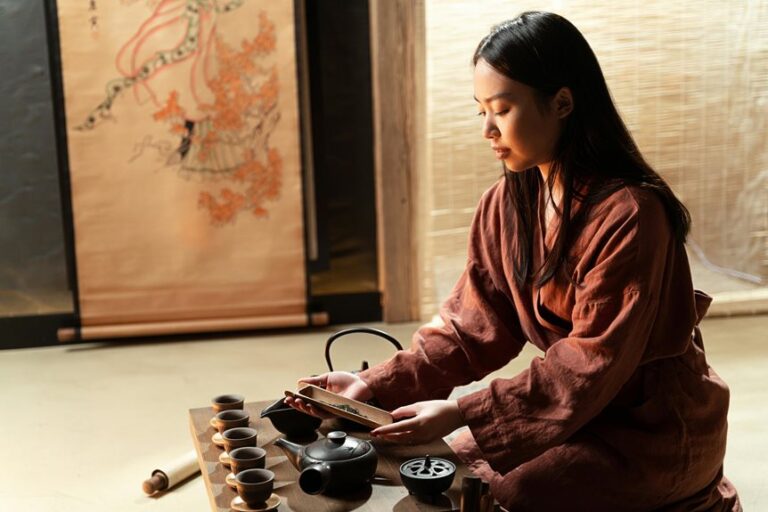
You don't need a thermometer to hit these temperatures — Japanese tea culture solved this problem long before anyone owned one. The traditional tool is a yuzamashi, a simple cooling vessel, but any cup or small pitcher on your counter does the same job.
- Pour and wait. Boil your water, then let the kettle sit uncovered for a few minutes. Every minute off the boil drops the temperature a few more degrees — roughly ten minutes gets you into sencha territory, longer gets you toward gyokuro.
- Transfer between vessels. Each time you pour boiling water into a cup, pitcher, or yuzamashi and let it sit a moment before pouring again, you lose several more degrees. Two transfers usually brings a full boil down into sencha range; three or four gets you closer to gyokuro.
- Watch the bubbles. As water heats, small bubbles gather along the bottom and sides of the kettle well before a rolling boil. That gentle, quiet stage is a reliable visual cue that you're in the right neighborhood for sencha — no gadget required.
- Preheat, then pour off. Warming your teapot or cup first, then emptying it, readies your teaware and takes a small bite out of the next pour's heat.
Leaf-to-Water Ratios
Temperature and steep time only tell half the story — how much leaf you use shapes the rest. As a starting point:
| Tea | Leaves | Water |
|---|---|---|
| Hojicha | 5 g | 200 ml |
| Genmaicha | 5 g | 200 ml |
| Bancha | 5 g | 200 ml |
| Sencha | 3 g | 150 ml |
| Gyokuro | 10 g | 100 ml |
In practice, that works out to about 5 grams of leaves to 200 ml of water for a standard cup of hojicha or genmaicha, scaled up or down for whatever pot you're brewing in. Gyokuro breaks that pattern on purpose — a heavier leaf-to-water ratio, paired with cool water and a long steep, is exactly what draws out its concentrated sweetness.
Common Mistakes That Flatten a Cup
- Treating every tea the same. The habit that trips up most people is brewing everything, roasted or not, at a full boil. It works beautifully for hojicha and genmaicha; it flattens sencha and gyokuro.
- Oversteeping. Leave the leaves in past their window and bitterness creeps in no matter how careful your temperature was. Pull the leaves — or the infuser — out as soon as the steep time is up.
- Reboiling the same water repeatedly. Water that's been boiled and reboiled several times tastes flat, and it flattens your tea right along with it. Start fresh each time.
- Skipping the preheat. A cold teapot or cup pulls heat out of your water the moment it's poured, throwing off your target temperature before the leaves even touch it.
- Forgetting the leaf was roasted. If a cup tastes flat or thin, ask whether you brewed a roasted tea too cool. Roasted teas and full-oxidized leaves like black tea both need real heat to open up; treating them like a delicate sencha shortchanges them.
Quick Reference
| Tea | Water Temp | Steep Time | Character |
|---|---|---|---|
| Hojicha | 90–100°C | 30 sec – 1 min | Toasty, nutty, caramel-sweet |
| Genmaicha | 90–100°C | 30 sec – 1 min | Popcorn-toasty, mellow green |
| Bancha | ~90°C | 30–45 sec | Light, clean, everyday |
| Sencha | 70–80°C | ~1 min | Grassy-sweet, umami-forward |
| Gyokuro | 50–60°C | ~2 min | Concentrated sweetness, deep umami |
| Matcha | 75–80°C | Whisked, not steeped | Rich, rounded, no bitterness |
Once you've got the temperature and ratio dialed in, the roasted side of the tea world is a great place to start experimenting — it's the most forgiving, and the most immediately rewarding when you get it right. Explore our full roasted Japanese green tea collection and find the hojicha or genmaicha that fits your kettle and your morning.