Matcha Bowl Benefits: The Complete Chawan Guide (Types, Shapes & How to Choose)
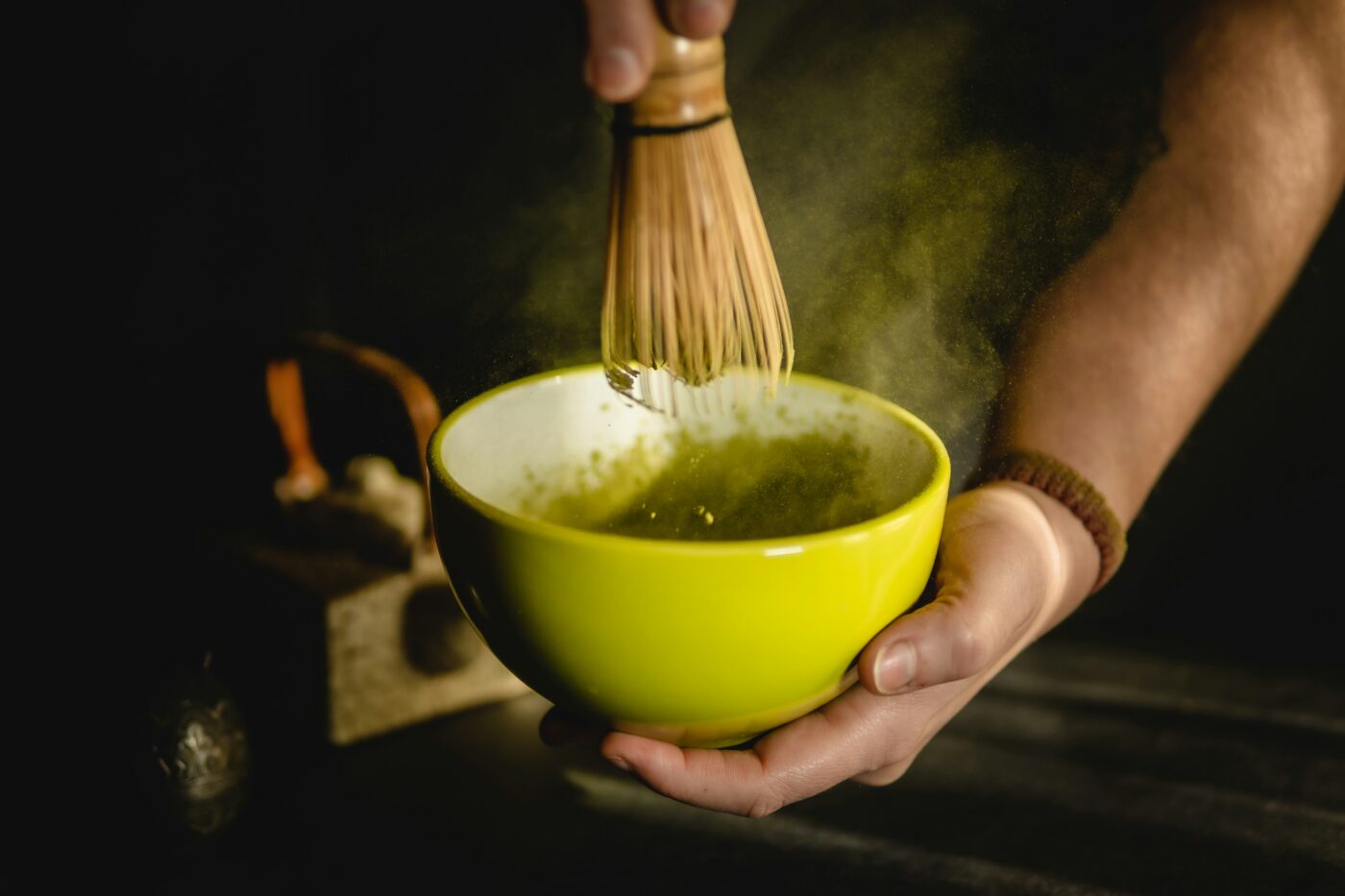
The Japanese chawan (茶碗) isn't just a bowl. It's the centrepiece of a 500-year-old ritual, a functional tool engineered to improve your matcha, and — if you choose well — a piece of art you'll use every morning for the next decade. Most matcha guides skip straight to powder ratios and water temperatures. This one starts where it should: with the bowl.
Whether you're drinking ceremonial-grade matcha every day or just getting started, understanding your chawan makes a genuine difference in how your tea tastes, how it feels to prepare, and how long the ritual sustains you. Here's everything you need to know.
Table of Contents
What Is a Chawan?
A chawan (茶碗, literally “tea bowl”) is the primary vessel of the Japanese tea ceremony, chanoyu. Unlike Western teacups, the chawan is deliberately wide and open — built not for sipping but for whisking powdered matcha into a frothy suspension directly in the bowl itself. The design is inseparable from the drink.
Chawan vary enormously by region, kiln tradition, material, and season. A Raku-ware bowl hand-moulded in Kyoto in the 1600s and a modern Mino-ware bowl made in Gifu today are both chawan — but they represent entirely different aesthetic philosophies and practical properties. Knowing the difference helps you choose a bowl that fits how and why you drink matcha. If you're curious, explore this Mino ware cherry blossom matcha bowl for the full story.
The Benefits of Using a Proper Matcha Bowl
Using a purpose-made chawan versus a regular mug isn't about tradition for tradition's sake. There are concrete functional reasons the shape matters.
Better Whisking
A standard chawan interior measures roughly 12–14cm in diameter at the rim. That space gives your chasen room to work — to move in a rapid M or W motion without the tines jamming against the sides. In a standard mug, the whisk is cramped, the motion is circular (which creates aeration bubbles but not stable microfoam), and the result is a flatter, less integrated drink. The wide bowl surface is also where foam collects and sets — a proper chawan produces the even, jade-coloured foam that signals a well-made matcha.
Heat Retention That Matters
Matcha tastes best at 70–80°C. Below that, the umami flattens and grassy notes dominate. Above 85°C, the L-theanine and catechins begin to degrade and the tea tastes harsh. A stoneware chawan with thick walls holds temperature well — not because it insulates like a thermos, but because the thermal mass of the clay releases heat slowly. This gives you a 2–4 minute window where the matcha stays in its ideal flavour range. A thin ceramic mug or a glass loses heat much faster.
The Meditative Dimension
This one is harder to quantify but worth naming: holding a chawan with both hands forces you to stop. Not metaphorically — literally. You can't carry it one-handed while scrolling your phone. The two-handed hold (right hand on the side, left cupped underneath) is both the traditional form and the ergonomically correct grip for a wide, shallow bowl. That physical pause — warming your palms on rough stoneware, watching steam rise, bringing the bowl up slowly — is a built-in cue to slow down. The same matcha enjoyed from a chawan in a slow, attentive way simply feels different from matcha slammed from a travel cup. The bowl shapes the experience.
Regional Chawan Styles: Japan's Great Kiln Traditions
Japan's ceramics map is richly regional. Different prefectures developed distinct clay bodies, glaze techniques, and aesthetic philosophies over centuries — and those differences show up directly in how a chawan looks, feels, and functions.
Raku Ware (楽焼) — The Original Tea Bowl
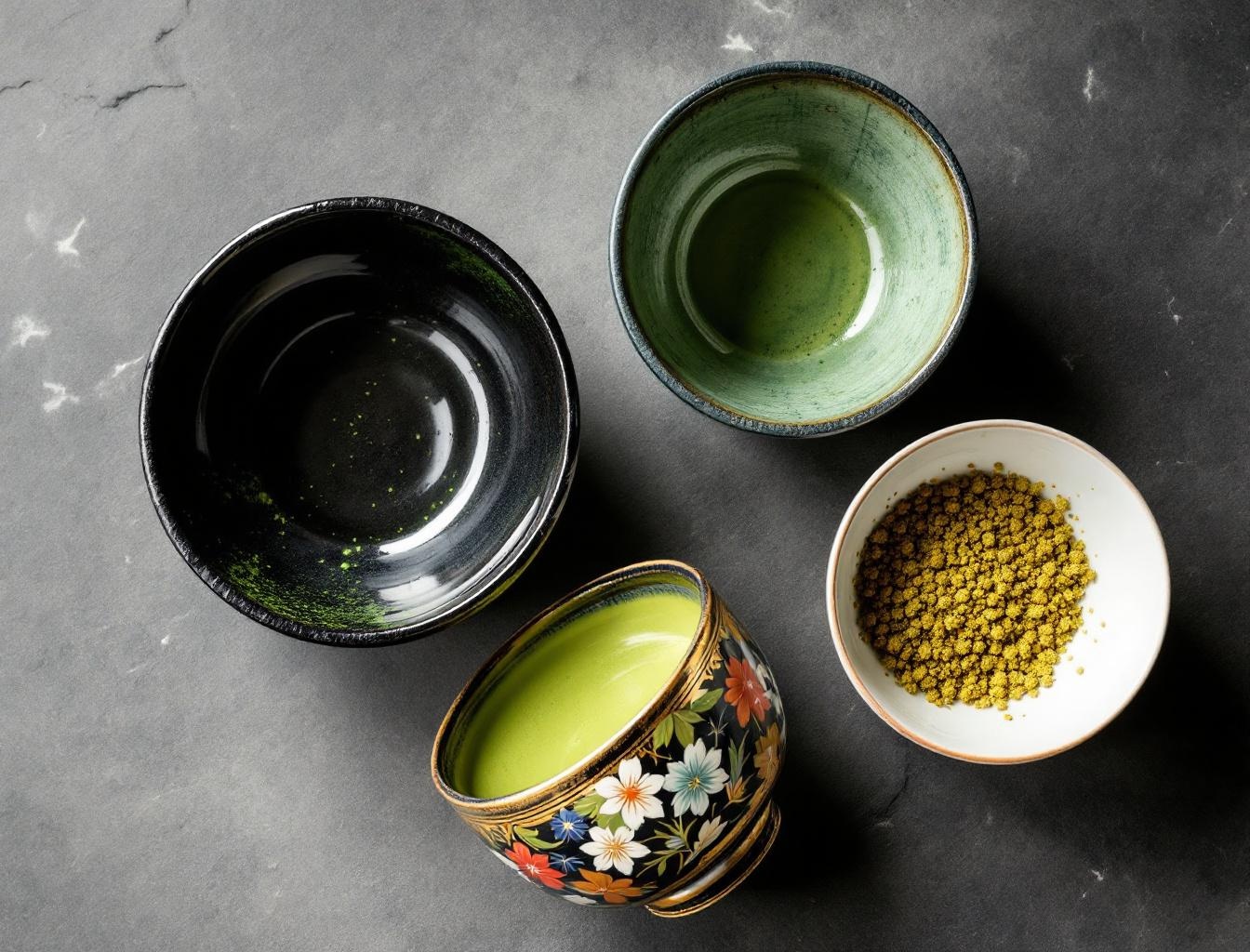
No kiln tradition is more intertwined with matcha than Raku. In 16th-century Kyoto, tea master Sen no Rikyū commissioned a tile-maker named Chōjirō to create bowls that embodied wabi — the beauty of imperfection, quietness, and transience. Chōjirō's hand-moulded, low-fired bowls became the template for what a tea ceremony bowl should be. The Raku family has passed that tradition, unbroken, for sixteen generations.
Raku bowls are never wheel-thrown — they're hand-shaped, which means every bowl is unique. They're fired at lower temperatures than most ceramics (around 800–1000°C) and often removed from the kiln while still glowing, producing the unpredictable surface effects that define the style. Traditional black Raku was designed for koicha (thick matcha); red Raku for usucha (thin matcha). The distinction matters: the colour of the glaze was chosen to complement the deep, rich green of each preparation style.
Authentic Raku ware from the Raku family is museum-grade and priced accordingly. Contemporary potters across Japan work in the Raku style, producing beautiful bowls that honour the tradition at more accessible price points.
Mino Ware (美濃焼) — Japan's Most Versatile Ceramic
Mino ware, from Gifu Prefecture, accounts for roughly half of all ceramic tableware produced in Japan today. For matcha bowls, the Mino tradition produced several of the most revered styles in tea culture:
- Shino: Japan's first domestically developed glaze. Thick, white-cream surface with irregular red-orange fire marks — the result of removing pieces from the kiln at specific moments. Shino bowls have a warm, rough texture ideal for the two-handed hold.
- Oribe: Named for samurai-general-turned-tea-master Furuta Oribe. Bold emerald-green glazes combined with abstract brushwork designs. The first Japanese ceramic style to deliberately depart from Chinese aesthetic influence.
- Kiseto: Amber-yellow glaze, often with naturalistic motifs. Quiet and warm in the hand.
- Setoguro: Jet-black glaze achieved by pulling pieces from the kiln at peak temperature. The contrast between black exterior and light interior makes the matcha's green colour particularly vivid.
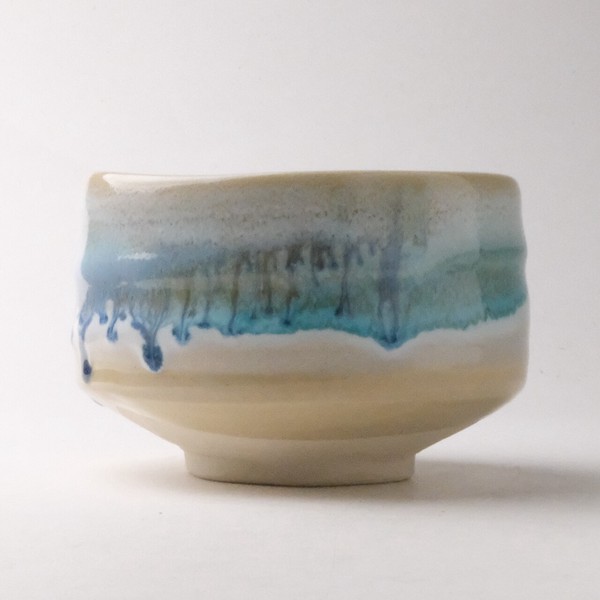
Mino ware is broadly available and covers a wide price range — from accessible daily bowls to high-end artisan pieces. Our Mino Ware Blue Ryoufu Matcha Bowl and Hana-chirashi White Bowl reflect the tradition's contemporary range — refined glazework at everyday prices.
Kutani Ware (九谷焼) — Ishikawa's Gold-Painted Luxury
From Ishikawa Prefecture on the Japan Sea coast, Kutani ware is Japan's most internationally recognised painted ceramic. It emerged in the early Edo period (1650s) and is defined by elaborate overglaze enamels — bold five-colour compositions (gosai-de) featuring red, blue, yellow, purple, and black — layered with gold detailing of exceptional precision.
What makes Kutani particularly suited to matcha bowls is how it transforms the exterior into a miniature canvas. See our Edo glass matcha bowl for an elegant example. Seasonal motifs — cherry blossoms, cranes, phoenix, rabbits in moonlight, maple leaves over streams — are standard subjects. The glaze creates a smooth, glass-like interior surface that makes whisking clean and easy, while the painted exterior gives each bowl a story you read as you hold it.
We carry one of the largest Kutani matcha bowl collections outside Japan. A few highlights:
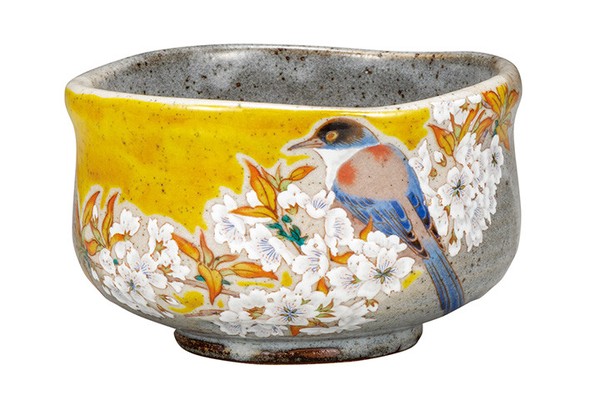
- Hand-painted Bluebird and Cherry Blossom Bowl — classic Kutani seasonal motif, ideal spring chawan
- Moon Rabbit Matcha Bowl — draws on the Japanese folklore of the rabbit in the moon, perfect for autumn
- Midnight Floral Matcha Bowl — deep indigo and gold floral, a bold winter piece
- Celadon Dreams Green Bowl — blends Kutani painting with celadon-style glazing for a softer, more contemplative look
- Golden Mandarin Duck Bowl — intricate gold-on-white design, a popular gift piece
- Glacial Stream Blue Bowl — cool blue wash with gold detailing, works beautifully for summer
Kyo/Kiyomizu Ware (京焼・清水焼) — Kyoto's Refined Hand
Produced in and around Kyoto — particularly along Kiyomizu-zaka near Higashiyama — Kyo ware embodies the refined aesthetic of Japan's ancient imperial capital. Unlike Raku's rustic wabi or Kutani's bold opulence, Kyo ware tends toward precision: delicate brushwork on light-coloured or white porcelain, restrained palettes, and motifs drawn from classical literature and court culture.
The best Kyo ware has a translucent quality — paper-thin walls that glow when held to light, glazes that shift from pale celadon to ivory depending on the angle. The aesthetic philosophy is miyabi: courtly elegance, refinement without ostentation. Our Kyo/Kiyomizu Ware Mount Fuji Bowl illustrates this well — the mountain painting is detailed but never busy, the background pale and open.

Tokoname Ware (常滑焼) — One of Japan's Six Ancient Kilns
Tokoname, in Aichi Prefecture, is one of Japan's “Six Ancient Kilns” — kilns that have operated continuously since the Heian period (794–1185 CE). Tokoname clay is uniquely high in iron, which gives it a characteristic rust-red or dark clay colour and a dense, heavy feel in the hand. That iron content matters: it interacts with tea tannins over time, mellowing the flavour and developing a patina that improves with use.
While Tokoname is best known for its small kyusu teapots, its matcha bowls carry the same dense heat-retention and quiet, unglazed aesthetic. A well-used Tokoname chawan develops a seasoned surface — tea oils absorb into the clay over months of use, and the bowl becomes uniquely yours.
How Bowl Shape Affects Your Matcha
The three classic chawan profiles aren't arbitrary — each was designed for specific seasonal and preparation conditions. Once you know them, you'll recognise them immediately in Japanese ceramics collections.
Tsutsu-nari (筒形) — The Deep Winter Bowl
Tall and cylindrical — narrower than it is wide. The reduced opening traps heat effectively, making tsutsu-nari the preferred shape for winter months or for koicha (thick matcha), where maintaining temperature through a long ceremony matters. The tradeoff is whisking difficulty: less surface area means more wrist motion is required to build foam. If you're using a Takayama chasen, choose a tsutsu-nari with a diameter that gives the tines room to flex without dragging the bottom.
Hira-nari (平形) — The Wide Summer Bowl
Wide and shallow — almost plate-like. The large surface area radiates heat quickly, naturally cooling the matcha to a comfortable drinking temperature. This is the summer bowl: ideal for usucha (thin matcha), for warm weather, and for anyone who wants the easiest whisking experience. The expansive interior is also where you can watch foam form as you whisk — the entire surface becomes a canvas of pale jade bubbles. A glass hira-nari (like our Tokyo-glass Ryodama Bowl) adds a visual element — you can see the matcha swirling below the foam.
Wan-nari (椀形) — The All-Purpose Bowl
Rounded, somewhere between deep and wide. Good heat retention, sufficient whisking room, stable in the hands. This is the most common shape and the right starting point for most people. If you're unsure, buy wan-nari first — it works for both usucha and koicha, in any season, with any preparation level.
Seasonal Chawan — Japan's Four-Season Tea Culture
Japanese tea aesthetics are inseparable from the seasons. A thoughtful host rotates their chawan through the year the way a garden rotates its blooms. This isn't rigid formality — it's a way of staying in conversation with time and place.
- Spring (Haru): Cherry blossom (sakura), plum (ume), and green willow motifs. Light-coloured glazes — pale blue, white, soft pink. Medium wan-nari or early hira-nari shapes as temperatures warm. Our Hand-painted Bluebird and Cherry Blossom Bowl or the Sakura Shino Bowl are quintessential spring pieces.
- Summer (Natsu): Wide hira-nari shapes. Cool glazes — ice blue, sea green, pale celadon. Glass bowls are a modern summer option that keeps both visual and thermal temperature light. The Glacial Stream Blue Bowl or Tokyo-glass Ryodama Bowl work well.
- Autumn (Aki): Maple leaf (momiji), chrysanthemum (kiku), and harvest moon motifs. Warm earth tones — amber, rust, deep green, burnt orange. The Moon Rabbit Bowl draws on the Japanese folklore of the rabbit pounding mochi beneath the harvest moon — a classic autumn image.
- Winter (Fuyu): Deep tsutsu-nari shapes. Dark glazes — iron-black, cobalt, rich matte brown. The Midnight Floral Bowl in deep indigo and gold, or the Brown Bekko Bowl, carry the weight and warmth a winter morning calls for.
Choosing Your First Matcha Bowl
A few practical guidelines for buyers who aren't yet deep in chawan lore:
Size
Standard chawan hold 200–300ml comfortably, with a working capacity of 80–120ml of water (the rest is headspace for whisking). If you make koicha, look for a wider bowl with more interior depth — the thick paste needs room and is mixed with a ladle, not a chasen, so whisking room matters less than capacity.
Material
Stoneware (Mino Shino, Tokoname, most hand-thrown bowls) retains heat best and has the most tactile character. Porcelain (most Kutani, Kyo ware) is elegant and easy to clean but runs slightly cooler. Glass is a modern option — visually striking in summer, not ideal if you drink your matcha slowly. For first buyers: stoneware or painted porcelain.
Interior Glaze
Run your fingertips around the interior before buying. The surface should be smooth or subtly textured — not rough or gritty. Sharp interior texture can trap matcha residue in ways that are difficult to clean and can affect the flavour over time.
Starting Picks
For a durable everyday bowl: the Brown Bekko Bowl or Sakura Shino Bowl — well-proportioned wan-nari shapes that work for any preparation. For something more decorative without sacrificing function: the Kutani Golden Mandarin Duck Bowl or Celadon Dreams Bowl. For complete beginners who want everything at once: the Made in Japan Complete Matcha Set includes a bowl, chasen, and chashaku.
Browse the full matcha bowl collection here.
How to Prepare Matcha in Your Chawan
The bowl shapes the technique. Here's the method that produces consistently good matcha:
- Warm the bowl. Pour a small amount of hot water into the chawan, swirl gently, and discard. This brings the ceramic to temperature — cold stoneware can drop your matcha water 5–8°C on contact, pulling it out of the optimal flavour range. Warming also primes the surface.
- Sift the matcha. Use a small fine-mesh sieve to sift 1.5–2g of matcha into the warmed bowl. Unsifted powder clumps, and clumps mean uneven whisking, bitter pockets, and wasted tea.
- Add water. Pour 70–80ml of water at 70–80°C. Not boiling — boiling water (100°C) scorches the leaf, producing harsh, bitter tea and flattening matcha's sweetness and umami. If you don't have a temperature-controlled kettle, boil and let sit for 3–4 minutes before pouring.
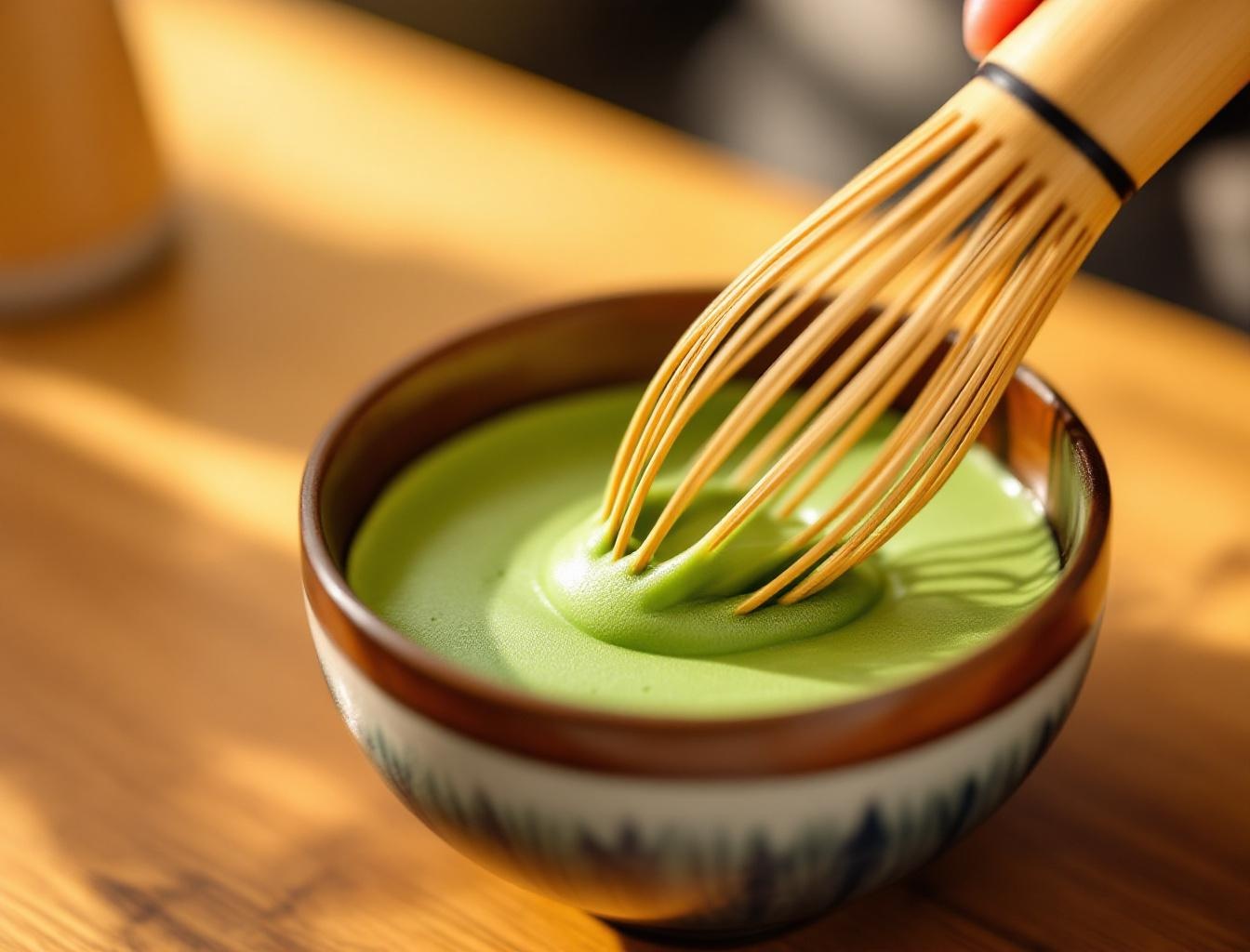
- Whisk. Hold your chasen between thumb and index finger with a relaxed wrist. Use a rapid M or W motion — not circular. Keep the tips of the tines in the liquid, not dragging the bowl bottom. Whisk for 20–30 seconds until the surface is uniformly foamy.
- Hold the bowl correctly. Right hand on the side of the bowl, left hand cupped underneath. This distributes warmth evenly, prevents the bowl tipping, and is the traditional form for a reason — the weight of a chawan full of matcha sits naturally in two hands, not one.
- Rotate before drinking. Turn the bowl clockwise two quarter-turns. This is the traditional gesture of avoiding the omote (front face) of the bowl — an acknowledgement of the bowl's craftsmanship before you drink.
Caring for Your Chawan
- Never machine wash a handcrafted chawan. The heat, pressure, and detergents degrade glaze and clay over time.
- Rinse immediately after use with warm water. Matcha stains are easy to rinse off when fresh; dried matcha takes longer.
- No soap for unglazed or porous clay (Tokoname, Raku). Soap absorbs into the clay body and can alter the flavour of future brews. Hot water is sufficient for these.
- For glazed stoneware and porcelain: a small amount of mild dish soap occasionally is fine. Rinse thoroughly.
- Dry completely before storing. Do not stack chawan without cloth or felt padding between them — the foot-ring (kodai) of a rough-bottomed bowl will scratch a glazed surface stored below it.
- Season new porous bowls. For iron-rich or unglazed clay bowls, brew a few rounds of light green tea in them before the first matcha use. This seals microscopic pores and integrates the clay's seasoning.