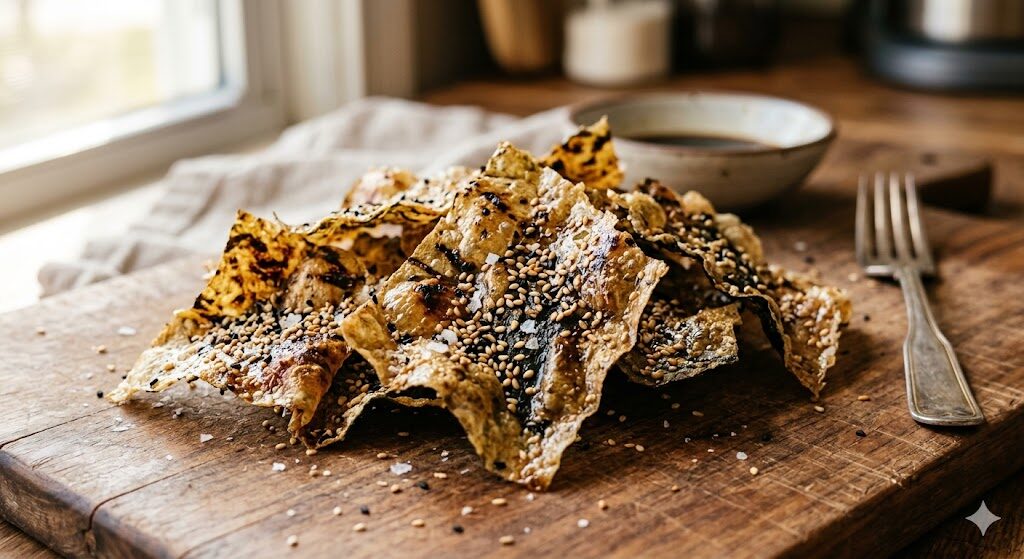
Nori Chips Recipe: Crispy Homemade Seaweed Snacks
Nori chips are one of the simplest, most satisfying snacks you can make at home — and the quality of your nori determines the quality of the result. Packaged nori snacks have taken off globally, but homemade versions made with premium nori taste categorically better: crisper, more aromatic, with that clean oceanic flavor that grocery-store roasted seaweed snacks try to approximate. This guide covers the technique and the best nori to use.
Why Nori Quality Matters for Chips
In a simple recipe with minimal ingredients, the base ingredient carries almost all the flavor. Cheap nori — thin, greenish-black, from anonymous sources — produces nori chips that taste flat, sometimes slightly bitter, and fall apart quickly after toasting.
Premium Japanese nori — from Ariake Bay, Mie Prefecture, or Tokyo Bay — starts with a clean, slightly sweet oceanic flavor and a deep forest-green color. When toasted, it develops complex roasted notes that cheap nori simply doesn't have to offer. The physical quality also matters: thick, evenly formed sheets hold their structure better and produce a more satisfying crunch.
For nori chips, use full-size 8-sheet (yaki nori) format, not the half-size or snack-size sheets. You'll cut them to size yourself.
Shop premium nori: shop.alldayieat.com/product/premium-nori/
Basic Nori Chips Recipe
Ingredients:
- 10 full-size nori sheets
- 2 teaspoons sesame oil (or light olive oil)
- 1 teaspoon fine sea salt or flaky salt
- Optional: sesame seeds, chili flakes, garlic powder
Method:
- Preheat oven to 160°C (325°F). Line two baking sheets with parchment.
- Cut each nori sheet into 4 rectangles (fold and tear, or use scissors).
- Using a pastry brush or your fingers, lightly coat one side of each piece with sesame oil. Less is more — nori absorbs oil quickly and too much makes it soggy rather than crispy.
- Arrange on baking sheets oil-side up without overlapping.
- Sprinkle lightly with salt and any additional seasonings.
- Bake for 8–10 minutes until crispy. Watch closely after 7 minutes — nori goes from perfectly crispy to slightly burnt quickly.
- Let cool on a wire rack. Nori chips continue to crisp slightly as they cool.
Stovetop Method (No Oven)
The traditional Japanese method uses direct heat rather than an oven:
- Cut nori into desired chip size.
- Hold a nori piece about 10cm above a gas flame or near a hot electric coil, moving constantly so it doesn't burn. 5–10 seconds per side.
- The nori will turn bright green and become crispy. Let it cool — it crisps further as it cools.
- Season immediately after toasting while still warm.
This method produces chips with more aromatic complexity than oven-baked versions. It's also the method most Japanese home cooks use for onigiri nori and snacking nori. The gas flame version is easier to control than electric.
Seasoning Variations
Classic Japanese: Sesame oil + flaky salt + toasted white sesame seeds. Clean, aromatic, simple. The benchmark.
Spicy: Sesame oil + sea salt + togarashi (Japanese seven-spice blend) or gochugaru. The heat from togarashi complements nori's oceanic flavor naturally.
Wasabi: Brush with wasabi oil or mix a small amount of wasabi paste into sesame oil before brushing. The heat of wasabi fades with baking but leaves a pleasant warmth.
Umami bomb: Brush with soy sauce + sesame oil mixed 1:1. Watch carefully during baking — the sugar in soy sauce caramelizes quickly and can burn. Reduce oven temperature to 150°C and check at 6 minutes.
Furikake: Sprinkle furikake (Japanese rice seasoning blend) on oil-brushed nori before baking. Pre-made furikake mixes contain sesame, salt, seaweed flakes, and often dried fish — an instant complex seasoning solution.
Storage and Shelf Life
Nori chips absorb humidity quickly. For best results:
- Cool completely before storing
- Store in an airtight container or resealable bag with a silica gel packet
- Consume within 2–3 days for maximum crispness
- If chips soften, re-crisp briefly in a 160°C oven for 3–4 minutes
Serving Ideas
- Straight as a snack with tea (hojicha or bancha pair naturally)
- Alongside rice bowls — crumble over the top for texture
- With sake or Japanese beer as an izakaya-style appetizer
- In bento boxes as a savory accompaniment to rice
- Crumbled into Japanese-style popcorn for flavor and color
Frequently Asked Questions
- Can I use any nori for chips?
- Yes, but quality makes a significant difference. Premium Japanese yaki nori (pre-toasted) produces the best chips because it starts with better flavor and better physical structure. Avoid using the cheapest available nori — the result will be thin, fragile chips with flat flavor.
- Why do my nori chips come out soggy?
- Three causes: too much oil, not enough heat, or humidity. Use oil sparingly — just enough to coat without saturation. Make sure your oven is fully preheated. Cool completely on a wire rack rather than leaving on the baking sheet. If humidity is high in your kitchen, eat immediately after cooling or store immediately in an airtight container.
- What's the difference between yaki nori and nori for chips?
- Yaki nori is pre-toasted nori — the standard format for onigiri and sushi. It's what you want for chips because it's already been through one round of toasting that improves flavor and reduces moisture. Raw (untoasted) nori needs more heat to crisp fully. Both work for chips, but yaki nori is easier and more consistent.
- Are homemade nori chips healthier than packaged ones?
- Generally yes. Packaged seaweed snacks often contain more oil, more salt, and additives. Homemade nori chips let you control every ingredient. Nori itself is low in calories, high in iodine and minerals, and a legitimate nutritious snack base.