Shincha: Japan’s Most Prized First Harvest Tea Explained
Every spring, tea vendors across the internet make the same claim: shincha is “lower in caffeine” and gentler on the body. It sounds reasonable — new growth, fresh and light. The problem is that the science says the exact opposite.
Shincha, Japan's first-flush new harvest tea, actually contains the highest caffeine levels of any sencha harvest. What makes it taste smooth and non-bitter isn't low caffeine — it's an extraordinary concentration of L-theanine, the amino acid that counteracts caffeine's edge and delivers something rare in a tea: focused, calm energy with a naturally sweet, brothy flavor that no other harvest can match.
That's just one of the reasons serious tea drinkers wait all year for shincha season. Here's everything you need to know about Japan's most prized seasonal tea — from the biochemistry behind its flavor to exactly when to order before it sells out.
What Is Shincha? Japan's Seasonal First-Flush Tea
Shincha (新茶) translates directly as “new tea.” It refers specifically to the very first tea leaves harvested each spring, typically processed into sencha style and released for sale immediately — without blending, resting in cold storage, or any of the post-harvest aging that goes into regular sencha.
Technically, shincha is sencha. The same Camellia sinensis plant, the same steaming-and-rolling process, the same needle-shaped leaves you recognize in the bag. But the distinction matters enormously: while regular sencha is typically blended from multiple harvests and regions to achieve consistency, shincha is a single-origin, single-season product. Its flavor, aroma, and character reflect the specific terroir and weather conditions of that individual year — more like a vintage wine than a grocery store commodity.
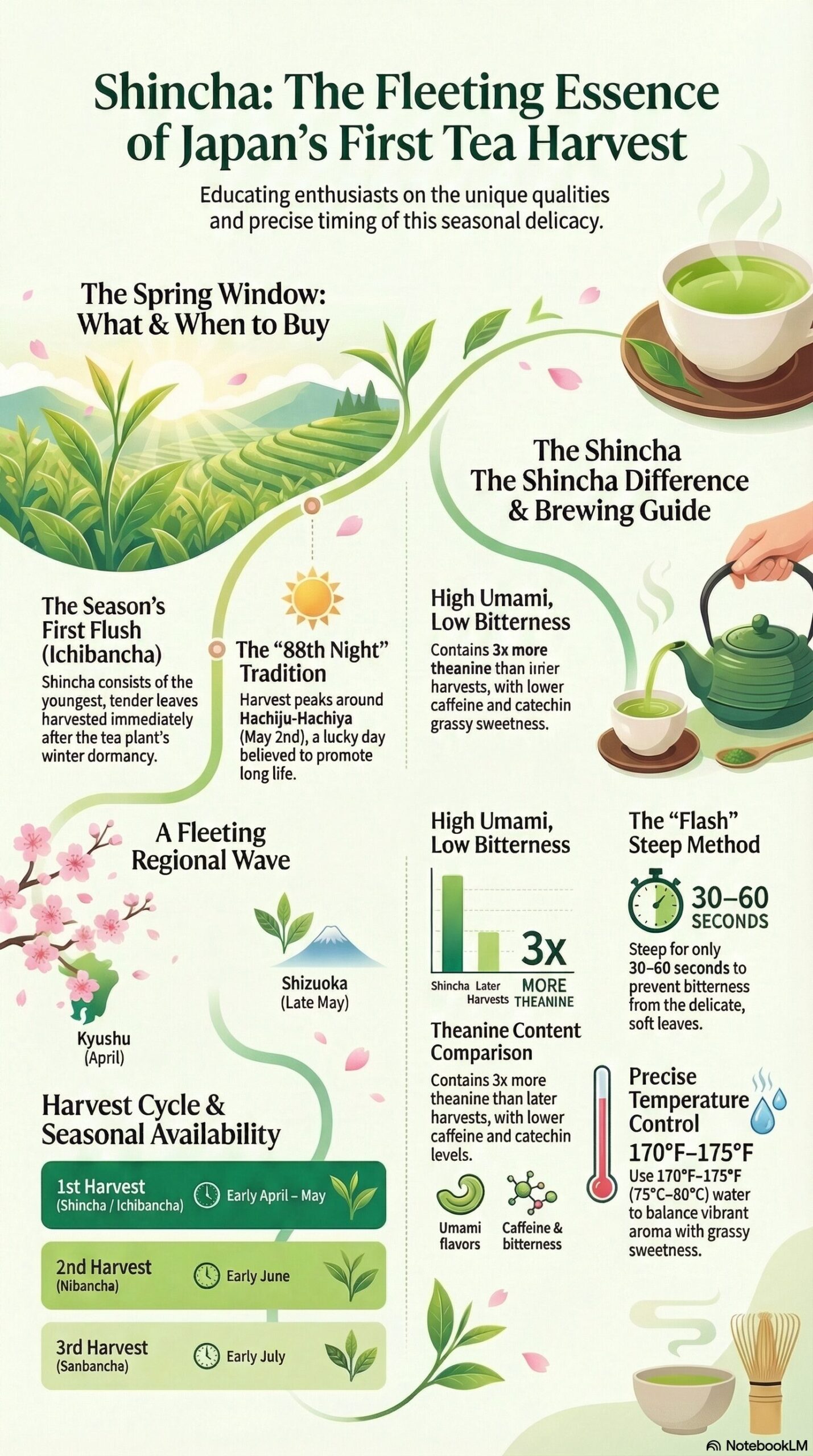
The release window is tight and regional. Tea farms in Kagoshima (Japan's southernmost major tea region) typically harvest earliest, with some lots available as early as late April. Shizuoka, which produces roughly 40% of Japan's total tea, follows in mid-to-late May. Uji in Kyoto, historically the most prestigious region, releases in early-to-mid May. Once each region's shincha is gone, it's gone — there is no second batch.
This is what makes it genuinely seasonal. Not seasonal in the marketing sense where the same product gets a spring label. Seasonal as in: if you want it, you need to buy it now.
Hachiju-Hachiya: The Auspicious 88th Night
In Japan, shincha season is anchored by one of the most evocative dates on the agricultural calendar: 八十八夜 (hachiju-hachiya), the 88th night counted from Risshun (立春), the traditional first day of spring on the Japanese calendar, which falls on February 3rd or 4th each year. Count 88 days from there, and you land on approximately May 1st or 2nd.
The significance is both practical and cultural. Agriculturally, the 88th night marks the point when the risk of late frost has substantially passed in most tea-growing regions — a genuine concern, since a late freeze can devastate an entire season's first flush in a single night. Tea farmers take this date seriously.
Culturally, the number 8 carries strong auspicious connotations in Japan (八 / hachi — its shape widens at the bottom, suggesting expanding fortune). Two eights compound the luck. A traditional belief holds that drinking tea harvested on this specific day brings good health and wards off illness for the entire year. It's become part of the seasonal ritual: premium farms compete to have their “hachiju-hachiya tea” ready on that exact date, and dedicated tea buyers plan ahead to secure it.
You'll see the term prominently on premium shincha packaging. When a tea specifies 八十八夜摘み (hachiju-hachiya tsumi — “88th night picked”), it signals that the tea was harvested on or very close to that auspicious date, at the precise moment the leaves were at peak biochemical density before the seasonal window closes.
Shincha vs Regular Sencha: What Actually Changes
To understand why shincha tastes different, you need to understand what happens to a tea plant over winter.
During winter dormancy, the tea plant isn't completely inactive. It's storing energy — drawing nitrogen, amino acids, minerals, and sugars into its root system, concentrating these nutrients over months of cold. When spring warmth triggers new growth, all of that accumulated nutrition surges upward into the very first buds. The result is leaves that are biochemically denser than anything the plant will produce for the rest of the year.
Here's what that means practically:
- Higher amino acid content — particularly L-theanine, which drives the sweet, brothy umami flavor
- Higher chlorophyll density — giving shincha its notably vibrant green color, often more saturated than second or third-harvest leaves
- More volatile aromatic compounds — specifically cis-3-hexenal, the compound responsible for what Japanese tea professionals call the 新茶香 (shincha-ka), or “new tea aroma”: fresh, green, grassy, almost cucumber-like
- Higher caffeine content — because caffeine concentration follows the same nutrient surge as everything else in the first flush
That last point contradicts what many vendors claim. More on that below.
The cis-3-hexenal point deserves emphasis: this volatile aromatic compound is what makes shincha smell and taste distinctly new. It's also highly unstable. Within a few months of harvest, it naturally degrades — and when it does, the “new tea” quality is simply gone. No storage method preserves it indefinitely. This is why shincha genuinely needs to be consumed fresh, and why the seasonal window isn't a marketing construct.
By comparison, regular sencha uses leaves from second, third, and even later harvests, often blended across regions and stored in refrigerated warehouses to enable year-round production. The result is a more consistent, predictable product — but it won't have that surge of first-spring nutrients or that ephemeral new-harvest aroma.
The Caffeine Myth: Why Shincha Doesn't Taste Bitter (But Is High in Caffeine)
This is the most important thing to understand about shincha, and the fact that most vendors get it backwards.
The claim you'll commonly see: “Shincha is lower in caffeine, making it milder and more suitable for sensitive drinkers.” The reasoning sounds logical — it's young, fresh, light. But it's wrong.
Shincha contains more caffeine than later harvests, not less. Caffeine in tea leaves exists precisely to defend the plant from insects — and the first tender spring buds are the most vulnerable, most insect-attractive growth of the year. More importantly, caffeine is a nitrogen compound, and nitrogen accumulates in the roots over winter alongside amino acids. When the nutrient surge hits the first buds, caffeine comes with it.
So why doesn't shincha taste bitter? Because bitterness in tea comes from catechins (a type of polyphenol), and catechins increase with sunlight exposure and later harvests — not with the first flush. And because shincha's L-theanine concentration is roughly three times higher than in second-harvest nibancha teas.
L-theanine does two things simultaneously: it contributes directly to the sweet, savory umami flavor that makes shincha taste smooth and full, and it modulates the neurological effect of caffeine. The two compounds cross the blood-brain barrier and interact with overlapping receptor systems. L-theanine softens caffeine's sharp stimulation, extending its duration and smoothing the experience into what many tea drinkers describe as “calm alertness” — focused without edginess, present without jitters.
This is not just the absence of bitterness. It's a specific biochemical combination that no other harvest, and very few teas, can replicate at this intensity.
| Tea Type | Caffeine (per 8oz) | L-Theanine (relative) | Flavor Profile |
|---|---|---|---|
| Shincha (1st flush) | ~40–60mg | Very high (3× nibancha) | Sweet, brothy, fresh green — smooth |
| Nibancha (2nd harvest) | ~30–45mg | Lower | Grassier, more astringent |
| Gyokuro (shade-grown) | ~35–55mg | Very high (shade increases L-theanine) | Deep umami, ocean-kelp sweetness |
| Matcha (ceremonial) | ~70–80mg (per serving) | High | Rich, grassy, creamy — whole leaf consumed |
| Hojicha (roasted) | ~10–25mg | Low–Medium | Nutty, caramel, toasty — very low bitterness |
Note: Caffeine values vary significantly by cultivar, growing region, and processing. Values shown are approximate ranges for standard brewing parameters.
The practical takeaway: if you've avoided green tea because of bitterness or caffeine sensitivity, shincha is worth trying before you write off the category. The L-theanine balance changes the experience substantially. That said, the caffeine is real — if you are medically sensitive to caffeine, treat shincha as you would any moderately caffeinated tea.
How to Brew Shincha for Maximum Freshness
Shincha rewards patience with water temperature in a way that few other teas do. Because its delicate volatile aromatics and high amino acid content are easily overwhelmed by heat, boiling water is the single fastest way to ruin a good shincha.
| Parameter | Recommended Range | Notes |
|---|---|---|
| Leaf amount | 2–6g per 150ml | Start at 3–4g; adjust to taste |
| Water temperature | 70–80°C (158–176°F) | 70°C emphasizes sweet umami; 80°C brings out grassy aroma |
| Steep time (1st infusion) | 30–60 seconds | Don't go longer — the L-theanine extracts fast |
| Water volume | 150–200ml per serving | Standard kyusu teapot size |
| Infusions | 2–3 total | 2nd: 10–20 seconds at 80°C; 3rd: 15–30 seconds at 85°C |
A few key technique points:
- Pour every last drop. Don't leave residual liquid in the pot — the tea continues steeping as long as water is present, and the second infusion will be over-steeped before it begins. Tilt the kyusu fully and hold it there until every drop falls.
- Use good water. Shincha's subtle sweetness is easily masked by high-mineral or heavily chlorinated tap water. Soft filtered water or a light spring water (low TDS) makes a noticeable difference.
- Lower temperature first time. If you've never brewed shincha before, start at 70°C. The resulting cup will be sweeter and more umami-forward — a good introduction to what first-flush character actually tastes like.
- The 2nd and 3rd infusions are different teas. The first extracts the sweetness and delicate aromatics. The second brings more structure and a light astringency. The third is often the most grassy and vegetal. All three are worth exploring.
If you're new to loose-leaf green tea brewing, our water temperature guide covers the full science of heat and extraction across all Japanese green tea styles.
How Long Does Shincha Last? Storage and Shelf Life
Shincha has real shelf life limitations that no other Japanese green tea faces as acutely. The reason comes back to those volatile cis-3-hexenal compounds that define the “new tea” character — they degrade naturally over time, and no amount of careful storage reverses that process.
Practical shelf life guidelines:
- Unopened, vacuum-sealed packaging: Up to 6 months in a cool, dark environment. The vacuum seal slows oxidation significantly.
- After opening: Aim to finish within 2–4 weeks for peak freshness. After a month, the defining shincha aroma will have faded noticeably. The tea doesn't go “bad” in a food safety sense, but it loses what makes it worth buying.
- Refrigerator storage (unopened): Can extend shelf life to 6–9 months, but requires careful handling — tea absorbs odors readily, and condensation when removing from the fridge can accelerate degradation. Only recommended for long-term storage with double-sealed packaging.
The practical implication: buy what you can drink within a few weeks of opening. Buying three bags of shincha in May and slowly working through them until autumn means you'll be drinking something closer to regular sencha by the time you reach the last bag.
For storage, use an opaque, airtight container kept away from heat, light, moisture, and strong odors (spices, coffee). Avoid clear glass jars on a countertop — UV exposure accelerates flavor degradation. The original vacuum-sealed bag, kept in a cool cabinet, is often the best storage option until you're ready to open it.
For the full science behind Japanese green tea storage, including temperature curves and container comparisons, see our tea storage guide.
When to Buy Shincha: The Seasonal Release Window
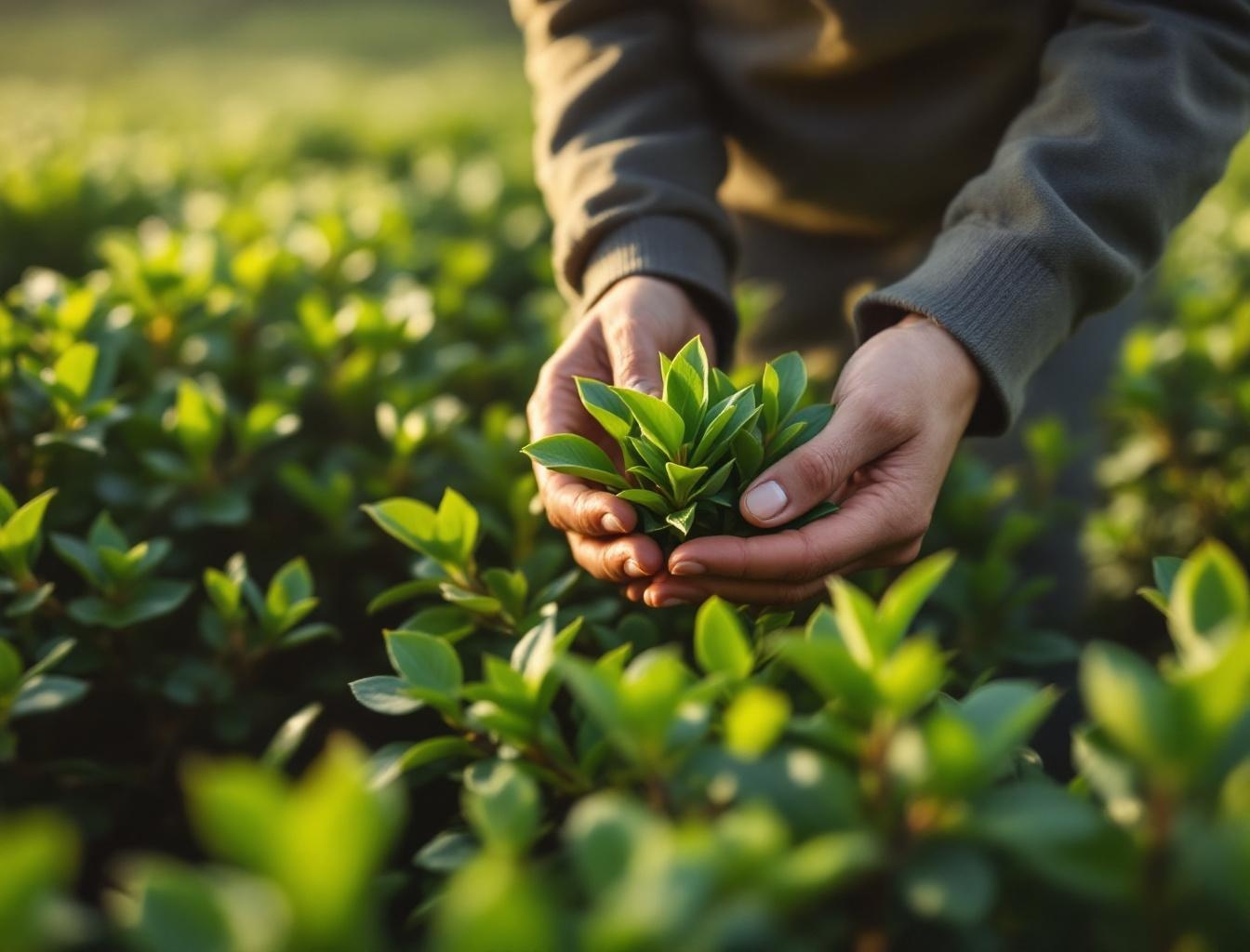
Shincha is not a product you can reliably find in October. Premium lots from respected farms sell out in weeks — sometimes days. If you wait until you feel like buying tea, you've probably already missed the best of it.
Here's how the seasonal release timeline typically unfolds:
- Mid-to-late April: Kagoshima (Kirishima, Chiran) harvests first, benefiting from the southernmost and warmest growing conditions. Yame in Fukuoka also releases early.
- Late April to early May: Mie, Shizuoka lowlands, and Miyazaki regions follow.
- May 1–2 (Hachiju-hachiya): The traditional ceremonial date. Premium “88th night” teas from across Japan are released. Highest demand, fastest sellouts.
- Early-to-mid May: Uji (Kyoto) and Yamashiro harvests reach market. Historically among the most prized.
- Late May: Higher-altitude Shizuoka farms (Kawane, Tenryu) complete their harvest. Mountain teas tend to be more mineral and complex.
The smart move for serious shincha drinkers is to pre-order. Many specialty tea importers take reservations before the harvest begins, shipping as soon as lots arrive. This is the only reliable way to secure specific farms or cultivars at peak freshness — especially for in-demand producers where annual production is measured in kilograms, not tons.
For casual drinkers, ordering in early May gives you the widest selection and the full seasonal window. By June, options narrow substantially.
Shincha Season Is Open
Japan's 2026 first-flush harvest is arriving now. Our shincha selection ships within 48 hours of arrival — quantities are strictly limited by what each farm produces.
Order Our Shincha Before It Sells Out →Shincha Cultivars: Not All First Flush Is the Same
Within shincha, the tea cultivar matters significantly. Japan's tea breeding programs have developed dozens of named cultivars, each with distinct harvest timing, flavor characteristics, and aroma profiles. If you want to explore shincha seriously, paying attention to cultivar names unlocks a new level of precision.
- Yabukita (やぶきた): By far the most widely planted, accounting for roughly 75% of Japan's tea acreage. Reliable, well-balanced — the benchmark flavor profile. A good entry point for first-time shincha drinkers.
- Okumidori (おくみどり): Later harvest, lower yield, rich umami character. Often used as the base for high-grade hojicha powder as well. Slower-developing flavor makes it worth waiting for.
- Saemidori (さえみどり): A cross of Yabukita and Asatsuyu. Exceptionally high L-theanine content even by first-flush standards, producing an intensely sweet cup with vivid emerald color. Increasingly popular among specialty buyers.
- Asatsuyu (あさつゆ): The “natural gyokuro” — high amino acid content without shade cultivation. Produces a very umami-forward shincha with a distinctive sweetness.
- Kanaya Midori (かなやみどり): Larger leaf, fruity and aromatic. Less common but notable for an unusual brightness in the cup.
For a deeper look at how Japanese tea cultivars differ across flavor, processing, and region, see our Japanese tea cultivars guide.
What to Eat With Shincha
Shincha's flavor profile — sweet, brothy, fresh green, with minimal astringency — pairs best with foods that don't compete with that delicacy. Strong flavors overwhelm it; neutral and lightly sweet foods amplify it.
Classic Japanese pairings:
- Wagashi (和菓子): The traditional pairing. Nerikiri and mochi sweets, particularly spring varieties featuring sakura, yomogi (mugwort), and warabi, provide gentle sweetness that contrasts beautifully with the tea's vegetal freshness. The pairing is ancient and genuinely works on a flavor level.
- Sakura mochi: The salt-preserved cherry blossom leaf adds a savory counterpoint that highlights shincha's umami. Spring-specific and worth trying if you can find it.
- Warabi mochi: Bracken-starch mochi dusted with kinako (roasted soybean flour). Nutty, chewy, understated — a perfect foil for the green freshness of shincha.
- Onigiri (plain or lightly seasoned): The salt and rice starch combination actually amplifies shincha's umami. Simple, seasonal, and appropriate to the moment.
Modern pairings that work:
- Light sponge cake (castella / kasutera) — the egg richness plays well with fresh green flavor
- Mild fresh cheeses (ricotta, fresh mozzarella) — the creaminess softens shincha's vegetal notes
- White chocolate — counterintuitively excellent with high-L-theanine teas; the sweetness draws out the umami
- Plain rice crackers (senbei) — a palate cleanser that resets the flavor between cups
Avoid with shincha: Heavy roasted flavors (coffee, dark chocolate, strong black tea), spicy foods, and anything high in tannins — these will compete with and mask shincha's subtle character.
Frequently Asked Questions
When does shincha arrive each year?
The first shincha of the year typically reaches Japanese markets in mid-to-late April from Kagoshima (the southernmost major tea region), with the main national wave arriving around hachiju-hachiya in early May. Most specialty importers ship international orders from late April through June, depending on the farm and region. Uji teas from Kyoto tend to arrive at the end of May.
How long does shincha last once opened?
Shincha is at its best within 2–4 weeks of opening. The volatile aromatic compounds (cis-3-hexenal) that define its “new tea” character begin degrading immediately upon exposure to air. Unopened and vacuum-sealed, it keeps well for up to 6 months in a cool, dark location. The tea doesn't spoil, but its defining fresh character fades significantly after 4–6 weeks open.
Can I buy authentic Japanese shincha outside Japan?
Yes, though the options are far more limited than what's available in Japan. Quality specialty tea importers in North America, Europe, and Australia source directly from Japanese farms and ship within days of arrival to preserve freshness. Be cautious of “shincha” sold year-round in generic tea shops — true shincha is a seasonal product with a very specific window. If it's available in November, it's either last season's stock or not genuinely shincha.
Is shincha worth the premium over regular sencha?
If you drink Japanese green tea regularly and have never tried first-flush shincha from a good producer, yes — at least once. The difference is real and immediately perceptible: the fresh green aroma, the pronounced sweetness, the smooth non-bitter finish. Whether it justifies a consistent premium over regular sencha depends on how much you value the seasonal, terroir-specific aspect of the tea. Many dedicated tea drinkers buy a quantity each spring and ration it; others treat it as an annual ritual and drink it through June. Both are reasonable approaches.
Does shincha have less caffeine than regular green tea?
No — this is a common misconception. Shincha actually has more caffeine than later harvests because the first spring buds receive the full surge of winter-accumulated nitrogen compounds, caffeine included. What makes shincha taste smooth and non-bitter is its exceptionally high L-theanine content (roughly three times that of second-harvest teas), which modulates caffeine's effects. If you're medically sensitive to caffeine, shincha should be treated as a moderately caffeinated beverage.
What's the difference between shincha and ichibancha?
The terms overlap but aren't identical. Ichibancha (一番茶) means “first tea” and simply refers to the first harvest of the season. Shincha (新茶) means “new tea” and emphasizes the freshness and immediacy — the fact that it hasn't been blended, aged, or stored before sale. All shincha is ichibancha, but not all ichibancha is marketed as shincha. Premium first-flush teas released with full seasonal fanfare are typically labeled shincha; first-harvest leaves blended into regular sencha production are just ichibancha.
Can I use shincha for cold brew?
Yes, and cold brewing is actually an excellent method for shincha. Steeping 5–8g of shincha in 500ml of cold water for 4–8 hours in the refrigerator extracts primarily L-theanine (which is more water-soluble at low temperatures) while leaving much of the caffeine and tannins behind. The resulting cold brew is exceptionally sweet, smooth, and refreshing — a great way to experience the amino acid profile without any heat-related extraction issues. Cold brew shincha keeps for 24–48 hours refrigerated.
What's the best shincha for a beginner?
For a first shincha experience, look for a Yabukita cultivar from Kagoshima or Shizuoka at a mid-range price point (roughly $15–$30 for 50–100g). Yabukita is the most widely grown Japanese tea cultivar and produces a well-balanced, approachable flavor profile — sweet, grassy, clean — without the intense umami of shade-grown or exotic cultivar versions. Brew at 70°C for 45 seconds. You'll understand immediately why the category has dedicated buyers.
Ready for Shincha Season?
Our 2026 shincha collection features single-origin lots from Kagoshima, Shizuoka, and Uji — sourced directly and shipped within 48 hours of arrival. Quantities are limited to what each farm produces; once a lot sells out, it's gone until next year.
Shop the 2026 Shincha Collection →