Hojicha: Japan’s Comfort Drink for Kids, Elders, and Everyone Else
You’ll find deep comfort in hojicha tea, a roasted Japanese tea that trades the grassy bite of sencha for warm, nutty notes. Because producers roast the leaves at high temperatures, they transform a green tea into something closer to roasted barley or coffee in character — without ever losing its tea roots.
Distinguishing Hojicha From Other Japanese Teas
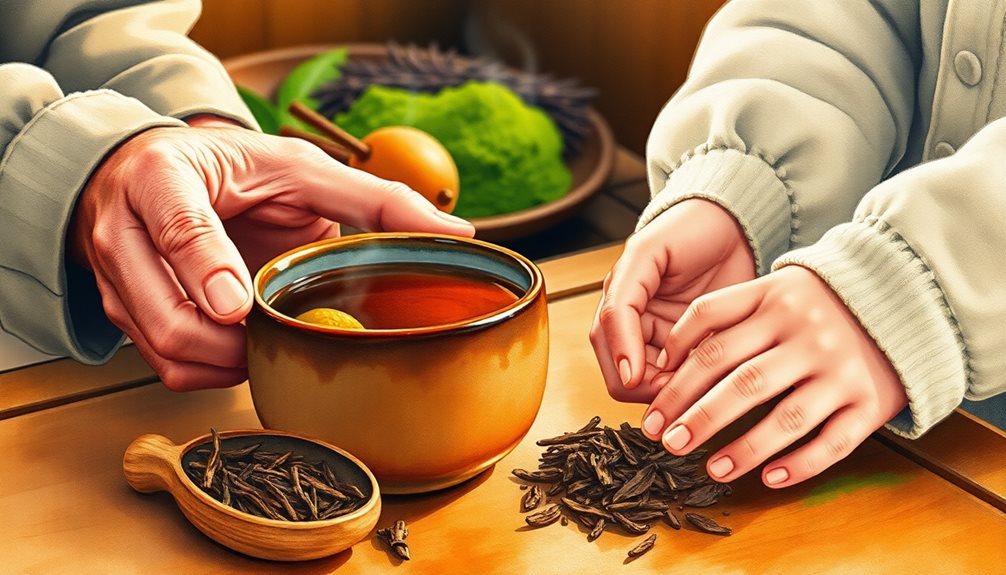
While most Japanese green teas rely on steaming to preserve their vegetal freshness, hojicha undergoes a high-temperature roasting process that fundamentally alters its character. This unique preparation style originated in Kyoto in the 1920s.
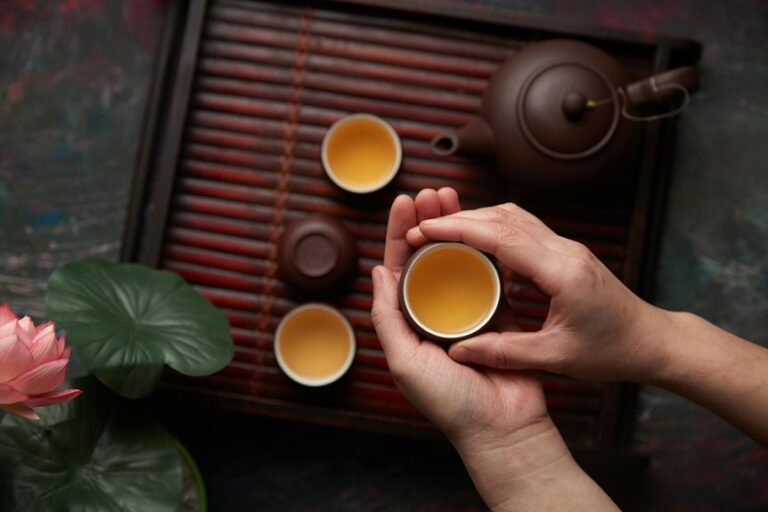
You’ll immediately distinguish it by its reddish-brown liquor, contrasting sharply with sencha’s bright green or genmaicha’s yellow-green infusion. It creates a completely different mouthfeel compared to the creamy texture typical of powdered matcha. You command a distinct flavor profile here, trading fresh vegetable-forward notes for nutty, caramel-like warmth.
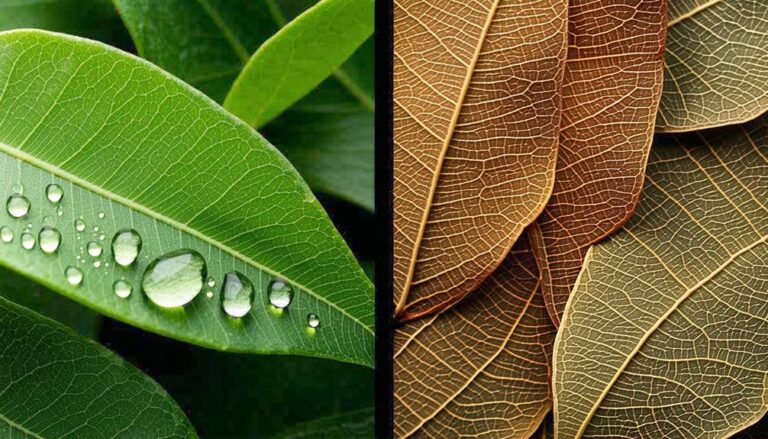
Because producers craft hojicha from coarser bancha leaves and stems rather than young tips, you get a robust, earthy blend carrying wood and chocolate undertones. While Sencha leaves are smaller, Hojicha leaves are larger and thicker due to their maturity. The roasting also drives off much of the caffeine, so hojicha typically carries only a small fraction of what a strong sencha holds.
The intense roasting eliminates bitterness, giving you a smooth, mellow experience. Its mild, low-caffeine profile is one reason hojicha is a popular choice for a late-afternoon or after-dinner cup. Preparation is straightforward, as you can steep the leaves in freshly boiled water for up to two minutes.
Tracing the Historical Origins of Hojicha
Although you likely prize hojicha for its flavor now, its development stemmed from economic desperation during the early 20th century. Rapid industrialization and machine harvesting generated massive waste, while oversaturated markets left merchants with unsaleable inventory. Lacking modern preservation technology, producers needed a strategy to salvage value. What began as a desperate measure is now an integral part of Japanese culture.
In 1902, Shinbei Hayashiya executed the first strategic pivot, roasting discarded stems into “Bo-cha” to actively monetize refuse. The definitive shift occurred in the 1920s when a Kyoto merchant, burdened by stagnant bancha stock, consulted university scholars who advised utilizing high-heat roasting for preservation. This early technique typically involved scorching the leftovers over hot charcoal, which established the initial method for production.
This calculated move transformed stale material into a fresh, distinct commodity. By repurposing low-grade scraps, tea producers seized control over supply chain losses, establishing a new category from what others inadvertently discarded. The resulting beverage rapidly gained popularity in the Hokuriku region, validating the potential of this repurposed product.
It's this ingenuity that turned strict economic liabilities into the staple you recognize, proving you command the market by maximizing every single available asset today. This distinct processing method imparts a unique reddish-brown color and toasty aroma that sets it apart from traditional green teas. Its naturally low caffeine content allows for an easygoing cup at almost any hour.
Achieving the Signature Roasted Flavor Profile
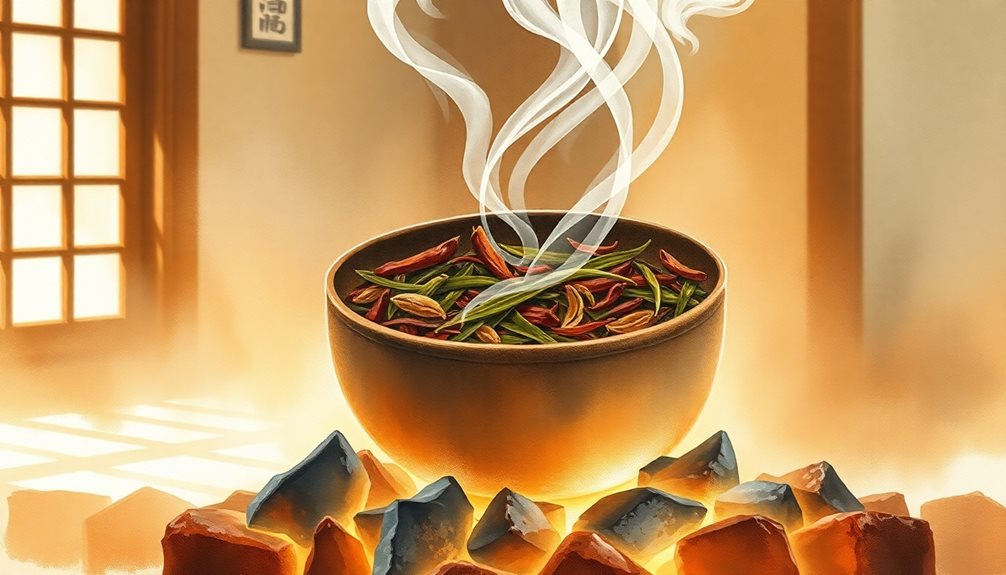
Turning those salvaged assets into a premium product demands mastery over the Maillard reaction. This flavor-building change occurs rapidly when you expose leaves to temperatures between 150°C and 200°C. Additionally, important aroma compounds like pyrazines and furans form to create the signature earthy scent.
You're directly working with amino acids and sugars to banish green vegetal notes for characteristic toasty richness. Precise heat management determines your success here. Start with low or medium heat to maintain control and avoid burning.
Whether you employ traditional iron pots or modern rotary drum roasters, you must distribute heat evenly to prevent localized charring. Such meticulous standards are famously upheld by Kyoto-region producers who maintain these traditional roasting methods. Adding volcanic grit to the drum mix helps you regulate this intense thermal process.
By adjusting durations, you dictate the final outcome: light roasts offer mildness, while dark roasts reveal deep, smoky complexity. Since hard water alters taste negatively, utilizing soft water is ideal for preserving this intended flavor.
Watch for the visual cue of smoke and a shift to brown, then immediately transfer the batch to cool. This halts the cooking instantly, letting you capture specific flavor characteristics. Successful execution locks in the savory notes of coffee and toasted nuts that define the final brew.
You're engineering a complex profile through rigorous oversight of time and temperature.
Why Hojicha Is a Low-Caffeine Tea
One striking effect of the high-heat roasting process is how much caffeine it drives off. Hojicha is traditionally made from bancha tea leaves or kukicha twigs, both already lower in caffeine than young spring leaves. Because roasting temperatures climb toward 200°C — past the point where caffeine begins to sublimate — a finished cup of hojicha carries noticeably less caffeine than sencha or coffee. That same high heat reduces tannins, which is why the brew tastes less astringent and so smooth. For tea drinkers, the practical upshot is simple: hojicha is an easy choice when you want a flavorful cup later in the day.
Choosing Between Leaf and Stem Varieties
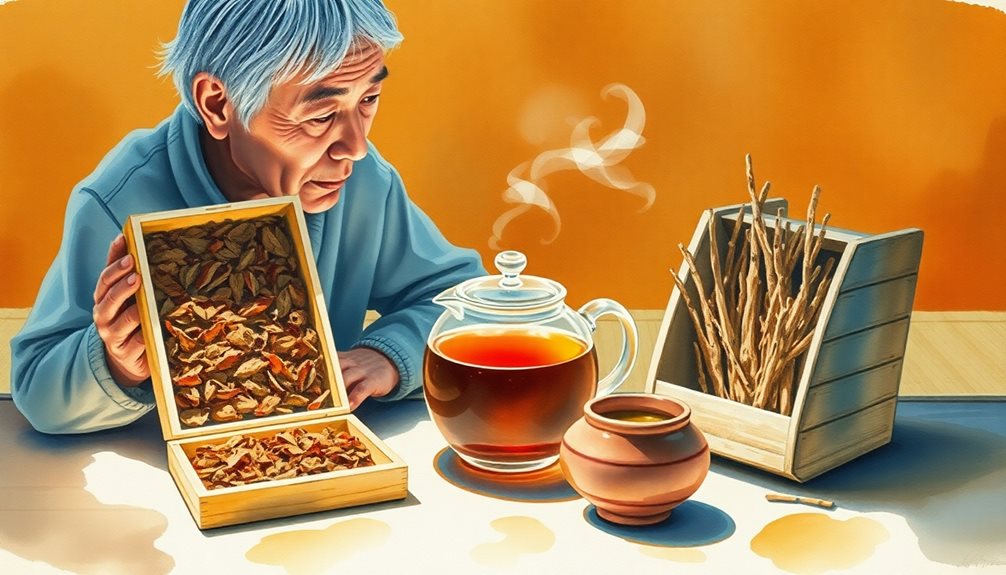
Texture determines taste when you’re deciding between the two primary hojicha structures. Select leaf-based varieties, typically sourced from mature bancha or young sencha, if you demand a balanced, roasted profile.
These leaves offer varying intensities, delivering a robust experience that carries sweeter aromatic notes when the leaf-to-stem ratio is high. Conversely, opt for stem hojicha, known as *kuki hojicha*, when you prefer a sweeter, creamier undertone. This extensive processing results in a flavor profile that is surprisingly closer to black and oolong teas than to most traditional Japanese green teas.
Often derived from premium gyokuro stocks, these varieties prioritize aromatic penetration over heavy taste components. You’ll find that heavily roasted leaves develop a smoky punch regardless of origin, whereas lighter roasted stems maintain a delicate character like Ishikawa’s famous Kaga Boucha.
However, exercise caution with deep roasts on stem-laden blends, as they risk producing an undesirable woody flavor. By visually identifying the mix of reddish-brown leaves and light stalks, you dictate the specific earthiness and sweetness hitting your palate before you buy.
Brewing the Perfect Cup at Home
Once you’ve selected your loose-leaf variety, bring your water to a rolling boil of 100°C (212°F) to extract the tea's full aromatic profile. Measure exactly one tablespoon (6g) into your kyusu for every 200ml of water to guarantee strength. Demand precision by steeping for 30 seconds to one minute. You must drain every drop between infusions to stop the extraction process, ensuring the leaves remain primed for a second round without bitterness. If you prefer a chilled, smoother variation, place 7g of leaves into 500ml of cold water and refrigerate for 4–6 hours. Consult this quick guide to master the details:
| Desired Outcome | Critical Action |
|---|---|
| Maximum Aroma | Use water hitting 100°C |
| Best Potency | Avoid waiting on re-steeps |
For hojicha powder, don't accept clumps. Sift 2g through a fine mesh, then whisk vigorously in M-shaped motions with 60ml of 70°C water. Consume immediately while the fine foam is intact.
Preparing Modern Lattes and Tea Sweets
If you’re craving a café-style treat, start by creating a concentrated hojicha shot rather than a standard brew. You dictate the texture by sifting hojicha powder into a clean, dry serving vessel to prevent clumping.
Add just 60ml of hot water between 80°C and 90°C, then whisk vigorously for 45 seconds using a bamboo whisk or electric frother until you achieve a dense foam.
Master the balance by heating 180ml of milk or plant-based alternatives like oat milk to exactly 65°C. For seamless distribution, dissolve maple syrup or brown sugar directly into the milk before frothing.
Pour your heated milk over the hojicha base to stratify flavors, or reverse the pour for a layered effect. You can even top it with vanilla cold foam.
Frequently Asked Questions
How Should I Store Hojicha to Maintain Its Freshness?
Seal hojicha in an opaque, airtight vessel like stainless steel. Keep it in a cool, dark cupboard. You’ll maintain the aroma by avoiding clear glass and consuming the tea within one month of opening it.
What Savory Foods Pair Best With Roasted Green Tea?
Pair smoked pistachios or soy-based marinades with the tea to match its roasted undertones. You'll maximize flavor using preserved ginger or savory black sesame. Select warm-spectrum foods to fully capture the deep earthy, caramel notes.
Is Hojicha Served During Formal Japanese Tea Ceremonies?
You won't serve hojicha during formal ceremonies, as tradition demands matcha. You'll instead offer roasted tea in informal settings or as a relaxed cup after the main ritual, separating casual consumption from the strict ceremonial standard.
How Long Does Hojicha Stay Fresh After Opening?
You'll capture peak flavor by consuming opened hojicha within one month. While it stays palatable longer, you must seal it tightly in a cool, dark place to delay flavor loss and maintain the roast's distinctive integrity.
Can Used Hojicha Leaves Be Repurposed or Composted?
Since 30% of bags contain plastic, you'll cut them open to compost the nitrogen-rich leaves. You can also mulch directly or brew liquid fertilizer, seizing control of your garden’s nutrient uptake for superior soil health.