Why Everyone’s Talking About Hojicha (Even If You’ve Never Heard of It)
You’ll quickly see why Hojicha stands out among green teas. By roasting leaves at high heat, producers swap the usual grassy bitterness for a smooth, reddish-brown character rich in toasted caramel and wood notes. It’s robust yet low in caffeine, offering a relaxing way to enjoy a comforting cup without the jitters. Explore the brewing tricks that reveal the full potential of this roasted brew.
How High-Heat Roasting Transforms Hojicha
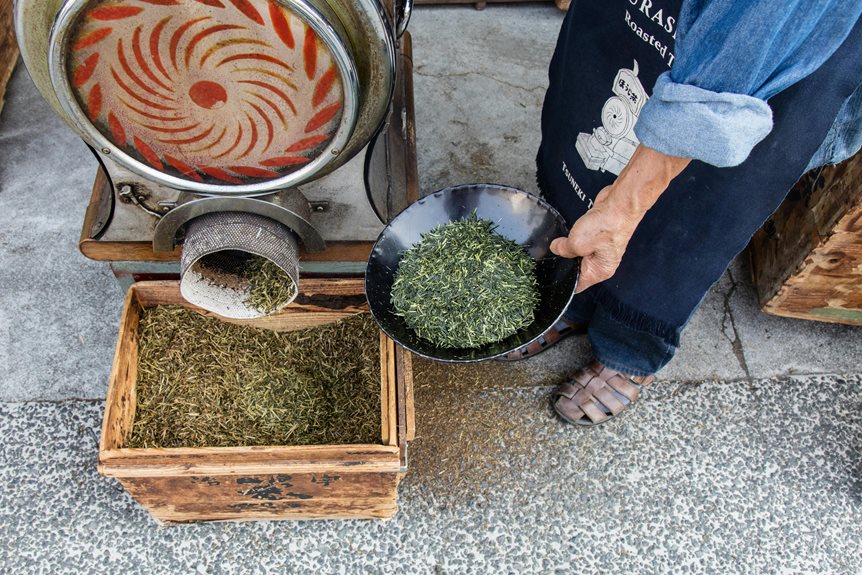
As industrial drum roasters heat coarse green tea leaves to approximately 392°F, they fundamentally alter the material's physical and chemical structure. You witness this precise operation as leaves tumble inside large, gas-heated metal drums, sometimes mixed with volcanic grit to strictly dictate the heating curve. This ingenious method was first introduced by a Kyoto tea merchant in the 1920s to repurpose leftover leaves.
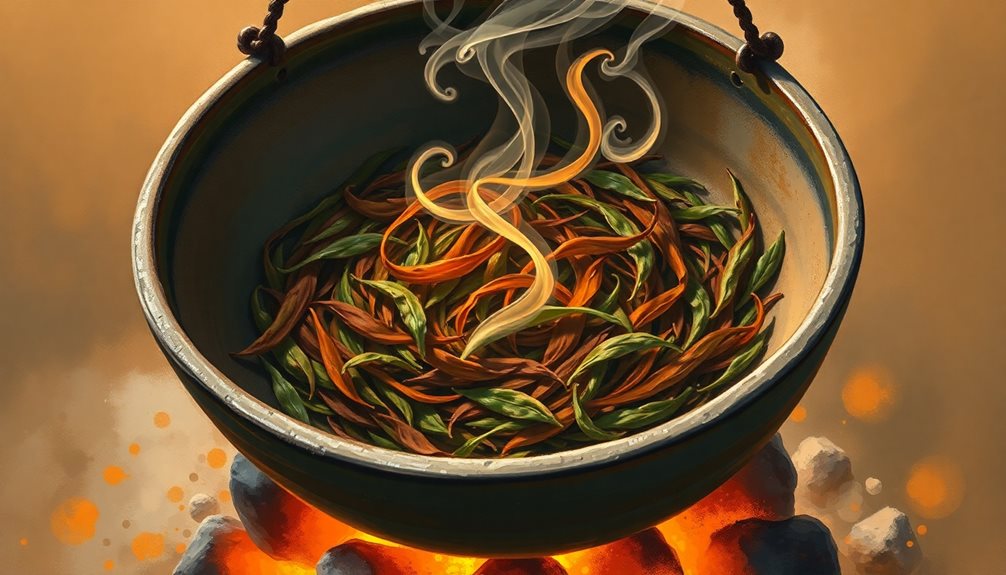
This isn't random; it's a calculated extraction. As temperatures climb, you'll watch the material shift from green to a reddish-brown hue. This intense thermal exposure aggressively eliminates heat-sensitive compounds. Consequently, you destroy the specific elements responsible for astringency found in unrefined stems and leaves. This rigorous processing leads to a brew with significantly lower caffeine content than unroasted varieties.
By managing this volatility, you guarantee the result won't turn bitter, even when you brew it at high temperatures. Producers meticulously regulate complex parameters to master this conversion, mindful that residual heat continues the process. To prevent over-roasting, you must ensure the leaves cool immediately once removed from the heat source.
You don't just roast tea here; you engineer a complete state change, stripping away all raw vegetative traits to stabilize the leaf's final composition. This critical modification permanently shifts the taste profile from grassy to nutty and earthy notes. The process also creates a distinct fragrance, allowing you to enjoy the smoky aroma while sipping.
A Flavor Profile of Caramel and Wood
This thermal conversion directly produces a cup defined by deep, toasty caramel and warm wood undertones. You command a sophisticated flavor profile that discards typical grassy notes for a robust, earthy character, a key reason behind hojicha's rising popularity.
By selecting specific roast levels, you manipulate the taste spectrum, ensuring the extraction matches your precise preference. High heat removes finicky bitterness, granting you a forgiving brew consistently delivering pure richness. To ensure the tea withstands this intense heat, the process exclusively utilizes mature tea leaves, as younger sprouts are too delicate for roasting.
- Roasted complexity: savory almonds and dark chocolate emerge within full-bodied varieties, providing substantial, layered depth.
- Textural authority: the liquid maintains a creamy, smooth consistency that creates a soothing, velvety mouthfeel lacking bite.
- Aromatic presence: distinct scents of toasted chestnut and coffee replace vegetal aromas, offering a powerful sensory impact.
You fully control the finish, which remains naturally sweet and free of harsh astringency. Its soothing, mellow character makes it a popular choice to enjoy after a heavy meal.
Whether you demand the intensity of deep smokiness or soft vanilla-like qualities, Hojicha yields to your palate’s desire for balanced, lingering warmth. Because the roasting process limits stimulants, this tea offers low caffeine content that is suitable for evening relaxation.
Versatile Ways to Brew and Bake
Since the roasting process diminishes bitterness-causing compounds, you can pour near-boiling water directly over loose leaves without fear of ruining the flavor profile. This distinctive technique imparts a reddish-brown color and robust aroma to the leaves. You determine the final outcome.
For deep, roasted intensity, steep 4-5 grams of leaves in 100°C water for two minutes. If you require a lighter taste, however, cut steeping times to 30 seconds. This forgiving tea accommodates your complex preferences, letting you manipulate temperature variables without producing astringency. Even with rapidly boiling water, the taste won't turn bitter. To ensure the best flavor, remember to pour out every last drop into your favorite teacup or mug.
For versatility beyond the teapot, master these precise methods:
- Cold brew 7 grams of leaves in 500ml of cold water for 4-6 hours to extract exceptionally smooth, full-flavored notes. Unlike grassy green teas, this roasted version offers warmer notes like coffee, caramel, and chocolate.
- Whisk 2 grams of sifted powder into 70ml of hot water to create immediate, rich foam for traditional drinking.
- Infuse 5 grams of loose leaves directly into hot milk for a robust latte that easily rivals professional preparations. You can enjoy this drink freely, as Hojicha has low caffeine content compared to other green teas.
Frequently Asked Questions
How Do You Correctly Pronounce Hojicha?
Unless you’re aiming for embarrassment, pronounce it “hoh-jee-cha.” You’ll elongate the first syllable’s vowel, dragging out the “o” sound. Don’t rush. You’ve got to emphasize the long “hou” sound to establish your linguistic authority immediately.
What Does the Word Hojicha Mean in English?
You define hojicha literally as “roasted tea,” merging hoji for roasting and cha for tea. It’s Japanese green tea you’ve roasted after production, distinguishing the specific variety from others through this defining secondary heating process.
How Should Hojicha Be Stored to Keep It Fresh?
Seal hojicha in an opaque, airtight canister to block light and moisture. Don't refrigerate opened tea; choose a cool, dark cupboard. You'll guarantee maximum freshness by finishing the batch within a month to avoid flavor loss.
How Long Does Hojicha Last After the Package Is Opened?
You'll ignore the clock, but chemistry won't. You've got six months to a year for powder, though ideal flavor vanishes after three. If it’s loose-leaf, you must finish it within two months or accept mediocrity.
Is Hojicha Typically Cheaper Than Matcha?
You’ll pay considerably less for hojicha. You save since producers roast older leaves and stems, avoiding matcha’s complex shade-growing and stone-grinding. You’ll obtain twice the quantity for the price because raw materials demand less investment.