Sencha: Japan’s Everyday Green Tea You Haven’t Tried Yet
You haven't truly experienced Japanese tea culture until you’ve sipped Sencha. Unlike matcha, producers steam these loose leaves to halt oxidation, sealing in grassy aromas and mellow sweetness. This everyday staple is a fixture of the Japanese table. Whether you prefer the sharp clarity of light-steamed or the rich umami of deep-steamed types, mastering the water temperature guarantees you extract every bit of flavor detailed below.
Sencha Origins and Cultural Significance
Buddhist monks Saicho and Kukai introduced tea seeds to Japan from Tang Dynasty China around 805 CE, an event first documented when Emperor Saga enjoyed the drink at Bonshakuji temple. The beverage eventually evolved from a ceremonial drink to a social staple, intertwining deeply with the nation's culture.
You can’t command sencha's history without acknowledging its elite roots. Initially, only nobles and monks possessed this resource. The Uji region near Kyoto became renowned for producing these high-quality green teas.
Later, Eisai revolutionized cultivation in 1191. He wrote *Kissa Yojoki*, the first Japanese treatise devoted to tea, and famously offered the drink to Shogun Minamoto no Sanetomo. His writing helped establish tea as a central part of Japanese life and ritual.
While early culture fixated on powdered matcha, you’ll find the critical power shift occurred later. Before this transition, tea masters like Sen no Rikyu refined the cultural practice known as Wabicha.
Zen teacher Ingen Ryūki and seller Baisaō dismantled the elite monopoly, championing loose-leaf varieties. This change empowered you to bypass labor-intensive rituals for direct consumption. Nagatani Sōen eventually modernized production in 1737 by introducing the method of steaming leaves to enhance flavor.
Unique Steaming Process and Flavor Profile
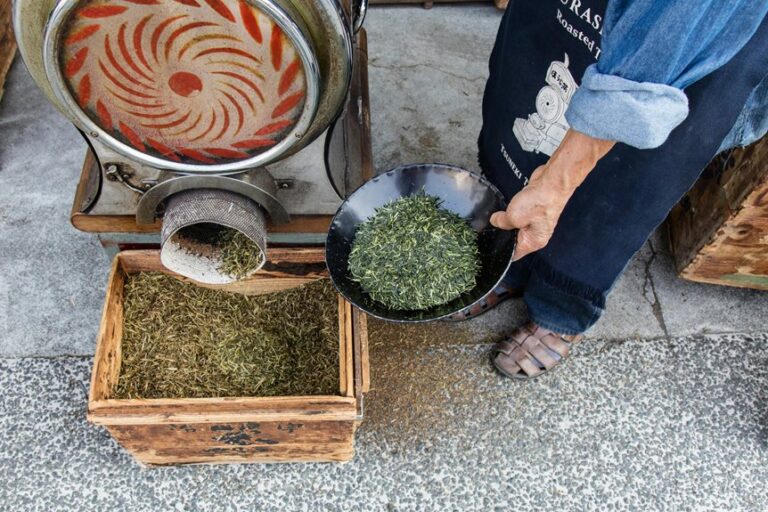
While the harvest provides the raw material, the steaming process strictly defines sencha's character by halting enzymatic oxidation within 24 hours. You wield this “kill-green” phase to stop fermentation totally. This procedure is formally categorized into five types of steaming, offering a spectrum of intensities beyond just light and deep.
By manipulating duration, you determine if leaves remain intact or fragment. Select light steaming, Asamushi (20-30 seconds), if you demand clear, golden liquor with invigorating astringency and intense aroma. You’ll maintain needle-like, unbroken leaves. This leaf integrity is a key factor in quality assessment.
Alternatively, command a deeper steam with Fukamushi (90+ seconds). You’ll sacrifice visual leaf integrity, but you gain a full-bodied, deep green brew rich in umami. This prolonged heat breaks down cellular membranes, releasing pectin for a sweeter, thicker mouthfeel that suppresses bitterness. Due to the smaller leaf particles, a shorter brewing time is recommended for optimal taste.
You master the cup by understanding these variables. Whether you prefer the sharp clarity of light steaming or the distinctive density of deep steaming, your knowledge of this precise thermal exposure dictates the quality of your sensory experience. To ensure the tea is storable, the final drying stage functions to reduce moisture to exactly 5%.
Guide to Light and Deep Steamed Varieties
Since the steaming process halts enzyme fermentation immediately, the specific duration dictates which of two distinct profiles you'll encounter in your cup. As the brewer, you fully command the final flavor output by selecting the specific source. The history of this tea began when Nagatani Soen invented sencha in 1768.
Light steaming, lasting 30-40 seconds, firmly maintains the leaf's structural integrity. This yields needle-like spikes and a transparent, golden-green liquor defined by a sharp astringency. This method is frequently applied to finishing Gyokuro, a variety regarded as high-class tea.
Conversely, deep steaming takes roughly twice as long, or over one minute, aggressively breaking down tough cell membranes. This technique was developed in Shizuoka Prefecture in the 1960s to reduce bitterness. This fukamushi style sacrifices the leaf’s shape to release suspended particles, rewarding you with a dense, opaque neon green liquid and a full body. Extreme versions called Tokumushi undergo steaming for more than two minutes.
- Select light steamed leaves when you demand a pristine visual appearance and original grassy aromas.
- Choose fukamushi to force a mellow, rich sweetness and suppress any unwanted bitterness.
- Reduce your steeping time for deep steamed varieties to effectively manage the much faster extraction rate.
Frequently Asked Questions
What Is the Correct Water Temperature for Brewing Sencha?
To hit the sweet spot, brew between 160°F and 180°F. You’ll target 160°F for premium leaves and 175°F for regular grades. You’ll dictate the tea’s structure and maximize umami by strictly manipulating the water’s heat.
How Should I Store Sencha to Keep It Fresh?
Seal your leaves in an opaque, airtight tin to block light. Store it in a cool, dry spot away from spices. You'll preserve freshness by keeping opened packages at room temperature to avoid damaging condensation.
What Is the Difference Between Sencha and Matcha?
You steep sun-grown Sencha leaves for a clear, grassy infusion, but you whisk shade-grown Matcha powder for a potent suspension. Because you’re consuming the entire leaf with Matcha, you’ll taste a fuller, more concentrated flavor and a brisker caffeine lift.
How Long Does Sencha Last After Opening the Package?
Since the clock’s ticking, you must consume sencha within one month for peak freshness. It’ll last three months maximum if sealed tight, but you’ll lose nuanced flavor. Don’t compromise standards; keep it cool and dry.
Can I Prepare Sencha as a Cold Brew Tea?
Yes, you can. Steep leaves in chilled water for three to eight hours to extract sweeter, richer notes. You’ll eliminate bitterness and reduce caffeine, ensuring you master the extraction process for a perfectly smooth result.