What Is Genmaicha?
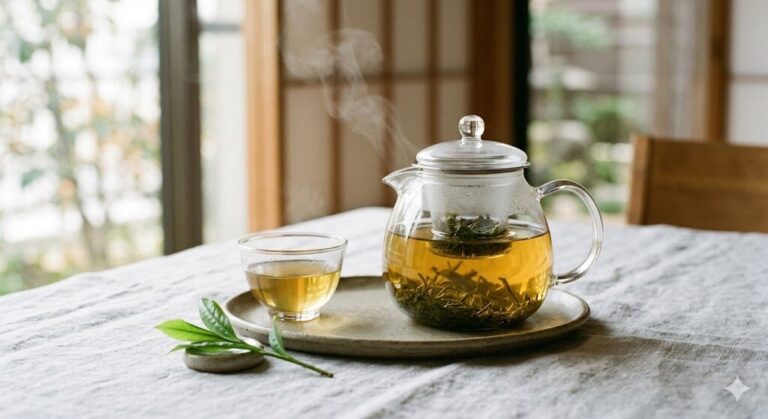
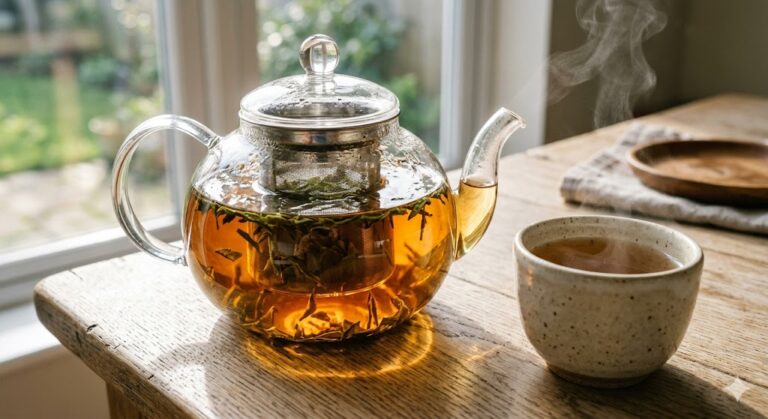
Walk into any Japanese restaurant and you'll likely be greeted with a cup of tea that smells like toasted rice and fresh-cut grass. That's genmaicha — one of Japan's most distinctive and historically significant teas. It's made by blending green tea leaves with roasted brown rice, and a few of those rice kernels pop during roasting, earning it the nickname “popcorn tea.” Our guide to organic Shizuoka genmaicha with toasted rice goes into much more depth on this topic.
What started as a way for working-class Japanese families to stretch their tea supply has become a genuinely beloved category of its own. This buying guide covers everything you need to know about genmaicha, from its history to how to choose the best blend for your taste.
What Is Genmaicha?
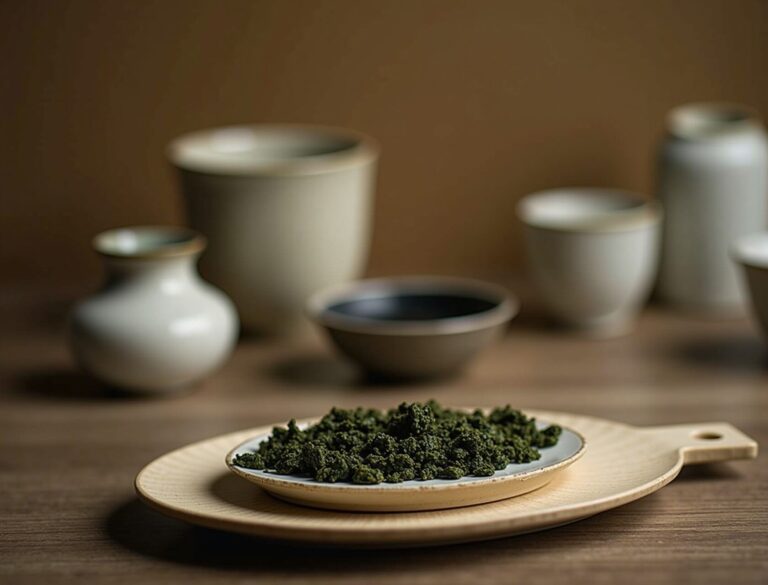
Genmaicha (玄米茶) translates literally to “brown rice tea.” It's a blend of Japanese green tea leaves and roasted brown rice (genmai). The rice undergoes a high-heat roasting process that transforms it from raw grain into golden, puffed kernels — some of which burst open like miniature popcorn during roasting.
That popcorn element isn't just a visual novelty. The popped kernels contribute a lighter, airier texture to the brew and release different aromatic compounds than the unpopped grains. Together, the roasted rice and green tea create a flavor profile that's nutty, toasty, and gently vegetal — unlike anything you'd get from either component alone.
In Japan, genmaicha is an everyday tea. It's served at family dinners, packed in thermoses for work, and offered at casual restaurants where compare with sencha or gyokuro would feel too formal. It's also one of the most approachable Japanese teas for newcomers, with its comforting, nutty aroma and balanced flavor.
The History of Genmaicha
Genmaicha‘s origin story is rooted in Japanese economic history. During periods of widespread poverty and wartime scarcity, rice was added to green tea as a way to stretch limited tea supplies further. The rice — cheap and abundant — effectively doubled the volume of tea a family could brew from the same amount of leaves.
This gave genmaicha its original reputation as the “people's tea” (binbō-cha, literally “poor person's tea”). It was the tea of farmers, laborers, and households that couldn't afford pure sencha. The rice wasn't just filler — it genuinely changed the flavor in ways that many people preferred, adding a toasty sweetness that masked any harshness from lower-grade leaves.
Over time, that reputation shifted. As Japanese tea culture evolved and international interest grew, tea producers began making genmaicha with higher-quality bases — first sencha, then even gyokuro. The trajectory from poverty staple to premium product mirrors what happened with hojicha vs genmaicha comparison, which also started as a way to salvage unsold or lower-grade leaves. Both teas prove that thoughtful blending can elevate humble ingredients into something truly special.
The trajectory from poverty staple to premium product mirrors what happened with hojicha (roasted green tea), which also started as a way to salvage unsold or lower-grade leaves. Both teas prove that some of Japan's best culinary innovations came from necessity.
How Genmaicha Is Made
Making genmaicha involves two parallel processes that come together in the final blending step.
The Tea Base
Traditional genmaicha uses bancha as its base — a late-harvest green tea with larger, more mature leaves. Bancha is lower in caffeine and has a milder, slightly earthy flavor that pairs well with the roasted rice without competing for attention.
Higher-end versions substitute sencha (a more refined, earlier-harvest green tea) or occasionally gyokuro (shade-grown, umami-rich green tea). The choice of base dramatically changes the final cup: bancha-based genmaicha is mellow and approachable, while sencha-based versions have more depth and a brighter green character.
The Rice Roasting Process
Short-grain Japanese brown rice is first soaked in water, then steamed to soften the starches. The steamed rice is then dried and roasted at high temperatures in a rotating drum or heated pan. During roasting, the Maillard reaction transforms the rice's sugars and amino acids into hundreds of new flavor compounds — the same chemistry that gives bread its crust and coffee beans their aroma.
Some kernels pop open during this process, creating the signature “popcorn” pieces. Skilled roasters control temperature and timing carefully: too little heat and the rice tastes raw and starchy; too much and it turns bitter and charred. The ideal roast produces golden-brown kernels with a clean, nutty sweetness.
The Blend
The standard ratio is roughly 50:50 tea to rice by volume, though this varies by producer. A higher proportion of rice produces a milder, more toasty cup with less caffeine. More tea yields a stronger green tea character with the rice acting as a background note.
Genmaicha Flavor Profile
Genmaicha tastes like no other tea. The combination of green tea and roasted rice creates a layered flavor profile that hits differently depending on how you brew it:
- Primary notes: Toasted rice, roasted grain, warm nuttiness
- Secondary notes: Fresh grass, light vegetal sweetness, subtle popcorn
- Finish: Clean and slightly sweet, with a lingering toasty warmth
- Body: Light to medium, smooth and easy to drink
- Aroma: Immediately recognizable — warm roasted grain with a green tea undertone
The flavor balance depends heavily on the tea base. Bancha-based genmaicha leans more heavily into the roasted rice character, with the tea providing structure but not dominating. Sencha-based versions have a more complex interplay between the bright, slightly astringent tea and the warm, sweet rice.
One detail most tea guides miss: genmaicha‘s flavor changes dramatically with water temperature. At 70°C, you get a sweeter, more delicate cup dominated by amino acids (L-theanine) and rice aromatics. At 85°C, you extract more catechins, which add body and slight astringency that balances the sweetness. The temperature you choose isn't just about “proper brewing” — it's a flavor tool.
Caffeine in Genmaicha
One of genmaicha‘s practical advantages is its relatively low caffeine content. Because half the blend is rice (which contains zero caffeine), a cup of genmaicha delivers roughly half the caffeine of the equivalent pure green tea.
| Beverage | Caffeine per Cup (240ml) | Notes |
|---|---|---|
| Genmaicha (bancha base) | 15–25mg | Rice dilutes caffeine by ~50% |
| Genmaicha (sencha base) | 20–30mg | Higher-caffeine base, still diluted |
| Sencha | 30–50mg | Standard Japanese green tea |
| Gyokuro | 50–70mg | Shade-grown, concentrated caffeine |
| Matcha | 60–70mg | Whole leaf consumed |
| Hojicha | 7–20mg | Caffeine reduced by roasting |
| Black tea | 40–70mg | Full oxidation |
| Coffee | 95–200mg | Varies by brewing method |
This makes genmaicha a popular option for afternoon and early evening drinking — low enough in caffeine to be an easy, mellow cup. The L-theanine in the tea leaves also lends the cup its characteristic smooth, rounded, umami-sweet flavor.
What Makes Genmaicha Distinctive
Genmaicha is one of the most approachable Japanese teas, and that comes down to how the two ingredients play off each other in the cup.
From the Green Tea
- Bright, grassy notes: The green tea base supplies the fresh, vegetal backbone. In genmaicha this is lighter than in straight sencha, because the rice dilutes the leaf content per gram.
- L-Theanine sweetness: L-theanine is an amino acid found almost exclusively in tea plants. It is the compound behind green tea's signature umami sweetness, and it gives the cup a smooth, rounded character.
- Low caffeine: Because the leaf base is often bancha and the rice takes up roughly half the blend, genmaicha is one of the milder green teas in the cup.
From the Roasted Rice
- Toasted, nutty warmth: The roasted brown rice contributes the signature popcorn-like aroma and a warm, cereal-like sweetness.
- Soft, starchy roundness: The rice gives the cup a gentle, smooth body that mellows the green tea's sharper, more astringent notes.
- An everyday tea: This mellow, comforting profile is why genmaicha has long been a casual, all-day household tea in Japan, enjoyed by drinkers of every age.
A practical note on flavor: the cup is temperature-sensitive. Brewing hotter draws out more catechins, adding body and a brisk astringent edge, while a cooler brew keeps more of the L-theanine sweetness and rice aromatics forward. There's no single “right” way to brew it — it depends on the flavor you want.
How to Brew Genmaicha
Genmaicha is one of the most forgiving Japanese teas to brew, but dialing in the right temperature and timing makes a noticeable difference in flavor. The rice component adds complexity to the brewing equation because rice and tea extract at different rates.
Standard Hot Brew
| Parameter | Recommendation | Effect of Adjustment |
|---|---|---|
| Water temperature | 80–85°C (176–185°F) | Lower = sweeter, milder; Higher = more body, slight astringency |
| Tea amount | 4–5g per 200ml | More tea = stronger green tea character |
| Steep time (1st) | 60–90 seconds | Longer = more extraction, can turn bitter past 2 min |
| Steep time (2nd) | 30–45 seconds | Flash steep — leaves are already open |
| Steep time (3rd) | 60–90 seconds | Slightly hotter water for final extraction |
| Re-steeps | 2–3 additional | Rice flavor fades; tea character dominates later steeps |
Key detail: Don't use boiling water. While genmaicha is more forgiving than pure sencha, boiling water over-extracts the catechins from the tea leaves, creating bitterness that overwhelms the delicate rice flavors. If you only have boiling water, pour it into a separate cup first and let it cool for 2–3 minutes.
Cold Brew Method
Cold-brewed genmaicha is exceptional in warm weather. The low temperature extracts almost no catechins or tannins, resulting in a naturally sweet, smooth cup with prominent toasted rice flavor.
- Ratio: 10g of genmaicha per 750ml cold water
- Method: Combine in a pitcher, refrigerate for 4–8 hours
- Result: Sweet, mellow, almost zero astringency
- Shelf life: Best consumed within 24 hours
Brewing Chemistry: Why Temperature Matters
This is where genmaicha gets genuinely interesting from a chemistry perspective. The two main components — tea and rice — release different compounds at different temperatures:
- Below 60°C: Primarily amino acids (L-theanine, glutamate) and rice sugars extract. Sweet, mellow, umami-forward.
- 60–75°C: Caffeine begins extracting alongside amino acids. Gentle stimulation with sweetness.
- 75–85°C: Catechins begin extracting in earnest. Adds body, slight astringency, and “green tea” character.
- Above 85°C: Heavy catechin and tannin extraction. Can turn bitter and mask the rice notes.
This means you can genuinely tune your cup by adjusting temperature. Want a dessert-like evening tea? Brew at 70°C. Want a robust morning cup with more kick? Push to 85°C. Same tea, completely different experiences.
Genmaicha Variations
The basic genmaicha template — green tea plus roasted rice — has spawned several popular variations.
Matcha-Iri Genmaicha (抹茶入り玄米茶)
This is genmaicha with a dusting of matcha powder added to the blend. The matcha adds a vivid green color to the brewed tea, boosts the umami and vegetal notes, and increases the caffeine content. It's the most common premium variation and the one you're most likely to find in Japanese specialty tea shops.
The matcha also settles at the bottom of the cup, which means the last sip is more concentrated than the first. Some drinkers swirl the cup periodically to keep the flavor consistent; others enjoy the progression.
Houjicha-Genmaicha
A less common but increasingly popular variant that uses roasted houjicha as the tea base instead of sencha or bancha. The double-roasted character (roasted tea + roasted rice) creates an intensely toasty, almost coffee-like experience with very low caffeine. This is an excellent evening tea.
DIY Genmaicha
You can make genmaicha at home, but there's one critical step most recipes skip: the rice must be soaked for 24–36 hours before roasting. This extended soak breaks down phytic acid in the brown rice, which otherwise gives the finished tea a chalky, mineral-heavy taste. After soaking:
- Drain and spread the rice in a single layer on a baking sheet
- Dry in the oven at 120°C for 15 minutes
- Increase temperature to 180–200°C and roast for 5–8 minutes, shaking the pan every 2 minutes
- The rice should be golden-brown with a few popped kernels — remove immediately when you smell toasting (it goes from perfect to burned fast)
- Cool completely, then mix with your preferred Japanese green tea at a 1:1 ratio
The freshly roasted rice has a more intense, complex aroma than pre-packaged versions. The trade-off is that homemade genmaicha should be consumed within 2–3 weeks, as the rice oils go stale faster than commercially processed rice.
Food Pairing
Genmaicha is one of the best Japanese teas for food pairing because its toasty, nutty profile bridges the gap between delicate green tea and richer, more savory flavors.
Classic Japanese Pairings
- Sushi and sashimi: This is the traditional pairing, and there's actual chemistry behind it. The polyphenols in genmaicha work synergistically with the gingerol compounds in pickled ginger (gari) to cleanse the palate between pieces. The toasty rice notes complement the vinegared sushi rice.
- Onigiri (rice balls): Rice tea with rice food — it sounds redundant, but the roasted rice in genmaicha provides a toasty contrast to the plain steamed rice in onigiri that works beautifully.
- Japanese pickles (tsukemono): The mild sweetness of genmaicha balances the sharp acidity and salt of pickled vegetables.
Japanese Sweets
- Wagashi (traditional sweets): The toasty dryness of genmaicha contrasts perfectly with the sweet, dense textures of mochi and bean-paste confections.
- Senbei (rice crackers): Roasted rice tea with roasted rice crackers creates a harmonious, deeply warming snack combination.
Beyond Japanese Cuisine
- Toast with butter: Sounds simple, but the toasted grain notes in genmaicha and buttered toast create an almost addictive morning combination.
- Mild cheeses: Soft, creamy cheeses like brie or fresh mozzarella pair well — the tea cuts through the fat without overpowering delicate dairy flavors.
- Breakfast foods: Genmaicha is arguably the best Japanese tea for Western-style breakfasts. Its nutty warmth complements eggs, oatmeal, and whole-grain bread in ways that sencha's grassiness doesn't.
Genmaicha vs Other Japanese Green Teas
If you're choosing between genmaicha and other Japanese teas, this comparison should help clarify which one fits your preferences:
| Feature | Genmaicha | Sencha | Hojicha | Gyokuro |
|---|---|---|---|---|
| Flavor | Nutty, toasty, mild green | Grassy, vegetal, slightly sweet | Roasted, caramel, smooth | Rich umami, marine, sweet |
| Caffeine | 20–30mg | 30–50mg | 7–20mg | 50–70mg |
| Best time | Morning, afternoon, with food | Morning, afternoon | Evening, after meals | Slow afternoons, focused sipping |
| Difficulty to brew | Easy — very forgiving | Moderate — temperature sensitive | Very easy — boiling water OK | Hard — precise temp/time needed |
| Color | Golden-green | Bright yellow-green | Reddish-brown | Deep green |
| Astringency | Low (rice buffers) | Moderate | Very low | Low (umami-dominant) |
| Price (per 100g) | $8–$20 | $10–$30 | $8–$25 | $25–$80+ |
| Best for | Beginners, food pairing | Daily drinking, tea purists | Evening, caffeine-sensitive | Connoisseurs, special occasions |
Genmaicha occupies a unique position: it's the most food-friendly Japanese tea, the most accessible for green tea newcomers, and one of the most affordable for daily drinking. If you're building a Japanese tea collection, it should be one of your first purchases alongside sencha and hojicha.
How to Buy and Store Genmaicha
Not all genmaicha is created equal. Here's what to look for when buying, and how to keep it fresh once you have it.
What to Look For
- Rice-to-tea ratio: A good blend should have roughly equal parts rice and tea by volume. If you see mostly rice with a few scattered tea leaves, the producer is cutting costs.
- Popped rice presence: Some popped kernels are a sign of proper roasting. A bag with zero popped pieces may indicate lower-temperature roasting, which produces less complex flavors.
- Tea base: Check whether the blend uses bancha or sencha. Sencha-based is generally higher quality and more flavorful, but bancha-based is perfectly good for daily drinking and often more affordable.
- Origin: Look for Japanese-grown tea. Genmaicha made with Chinese green tea base exists and is usually significantly cheaper, but the flavor profile is different.
- Freshness date: Unlike some teas that improve with age, genmaicha is best consumed within 6 months of production. The rice oils deteriorate over time.
Storage
- Keep in an airtight, opaque container away from light and heat
- Do not refrigerate — temperature fluctuations cause condensation that degrades both the tea and rice
- Consume within 3–6 months of opening for optimal flavor
- If you buy in bulk, divide into smaller portions and keep the reserve sealed
Frequently Asked Questions
Is genmaicha actually green tea?
Yes. The tea component of genmaicha is genuine Japanese green tea — typically bancha or sencha. The roasted rice is an addition, not a replacement. You get all the compounds present in the green tea base, just in lower concentration because the rice dilutes the tea portion of each serving.
Why is genmaicha called “popcorn tea”?
During the roasting process, some of the brown rice kernels pop open, looking and behaving exactly like miniature popcorn. This is a natural result of the high-heat roasting and is actually a sign of quality — it means the rice was roasted at the proper temperature. The popped kernels also contribute a lighter, airier flavor to the brew.
Can I drink genmaicha before bed?
Genmaicha contains 20–30mg of caffeine per cup, which is lower than sencha or coffee but not zero. Most people who aren't highly caffeine-sensitive can drink it in the early evening without issues. If you're particularly sensitive to caffeine, switch to hojicha (7–20mg) or a caffeine-free herbal tea for late-night drinking.
Does genmaicha expire?
Genmaicha doesn't become unsafe to drink, but it does lose flavor over time — faster than most pure teas. The roasted rice oils gradually go rancid, producing a flat, stale taste. For the best experience, consume genmaicha within 3–6 months of opening and within a year of purchase.
Why is genmaicha considered such a mellow, easy-drinking tea?
The roasted rice is what makes genmaicha so approachable. It rounds out the cup with a soft, starchy sweetness that mellows the brisker, more astringent notes of straight green tea. That gentle, comforting flavor is why genmaicha has long been a casual everyday tea in Japan, poured at family meals and served in casual restaurants.
What's the difference between genmaicha and matcha-iri genmaicha?
Matcha-iri genmaicha is standard genmaicha with added matcha powder. The matcha gives the brewed tea a more vivid green color, increases the umami flavor, and adds more caffeine. It's generally considered a premium version of genmaicha and costs slightly more. The matcha also settles at the bottom of the cup, making the last sip more concentrated.