Premium Nori Sheets: Is Expensive Seaweed Worth the Cost?
Walk into a Japanese specialty shop and you'll find nori priced anywhere from a few dollars for a pack of 50 sheets to $25–$35 for a carefully packaged tin of 10 premium sheets. That's a 10x price difference. Is premium nori actually better, or is it marketing? This guide explains the real differences in nori quality, what you're paying for, and when the premium is genuinely worth it.
How Nori Is Graded
Japan has a tiered grading system for nori (officially regulated by prefecture and cooperative standards). The grades run from bottom to top, with premium nori achieving the highest grades based on:
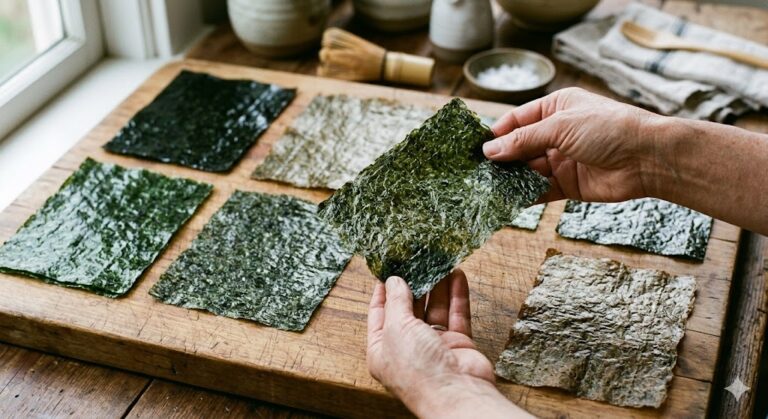
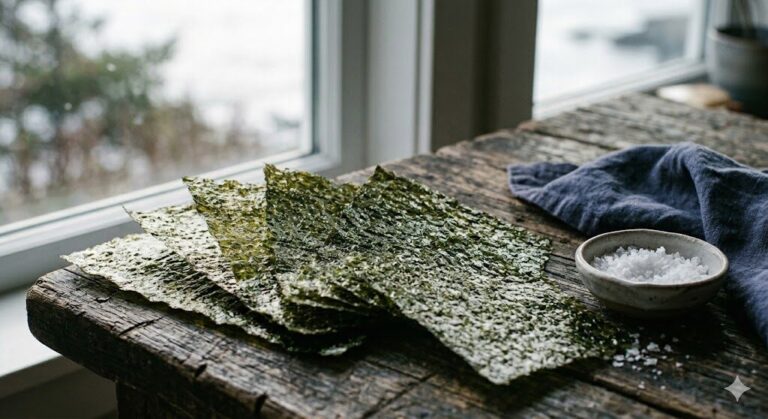
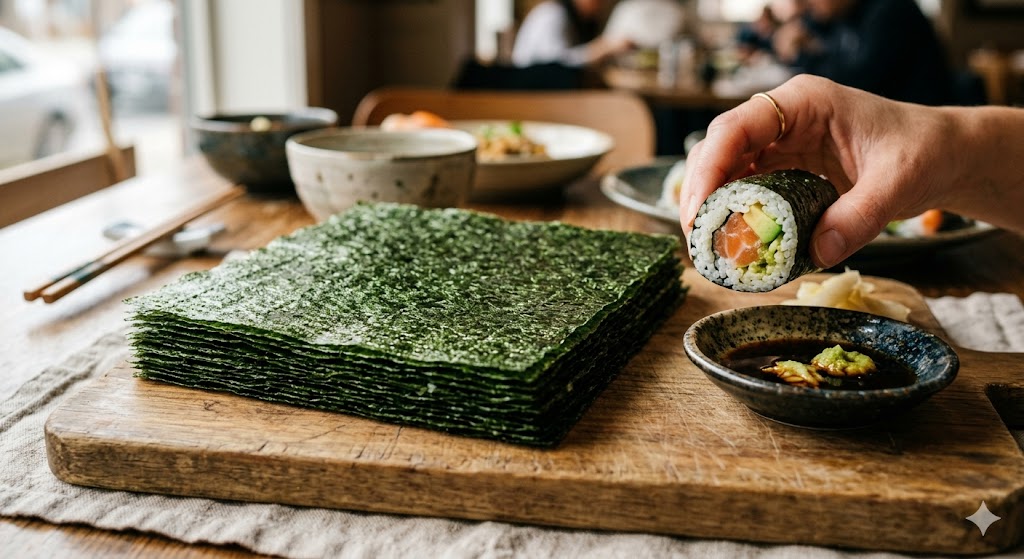
- Color: Top-grade nori is deep forest green — uniform, rich, and slightly lustrous. Lower-grade nori is greenish-black, patchy, or has visible veining. When the sheet is held up to light, premium nori is semi-translucent with a consistent weave. Cheap nori is opaque and uneven.
- Texture: Premium nori is thin, uniform in thickness, and smooth. It crisps cleanly when toasted without turning brittle or crumbling. Inferior nori is thick in places, thin in others, and tends to crack unevenly.
- Aroma: Good nori smells oceanic, slightly sweet, and clean. The aroma is immediate and pleasant. Poor-quality nori smells flat, stale, or slightly fishy in an unclean way.
- Flavor: Premium nori has a complex oceanic sweetness that cheap nori doesn't approach. When eaten fresh (no sushi application), top-grade nori is a snack on its own. Cheap nori tastes flat or slightly bitter.
- Harvest timing: First-harvest nori (ichiban-tori, harvested January-February in Japan) is the most tender and flavorful. Later harvests are thicker, tougher, and less flavorful. Premium products typically specify harvest number.
Regional Differences in Japanese Nori
Where nori is harvested affects its character:
Ariake Bay (Fukuoka, Saga, Kumamoto, Nagasaki): Japan's most prestigious nori producing region. The bay's mix of fresh water and seawater creates ideal growing conditions. Ariake nori is thin, tender, and deeply flavored. The highest-grade Japanese nori typically comes from Ariake.
Tokyo Bay area (Chiba, Kanagawa): The historical center of Japanese nori cultivation. Asakusa nori (named for the Tokyo district where it was processed) is a traditional style made from Tokyo Bay harvest. Still excellent; less production now than previously due to water quality changes.
Ise-Shima (Mie Prefecture): The same waters known for premium kombu kelp produce fine nori. Mie nori has a distinctive mineral character influenced by the Pacific current.
When Premium Nori Is Worth It
For eating as a standalone snack: The difference is night and day. Premium nori eaten fresh with rice or as a snack has genuine complexity. Cheap nori just provides texture and some mineral flavor — it's background, not foreground.
For onigiri: The nori wrapper is a central component of an onigiri, not just functional packaging. Good nori wraps cleanly, crisps properly, and contributes flavor that complements the rice and filling.
For temaki and norimaki sushi: Premium nori rolls without cracking, has the structural integrity to hold a filled roll, and adds flavor that grocery-store nori doesn't. The difference is tangible when you're making your own sushi rolls at home.
For gifting: A tin of premium Ariake nori makes a thoughtful, distinctive gift. The packaging of top Japanese nori is often beautiful — wood or lacquered tin — and the product is genuinely something people won't buy for themselves.
When Standard Nori Is Fine
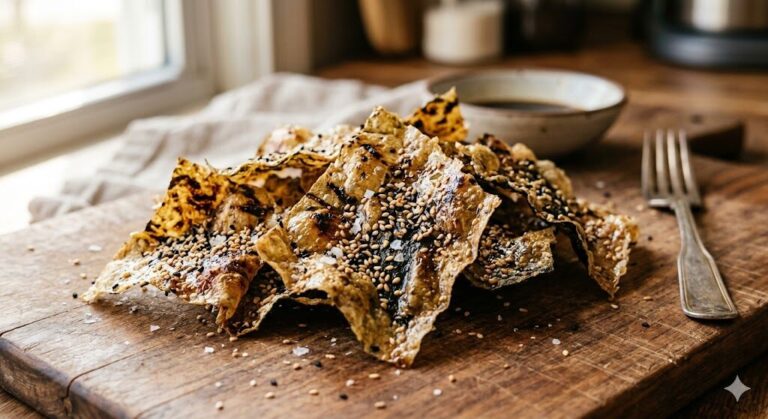
For cooked applications: Nori used as a furikake component, baked into nori chips, or incorporated into cooked dishes loses its fresh character during cooking. Premium nori's flavor advantage diminishes when heat is applied. Use mid-grade for cooking.
For high-volume casual use: If you go through 50 sheets a week making bento boxes and casual onigiri, the cost premium adds up. Mid-range nori works fine for daily high-volume use.
Shop premium nori: shop.alldayieat.com/product/premium-nori/
How to Store Premium Nori
Premium nori is an investment; storage matters:
- Keep sealed until use — nori absorbs humidity rapidly and loses its snap
- Store in a cool, dry location away from strong odors
- Once opened, keep in an airtight tin with a silica gel packet
- Consume within 2 weeks of opening for best quality
- If nori has softened, briefly wave over a gas flame or toast in a 150°C oven for 30 seconds to restore crispness
Frequently Asked Questions
- What grade of nori does Japanese sushi restaurants use?
- High-end sushi restaurants use the highest available grade — typically Ariake first-harvest nori. Casual sushi chains use mid-grade. The quality difference is part of what you're paying for at a premium sushi counter.
- How do I tell good nori from bad nori without tasting it?
- Hold a sheet up to light: premium nori is semi-translucent with an even, consistent weave pattern. The color should be deep green, not black or patchy. Premium nori has a fresh oceanic aroma immediately on opening the package. Cheap nori smells flat or slightly stale. Premium nori also feels slightly smooth and silky; inferior nori feels rough or uneven.
- Is Korean nori the same as Japanese nori?
- Korean gim (the same species) is typically thinner and more heavily oiled and salted than Japanese yaki nori. Both are fine products but for different uses. Japanese yaki nori is roasted to a crisp without added oil — that's the correct format for onigiri, sushi, and pure seaweed applications. Korean gim has its own excellent applications but isn't a direct substitute in Japanese recipes.
- What's the white powder sometimes visible on nori?
- Normal and harmless — it's a crystallized mineral deposit (mostly sodium and magnesium compounds) from the seawater. It doesn't affect flavor or food safety. It indicates the nori was harvested from mineral-rich water and dried naturally.