Nori for Bento: Best Sheets for Wrapping and Decoration
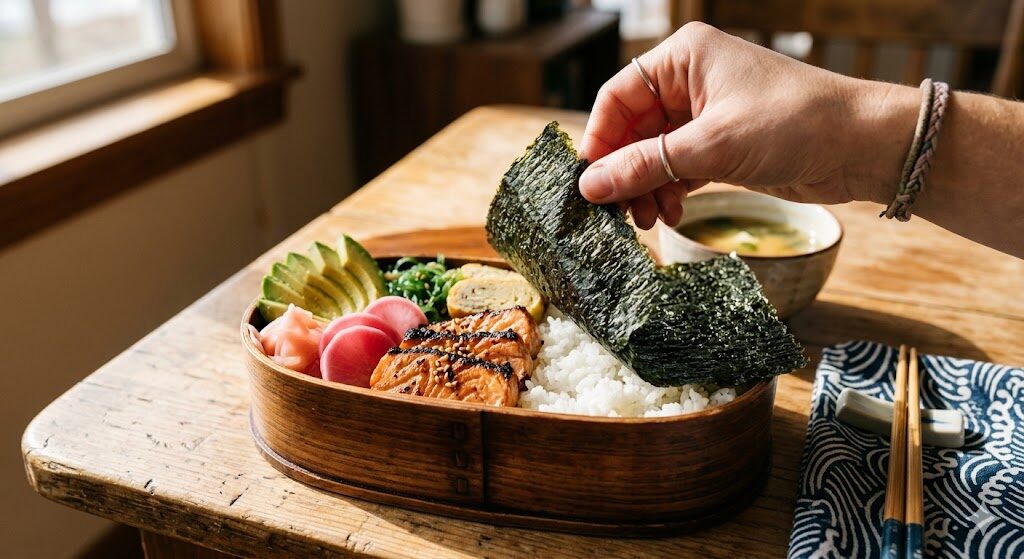
Nori in bento boxes serves two distinct functions: as a structural wrapper around rice balls and rolls, and as a decorative element for facial features, shapes, and borders. These two applications need different types of nori, and choosing the wrong one creates practical problems — soggy wrappers, torn decoration pieces, or nori that slides off rice. This guide covers what you need for each bento nori application.
The Bento Nori Challenge: Staying Crispy
The main technical challenge of nori in bento boxes is moisture. Nori naturally absorbs humidity from rice and other components over time, going from crispy to soft within 30-60 minutes. Whether this is a problem depends on your preference:
Crispy nori preference: You want the nori to still snap when bitten at lunchtime — about 4-6 hours after packing. This requires thicker, sturdier nori sheets kept somewhat separate from rice (using separator components, or packing nori separately to be added just before eating).
Soft nori preference: Many traditional Japanese bento are designed with the expectation that nori will soften — onigiri nori becomes integrated with the rice, and the chewy, slightly sticky texture is considered pleasant rather than a problem. For this application, you want thinner, more delicate nori that melds rather than maintaining crunch.
Types of Nori for Bento Use
Standard Full-Sheet Yaki Nori (Roasted Nori)
The 19 × 21cm standard yaki nori sheet is the foundation for all bento nori applications. Pre-roasted, crispy, deep green, and strong enough to wrap around onigiri and maki rolls without tearing. For all basic bento wrapping, standard full-sheet yaki nori is what you want.
For onigiri that will be eaten immediately: any quality yaki nori works. For packed bento where the nori will sit for hours: choose a thicker, firmer nori from a quality producer that holds its structure better as it slowly absorbs moisture.
Half-Size Convenience Nori
Pre-cut to roughly half sheet size, these are practical for bento preparation: wrap around rice balls without cutting, quick use for maki-style rice. The convenience is real; the quality is usually slightly lower than full sheets from the same producer. For everyday bento use where speed matters, half-size nori is a smart choice.
Thin Nori (Hoso Nori) for Decoration
Thinner, more delicate nori sheets are specifically suited for cutting into decorative shapes — the fine texture cuts cleanly with scissors or a craft punch without tearing. For charaben (character bento) decoration, the sheet needs to cut precisely for small features like eyes, mouths, and border details. Standard thick yaki nori is harder to cut into fine shapes.
Nori Strips and Pre-Cut Products
Pre-cut nori strips (typically 1-2cm wide) are sold specifically for bento borders, rice ball wrapping, and futomaki sushi. They save cutting time and ensure uniform widths. Worth keeping in stock for frequent bento makers.
Shop premium nori: shop.alldayieat.com/product/premium-nori/
Practical Bento Nori Techniques
Onigiri wrapping: For stable, hold-together onigiri with crispy nori at lunch, use the individually wrapped technique: wrap each rice ball in plastic wrap or in the specialized two-sided separable onigiri bags. This keeps the nori away from the rice's moisture until the moment of eating.
Decoration cutting: Use sharp scissors and cut in a single decisive motion rather than sawing. Nori tears when scissors are dull or when you cut hesitantly. For very small shapes, a craft punch or stencil cutter produces cleaner edges than scissors.
Securing decoration nori: Small nori decoration pieces stick to slightly warm or sticky rice naturally. For pieces on other surfaces (egg, tofu), a tiny dab of food-safe glue (mayo works) on the back holds the piece in place.
Preventing pre-cut pieces from sticking together: Keep cut pieces separated by laying them on dry parchment paper. If storing overnight, layer parchment between stacked pieces and keep in an airtight container with a silica gel packet.
Quality Matters for Bento Nori
For wrapping: quality nori is thicker, stronger, and more resistant to tearing. It holds up better as it gradually absorbs moisture. Cheap thin nori disintegrates faster and tears when wrapping.
For decoration: fine-grained quality nori cuts cleanly into small shapes. Cheap nori with coarse texture produces ragged cut edges on small pieces.
For both applications, the difference between grocery-store nori and quality Japanese nori is real in bento use — not just flavor, but physical performance.
Frequently Asked Questions
- How do I keep nori crispy in a bento until lunchtime?
- The most reliable method: pack nori separately in a small zip-lock bag, pack the rice component separately, and combine just before eating. The “nori wrapper with humidity barrier” onigiri bags sold at Japanese grocery stores are designed exactly for this — the nori stays crispy because it doesn't contact the rice until the moment you open it.
- Can I use raw (unroasted) nori in bento?
- Technically yes, but raw nori softens faster and has a different (more intensely oceanic, less crispy) character. Pre-roasted yaki nori is the standard for bento because it starts crispy and holds up better. Raw nori is used for different applications (in soups, as a garnish on warm dishes).
- What's the best nori for character bento (charaben)?
- Thin nori that cuts cleanly with scissors or punches. Many charaben artists use thinner imported nori sheets specifically because they cut more precisely than standard thick yaki nori. A dedicated set of small stencil punches in facial feature shapes makes charaben nori decoration dramatically faster.
- How long does opened nori last for bento use?
- At peak quality, 2 weeks after opening if kept airtight with silica gel. The nori remains safe to eat beyond this but gradually loses crispness and flavor complexity. For bento where the nori will sit for hours anyway, slightly older nori is acceptable; for eating fresh, use newer nori.