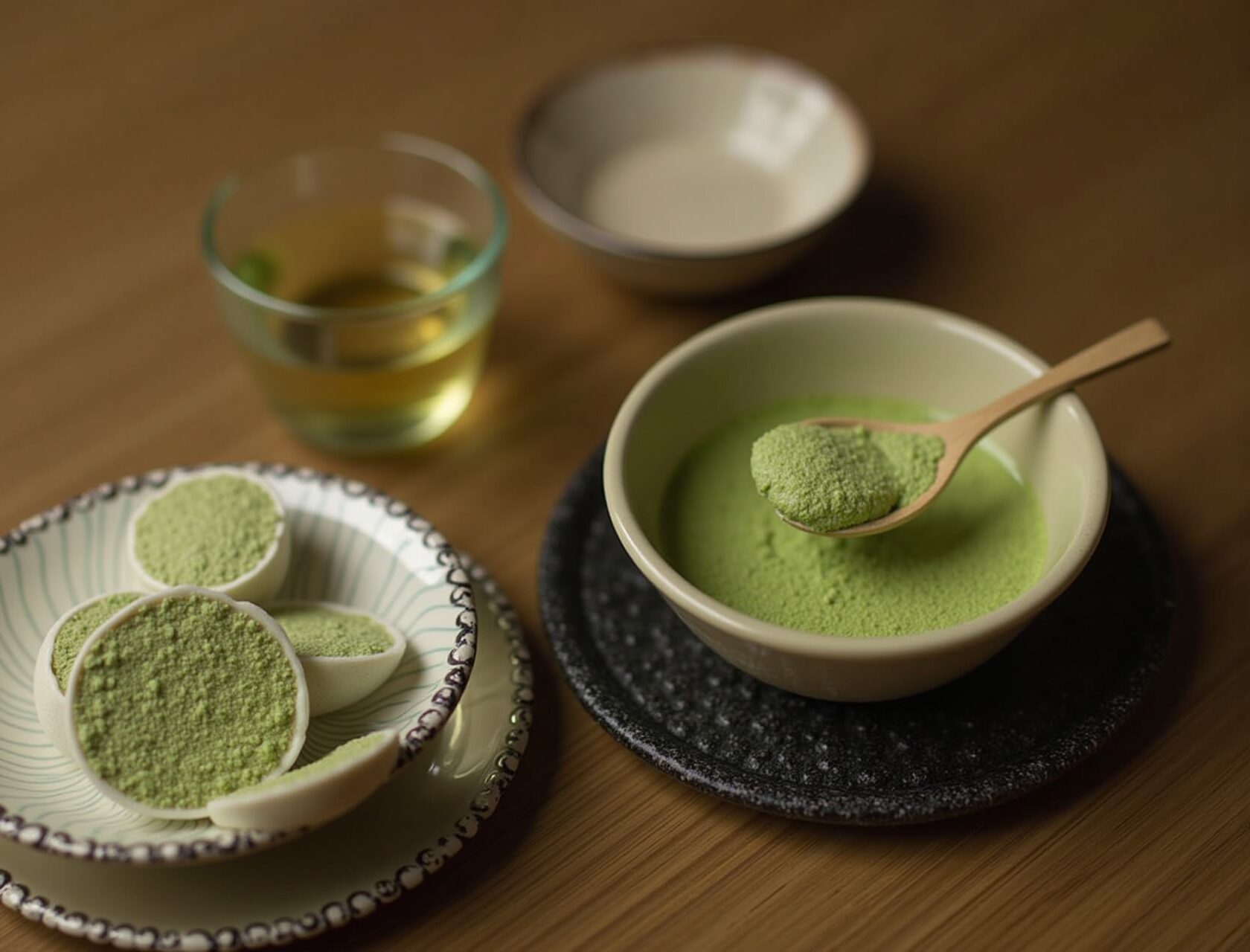
Kagoshima Matcha: Why Japan’s Largest Tea Region Makes the Best Matcha
If you have been exploring the world of Japanese green tea, you have likely encountered the name Uji or Nishio on matcha tins. But the true powerhouse behind Japan’s matcha production may surprise you. Kagoshima matcha — grown in the volcanic southern reaches of Kyushu — now accounts for the largest share of Japan’s tea output by volume, and its reputation for quality is rising fast among tea connoisseurs worldwide.
鹿児島県 (Kagoshima-ken), Kagoshima Prefecture, sits at the southern tip of Japan’s main islands. It is a land shaped by volcanoes, blessed with warm subtropical weather, and home to tea farms that stretch across rolling green plateaus. For anyone serious about understanding matcha, Kagoshima deserves a place at the very top of your list.
Why Kagoshima Is Japan’s #1 Tea-Producing Prefecture
For decades, Shizuoka held the title of Japan’s largest tea-producing region. That changed in 2019 when Kagoshima officially overtook Shizuoka in total aracha (荒茶, crude tea) production volume. Today, Kagoshima produces roughly 28,000–30,000 tonnes of tea annually, making it Japan’s single largest tea-growing prefecture.
But volume alone does not tell the whole story. Kagoshima’s rise is driven by a deliberate strategy of quality-focused cultivation, modern farming infrastructure, and an emphasis on premium cultivars suited to shade-growing — the essential technique behind all authentic matcha.
Several factors give Kagoshima its edge:
- Flat, expansive tea fields — Unlike the steep mountain plots of Uji, Kagoshima’s broad Shirasu plateau allows for efficient, large-scale shade cultivation without sacrificing quality.
- Earlier harvest season — The warm southern climate means Kagoshima’s first flush (ichibancha / 一番茶) arrives weeks before other regions, giving producers access to the youngest, most amino acid-rich leaves.
- Volcanic terroir — The mineral-rich soil from nearby Sakurajima volcano creates growing conditions that are genuinely unique in the tea world.
- Investment in premium cultivars — Kagoshima leads Japan in planting high-quality cultivar varieties like Saemidori, Asatsuyu, and Okumidori alongside the workhorse Yabukita.
Kagoshima’s Geography and Climate: Built for Tea
The Shirasu Plateau (シラス台地)
Kagoshima’s tea-growing identity begins with its geology. The Shirasu plateau (シラス台地 / Shirasu daichi) is a vast expanse of volcanic ash deposits left behind by massive eruptions thousands of years ago. This unique soil composition contributes to the tea’s rich nutritional profile, making Kagoshima matcha especially prized for its depth and balance.
Deep-rooted tea plants absorb a broader spectrum of trace minerals from the volcanic subsoil, and many tea experts believe this contributes to the distinctive sweetness and complexity of Kagoshima tea. The soil is naturally acidic (pH 4.0–5.5), which is precisely the range where Camellia sinensis thrives.
Sakurajima’s Influence (桜島)
Sakurajima (桜島), one of Japan’s most active volcanoes, looms across the bay from Kagoshima city. Its periodic ashfall continuously replenishes the surrounding soil with fresh minerals — a process that has been occurring for centuries. While volcanic ash can be a nuisance for daily life, it is a gift for agriculture. Tea fields in Kagoshima benefit from soil that is constantly being enriched with potassium, phosphorus, and micronutrients.
Subtropical Climate
Kagoshima sits between 30–32 degrees north latitude — roughly the same as Cairo, Egypt — making it one of the warmest tea-growing regions in Japan. Key climate advantages include:
- Long growing season — Tea plants enjoy an extended period of active growth, with some farms managing three to four harvests per year.
- Warm winters — Milder cold seasons reduce frost damage and allow plants to store more energy for the crucial spring flush.
- Ample rainfall — Annual precipitation of 2,000–2,500mm keeps tea fields well-hydrated without irrigation.
- Morning mist — Fog rolling in from the sea acts as a natural diffuser of sunlight, similar in effect to artificial shading.
Key Cultivars Grown in Kagoshima
One of the most important factors in matcha quality is the tea plant cultivar (hinshu / 品種). Kagoshima is notable for the diversity and quality of cultivars it grows. While the rest of Japan relies heavily on a single variety, Kagoshima has invested in a portfolio of premium cultivars.
Saemidori (さえみどり) — The Crown Jewel
Saemidori, whose name translates to “clear green” (冴え緑), is arguably the most prized cultivar for ceremonial matcha production. Developed at the National Institute of Vegetable and Tea Science (now NARO) in the 1990s, Saemidori is a cross between Yabukita and Asatsuyu — inheriting Yabukita’s hardiness and Asatsuyu’s remarkable sweetness.
What makes Saemidori exceptional for matcha:
- Extraordinarily high L-theanine content — L-theanine is the amino acid responsible for matcha’s prized umami sweetness and calming effect. Saemidori consistently tests higher in theanine than most other cultivars.
- Vibrant green color — The leaves produce an intensely bright, almost electric green powder when stone-milled, making it visually striking in the bowl.
- Low astringency — With less catechin (the compound behind bitterness) relative to theanine, Saemidori matcha is naturally sweet and smooth.
- Delicate aroma — A refined, almost floral fragrance that is immediately recognizable to experienced tea drinkers.
Kagoshima is the heartland of Saemidori production. The cultivar thrives in the warm southern climate and volcanic soil, producing leaves that are ideally suited for shading and tencha processing. Our own Organic Kagoshima Matcha, Saemidori Cultivar, Ceremonial Grade is a direct expression of what this cultivar can achieve in Kagoshima’s terroir. For a closer look, explore our Shizuoka organic cooking matcha.
Okumidori (おくみどり)
Okumidori, meaning “deep green” (奥緑), is a late-budding cultivar that produces tea with a mellow, balanced character. It is well-regarded for both matcha and gyokuro production. Okumidori matcha tends to have a gentle sweetness with subtle grassy notes — less intensely umami than Saemidori but with an approachable elegance that many drinkers enjoy. If you are curious to compare, our Shizuoka Matcha, Okumidori Cultivar showcases what this cultivar produces in a different terroir.
Yabukita (やぶきた)
Yabukita (藪北) is the backbone of the Japanese tea industry, accounting for roughly 75% of all tea plants in Japan. Selected in the early 20th century in Shizuoka Prefecture, it is reliable, cold-hardy, and produces consistent quality year after year. In Kagoshima, Yabukita is widely used for both sencha and culinary-grade matcha, where its robust flavor holds up well in lattes, baking, and cooking applications.
Asatsuyu (あさつゆ)
Asatsuyu, “morning dew” (朝露), is sometimes called “natural gyokuro” (tennen gyokuro / 天然玉露) because its leaves are so rich in amino acids that even sun-grown Asatsuyu tastes similar to shade-grown tea. It is one of the parent cultivars of Saemidori and contributes the intense sweetness that Saemidori is known for. Asatsuyu is less commonly found as a standalone matcha but remains an important breeding cultivar in Kagoshima.
Kagoshima vs. Uji vs. Nishio: How Japan’s Matcha Regions Compare
Each of Japan’s major matcha-producing regions brings something distinct. Here is a side-by-side comparison to help you understand the differences:
| Factor | Kagoshima (鹿児島) | Uji (宇治) | Nishio (西尾) |
|---|---|---|---|
| Location | Southern Kyushu | Kyoto Prefecture | Aichi Prefecture |
| Production Volume | Largest in Japan | Modest (high-value focus) | Largest matcha-specific |
| Soil Type | Volcanic ash (Shirasu) | Clay-rich river basin | Sandy alluvial |
| Key Cultivars | Saemidori, Okumidori, Yabukita, Asatsuyu | Samidori, Gokou, Uji Hikari | Yabukita, Samidori |
| Flavor Profile | Sweet, umami-forward, clean finish | Complex, layered, deep umami | Mild, balanced, slightly earthy |
| Price Range | Moderate to premium | Premium to ultra-premium | Moderate |
| Reputation | Rising star, quality-value | Historic prestige, tea ceremony heritage | Industrial matcha capital |
| Best For | Ceremonial and culinary, excellent value | Ceremonial, competition-grade | Culinary, food-service |
The key takeaway: Uji matcha carries centuries of prestige and commands the highest prices, but Kagoshima delivers exceptional quality — often at a more accessible price point. For many drinkers, Kagoshima represents the best intersection of quality and value in Japanese matcha today. To explore the Uji tradition, you can also try our Uji Hikari Matcha, Ceremonial Grade.
How Kagoshima Matcha Is Produced
Authentic matcha production follows a precise sequence of steps, each one critical to the final quality. Understanding this process helps explain why real matcha commands higher prices than ordinary green tea powder. For a comprehensive overview of matcha production and its distinctions from other green teas, see our Complete Guide to Matcha.
Step 1: Shade Growing (被覆栽培 / Hifuku Saibai)
Three to four weeks before harvest, tea fields are covered with shading structures that block 80–90% of sunlight. In Kagoshima, most farms use a shelf-type covering system (tana-gake / 棚掛け) with multiple layers of black mesh netting.
Shading triggers a remarkable transformation in the tea leaves. Without direct sunlight, the plant cannot convert L-theanine into catechins through photosynthesis. The result is leaves packed with amino acids (sweetness and umami) while staying low in catechins (bitterness). Chlorophyll production also increases as the plant reaches for light, giving shade-grown leaves their deep, vivid green color.
Step 2: Harvest and Steaming
In Kagoshima, the first harvest typically falls in mid to late April — among the earliest in Japan. Leaves are picked, then immediately steamed (mushisei / 蒸し製) within hours to halt oxidation. This brief but intense steaming locks in the fresh green color, amino acid content, and aroma.
Step 3: Tencha Processing (碾茶製造)
Here is where matcha diverges from all other Japanese teas. After steaming, the leaves are dried in a specialized tencha furnace — but crucially, they are not rolled. This non-rolling process is unique to tencha and is what distinguishes matcha from powdered sencha. The dried, unrolled leaf fragments are then sorted, with stems and veins removed, leaving only the pure leaf tissue.
Step 4: Stone Grinding (石臼挽き / Ishiusu-biki)
The final step is grinding the tencha into matcha using traditional granite stone mills. This is a slow, deliberate process — a single mill produces only about 30–40 grams of matcha per hour. The slow grinding prevents heat buildup that would damage the delicate flavor compounds and degrade the vibrant color. This is why stone-milled matcha has a silkier texture and more nuanced flavor than machine-ground alternatives.
Flavor Profile: What Makes Kagoshima Matcha Distinctive
The combination of volcanic terroir, warm climate, and premium cultivars gives Kagoshima matcha a flavor profile that is immediately recognizable:
- Prominent umami sweetness — The high L-theanine content, especially in Saemidori cultivar matcha, delivers a rich, savory-sweet depth that lingers on the palate.
- Clean, smooth finish — Less astringency than some cooler-climate matchas, with minimal bitterness even when prepared thick (koicha).
- Bright, vivid green color — Kagoshima matcha often exhibits an especially electric green hue, a visual marker of high chlorophyll and amino acid content.
- Subtle marine undertone — Some tasters detect a faint ocean-like quality, possibly influenced by the proximity of tea fields to the sea and the mineral-rich volcanic soil.
- Creamy body — When whisked properly, Kagoshima matcha produces a naturally creamy, velvety mouthfeel that holds its froth well.
This flavor profile makes Kagoshima matcha particularly versatile — equally at home in a traditional ceremonial bowl or a modern matcha latte. To explore the full range of matcha health benefits, from antioxidant content to cognitive support, these flavors are markers of the very compounds that make matcha a nutritional powerhouse.
How to Brew Kagoshima Matcha
Whether you prefer the meditative ritual of traditional preparation or a quick everyday bowl, getting the most out of your Kagoshima matcha starts with proper technique. A quality matcha bowl and whisk set will make a noticeable difference in your results.
Ceremonial Style (薄茶 / Usucha)
Usucha, or “thin tea,” is the standard way matcha is enjoyed in the Japanese tea ceremony and the best method for appreciating the subtle nuances of a high-quality Kagoshima ceremonial matcha.
- Sift 2 grams (about 1.5 level chashaku scoops or 1 teaspoon) of matcha into your matcha bowl (chawan / 茶碗) through a fine mesh strainer. Sifting breaks up clumps and ensures a smooth result.
- Add 70–80ml of hot water at 70–80°C (158–176°F). Do not use boiling water — it will scorch the delicate amino acids and produce bitterness.
- Whisk vigorously with a chasen (茶筅, bamboo whisk) using a rapid “W” or “M” motion for 15–20 seconds until a fine, creamy froth forms on the surface.
- Enjoy immediately — matcha begins to settle and oxidize within minutes of whisking.
Everyday Style (Matcha Latte)
For a daily matcha drink that still showcases Kagoshima’s flavor, the latte approach works beautifully — especially with our Kagoshima Organic Cooking Matcha, which is designed to hold its flavor when blended with milk.
- Sift 2–3 grams of matcha into a bowl or cup.
- Add 30ml of hot water (80°C / 176°F) and whisk or froth until dissolved and smooth.
- Heat 200ml of your preferred milk (dairy, oat, and almond all pair well with Kagoshima matcha).
- Pour the matcha concentrate into the milk, stir gently, and sweeten to taste if desired.
Pro tip: For iced matcha, dissolve the powder in a small amount of hot water first, then pour over ice and cold milk. This prevents clumping and ensures full flavor extraction.
Buying Guide: What to Look for When Choosing Kagoshima Matcha
Not all matcha labeled “Kagoshima” is created equal. Here is what to check before you buy:
- Single origin — Look for matcha that specifies Kagoshima as the origin, not just “Japan.” Blended matcha from multiple regions may dilute the distinctive Kagoshima character.
- Cultivar information — Premium matcha will name the cultivar. Saemidori is the top choice for ceremonial grade. Yabukita is excellent for culinary use.
- Harvest season — First harvest (ichibancha / 一番茶) matcha has the highest amino acid content and the most refined flavor. Later harvests are suitable for cooking but lack the depth of first flush.
- Organic certification — JAS Organic (Japanese Agricultural Standards) certification ensures the tea was grown without synthetic pesticides or fertilizers. Look for the JAS mark.
- Stone-milled — Authentic matcha is ground by stone mill (ishiusu). Machine-ground matcha is cheaper but coarser and may taste flat.
- Color — High-quality Kagoshima matcha should be a vibrant, bright green. Yellowish or dull green indicates lower grade, older stock, or improper storage.
- Packaging — Matcha degrades rapidly when exposed to light, heat, and air. Look for opaque, sealed packaging (aluminum-lined bags or tins). Once opened, store in the refrigerator and use within 4–6 weeks.
Frequently Asked Questions
Is Kagoshima matcha as good as Uji matcha?
Quality depends on the specific farm, cultivar, and processing — not just the region name. Top-tier Kagoshima matcha made from Saemidori cultivar tencha rivals the best Uji matcha in blind tastings. Many tea professionals consider Kagoshima to offer the best quality-to-value ratio in Japanese matcha today. The main difference is that Uji carries centuries of prestige and name recognition, while Kagoshima is a more recent entrant to the premium matcha market.
What does Kagoshima matcha taste like compared to other regions?
Kagoshima matcha is typically characterized by a pronounced umami sweetness, a clean and smooth mouthfeel, and minimal astringency. Compared to Uji, which can have more layered complexity and deeper savory notes, Kagoshima tends to be brighter and more immediately sweet. Compared to Nishio matcha, which is often milder and slightly earthy, Kagoshima offers more intensity and vibrancy.
Why is Kagoshima matcha often less expensive than Uji matcha?
Several factors contribute. Kagoshima’s flat terrain allows for more efficient, mechanized farming compared to Uji’s smaller, often hillside plots. Kagoshima also produces significantly higher volumes, which creates economies of scale. Finally, the “Uji” name carries a historical premium — much like Champagne in the wine world — that Kagoshima has not yet fully established, even though the intrinsic quality can be comparable.
What is the Saemidori cultivar and why does it matter?
Saemidori (さえみどり, “clear green”) is a premium tea cultivar developed in Japan by crossing Yabukita and Asatsuyu varieties. It is prized for its exceptionally high L-theanine content, which gives the matcha a naturally sweet, umami-rich flavor with very low bitterness. Saemidori is considered one of the finest cultivars for ceremonial-grade matcha, and Kagoshima is its primary growing region.
Can I use Kagoshima matcha for lattes and cooking?
Absolutely. In fact, Kagoshima produces excellent culinary-grade matcha specifically designed for lattes, smoothies, baking, and cooking. Culinary matcha uses a slightly different leaf selection that produces a bolder flavor capable of standing up to milk, sugar, and other ingredients. For drinking straight in the traditional manner, choose a ceremonial grade like our Saemidori ceremonial matcha.
How should I store Kagoshima matcha to keep it fresh?
Matcha is highly sensitive to light, heat, moisture, and oxygen. Store your matcha in an opaque, airtight container in the refrigerator. Before opening, let the container come to room temperature to prevent condensation. Once opened, try to use the matcha within 4–6 weeks for the best flavor and color. Never store matcha near strong-smelling foods, as it readily absorbs odors.