How to Read Kutani Ware Marks: A Collector’s Identification Guide
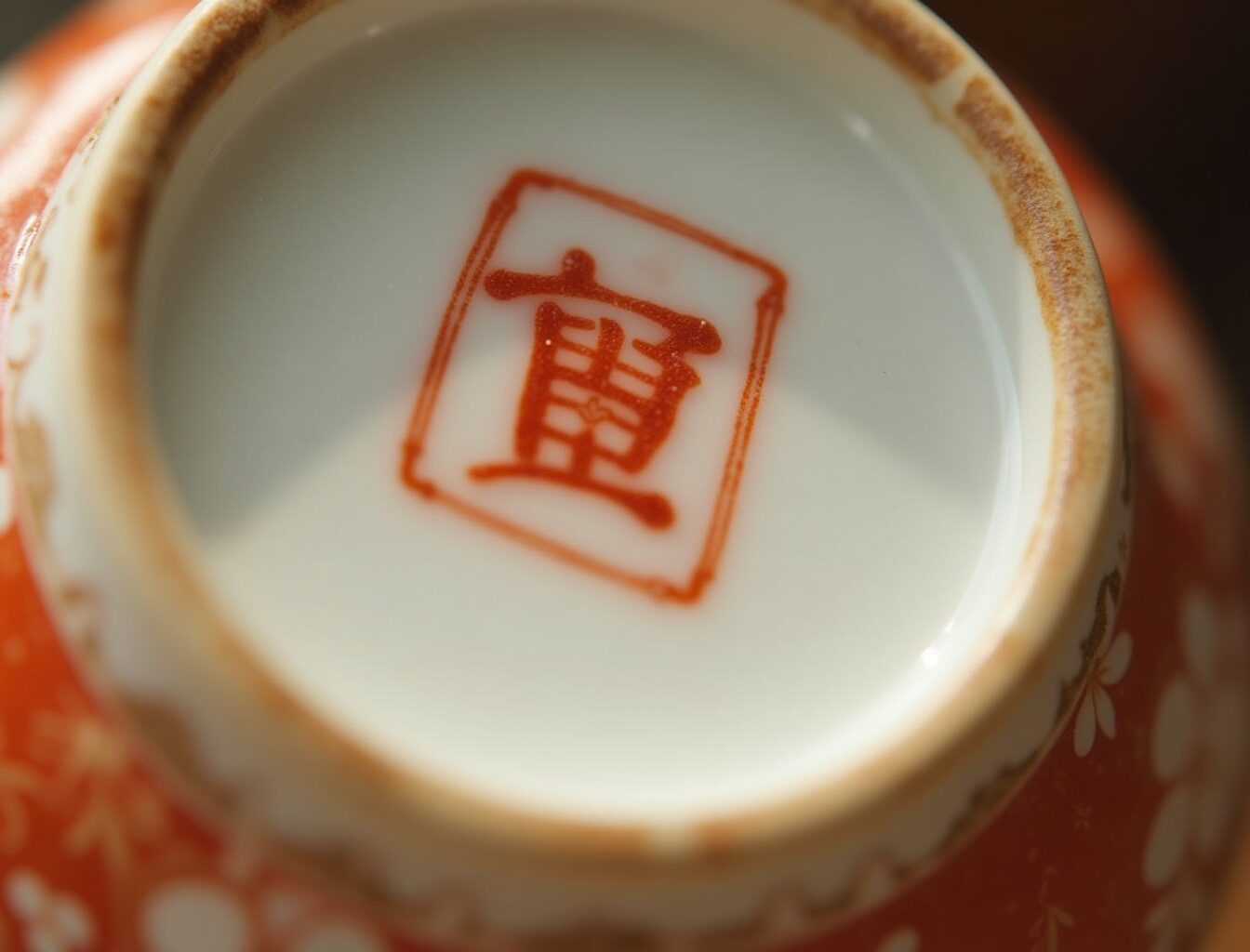
The mark on the base of a Kutani piece tells you more than where it was made — it tells you when it was made, who decorated it, whether it was a kiln commission or an artist's personal work, whether it was destined for a Japanese dining table or an overseas collector, and whether the mark itself is honest. Collectors who know how to read Kutani marks can date a piece within decades, identify specific kilns and artists, and spot the fakes that flood the secondhand market. Those who don't are guessing.
This guide covers the full marking system: what the characters mean, how marking conventions changed from the Edo period through the modern era, how to decode export marks like JAPAN and NIPPON, the specific kanji and compound phrases you'll encounter most often, and the red flags that distinguish an authentic mark from a copy. Japanese characters are included throughout — use them as direct reference when examining pieces.
Quick navigation: Examining a specific character? Use the Kanji Decoder section. Dating a piece by mark style? Go to the Era-by-Era Guide. Trying to verify authenticity? See Authentication. For full Kutani history, styles, and buying guidance, see our complete Kutani Ware guide.
Why Kutani Pieces Bear Marks: A Brief History of the Marking System
Kutani ware did not always bear marks. The original kilns operating under Lord Maeda Toshiharu's patronage in the mid-1600s produced pieces primarily for court use — there was little commercial incentive to label them, and most Ko-Kutani (古九谷, Old Kutani) pieces from 1655 to approximately 1730 are either unmarked or carry only a simple 福 (fuku, “good fortune”) character. When marks appear on Ko-Kutani pieces at all, they are incised or painted in blue underglaze and typically limited to single characters.
The marking system developed in earnest during the 19th-century revival kilns (再興九谷, Saikō Kutani). As production expanded and pieces entered commercial trade, kilns needed to distinguish their output. Individual kiln names, geographic designators, and eventually artist pseudonyms became standard. By the Meiji period (1868–1912), when Kutani became a major export commodity, marks served a commercial function — they were brand identifiers for Western buyers unfamiliar with Japanese ceramics, and they incorporated the geographic and nationality marks that treaty ports required.
Understanding this evolution is the first key to reading marks correctly. The presence, absence, complexity, and language of a mark all carry dating information before you've decoded a single character.
Kanji Decoder: The Core Mark Vocabulary
Most Kutani marks combine a geographic or origin identifier with a production descriptor. The vocabulary is limited — there are perhaps 30 core characters and 15-20 standard compound phrases you need to know. Here they are, organized by function.
Origin and Geographic Characters
| Character(s) | Reading | Meaning | Context |
|---|---|---|---|
| 九谷 | Kutani | “Nine Valleys” | The baseline origin mark found on pieces from every era and quality level |
| 九谷焼 | Kutani-yaki | “Kutani fired ware” | General term for the tradition; common on domestic-market pieces |
| 九谷製 | Kutani-sei | “Made in Kutani” | Standard export mark; often paired with 大日本 on Meiji pieces |
| 九谷造 | Kutani-zo | “Created in Kutani” | Artisanal connotation; implies craft rather than industrial production |
| 大日本九谷 | Dai Nippon Kutani | “Great Japan Kutani” | Meiji nationalist-era mark, c.1890–1912; emphasizes Japanese identity for export |
| 加賀 | Kaga | “Kaga Province” | Historical domain encompassing Kutani's birthplace; suggests older pieces |
| 大聖寺 | Daishoji | “Daishoji” (castle town) | Original Ko-Kutani production center; marks including Daishoji suggest pre-Meiji |
| 加賀国 | Kaga no Kuni | “Kaga Province” (formal) | Pre-Meiji formal designation; rarely seen on post-1868 pieces |
| 加賀九谷 | Kaga Kutani | “Kaga-Kutani” | Emphasizes regional identity; Meiji and Taisho pieces |
| 九谷横浜 | Kutani Yokohama | “Kutani [decorated in] Yokohama” | Piece decorated by Yokohama importers for export, not kiln-fired in Kutani region |
| 日本 | Nihon / Nippon | “Japan” | Country identifier; see export marks section below for dating significance |
| 大日本 | Dai Nippon | “Great Japan” | Nationalist-era country identifier; helps date Meiji pieces |
Production Descriptor Characters
These characters appear after the origin identifier to describe how or by whom the piece was made. Recognizing them helps you understand the production context:
| Character | Reading | Meaning | What it indicates |
|---|---|---|---|
| 製 | sei | “Made by” | General production mark; most common on export pieces |
| 造 | zo | “Constructed / crafted by” | Implies more artisanal production than 製 |
| 画 | ga / kaku | “Painted by” | Indicates specific artist attribution; painter's mark |
| 筆 | hitsu / fude | “Drawn by” (lit. “brush”) | Similar to 画; emphasizes the brushwork specifically |
| 窯 | kama | “Kiln” | Identifies a specific kiln; often precedes the kiln name |
| 謹製 | kinsei | “Respectfully made” | Honorific production mark; indicates formal or gift-grade pieces |
| 慎画 | shinsha | “Carefully painted” | Emphasizes care in execution; quality indicator |
| 於 | oite | “Made at” / “at the location of” | Preposition indicating kiln location; precedes kiln name |
| 堂 | do | “Hall / trading firm” | Indicates a commercial operation rather than a single kiln |
| 商店 | shoten | “Shop” | Commercial retailer mark; pieces sold through shops rather than direct from kiln |
Quality and Symbolic Characters
| Character | Reading | Meaning | Collector notes |
|---|---|---|---|
| 福 | Fuku | “Good fortune” | Primary mark on pre-Meiji pieces; on later pieces, decorative only. Inside a double square frame is an Edo-period indicator. |
| 手描き | te-gaki | “Hand-painted” | Modern mark distinguishing genuine hand-painting from decal transfer; positive indicator on contemporary pieces |
| 証 | sho | “Certificate / proof” | Appears on pieces accompanied by authentication papers from recognized kilns |
| 金城 | Kinjo | “Gold Castle” | Kiln/artist name meaning “Gold Castle”; evokes the historical wealth of Kaga domain |
| 吉田屋 | Yoshidaya | “Yoshida shop / house” | The influential 19th-century revival kiln; marks indicate 1823–1850s production |
A Note on Reading Direction
Pre-Meiji Kutani marks are typically written in the traditional right-to-left direction, or in vertical columns read top-to-bottom. After the Meiji period began in 1868, Japan adopted Western left-to-right horizontal writing for many commercial contexts, including ceramic marks. A mark reading left-to-right generally indicates Meiji or later production. A mark reading right-to-left suggests pre-1868 origin — though kilns occasionally retained traditional orientation out of convention. Vertical writing occurred throughout all periods and is not, by itself, a dating indicator.
Era-by-Era Mark Dating Guide
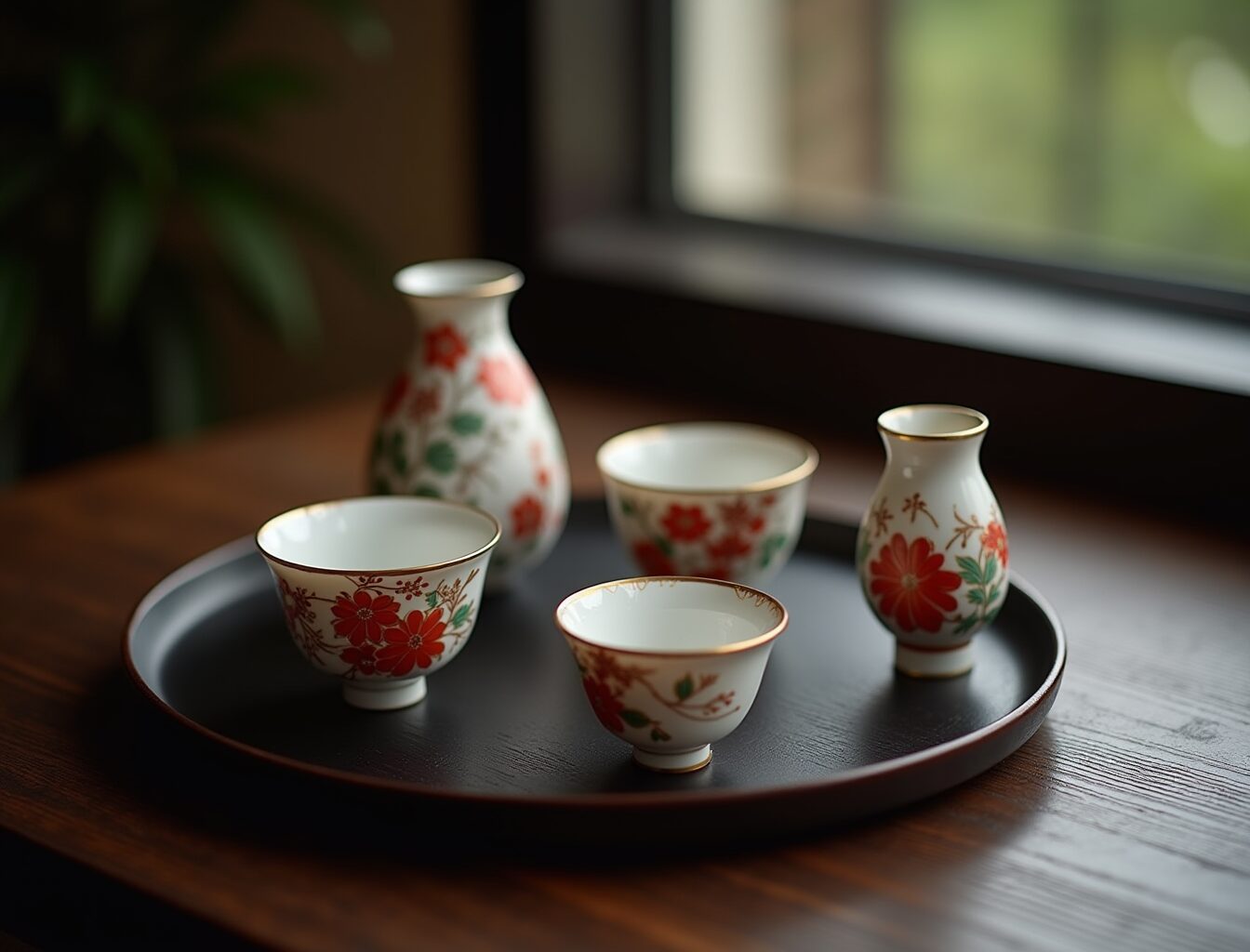
Matching a piece's mark to a specific era requires cross-referencing the mark's content, writing style, application method, and the decoration style of the piece itself. Inconsistencies between mark and decoration are the most reliable sign of misattribution or fakery.
Ko-Kutani Period: 古九谷 (circa 1655–1730)
The original kilns under the Maeda clan's patronage produced pieces primarily for court use. Most Ko-Kutani pieces are unmarked. When marks appear, expect:
- Simple incised marks, occasionally single characters in blue underglaze
- 福 (fuku) inside a double square frame — the period's primary identifiable mark
- No kiln names, no artist names, no geographic identifiers
- Pre-Meiji right-to-left writing direction if characters appear
The decoration, not the mark, identifies Ko-Kutani: bold five-color compositions, thick enamel application, large-scale pictorial subjects (landscapes, birds, dragons), and a grayish-white clay body from the Daishoji region. Anyone claiming a piece is Ko-Kutani based on its mark alone is either misinformed or misrepresenting the piece.
Saiko Revival Kilns: 再興九谷 (circa 1800–1867)
The revival era produced multiple distinct kiln styles, each with its own marking conventions:
| Kiln / Style | Active Period | Typical Marks | Visual Identifier |
|---|---|---|---|
| Wakasugi / Honda Kiln | 1779–1820s | Rare, inconsistent; early pieces often unmarked | First revival kiln; pieces rare and important |
| Yoshidaya (吉田屋) | 1823–circa 1850s | Yoshidaya kiln name, sometimes in full | Green, blue, yellow, purple — notably no red enamel |
| Eiraku / Kyoto style (永楽) | 1840s–1860s | 永楽 (Eiraku) mark common; red-ground pieces | Red base with all-over gold brocade; Kyoto influence |
| Shoza style (庄三) | 1840s onward | 庄三 mark; sometimes kiln + 製 combination | Gold brocade, vivid enamels, fine figure painting |
| Iidaya / Aka-e Saibyō (飯田屋) | 1832–1859 | Iidaya kiln name or Miyamoto Kiln mark | Near-exclusive red linework; microscopic detail; gold accents |
Meiji Period Export Era: 明治 (1868–1912)
The most prolific marking period. Japan's opening to global trade transformed Kutani from court ware to export commodity. Key mark patterns:
- 大日本九谷製 (Dai Nippon Kutani-sei) — the standard Meiji export mark; presence of 大日本 helps date the piece to approximately 1868–1912
- 大日本九谷造 (Dai Nippon Kutani-zo) — same period, slightly more artisanal connotation
- 九谷製 paired with a kiln or artist name — indicates specific attribution rather than generic export production
- Yokohama decorator marks — pieces decorated in Yokohama export workshops often bear 九谷横浜 (Kutani Yokohama) or similar compound marks; the porcelain body may still have been fired in the Kutani region
- Western-language export marks — see the export marks section below
Meiji pieces are the sweet spot of the Kutani collector market: historically significant, genuinely antique, and still relatively accessible in price. The mark helps confirm Meiji origin, but the decoration style is equally important — fine linework, heavy gold use, Western-influenced floral borders, and detailed figure painting are all Meiji hallmarks.
Taisho Period: 大正 (1912–1926)
A shift toward individual artist identity. Marks during this period frequently feature artist pseudonyms:
- -山 (-zan or -yama) suffixes — “Mountain” as an honorific; e.g., 美山 (Bizan), 旭山 (Kyokuzan), 月山 (Tsukiyama). Taisho artisan marks ending in -zan are particularly sought by collectors.
- -斎 (-sai) suffixes — “Studio” or “study”; indicates an artist with a named studio practice
- Combined marks: kiln name + artist pseudonym on the same piece become more common in this period
- Marks tend to be more carefully executed than late-Meiji mass-export pieces; the brush quality of the mark itself reflects the shift toward artisan pride over volume production
Showa Period: 昭和 (1926–1989)
Two production streams existed simultaneously:
Fine studio production: Pieces by designated Important Intangible Cultural Property holders (Living National Treasures) bear individual artist marks with full documentation. Tokuda Yasokichi I (1873–1956) and Tokuda Yasokichi III (1933–2009), Yoshida Minori (1932–), and other designated artists produced work in this period.
Mass/tourist production: Repetitive Geisha girl and Torii gate patterns on pieces marked simply 九谷 or 九谷焼 with no artist attribution. The Central Purchasing Organization (CPO) mark appears on pieces sold through US military base retail operations. Occupied Japan pieces (1945–1952) required “MADE IN OCCUPIED JAPAN” in English.
Modern Kutani: 現代九谷 (Post-1989 to Present)
Contemporary studio pieces typically carry:
- The artist's full name (not a pseudonym), sometimes in both kanji and Western script
- 手描き (te-gaki, “hand-painted”) to distinguish from decal production
- Authentication certificate cards from the Kutani Association of Traditional Craftsmen
- Certification marks from the Ishikawa Prefectural Government for qualifying pieces
Reading Western-Language Export Marks: JAPAN, NIPPON, and MADE IN OCCUPIED JAPAN
Export marks in English and other Western languages are among the most reliable dating tools available because they correlate directly with international trade law and treaty provisions.
| Mark | Date Range | Why This Date | Collector significance |
|---|---|---|---|
| NIPPON | 1891–1921 | US McKinley Tariff Act (1890) required country-of-origin marking; “Nippon” used as the Japanese-language equivalent of “Japan” | Meiji-era pieces; generally high quality; major collector segment |
| JAPAN | 1921–present | US customs ruling in 1921 required English “Japan” rather than Japanese “Nippon” on imports; all pieces from 1921 onward should read “Japan” | Taisho through modern; broad range of quality levels |
| MADE IN JAPAN | Post-1921, esp. 1952–present | “Made in Japan” became standard after WWII; pieces from 1952 onward when full sovereignty was restored bear this most consistently | Post-occupation; ranges from tourist ware to fine studio pieces |
| MADE IN OCCUPIED JAPAN | 1945–1952 | US occupation authorities required this specific marking on all Japanese exports to distinguish them in international trade records | Specific sub-collector market; often tourist quality but genuinely dateable to 1945–1952 |
| JAPAN KUTANI or KUTANI JAPAN | Post-1921 | Combined origin mark standard on export pieces after Nippon-to-Japan transition | Standard Meiji/Taisho export mark when combined with kanji equivalent |
A critical point: the presence of an English-language export mark is not a sign of lower quality or inauthenticity. Many of the finest Kutani pieces ever made — including museum-quality Meiji export pieces — bear these marks. The marks date the pieces; they don't grade them. A “NIPPON” mark on a fine Meiji vase with exceptional enamelwork is evidence of age, not compromise.
Mark Application Methods and What They Signal
How a mark was applied tells you nearly as much as what it says. Authentication requires evaluating both the content and the method.
| Application Method | Japanese Term | Period | Authentication Signal |
|---|---|---|---|
| Hand-painted overglaze | Fude-gaki (筆描き) | All periods, most common | High — brush irregularities confirm handwork; most authentic marks are this type |
| Impressed / stamped | In-kan (印鑑) | Meiji–Taisho; some modern | Medium — authentic on studio pieces; the impression is physical, not decorative |
| Incised / scratched | Kakitsuke (書き付け) | Ko-Kutani period, some modern | Variable — Ko-Kutani incised marks are rare; also used on contemporary artisan pieces |
| Embossed / raised | Moriage (盛り上げ) | Meiji, specialty pieces | High — labor-intensive, rarely reproduced cheaply |
| Underglaze painted | Shita-etsuke (下絵付け) | Ko-Kutani; rare later pieces | High on genuine old pieces; note that red cannot be fired underglaze (see below) |
| Transfer / decal printed | — | Post-WWII, mass production | Low — indicates machine production; not inherently fake but signals tourist/commercial grade |
The red overglaze rule: Authentic Kutani marks in red are always applied overglaze — never underglaze. Red iron-based pigments (bengara, 弁柄) cannot survive the 1,300°C primary firing required to vitrify the porcelain body. Red marks are fired at 800°C–1000°C in a second firing, after the base glaze has already set. A red mark that appears to be underglaze (visible beneath the glaze surface, not sitting on top of it) is either a fake or a misidentified piece of non-Kutani ware.
Kiln-Specific and Artist Marks Worth Knowing
Beyond generic geographic marks, certain kiln and artist marks appear frequently enough in the collector market to merit specific recognition:
Historic Kiln Marks
- 吉田屋 (Yoshidaya) — The influential 1820s revival kiln; pieces in the distinctive green-blue-yellow palette without red. Genuine Yoshidaya marks command premiums among serious collectors.
- 永楽 (Eiraku) — Both a kiln name and an artist pseudonym; associated with red-and-gold Kyoto-influenced pieces. The Eiraku mark appears on some of the finest 19th-century Kutani.
- 庄三 (Shoza) — Refers to the Kutani Shoza style established by Matsumoto Sahei; the most common Kutani style in the global antique market. Shoza-marked pieces span a wide quality range.
- 金城 (Kinjo) — “Gold Castle”; a kiln and artist name with multiple generations of use in the 19th and early 20th centuries.
Artist Pseudonym Conventions
Important dating rule: Kutani potters did not sign individual pieces with personal names until approximately 1850. Artist pseudonyms and studio names are a feature of mid-to-late 19th century and later production. A piece that claims pre-1850 origin but bears a personal name mark should be examined with heavy skepticism — this inconsistency is one of the most reliable red flags in the entire authentication process.
Authentication: Reading Marks to Verify Authenticity
Kutani has a well-documented authenticity problem. The secondary market contains significant quantities of Seto-ware marked as Kutani, late reproductions marked with period-style characters, and Korean or Chinese pieces attempting to pass as Japanese ceramics. Here's how marks help you authenticate — and where they fall short.
What Authentic Marks Look Like
Genuine hand-painted marks on Kutani pieces share these characteristics:
- Brush variation: Authentic brush-painted marks show natural variation in stroke thickness — slightly thicker where the brush pressed, slightly thinner where it lifted. Stamped or transfer-applied marks are perfectly uniform.
- Kanji accuracy: The 谷 character in 九谷 is a common error point on fakes. Authentic marks show the correct stroke count and proportion. Check the internal structure of 谷 specifically — the lower portion should have two clear strokes under the 口 component.
- Integration with the piece: On genuine pieces, the mark was applied and fired as part of the production process. The mark and the decoration style should be consistent with each other and with the claimed period.
- Mark placement: Authentic Kutani marks appear on the base, typically within or near the footring. Marks on the sides of pieces or on the interior are unusual and warrant scrutiny.
Red Flags: When a Mark Signals a Problem
- Perfect uniformity: Machine-perfect stroke width throughout a supposedly hand-painted mark suggests stamping, printing, or decal application.
- Period inconsistency: A 大日本 (Dai Nippon) mark on a piece with Showa-era decoration quality, or an artist pseudonym on a piece claiming Ko-Kutani origin, signals misattribution.
- Removable marks: Genuine overglaze marks are fused to the glaze surface and cannot be rubbed off. If a mark smears, lifts, or shows any sign of being a surface application rather than a fired element, reject the piece.
- Wrong red: On suspicious pieces, compare the red of the mark to the red in the decoration (if any). Modern paint-applied fakes often show a slightly different red tone from the genuine overglaze enamel in the rest of the piece.
- Seto indicators: Seto-ware (近代) was manufactured near Nagoya and sometimes marked as Kutani for export. The clay body is whiter and less warm than genuine Hanasaka tōseki porcelain; Seto pieces often feel slightly lighter.
When the Mark Alone Cannot Settle the Question
Marks are one layer of evidence, not the final word. Ko-Kutani attribution, in particular, relies on decoration style and clay body analysis rather than marking, because authentic Ko-Kutani pieces are largely unmarked. For pieces valued above approximately $1,000, expert consultation from a specialist in Japanese export ceramics — not just a generalist “Asian antiques” dealer — is the appropriate next step. Japanese auction houses including Shinwa and Mitsukoshi can provide specialist appraisal; internationally, Christie's and Bonhams run dedicated Japanese ceramics departments.
Comparison Table: Marks by Period at a Glance
| Period | Dates | Typical Marks | Marking Language | Common Method |
|---|---|---|---|---|
| Ko-Kutani | 1655–1730 | Unmarked; or 福 in double square; single characters | Japanese (rare) | Incised / underglaze blue (rare) |
| Saiko Revival | ~1800–1867 | Kiln names (吉田屋, 永楽, 庄三); some 福 | Japanese | Hand-painted overglaze |
| Meiji Export | 1868–1912 | 大日本九谷製; 大日本九谷造; NIPPON; KUTANI | Japanese + English (export) | Hand-painted overglaze; some impressed |
| Taisho | 1912–1926 | Artist -zan names; 加賀九谷; JAPAN | Japanese + English | Hand-painted; occasionally impressed |
| Showa — Studio | 1926–1989 | Artist full names; 手描き; JAPAN KUTANI | Japanese | Hand-painted, documented |
| Occupied Japan | 1945–1952 | MADE IN OCCUPIED JAPAN; often with 九谷 | English (required) | Printed / transfer; some hand-painted |
| Showa — Mass Market | 1926–1989 | 九谷; JAPAN; KUTANI JAPAN | Japanese + English | Printed / transfer |
| Modern | 1989–present | Artist name; 手描き; certification marks | Japanese (sometimes bilingual) | Hand-painted; certification stamps |
Frequently Asked Questions About Kutani Marks
What does 九谷 mean on porcelain?
九谷 (Kutani) means u0022Nine Valleysu0022 and refers to the Kutani region in present-day Ishikawa Prefecture, Japan — the historic center of Kutani porcelain production. The name derives from the nine mountain valleys surrounding the original kiln sites established in the mid-17th century. When you see 九谷 on the base of a piece, it identifies the piece as Kutani ware, whether a collectible antique or a contemporary studio piece. The character 九 means u0022nineu0022 and 谷 means u0022valley.u0022
How old is my Kutani piece? How do I date it from the mark?
Match the mark's content to these time periods: If the mark contains 大日本 (Dai Nippon / u0022Great Japanu0022), the piece dates to approximately 1868–1912 (Meiji era). If it reads NIPPON in English, it dates to 1891–1921 (McKinley Tariff Act compliance). If it reads JAPAN or MADE IN JAPAN, it dates to post-1921. MADE IN OCCUPIED JAPAN is specific to 1945–1952. Artist pseudonyms ending in -zan or -yama (-山) point to Taisho (1912–1926). If the piece is unmarked or has only 福 (fuku) in a double square, it may be pre-1868 — but decoration style must confirm this, as marks alone cannot authenticate Ko-Kutani pieces.
What is the rarest Kutani mark?
Authenticated Ko-Kutani marks (pre-1730) are the rarest, but genuine Ko-Kutani pieces are mostly unmarked, so a u0022Ko-Kutani marku0022 is largely a contradiction. Among dateable marks, the most valuable are those from documented Living National Treasure artists — particularly Tokuda Yasokichi I and III, and Yoshida Minori — with full studio provenance documentation. Yoshidaya kiln marks from the 1823–1850s revival period are also rare and command significant premiums. Among export marks, the specific 大日本九谷製 (Dai Nippon Kutani-sei) mark on exceptional-quality pieces represents the peak of Meiji production.
Why are some Kutani pieces unmarked?
Unmarked Kutani pieces fall into three categories. First, Ko-Kutani (1655–1730) — the original production period — was primarily for court use, not commerce, so marking was unnecessary. Second, certain utilitarian pieces from any period were left unmarked as standard practice. Third, some kiln operators during transition periods simply didn't adopt consistent marking practices. Being unmarked is not inherently a red flag. For Ko-Kutani attribution of an unmarked piece, you need expert analysis of decoration style, clay body, and enamel chemistry — the mark is not available as evidence.
What does 大日本九谷製 mean on a Kutani piece?
大日本九谷製 translates to u0022Made in Kutani, Great Japan.u0022 It is the standard Meiji-era export mark, used from approximately 1868 to 1912. 大日本 (Dai Nippon, u0022Great Japanu0022) was a nationalist-era designation used when Japan opened to Western trade and wanted to emphasize national identity on export goods. 九谷 identifies the origin as Kutani. 製 means u0022made byu0022 or u0022manufactured.u0022 A piece bearing this full mark dates reliably to the Meiji era. The quality of such pieces varies widely, but many bear exceptional workmanship from this golden age of Kutani export production.
Is NIPPON on a piece the same as JAPAN?
NIPPON and JAPAN both mean Japan, but the specific mark helps date a piece. NIPPON was used from 1891 (when the McKinley Tariff Act required country-of-origin marking on US imports) until approximately 1921, when a US customs ruling required the English word u0022Japanu0022 rather than the Japanese-language equivalent. A piece marked NIPPON was almost certainly made between 1891 and 1921 — the Meiji to early Taisho period. This is a reliable dating tool because compliance was required for US market entry. JAPAN marks on the same pieces would indicate post-1921 production.
Can I tell if a Kutani mark is fake?
Fake marks share several observable characteristics. Look for: perfect uniformity in brush strokes (genuine hand-painted marks show natural variation in width and pressure); incorrect kanji construction (the 谷 in 九谷 is a common error point — count the strokes and check the proportion); marks that don't match the decoration style (a Meiji-era mark on Showa-quality painting, for example); marks that show any sign of being surface-applied rather than fired (can be rubbed off, or sit visibly on top of the glaze rather than integrated into it); and clay body characteristics inconsistent with genuine Kutani porcelain (too white, too light). For high-value pieces, professional appraisal is the definitive answer.
What does 手描き (te-gaki) mean on Kutani?
手描き (te-gaki) means u0022hand-paintedu0022 and appears on modern Kutani pieces as a quality designation distinguishing genuine hand-painted enamelwork from decal or transfer-print decoration. As mass production techniques became more common from the mid-20th century onward, established studios began marking hand-painted pieces specifically to differentiate their work. Seeing 手描き on a contemporary Kutani piece is a positive indicator — it signals that the decoration was applied by a skilled painter rather than a machine process. It should ideally be accompanied by an authentication certificate from the kiln or studio.
Using Marks Alongside Other Identification Methods
Marks are one layer in the authentication stack, not the complete answer. For a rounded identification approach, cross-reference what the mark tells you against:
- Decoration style: Each period has recognizable aesthetics. Ko-Kutani means bold, aggressive compositions. Meiji export means fine linework and heavy gold. Showa tourist means simplified, repetitive motifs. The decoration and mark should be consistent.
- Clay body: Genuine Kutani porcelain from the Hanasaka tōseki quarry reads warm grayish-white. Seto-ware (sometimes mislabeled as Kutani) is whiter and slightly lighter. This is most visible at chips or along the footring edge.
- Enamel depth: Authentic Kutani overglaze enamels have a glassy depth and slight relief you can feel. Transfer prints are perfectly flat with no variation in surface height.
- Physical weight: Genuine high-fired Kutani porcelain has a satisfying, substantial weight. Tourist-grade pieces feel noticeably lighter for their size.
For a complete guide to authentication beyond marks — including era-specific visual markers, buying guidance, and how to care for Kutani pieces — see our full Kutani Ware guide. For more on Kutani pottery as a collecting tradition, including teaware applications, see the Kutani Pottery guide.
🍵 Love Japanese ceramics? Take our 60-second quiz: Match Your Perfect Japanese Teaware
Get a personalized recommendation — plus a discount code for your first order.