Glass Teapot Care and Cleaning: How to Keep It Clear and Crack-Free
A glass teapot's primary appeal is visibility — you see the tea brewing, watch the leaves unfurl, monitor the color developing. But that same glass requires specific care to stay clear and chip-free. The care is not complicated, but it is different from ceramic or clay teapots, and doing it wrong leads to cloudy, stained, or cracked glass. Here is everything you need to know.
The Main Enemy: Thermal Shock
Glass expands and contracts with temperature changes. Rapid, dramatic temperature shifts create stress in the glass structure that causes cracking. The two most common causes of thermal shock damage in glass teapots:
- Pouring boiling water into a cold, dry glass teapot (particularly dangerous in cold climates)
- Rinsing a hot teapot with cold water immediately after use
Quality borosilicate glass (used in Hario and other premium glass teapots) is significantly more thermal shock-resistant than ordinary soda-lime glass — but “resistant” does not mean “immune.” Preheat your teapot with warm water before adding boiling water, and allow it to cool before washing.
Daily Cleaning: Simple and Non-Negotiable
After each use, rinse the teapot with hot water immediately after pouring out the last cup. This removes tea residue while it is still fresh and water-soluble. Do not let tea sit in the pot for hours — tannins from tea leaves stain glass noticeably faster than they stain clay or ceramic.
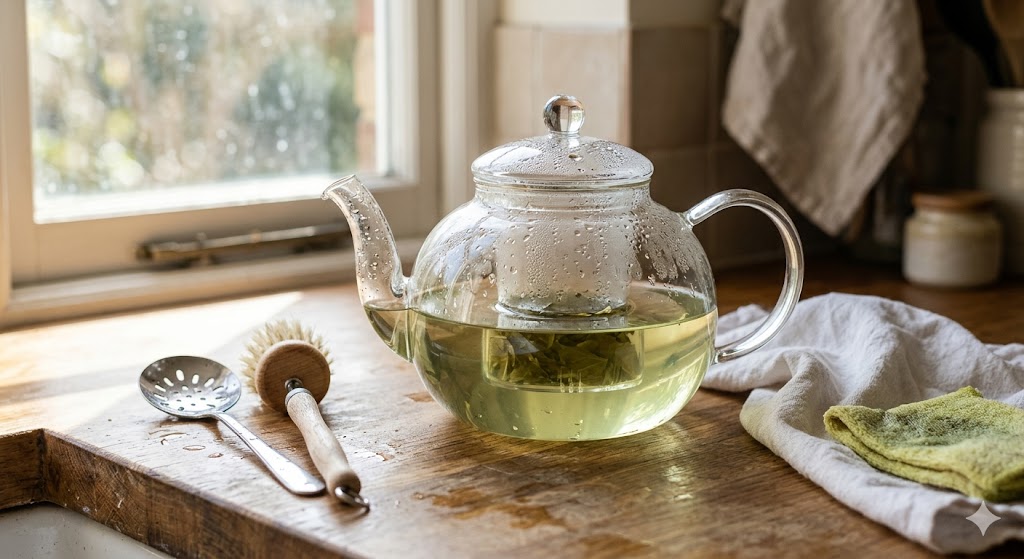
For routine washing: warm water and a soft sponge. Avoid abrasive pads (they scratch glass surfaces, creating micro-channels that trap stains). A bottle brush with a soft head reaches the interior curves of most glass teapots effectively. Rinse thoroughly and allow to air-dry completely before storing.
Removing Tea Stains: The Safe Methods
Even with daily cleaning, tea tannins gradually cloud glass over time. Removing these stains safely:
- Baking soda paste: Mix baking soda with just enough water to form a thin paste. Apply to the stained interior with a soft cloth or brush, let sit 10-15 minutes, then scrub gently and rinse. Effective for light to moderate staining.
- White vinegar soak: Fill the teapot with undiluted white vinegar and let stand 30-60 minutes. The acid dissolves tannin deposits. Rinse thoroughly afterward — residual vinegar affects tea flavor. Repeat if needed.
- Denture cleaning tablets: Fill with warm water, drop in one tablet, allow to fizz for 20-30 minutes. The effervescence reaches corners and lifts staining without abrasion. Rinse well.
- Do not use: Bleach (weakens glass over time), abrasive scouring powder, steel wool, dishwasher detergent (often too harsh).
Infuser and Filter Cleaning
Most glass teapots include a stainless mesh infuser or glass infuser basket. Clean the infuser after every use — tea particles lodge in mesh openings and oxidize, creating off-flavors in subsequent brews. Use a small brush or an old toothbrush to clean mesh infusers. Soak in a white vinegar solution weekly if you brew daily. Replace mesh infusers if they develop visible corrosion or persistent tannin buildup that does not respond to cleaning.
Descaling: Removing Mineral Buildup
In hard water areas, white mineral deposits (limescale) accumulate on the interior of glass teapots. These are calcium carbonate deposits from the water, not from the tea. Removal: fill with a solution of equal parts white vinegar and water, heat to warm (not boil) in the teapot on the stove, and allow to soak 30-60 minutes. The acid dissolves calcium carbonate effectively. Rinse thoroughly. For severe buildup, repeat the process or use a commercial descaler diluted according to its instructions.
Storage: Protecting Your Investment
- Store the lid separately from the pot — stored together, temperature cycling can cause lid and pot to thermally bond, cracking when separated
- Keep out of direct sunlight (UV exposure can affect certain glass formulations over time)
- Store in a cabinet where the spout and handle cannot be knocked — these are the most vulnerable points on glass teapots
- If stacking storage items, never place anything heavy on top of a glass teapot
When to Replace
Replace your glass teapot when: hairline cracks appear anywhere in the glass body (structural integrity is compromised), the spout has significant chips that could end up in the cup, the mesh infuser is corroded beyond cleaning, or persistent cloudiness cannot be removed even with thorough cleaning. A good glass teapot maintained well lasts 3-7 years with regular use. Browse our glass teapot collection for Hario and other quality borosilicate options.
Frequently Asked Questions
- Can I put my glass teapot in the dishwasher?
- Most glass teapots are not dishwasher-safe — the harsh detergents and thermal cycling damage glass clarity and etches the surface. Hand wash only.
- Why is my glass teapot cloudy even after cleaning?
- If cleaning removes staining but cloudiness persists, it is likely etching from hard water minerals or abrasive cleaning tools. Mild etching is cosmetic; severe etching weakens glass. A vinegar soak will address mineral deposits; etching from abrasion is permanent.
- Can I use a glass teapot on a gas stove?
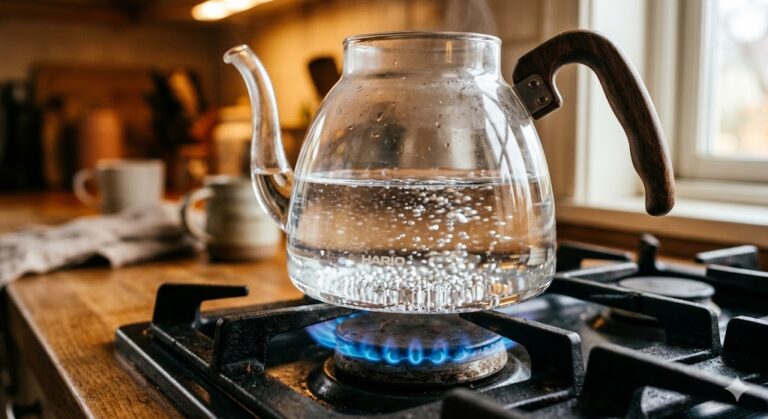
- Only if it is specifically rated for direct heat use. Most glass teapots designed for stovetop use (like Hario models with the heat-proof designation) use borosilicate glass. Standard soda-lime glass teapots are pour-over style only — use a kettle to boil water separately.
- How do I prevent my glass teapot from cracking in winter?
- Preheat the teapot with warm tap water before adding hot water. This gradual temperature increase prevents the thermal shock that causes cold-weather cracking.