Best Water Temperature for Green Tea: The Complete Japanese Tea Guide
Ask ten tea drinkers why their green tea tastes bitter, and nine of them made the same mistake: boiling water. Water temperature is the single variable that separates a bright, sweet, umami-rich cup of sencha from a sharp, astringent disappointment — and it's almost always the culprit when Japanese tea tastes “off.”
This guide covers every Japanese tea variety with precise temperature targets, the chemistry behind why those targets exist, and practical techniques for reaching them whether you own a temperature-controlled kettle or nothing more than a pot on the stove.
Why Water Temperature Matters More Than You Think
Tea leaves contain hundreds of compounds, but three govern most of what ends up in your cup: catechins, L-theanine, and caffeine. Each one dissolves at a different rate depending on water temperature — and that relationship determines everything about flavor.
The Chemistry in Plain Terms
L-theanine is the amino acid responsible for tea's characteristic umami sweetness and the calm focus it promotes. It dissolves readily at lower temperatures — around 60°C (140°F) and above. This is the compound you want to emphasize in delicate shaded teas like gyokuro and kabusecha.
Catechins — the polyphenol antioxidants including EGCG — require higher temperatures to extract efficiently. They also carry the astringency and bitterness that tea is sometimes (unfairly) known for. At boiling water temperatures, catechin extraction accelerates dramatically. On premium Japanese green teas, this tips the flavor from pleasantly brisk to harshly bitter.
Caffeine extraction increases with temperature. Gyokuro brewed at 50°C (122°F) yields roughly half the caffeine of the same leaf brewed at 80°C (176°F). Cold-brewed gyokuro yields about 54mg of caffeine per serving versus 148mg from a hot brew — a dramatic difference for anyone who monitors their intake.
The practical takeaway: lower temperature = more sweetness, less bitterness, less caffeine. Higher temperature = more antioxidant extraction but also more astringency. Neither is wrong — it depends on what you want from the cup.
Research using NMR (Nuclear Magnetic Resonance) spectroscopy confirms that brewing at 90°C versus the 45–75°C optimal range significantly reduces the concentration of beneficial catechins in the infusion — an irony that surprises most people. Boiling water doesn't just taste worse on green tea; it also extracts less of the intact epi-form catechins that carry the most antioxidant activity.
The Master Reference Table: Ideal Temperatures for Every Japanese Tea
Use this table as your primary brewing reference. Temperature ranges reflect the full stylistic spectrum — go cooler for sweeter, umami-forward cups; go warmer when you want more body and briskness.
| Tea Type | Temp (°C) | Temp (°F) | Steep Time | Tea per 100ml | Flavor Notes |
|---|---|---|---|---|---|
| Gyokuro | 45–60°C | 113–140°F | 90–120 sec | 3–4g | Intense umami, ocean sweetness, almost no bitterness. Japan's most prized shaded tea. |
| Kabusecha | 60–70°C | 140–158°F | 60–90 sec | 3g | Softer umami than gyokuro, gentle sweetness, light vegetal notes. “Half-shaded” sencha. |
| Matcha (Usucha) | 70–80°C | 158–176°F | Whisk 30 sec | 1.5–2g per 60ml | Bright, grassy, creamy when properly whisked. Too hot = chalky bitterness. |
| Matcha (Koicha) | 75–80°C | 167–176°F | Fold, don't whisk | 3–4g per 40ml | Thick, deeply umami, less frothy than usucha. Requires ceremonial-grade matcha. |
| Sencha (Standard) | 70–80°C | 158–176°F | 45–60 sec | 2–3g | Bright, grassy, lightly astringent. The backbone of everyday Japanese tea. |
| Fukamushi Sencha (Deep-steamed) | 70–75°C | 158–167°F | 30–45 sec | 2–3g | Softer, rounder, less grassy than regular sencha. More leaf surface area extracts quickly — shorter steep. |
| Asamushi Sencha (Lightly-steamed) | 75–85°C | 167–185°F | 60–90 sec | 2g | Cleaner, more structured flavor with distinct terroir character. Handles more heat than fukamushi. |
| Hojicha | 90–100°C | 194–212°F | 30–45 sec | 3–5g | Roasted, caramel, woody. High heat develops the pyrazines that give hojicha its signature aroma. |
| Bancha | 80–100°C | 176–212°F | 30–60 sec | 3–5g | Earthy, mild, lower caffeine. Forgiving with heat — a good daily drinker. |
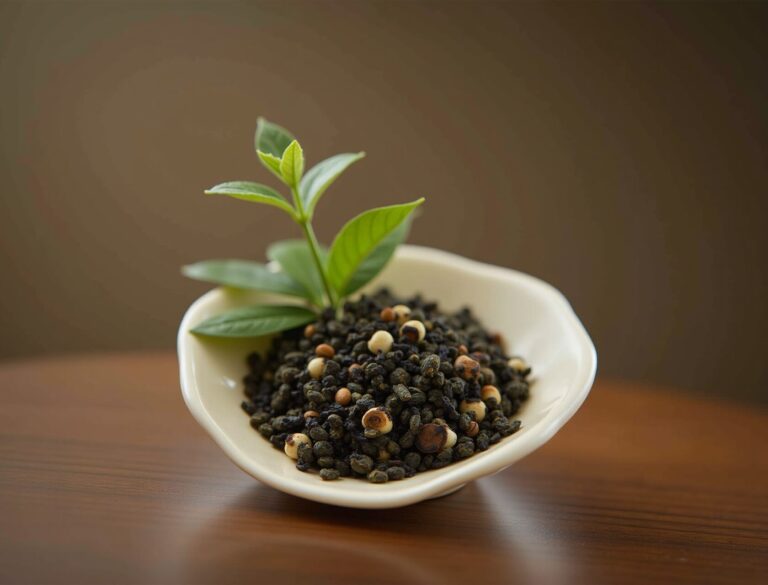
| Genmaicha | 80–90°C | 176–194°F | 30–45 sec | 3–4g | Toasty, nutty from the roasted rice. Can handle more heat than pure green tea. |
| Kukicha (Twig tea) | 75–85°C | 167–185°F | 45–60 sec | 3–4g | Mild, slightly sweet, low caffeine. Stems have less catechin content than leaves — forgiving to brew. |
| Mugicha (Barley tea) | 95–100°C | 203–212°F | 5–10 min (or cold brew) | 1 bag per 1L | Roasted, grain-forward, naturally caffeine-free. Typically brewed hot then served cold in summer. |
Note: These are starting points, not rules. Your water source, altitude, and personal preference all affect the ideal brew. Treat first brews as calibration runs.
How to Reach the Right Temperature Without a Thermometer
A temperature-controlled kettle is the cleanest solution, but it's not the only one. Japanese tea masters have been cooling water precisely for centuries without digital displays.
The Traditional Cooling Method (Yuzamashi)
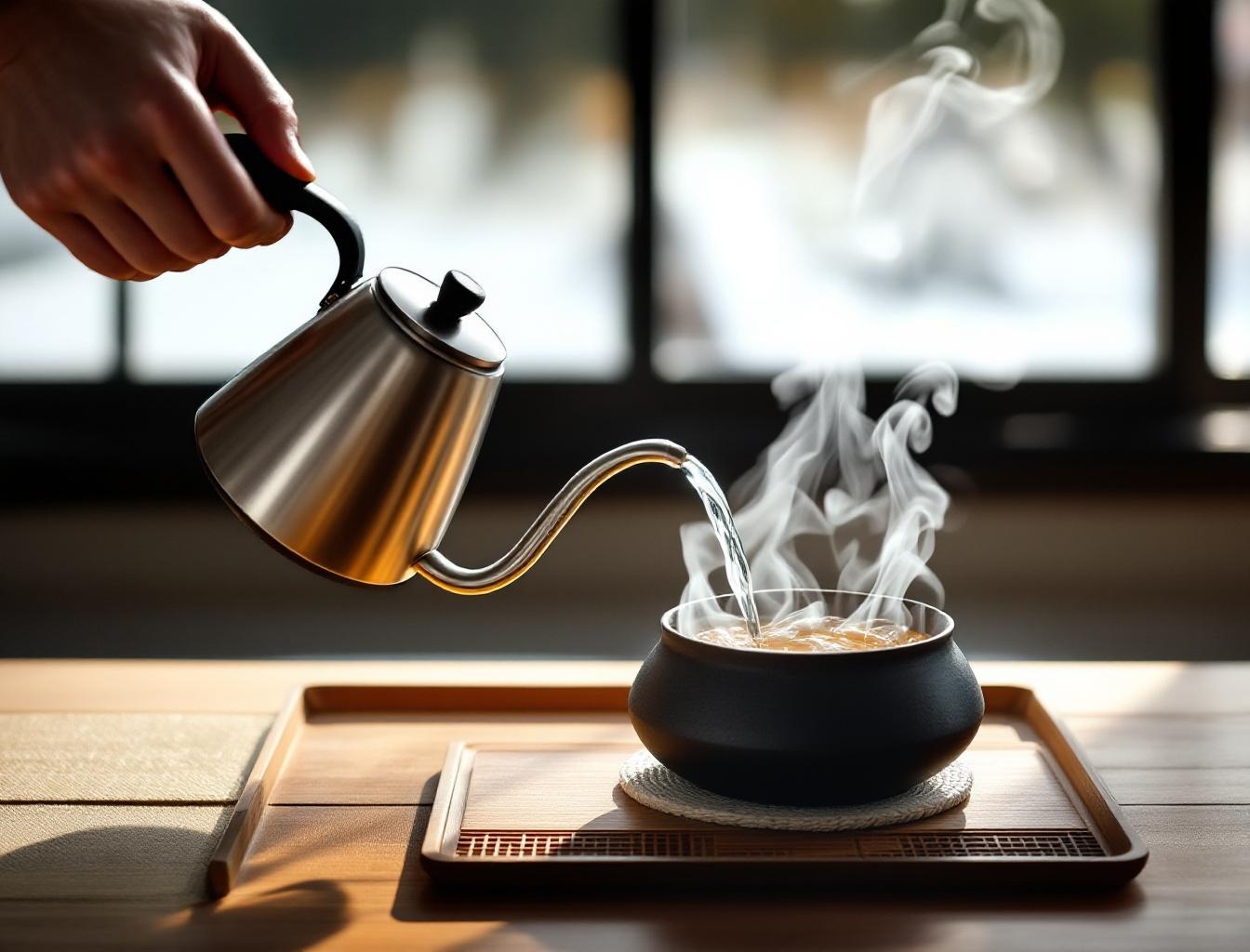
In Japanese tea practice, the vessel used to cool boiling water is called a yuzamashi (湯冷まし) — literally “hot water cooler.” Pouring boiling water from a kettle into a ceramic pitcher or spare kyusu, then into the teapot, drops the temperature roughly 10°C (18°F) per transfer.
- One pour: ~90°C (194°F) — good for bancha, genmaicha
- Two pours: ~80°C (176°F) — good for sencha
- Three pours: ~70°C (158°F) — good for kabusecha, matcha
- Pour + wait 3–5 minutes: ~60°C (140°F) — good for gyokuro
The pour-to-pour method also aerates the water and releases harsh dissolved gases — many Japanese tea masters believe this improves flavor beyond just the temperature drop.
Visual Cues from the Kettle
If you watch water heat in a clear kettle or pot, temperature has visual signatures:
- ~70°C (158°F): Small bubbles clinging to the bottom begin to rise but don't break the surface. Steam wisps appear.
- ~80°C (176°F): Bubbles rising steadily but not vigorously. A faint sizzle sound.
- ~90°C (194°F): Larger bubbles, more active movement, steam rising clearly.
- 100°C (212°F): Full rolling boil.
The old description — “shrimp eyes” (small rising bubbles at ~70–75°C) versus “crab eyes” (larger bubbles at ~80°C) versus “fish eyes” (rolling at 90°C+) — comes from Song Dynasty Chinese tea texts and still gets taught in Japanese tea ceremony classes today.
The Waiting Method
Boiling water in a standard kettle loses roughly 2–3°C per minute when sitting uncovered at room temperature. So:
- Wait 3–4 minutes after boiling → ~90°C (194°F)
- Wait 6–8 minutes → ~80°C (176°F)
- Wait 10–12 minutes → ~70°C (158°F)
- Wait 20+ minutes → ~60°C (140°F)
This works but rewards patience you may not have on a Monday morning. A temperature-control kettle or the yuzamashi pour method is faster and more consistent.
Equipment: Temperature-Controlled Kettles vs. Traditional Methods
Temperature-Controlled Electric Kettles
Variable-temperature kettles — gooseneck style preferred for Japanese tea — let you set an exact target and hold it. Brands like Fellow Stagg EKG, Hario Buono, and Bonavita are popular in the Japanese tea community.
What to look for:
- Gooseneck spout: Essential for controlled, slow pours. Straight-spout kettles dump too fast for small kyusu volumes.
- Hold function: Keeps water at target temperature for 15–60 minutes. Critical if you brew multiple infusions.
- 1°C increments: Cheap kettles set in 5°F steps — too coarse for gyokuro work.
- 1L capacity minimum: You'll use water for rinsing the teapot and pre-warming cups.
Traditional Tetsubin (Cast Iron Kettle)
A tetsubin heated over an IH burner or gas flame is the classic Japanese approach. Cast iron retains heat exceptionally well and, according to traditional tea practitioners, leaches trace iron into the water — believed to soften the flavor and enhance mineral complexity.
The drawback is temperature control: you're using the yuzamashi method or visual cues rather than a digital readout. For gyokuro work at 50°C, this takes real practice. For sencha, bancha, and hojicha where precision matters less, a tetsubin is a beautiful and functional choice.
The Kyusu as a Temperature Buffer
Pre-warming your kyusu (and cups) with hot water before brewing isn't just ceremony — it prevents the first pour from dropping 5–10°C when it hits cold ceramic. Discard the preheat water, add tea leaves, then pour at your target temperature. You'll taste the difference.
Regional Temperature Differences in Japan
Temperature preferences for the same tea type vary noticeably by region in Japan, often shaped by the local tea production style.
Kyoto style (Uji, Wazuka area): Kyoto tea culture — which gave us the chado ceremony tradition — generally favors cooler, more deliberate brewing. Sencha in Kyoto tea houses is frequently brewed at 65–70°C rather than the higher 75–80°C used elsewhere. The goal is maximum umami expression and gentleness.
Kyushu style (Kagoshima, Miyazaki): Kagoshima is Japan's largest tea-producing prefecture, and the local style tends toward bolder brews. Sencha brewed at 80–85°C is common — higher than the Kyoto standard — producing a more vibrant, assertive cup. This suits Yabukita and Yutakamidori cultivars grown there, which have enough body to handle the extra heat.
Shizuoka style: Japan's most volume-significant producing region favors middle-ground temperatures — roughly 75°C for everyday sencha. Fukamushi sencha, which dominates production in areas like Kakegawa, brews better at slightly lower temperatures because the fine broken leaf particles extract very quickly.
How Temperature Affects Steeping Time
Temperature and time are inverse levers. Lower temperature means slower extraction — so you steep longer. Higher temperature extracts fast — steep shorter or you over-extract.
This relationship matters most in two scenarios:
Multiple infusions: Each successive steep of the same leaves should be slightly hotter and slightly shorter than the previous. First infusion gyokuro at 50°C for 90 seconds; second at 55°C for 30 seconds; third at 65°C for 20 seconds. This technique — common in Japanese tea ceremony and enthusiast circles — extracts different compound profiles with each pour.
Fukamushi vs. asamushi sencha: Fukamushi (deep-steamed) sencha has fine, broken leaf particles with enormous surface area. At 80°C it extracts in 20–30 seconds before turning bitter. Asamushi (light-steamed) sencha has intact needles with less surface exposure — it can sit at 80°C for 60–90 seconds comfortably. Same temperature, very different steep time.
Troubleshooting: What Went Wrong With Your Brew
Use this table to diagnose common problems and fix them immediately.
| Symptom | Likely Cause | Fix |
|---|---|---|
| Tea tastes harsh and bitter | Water too hot for the tea type | Drop temperature by 10°C (18°F). For sencha, target 75°C max. |
| Tea is very astringent, makes mouth feel dry | Catechin over-extraction — too hot or steeped too long | Lower temp AND shorten steep time. Start at 70°C / 45 seconds. |
| Tea tastes flat, watery, no character | Water too cool, or tea-to-water ratio too low | Increase temp by 5–10°C OR add 0.5g more leaf per 100ml. |
| Gyokuro has no umami sweetness | Water too hot — L-theanine dominated by catechins | Drop to 50–55°C. Patient cooling required. Use a yuzamashi. |
| Hojicha tastes thin and watery | Water not hot enough — pyrazines need high heat to extract | Use near-boiling water (95–100°C). Hojicha is one tea where full heat works. |
| Matcha is clumpy and chalky | Water too hot, or matcha not sifted before whisking | Target 75–78°C. Sift matcha before adding water. Use a chasen (bamboo whisk). |
| Tea tastes “cooked” or has a vegetal off-note | Re-boiled or stale water, or temperature held too long | Always use fresh water. Boil once and use immediately or cool to target temp. |
| Each cup varies despite same temperature | Not pre-warming the kyusu — cold ceramic steals 5–10°C on first pour | Pre-warm teapot and cups with hot water before every brew session. |
| Sencha bitter in morning but fine in afternoon | Tap water chlorine — more pronounced when water is cold from overnight | Use filtered water, or let tap water run for 10 seconds before filling the kettle. |
Water Quality: The Factor People Overlook
Temperature is the primary lever, but water quality affects extraction in ways that interact with temperature.
Use soft water. Japanese teas are calibrated to Japan's famously soft water (typically 20–50 mg/L hardness). Hard water — high in calcium and magnesium — interferes with catechin and amino acid extraction, dulling flavor. If your tap water is hard, a simple carbon filter or bottled spring water (not mineral water) makes a noticeable difference.
Ideal pH: 6.0–7.0. Slightly acidic to neutral water preserves the green color and bright flavor of Japanese green tea. Very alkaline water (pH 8+) can turn sencha yellow and soften flavors in a flat way. Most filtered tap water falls in a usable range.
Boil once, use fresh. Re-boiled water loses dissolved oxygen and picks up mineral concentrations as water evaporates. The result is a flat-tasting cup — not bitter, just lifeless. Fill the kettle fresh each session.
Altitude adjustment: At high altitude, water boils at lower temperatures (at 1,500m / 5,000ft, water boils around 95°C / 203°F instead of 100°C). For most Japanese teas this is inconsequential, but for hojicha and bancha — which want 95–100°C — you may need a longer steep to compensate.
Quick-Reference Temperature Guide by Occasion
Not everyone wants to think about extraction chemistry at 7am. Here's the simplified version:
- You want the most delicate, sweet cup possible: Gyokuro, 50°C (122°F), 90 seconds
- You want your standard everyday green tea: Sencha, 75°C (167°F), 45 seconds
- You want something warm and comforting, low-caffeine: Hojicha, 95°C (203°F), 30 seconds
- You're making a green tea latte or matcha drink: Matcha, 78°C (172°F), whisked 30 seconds
- You want a cold brew for summer: Any Japanese green tea, cold water, 4–8 hours in fridge — produces sweeter, lower-caffeine result than hot brew
Frequently Asked Questions
What is the best water temperature for green tea?
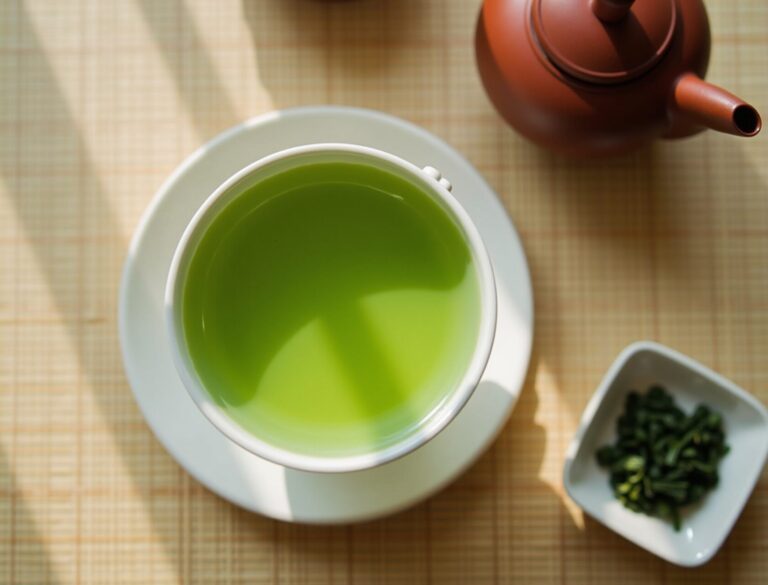
It depends on the type. Sencha — Japan's most common green tea — brews best at 70–80°C (158–176°F). Gyokuro, the premium shaded tea, wants 45–60°C (113–140°F). Hojicha, despite being technically a green tea, uses near-boiling water at 90–100°C (194–212°F). There is no single “best” temperature because the teas themselves are so different.
Can I use boiling water for green tea?
For most Japanese green teas — sencha, gyokuro, matcha, kabusecha — no. Boiling water (100°C / 212°F) will over-extract catechins and produce a bitter, harsh cup. The exceptions are hojicha, bancha, and mugicha, which are either roasted or lower in catechins and actually benefit from high heat.
Why does my green tea taste bitter even at the right temperature?
Three likely causes: steep time too long, too much leaf, or water quality issues. Try 45 seconds at 75°C with 2g of sencha per 100ml using filtered water. If it's still bitter, the tea itself may be a low-grade blend with high catechin content.
What temperature for matcha?
75–80°C (167–176°F) for standard usucha (thin tea) preparation. Koicha (thick tea) can go up to 80°C. Never use boiling water — it denatures some of the amino acids and produces a chalky, flat result.
Does water temperature affect caffeine in green tea?
Yes, significantly. Higher temperatures extract more caffeine. Cold-brewed gyokuro yields approximately 54mg of caffeine per serving; the same leaves brewed hot yield closer to 148mg. If you're sensitive to caffeine, cold brewing or low-temperature brewing (50–60°C) meaningfully reduces intake.
How do I cool water to 70°C without a thermometer?
Boil water, then pour it into a ceramic pitcher or yuzamashi vessel and wait about 6–8 minutes, or pour it back and forth between vessels twice. Each transfer-and-pour drops the temperature roughly 10°C (18°F). Alternatively, look for the “shrimp eye” stage — small bubbles rising from the bottom but not yet breaking the surface — which occurs around 70–75°C.
Does water temperature matter for cold brew green tea?
Cold brew uses room temperature or refrigerator-cold water (4–20°C / 39–68°F), and the extraction happens over hours rather than minutes. The result is a noticeably sweeter, smoother cup with about 180% more free amino acids (L-theanine) and significantly less caffeine than hot-brewed tea from the same leaves. Temperature still matters — fridge cold takes 6–8 hours, room temperature takes 3–4 hours.
Why do some Japanese teas use different temperatures than Chinese green teas?
Japanese green teas are almost exclusively steamed (not pan-fired like Chinese green teas). Steaming preserves more L-theanine and catechins in an intact, water-soluble form, making Japanese teas more sensitive to over-extraction at high temperatures. Chinese pan-fired greens like Dragonwell (Longjing) can handle 80–85°C without significant bitterness, while equivalent Japanese steamed sencha would taste harsh at that temperature.
Is there an ideal water temperature for iced green tea?
Two approaches work well. Method 1 (cold brew): cold water, 4–8 hours — produces the sweetest result. Method 2 (hot flash): brew double-strength at 70°C for 30 seconds, pour immediately over ice — the rapid chill locks in bright flavor while the dilution from ice brings it to normal concentration. The hot-flash method preserves more of the tea's aromatic top notes than slow cold brew.
What water temperature for genmaicha?
80–90°C (176–194°F). Genmaicha is a blend of sencha (or bancha) with roasted rice, and the roasted component handles heat well. The toasty, nutty flavor from the rice is actually enhanced by slightly higher temperatures. Unlike pure sencha, you can comfortably use 85–90°C without over-extracting bitterness.