Why Sencha Tastes Better Than Any Grocery Store Green Tea
Sencha captures a vibrant, savory freshness that oxidized grocery store blends can't match. Growers harvest premium leaves early in spring to maximize nutrient density, then immediately steam them to preserve these qualities—this is why Sencha's unique qualities stand out in both aroma and flavor.
Earlier Harvests Give Sencha Dimensional Flavor
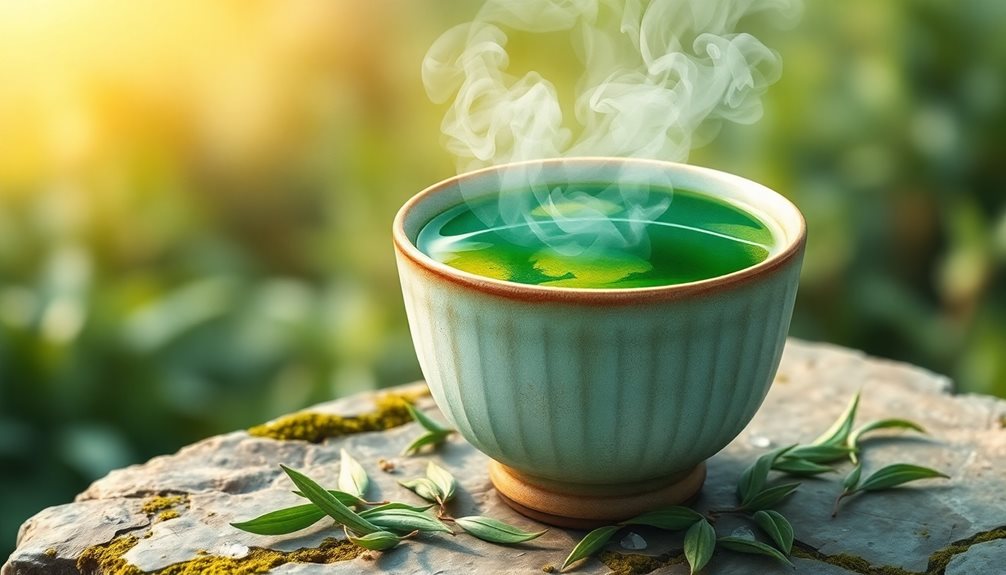
As tea plants store essential nutrients during winter dormancy, the first spring harvest captures maximum nutrient density before the plant redirects reserves toward new growth. It is this timing that defines Japan’s signature green tea, ensuring a well-balanced and juicy-fresh flavor.
You secure a superior foundation for multi-dimensional flavor that later harvests simply can't provide. The production process involves leaves that are steamed instead of pan-fired, creating a distinctively vegetal and earthy taste. Because these young, tender buds possess the highest concentration of L-theanine, you experience an intense umami and natural sweetness absent in commodity bags.
Later pickings drain these stored reserves and accumulate catechins from extended sunlight exposure, forcing you to accept unwanted sharp bitterness. These subsequent crops are generally used to make Genmaicha and hojicha due to their lower quality. With the premium first flush, often called Shincha, you avoid that astringency completely. Instead of harshness, you experience pleasant tasting notes like sweet corn and baby spinach.
You gain access to a complex, savory profile because the plant prioritized nutrient density over rapid summer expansion. Don't settle for the hollow taste of leaves stripped of their chemical potential. This premium option is grown in Kyoto hills, ensuring an aroma of freshly cut straw and firm tannins.
Sencha Steaming Preserves Vegetal Notes Better
Although most of the world uses dry heat to process green tea, Japanese growers rely on steam to aggressively lock in vegetal flavor. Crucially, the leaves are not withered before arrival, ensuring the raw material remains fully hydrated and distinct. This “kill-green” method blasts fresh leaves with heat to immediately deactivate the oxidative enzymes that typically degrade taste.
By halting this chemical reaction, you guarantee the catechins responsible for savory, grassy notes don't break down. Because the plants are cultivated under full sunlight year-round, the leaves naturally develop higher levels of vitamin C compared to shaded teas. While standard processing bakes the nuance out of the leaf, steaming defines the intensity.
This isn't random; growers manipulate the steam duration daily to master the outcome. A quick twenty-second *asamushi* steam preserves a delicate, fresh snap, whereas a deep *fukamushi* steam lasting sixty seconds forces a bold release of vivid seaweed and kelp characteristics. Consequently, this extended processing time often creates broken leaves, leading to a thicker and more textured brew.
You don't have to accept the generic, flat profile of pan-fired substitutes. The most prestigious versions are crafted using traditional hand rolling, a method specifically reserved for luxury teas and competitions. To prevent harsh extraction and bitterness, you should verify the water temperature is 70–80°C using a thermometer. When you choose sencha, you command a flavor profile engineered for maximum vegetal impact, keeping the potent antioxidant power strictly under your control.
Whole Sencha Leaves Retain More Essential Oils

Structural integrity separates premium sencha from the stale dust found on grocery shelves. You assume command of the brewing potential when you select whole leaves, as their needle-like shape drastically minimizes surface area. Commercial tea bags contain pulverized fragments, exposing essential oils to aggressive oxidation and moisture that destroy quality before you open the box. This guarantees the natural saponins and polyphenols remain chemically stable and potent. Additionally, the initial steaming process functions to deactivate oxidation enzymes while maintaining the signature grassy-sweet flavor.
| Degradation Metric | Premium Whole Leaf | Commercial Bagged Dust |
|---|---|---|
| Structural Form | Tightly rolled tubes | Crushed particles |
| Air Exposure | Low surface area | Maximum contact |
| Cellular Shield | Intact membranes | Ruptured walls |
| Oil Volatility | Sealed internally | Rapid dissipation |
You prevent aroma loss by rejecting leaves that have surrendered their potency to industrial chopping. Steaming and rolling techniques lock volatile compounds deeply inside leaf cells. While broken particles succumb to evaporation, whole leaves guard these critical oils strictly until you decide to release them during infusion. Since green tea typically lasts only 3-6 months once opened, prioritizing the superior retention of whole leaves is essential. To ensure absolute freshness, the crop is picked and processed within 24 hours of harvesting.
Sencha Balances Umami With Lower Astringency
Releasing those preserved oils reveals a sophisticated interplay between savory depth and invigorating bite, a balance commercial bags fail to achieve. High-quality varieties emit a distinct fresh, greenish scent that lacks the floral notes often found in Chinese green teas.
You dominate this flavor profile by selecting high-grade leaves distinctively packed with theanine and glutamate. These amino acids deliver a thick, savory power that naturally overwhelms the thin bitterness typical of low-quality alternatives. Visually, the best Sencha appears as elongated, slightly flattened leaves rolled into distinct needle-like forms.
While full sun exposure converts theanine into astringent catechins, premium processing techniques like Fukamushi—deep steaming—break down leaf particles to greatly suppress sharpness and boost liquid density. To achieve this texture, the leaves undergo a detailed process of steaming, rolling, kneading, and drying before they ever reach your cup.
You further dictate the outcome through precision brewing. By keeping water strictly between 158°F and 176°F, you extract rich umami while restricting the rapid release of bitter tannins. Higher temperatures release excessive bite, whereas lower temperatures maintain a mellow sweetness. Learn more in our guide on tea cultivars that shape sencha flavor. Since water quality significantly affects flavor, usage of soft water is preferred to ensure the delicate taste is not altered by minerals.
You aren't merely drinking tea; you’re effectively managing complex chemistry to create a texture that feels substantial and smooth rather than pulling, dry, or harsh on the palate.
Single-Origin Sencha Specificity vs. Commercial Blends
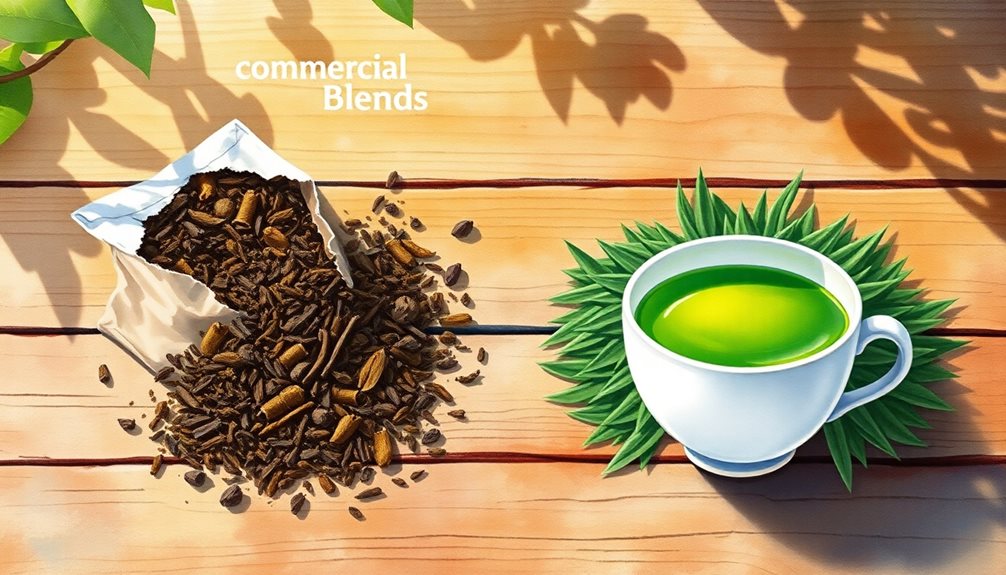
Terroir dictates the flavor profile of high-end sencha, but commercial brands actively suppress these regional nuances by blending leaves from disparate locations to secure uniformity. You don't maintain absolute command over your tasting experience when accepting mass-market tea homogenization. Given that this specific variety accounts for 70% of green tea produced in Japan, huge industrial manufacturers frequently treat it as a standardized commodity rather than a nuanced agricultural product. Large producers prioritize profit margins over individuality, indiscriminately mixing distinct harvest periods and heating methods like steaming to reduce overhead. This practice greatly dilutes the signature vegetative qualities, such as edamame and asparagus, that you demand. While Chinese green tea is typically pan-roasted, true sencha relies on steaming to enhance its vegetal notes. Conversely, single-origin sourcing empowers you to isolate specific, distinct flavor profiles derived strictly from precise cultivation areas. By rejecting generic blends that incorporate lower-grade, older leaves often found in cheaper bancha, you guarantee uncompromised quality and strict chemical purity in your daily cup. It is critical to apply heat immediately to the harvest to stop enzymes, as oxidation begins the instant the leaves are plucked. Inspect the critical production differences defined clearly here.
| Control Factor | Single-Origin Standard |
|---|---|
| Harvest Timing | First Flush Only |
| Geographic Origin | Specific Regional Terroir |
| Processing Method | Uniform Steaming |
| Leaf Quality | Premium Designated |
Vacuum Sealing Protects Sencha Freshness Longer
Even the most prestigious single-origin sencha loses its value if you don't shield it from environmental exposure immediately after processing. You must actively control oxidation to rigorously preserve the leaf's integrity.
By removing air, you create an airtight environment that considerably slows the oxidation process, effectively securing the longevity of delicate flavors and aromatics. Yet, standard vacuum packing alone can't achieve absolute protection against deterioration.
You require nitrogen flushing to displace oxygen with inert gas, guaranteeing superior preservation compared to simple air removal techniques. In addition, you must utilize opaque barriers to block UV rays that directly damage polyphenols.
Since moisture intrusion rapidly destroys freshness, this airtight defense is crucial to prevent damaging condensation buildup. By insisting on nitrogen-flushed, vacuum-sealed packaging, you lock in essential catechins and maintain the tea’s natural chlorophyll levels.
This guarantees you command the quality of your brew, enjoying the potent, fresh, intended taste long after harvest.
Frequently Asked Questions
What Is the Ideal Water Temperature for Brewing Sencha?
Secure the profile by targeting 158°F to 176°F. You’ll drop to 160°F for premium leaves. If you’re demanding astringency, increase the heat, but don’t boil the water or you’ll ruin the tea’s precise structural balance.
How Much Caffeine Does a Typical Cup of Sencha Contain?
You'll find 20 to 40 milligrams of caffeine in a standard cup. Since you control the variables, you'll extract up to 60 milligrams through longer steeps, yet you'll stay well below a strong coffee’s kick.
What Is the Main Difference Between Sencha and Matcha?
You wield the powers of shadow and light. Matcha’s a powder you consume whole. Sencha’s a leaf you steep. You distinguish them by whether you ingest the solid plant or simply extract its pure essence.
Can Sencha Leaves Be Re-Steeped Multiple Times?
You can infuse sencha three to four times. You’ll drive the flavor profile by shortening the second steep, then extending later infusions. Don't discard your leaves until you’ve extracted every ounce of quality they possess.
Do I Need a Special Teapot to Prepare Sencha?
You don't need a special teapot. While a Kyusu offers convenience, you can execute precise temperature reductions using ordinary cups. You'll secure excellent results by strictly managing water transfers, ensuring your technique drives the brew's quality.